 listicle
Professional Cat Sitting for Anxious Pets
Table of Contents
- Why Professional Cat Sitting Works for Anxious Cats
- In-Home Cat Sitting vs. Boarding: What Anxious Cats Need
- How to Prepare an Anxious Cat for a Sitter
- Cat Separation Anxiety: Signs and Solutions
- Cat Sitter Visit Frequency: Finding the Right Schedule
- Questions to Ask a Cat Sitter Before You Book
- Peace of Mind: What Professional Care Really Delivers
- Frequently Asked Questions
Last Updated: October 8, 2026
Why Professional Cat Sitting Works for Anxious Cats
Anxious cats need consistency, familiarity, and a calm environment, not just food and water, which is why professional cat sitting anxious cats requires specialized attention.
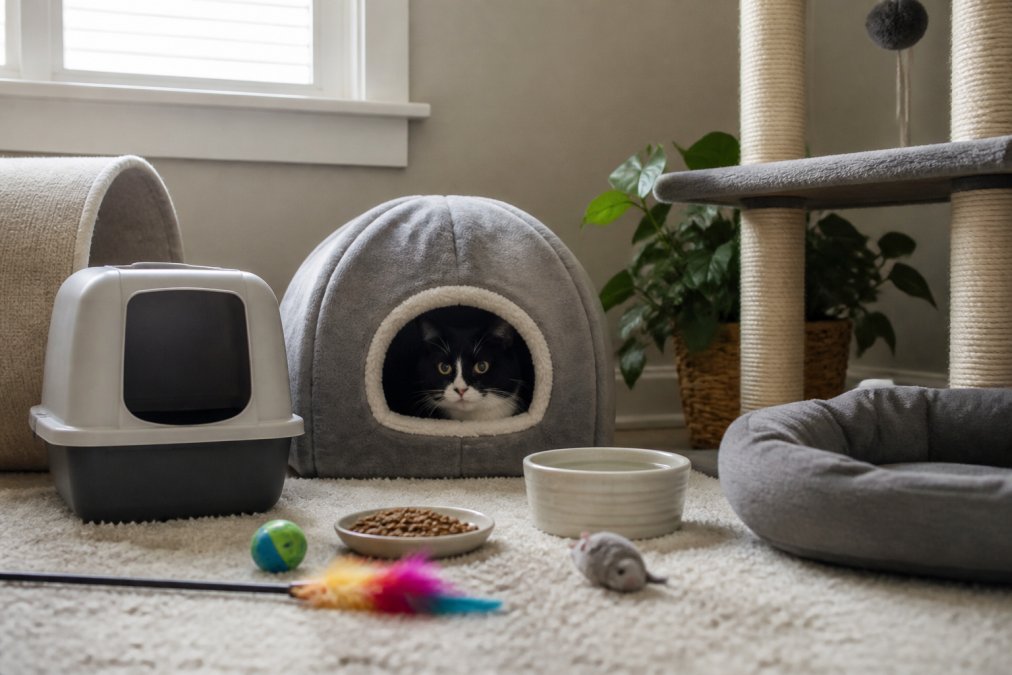
When a cat stays home instead of moving to a boarding facility, stress levels drop. They keep their routine, bed, and litter box, and their territory stays unchanged, which matters more for anxious cats than most people realize.
The real benefit is peace of mind: you travel knowing your anxious cat avoids the trauma of transport, strange sounds, and unfamiliar people, and instead gets personalized attention at home.
In-Home Cat Sitting vs. Boarding: What Anxious Cats Need
In-home cat sitting means a professional sitter visits your home to care for your cat. Boarding means your cat stays at a facility with other animals and different staff. For anxious cats, these aren't equivalent options.
Here's what matters most:
| Factor | In-Home Sitting | Boarding Facility |
|---|---|---|
| Familiar environment | Your cat stays home | Cat moves to new location |
| Stress level | Low (routine unchanged) | High (unfamiliar space, sounds, people) |
| Territory control | Complete | None |
| One-on-one attention | Yes | Shared with other animals |
| Medication handling | Precise, personalized | Less individualized |
| Behavioral monitoring | Detailed observation | Basic checks |
| Cost | $30.00 per 30-minute visit |
Boarding suits social, adaptable cats, but for anxious, shy, or senior cats, in-home sitting is almost always better. Your cat avoids transport, unfamiliar sounds, and crowded spaces, and gets the focused attention that keeps anxiety from spiraling.
How to Prepare an Anxious Cat for a Sitter
Preparation is everything. The more your anxious cat knows what to expect, the less stressed they'll be when the sitter arrives.
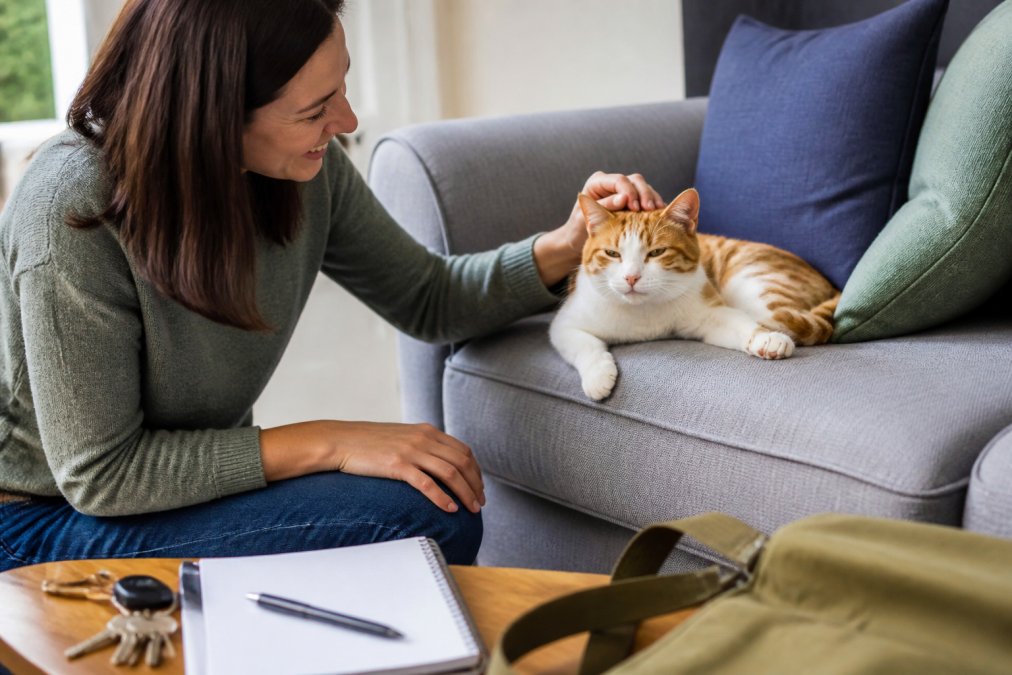
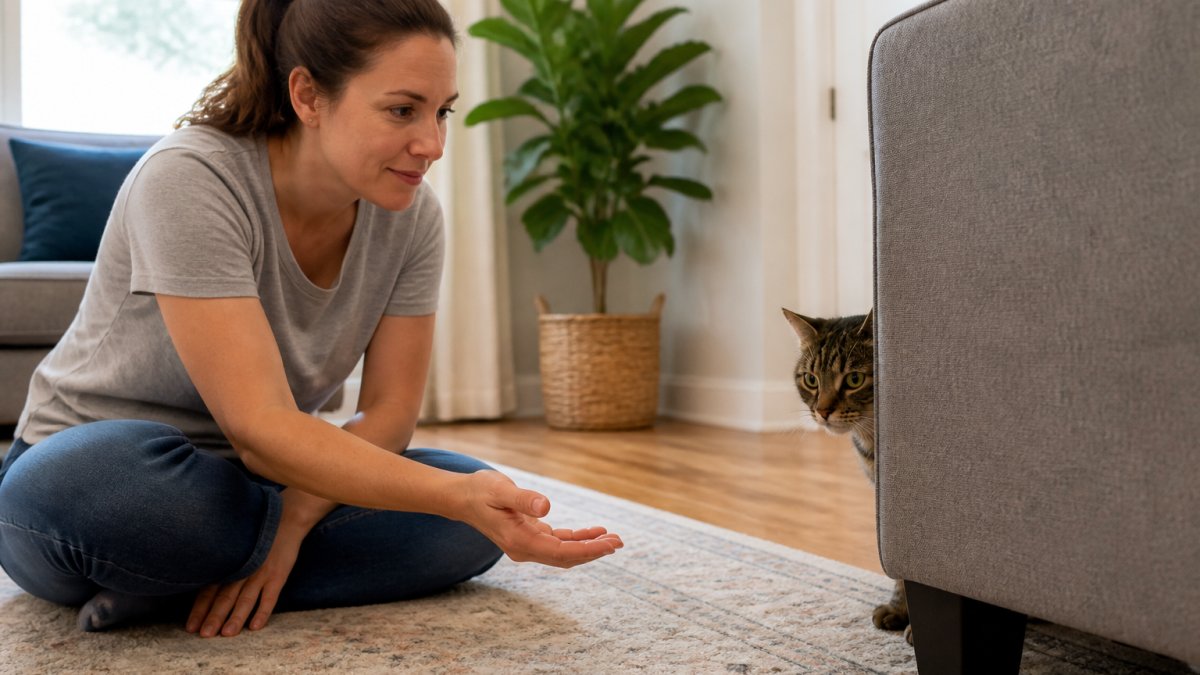
Introduce the sitter before your trip. Schedule a meet-and-greet where the sitter spends time in your home while you're present, letting your cat observe in a low-pressure setting. Some anxious cats warm up quickly, others need multiple visits, either way, familiarity reduces fear.
Provide written instructions covering your cat's behavior and preferences: where they hide when stressed, feeding schedule, medication timing, and quirks. A good professional cat sitter reads this carefully, avoids chasing or sudden movements, and gives your anxious cat space to approach on their own terms.
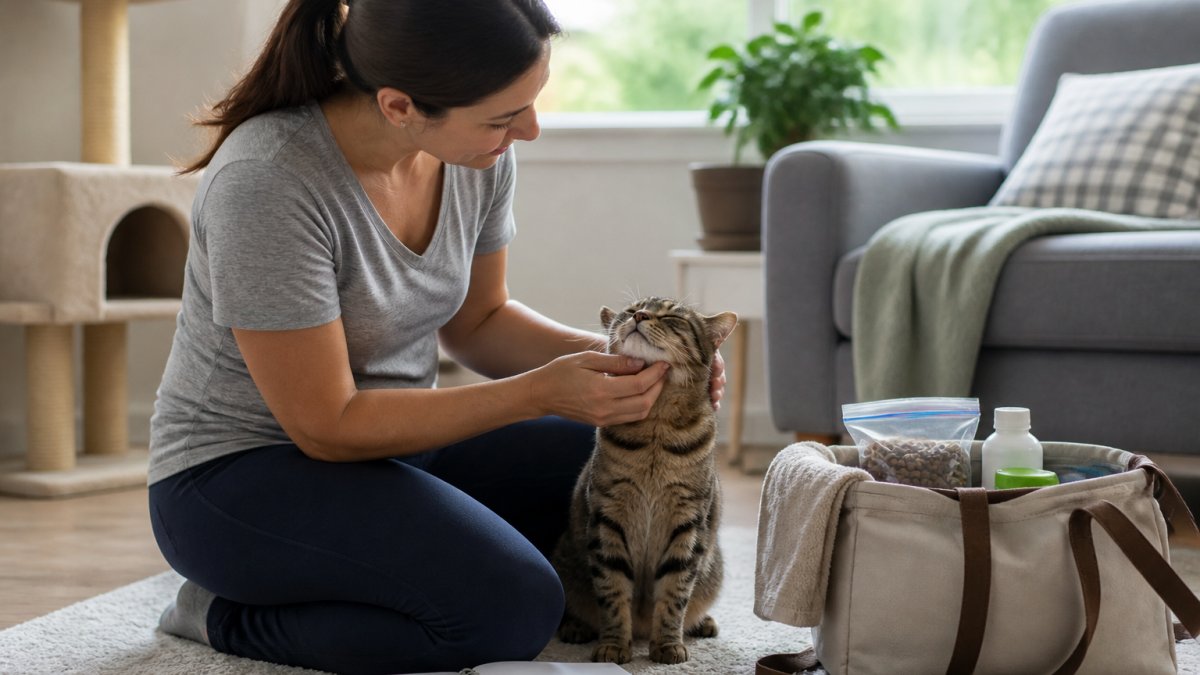
Leave out familiar items, toys, blankets, or things with your scent, and tell the sitter which areas your cat prefers and which rooms to avoid if your cat is hiding.
The day before you leave, keep your routine normal and don't act anxious yourself, cats pick up on your energy. A calm, matter-of-fact departure signals that everything is fine and you'll return.
Cat Separation Anxiety: Signs and Solutions
Cat separation anxiety is real, but it's often confused with ordinary feline independence, a confusion that leads owners to over-worry or under-treat. The distinction matters because the two require different responses.
A cat who naps through your workday and greets you calmly is not anxious. A cat who paces, vocalizes, or eliminates outside the box within 30 minutes of your departure is showing a stress response worth investigating.
Reading the Signals: Normal vs. Concerning
Feline stress shows up in clusters, not single behaviors.
- Vocalization: Occasional meows at feeding time are normal. Persistent, yowling cries that start soon after you leave and stop when you return suggest attachment distress.
- Elimination: One accident after a litter box change is situational. Repeated urination on your bed, laundry, or near the door is a recognized anxiety marker, and also a medical red flag for cystitis or urinary crystals.
- Grooming: Normal grooming maintains coat condition. Over-grooming creates bald patches, usually on the belly, inner thighs, or forelegs.
- Appetite: A cat who skips one meal is often fine. A cat who refuses food for 24+ hours is a medical concern, hepatic lipidosis can develop quickly in cats who stop eating.
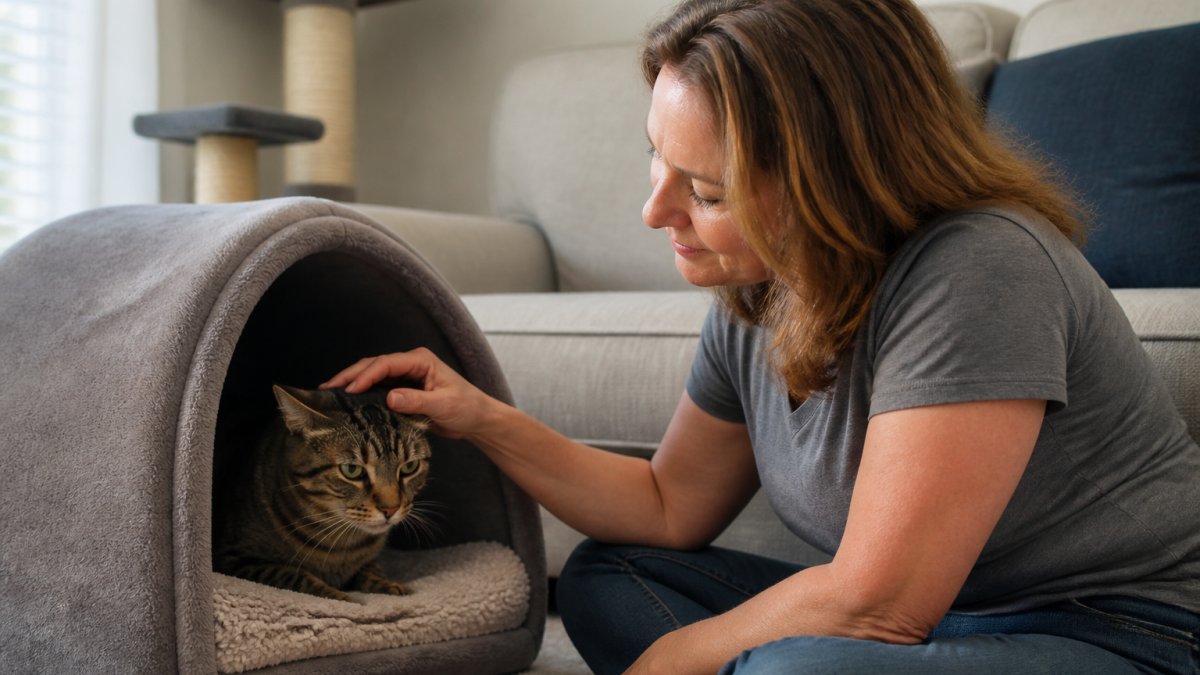
- Hiding: Retreating to a quiet spot is normal. Refusing to emerge for food, water, or the litter box is not.
- Destruction: Scratching furniture is normal marking behavior. Chewing window blinds, door frames, or self-inflicted wounds is not.
When to Call Your Veterinarian Instead of a Sitter
Some signs that look like separation anxiety are medical. Sudden behavior changes, especially inappropriate elimination, appetite loss, or aggression, warrant a veterinary exam before any behavioral intervention. Pain, hyperthyroidism, dental disease, and urinary conditions all mimic anxiety.
How Professional Sitting Interrupts the Anxiety Cycle
Once medical causes are ruled out, professional cat sitting addresses separation anxiety through several mechanisms:
- Consistent presence: Your cat isn't alone for 8-12 hours at a stretch, which breaks the escalation window when distress typically peaks
- Routine maintenance: Feeding, water, and litter box care happen on the same schedule your cat already knows
- Health monitoring: A sitter familiar with feline stress signals notices subtle changes, reduced grooming, hiding shifts, litter box avoidance, that owners miss on a video call
- Companionship: Even a quiet sitter's presence in the home can lower cortisol responses in anxious cats
- Emergency response: If something goes wrong, your sitter can contact you or your veterinarian immediately
Matching Care to Anxiety Severity
Not every anxious cat needs the same plan. A useful framework:
- Mild anxiety (occasional vocalizing, mild hiding): once-daily visits with a consistent sitter and a predictable routine
- Moderate anxiety (over-grooming, appetite changes, door-waiting): twice-daily visits, plus a meet-and-greet before the first trip and familiar-scent items left out
- Severe anxiety (self-injury, refusal to eat, house soiling): twice-daily visits plus a veterinary consult, some cats benefit from short-term anti-anxiety support prescribed before travel
The goal isn't to eliminate separation anxiety overnight, but to reduce your cat's stress while you're away, and to know when the situation calls for a veterinarian rather than a sitter alone.
Cat Sitter Visit Frequency: Finding the Right Schedule
How often should your sitter visit? It depends on your cat, but "it depends" isn't a care plan. Here's how to match visit frequency and duration to your cat's profile.
Care-Plan Tiers by Cat Profile
| Cat Profile | Recommended Frequency | Typical Visit Length | Why |
|---|---|---|---|
| Healthy adult, social | Once daily | 30 minutes | Meets feeding, litter, and companionship needs |
| Anxious adult | Once or twice daily | 30-45 minutes | Breaks the alone-time window; allows calm, unhurried interaction |
| Senior cat (10+ years) | Twice daily | 30 minutes | Catches subtle health changes; ensures medication timing |
| Kitten (under 6 months) | Twice daily minimum | 30-45 minutes | Growing cats eat more often and need play and litter checks |
| Cat on medication | Twice daily (or per vet schedule) | 30 minutes | Precise dosing windows; observation of side effects |
| Cat with chronic illness (CKD, diabetes, hyperthyroid) | Twice daily | 30-45 minutes | Appetite, hydration, and litter output must be tracked |
Why Frequency Matters More for Anxious Cats
A cat left alone for 24 hours faces a long stretch of isolation; a cat visited twice daily never goes more than about 12 hours without a human presence, a fresh meal, and a litter check. For anxious cats, that's the gap between a manageable absence and a distress spiral.
Twice-daily visits can accelerate settling for anxious cats.
When a Sitter Should Recommend More Support
A professional sitter should flag when more care is needed, not just complete the visit. Situations warranting more frequent visits or veterinary involvement:
- Food untouched at two consecutive visits: possible illness or severe stress
- Litter box unused for 24+ hours: possible urinary blockage, especially in male cats, a medical emergency
- New hiding behavior or refusal to come out for meals: escalating anxiety
- Medication missed or refused twice: needs owner and vet coordination
- Signs of self-injury or over-grooming: behavioral or medical intervention needed
Practical Scheduling Considerations
- Trip length: A weekend trip may only need once-daily visits for a healthy adult cat. A two-week trip almost always warrants twice-daily visits, even for a calm cat.
- Season and weather: Extreme heat or cold means water and climate checks matter more frequently.
- Backup coverage: Confirm your sitter has a plan if they get sick or have an emergency, a single point of failure is a risk for any care plan.
- Meet-and-greet before the first booking: For anxious cats, one pre-trip visit dramatically reduces day-one stress.
Tracy's Kitty Care's 30-minute visits include feeding, fresh water, litter box cleaning, and playtime, the right balance for most anxious cats. For cats who need more, we'll tell you honestly when twice-daily visits or a veterinary consult is the better call.
Questions to Ask a Cat Sitter Before You Book
Before hiring any professional cat sitter, ask these questions:
About experience and credentials:
- How long have you been sitting cats?
- Are you background checked, licensed, bonded, and insured? (Non-negotiable)
- Have you worked with anxious cats before?
- What's your training in recognizing signs of illness or stress?
About your cat's care:
- How do you handle a cat that hides or won't come out?
- What's your process for giving medication?
- How will you monitor my cat's eating, water intake, and litter box habits?
- What do you do if my cat seems sick or injured?
About communication:
- How often will you update me while I'm away?
- What's your protocol if something goes wrong?
- Can I reach you in an emergency?
- Do you take photos or send progress notes?
About logistics:
- What's your cancellation policy if my plans change?
- How do you handle last-minute scheduling?
- What's included in a visit, and what costs extra?
- Do you have backup coverage if you get sick?
A professional sitter should answer these thoroughly and without hesitation, their responses reveal whether they're genuinely invested in your cat's wellbeing or just going through the motions.
Peace of Mind: What Professional Care Really Delivers
The real value of professional cat sitting isn't just the tasks completed. It's the certainty that your cat is safe, fed, and observed while you're away.
When you hire a professional, you're getting:
- Accountability: A bonded, insured sitter means recourse if something goes wrong
- Expertise: Someone trained to spot health problems, behavioral changes, and stress signals
- Consistency: The same sitter, same routine, same care every visit
- Documentation: Updates and observations you can trust
- Emergency response: A sitter who knows your cat and can act quickly if needed
For anxious cats, this matters even more: your cat is observed by someone who understands feline behavior and stress signals. If your cat stops eating, hides more than usual, or needs a medication adjustment, the sitter notices, documents, and reports it.
That's peace of mind: you travel knowing your anxious cat isn't just surviving, but cared for by someone who takes their emotional and physical wellbeing seriously.
Anxious cats deserve more than a quick food-and-water check. They need a professional who understands that their stress is real and their comfort matters.
Frequently Asked Questions
Can a cat sitter help with separation anxiety?
Yes. A professional cat sitter reduces separation anxiety by maintaining your cat's daily routine, providing companionship, and keeping the home environment unchanged. Anxious cats benefit from consistent visits that include feeding, fresh water, litter-box cleaning, and playtime. Regular presence from a trusted caregiver signals safety and reduces the stress of being alone for extended periods.
How often should a sitter visit an anxious cat?
Anxious cats typically need at least one visit daily, ideally two if you're away for more than 24 hours. Visit frequency depends on your cat's anxiety level, medical needs, and age. Senior cats or those on medication may need twice-daily visits. A professional sitter can assess your cat's specific needs and recommend an appropriate schedule during an initial consultation.
Is in-home cat sitting less stressful than boarding?
In-home cat sitting is significantly less stressful for anxious cats. Boarding facilities involve unfamiliar environments, new sounds, and other animals, which amplify stress for nervous pets. In-home sitting keeps your cat in familiar surroundings with consistent routines, reducing behavioral changes and health risks associated with travel stress and environmental change.
What should I tell a cat sitter about my cat's anxiety?
Provide detailed information about your cat's specific anxiety triggers, hiding spots, favorite toys, and calming techniques that work. Explain any behavioral changes to expect (hiding, reduced appetite, litter-box changes). Share your cat's medical history, medication schedule, and emergency veterinary contact information. Clear communication helps the sitter deliver personalized care and monitor your cat's wellbeing effectively.