 blog
10 Questions to Ask Potential Cat Sitters
Table of Contents
- 1. What Are Your Professional Credentials and Insurance?
- 2. What Experience Do You Have With Cats, Especially Behavioral Issues?
- 3. Can You Walk Me Through Your Cat Sitter Daily Check-In Process?
- 4. What Questions to Ask a Pet Sitter About Emergency Protocols?
- 5. Can You Administer Medication and Handle Special Medical Needs?
- 6. What Should I Include in Cat Sitting Instructions for Your Visit?
- 7. Do You Offer a Trial Visit, and How Do You Handle Shy or Anxious Cats?
- 8. What Is Your Cancellation Policy and Communication Approach?
- Frequently Asked Questions
Last Updated: September 25, 2026
1. What Are Your Professional Credentials and Insurance?
Before hiring a cat sitter, the questions to ask cat sitters should start with proof of bonding and insurance. This protects both you and your pet. A responsible sitter carries liability coverage in case something goes wrong during a visit.
Ask specifically:
- Are you bonded and insured?
- What type of coverage do you carry?
- Can you provide proof of current insurance?
Many cat owners skip this question, but it's critical. If your cat gets injured or your home is damaged during a visit, you need to know you're covered. Insurance shows a sitter takes their job seriously.
Look for sitters who are also background checked. This is standard in professional pet care. Tracy's Kitty Care, for example, ensures all team members are background checked, licensed, bonded, and insured before they step into your home.
2. What Experience Do You Have With Cats, Especially Behavioral Issues?
Experience matters more than you might think. Some sitters have worked with dozens of cats. Others have only handled a few. The difference shows in how they interact with your pet.
Ask about their background:
- How many years have you been sitting cats?
- What types of cats have you cared for?
- Have you worked with shy, anxious, or aggressive cats?
- How do you handle cats with special behavioral needs?
Cats aren't all the same. A sitter skilled with outgoing, social cats might struggle with a nervous or territorial animal. If your cat hides when strangers visit, you need someone who understands feline anxiety and knows how to build trust slowly.
Mention any behavioral quirks your cat has. Does your cat hide? Scratch? Avoid eye contact? A good sitter will have strategies for these situations. They won't just open a door and hope for the best.
3. Can You Walk Me Through Your Cat Sitter Daily Check-In Process?
Understanding the daily routine keeps your mind at ease. Ask exactly what happens during each visit. A thorough cat sitter daily check-in process includes multiple tasks, not just feeding.
A solid visit includes:
- Feeding fresh food and water
- Cleaning litter boxes
- Playtime and attention
- Checking on your cat's health and behavior
- Sending you updates
The length and frequency of visits matter. A 30-minute visit allows time for feeding, litter maintenance, and meaningful interaction. Some sitters rush through in 15 minutes. Others spend an hour. Ask what fits your cat's needs.
Ask about communication too. How often will you hear from your sitter? Will they send photos or text updates? Do they call if something seems off? At Tracy's Kitty Care, we understand that cat owners want regular updates while they're away. Knowing your cat is safe and happy is part of the service.
Ask these specific questions about the process:
- How long is each visit?
- What do you do if my cat won't eat?
- How do you know if my cat is stressed or sick?
- Will you send me updates?
4. What Questions to Ask a Pet Sitter About Emergency Protocols?
Emergencies happen. You need to know your sitter is prepared. Ask directly about their emergency plan before you hire them.
Questions to ask a pet sitter about emergency protocols:
- What do you do if my cat seems sick or injured?
- Do you have a veterinary contact for my cat?
- Can you reach me immediately if there's a problem?
- Do you know pet CPR or first aid?
- What's your protocol if you can't reach me?
A good sitter won't panic. They'll have a clear plan. They should know your vet's name and location. Ideally, they'll have your vet's contact information written down before your trip starts.
Ask if they've handled emergencies before. Have they dealt with a choking cat? A bleeding wound? Sudden illness? Experience counts here. You want someone calm and capable, not someone learning on the job.
Provide written emergency instructions. Include your vet's address and phone number. List a trusted neighbor or friend as backup contact. Make sure your sitter knows exactly what to do if you're unreachable.
5. Can You Administer Medication and Handle Special Medical Needs?
Some cats need medication. Insulin injections. Thyroid pills. Eye drops. Not every sitter can handle this responsibility. Ask directly if they're capable and comfortable.
Ask about medication handling:
- Have you given cats medication before?
- Are you comfortable with injections?
- Can you handle pills, liquids, and topical treatments?
- What's your process for tracking doses?
If your cat needs insulin injections twice daily, this is critical. A sitter who's never given injections might be nervous or make mistakes. You need someone confident and experienced.
Provide clear written instructions for any medication. Include dosage, timing, and how to administer it. Show your sitter exactly how to do it before you leave. Watch them practice if possible.
Some sitters charge extra for medication administration. That's normal and fair. It requires additional training and liability. If cost is a concern, ask about pricing upfront.
Document everything. Write down when medication was given. Have your sitter confirm they've administered it. This protects both you and your sitter.
6. What Should I Include in Cat Sitting Instructions for Your Visit?
Detailed instructions prevent confusion and mistakes. Don't assume your sitter knows anything about your cat. Write everything down.
Your cat sitting instructions should cover:
- Feeding schedule and portion sizes
- Water bowl location and refill details
- Litter box locations and cleaning preferences
- Medication instructions with dosage and timing
- Your cat's name, age, and any medical conditions
- Behavioral quirks and how to handle them
- Favorite toys and play preferences
- Areas of the home your cat can access
- Emergency vet information and your contact details
Be specific. Instead of "feed my cat," write "Feed Whiskers 1/2 cup of wet food at 8 AM and 6 PM. Use the blue bowl in the kitchen. Store food in the fridge."
Include photos of your cat. Sounds odd, but it helps if your sitter needs to describe your cat to a vet. Include photos of medication bottles and feeding areas too.
Write down your cat's normal behavior. Is she usually active or sleepy? Does she hide or seek attention? This helps your sitter spot problems. If your cat suddenly acts strange, your sitter will notice.
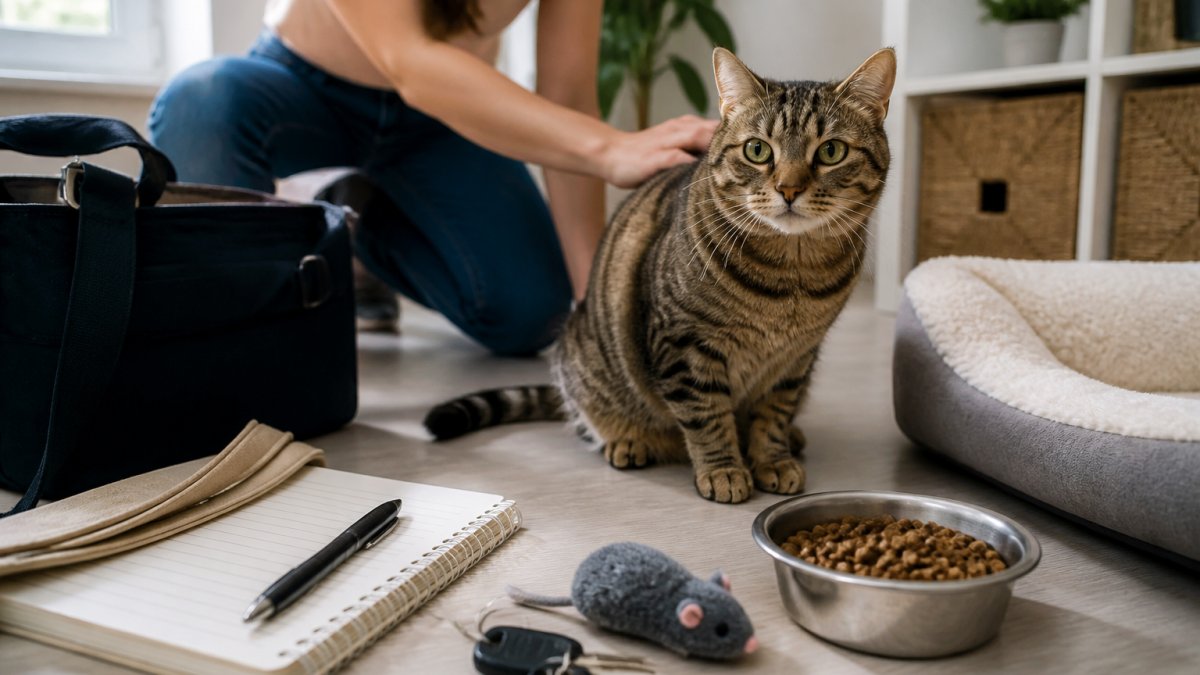
Leave your instructions somewhere obvious. On the kitchen counter. In a notebook by the door. Text them to your sitter before you leave. Provide both written and digital copies.
7. Do You Offer a Trial Visit, and How Do You Handle Shy or Anxious Cats?
A trial visit is smart. It lets you see how your sitter interacts with your cat. It gives your cat time to adjust to a new person before you leave for days.
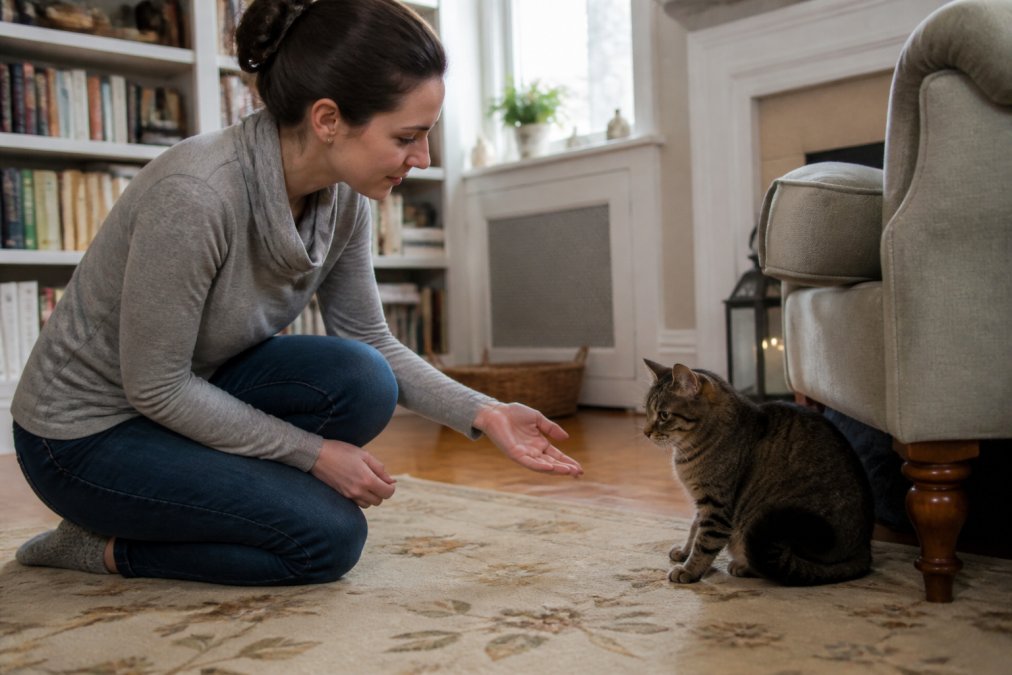
[IMAGE: Professional cat sitter kneeling down to gently interact with a shy tabby cat in a home living room, building trust during an initial meet and greet | section:7.
Ask about trial visits:
- Do you offer a meet and greet before the first paid visit?
- How long is the trial visit?
- What do you do during this visit?
- Can we discuss my cat's behavior and needs in detail?
8. What Is Your Cancellation Policy and Communication Approach?
Plans change. Flights get delayed. Trips get cut short. You need to know the cancellation policy before you book.
Ask about cancellations:
- What's your cancellation policy?
- How much notice do you require?
- Is there a cancellation fee?
- What if I need to cancel last minute?
- Can I reschedule instead of canceling?
Frequently Asked Questions
What should I look for in a cat sitter's credentials?
A qualified cat sitter should be bonded and insured, have completed a background check, and ideally hold pet first aid and CPR certification. Ask for proof of these credentials before hiring. Professional experience with cats, especially handling behavioral issues and special needs, demonstrates expertise. References from previous clients and a service agreement that outlines their responsibilities provide additional assurance of reliability and professionalism.
What information should I include in cat sitting instructions?
Your cat sitting instructions should cover feeding schedules and portion sizes, litter box maintenance preferences, medication administration details with clear written directions, emergency veterinary contact information, your cat's vaccination status, and any behavioral quirks or triggers. Include your vacation contact details, your veterinarian's name and phone number, and a trusted neighbor or family member to contact if needed. Provide clear instructions on home security, WiFi access if needed for photo updates, and your cat's preferred play and interaction style to ensure consistent, personalized care.
How often should a cat sitter check in during daily visits?
A standard cat sitter daily check-in process typically includes a 30-minute visit that covers feeding, providing fresh water, cleaning litter boxes, and playtime or attention. For cats requiring medication or with special needs, more frequent visits may be necessary. The sitter should provide photo or text updates during or after each visit to keep you informed. Ask your sitter about their communication frequency and preferred update method before booking to ensure it matches your expectations and comfort level.
What emergency protocols should a cat sitter have in place?
When asking questions to ask a pet sitter about emergency protocols, clarify what happens if your cat shows signs of illness, injury, or distress. The sitter should know your veterinarian's contact information and be authorized to seek emergency care if needed. Confirm they understand your cat's medical history and vaccination status. Ask about their response time for emergencies, whether they carry pet first aid supplies, and if they have experience recognizing signs of illness. A reliable sitter will have a written protocol and won't hesitate to contact you and your vet if something seems wrong.