 listicle
Signs of a Reliable Professional Pet Sitter
Table of Contents
- Green Flags: What a Reliable Pet Sitter Looks Like
- Questions to Ask a Pet Sitter Before You Book
- What Happens at a Pet Sitter Meet and Greet
- The Cat Sitter Daily Check-In Checklist
- Pet Sitter Red Flags That Should End the Conversation
- Service Scope, Visit Duration, and Emergency Planning
- Frequently Asked Questions
Last Updated: October 12, 2026
Green Flags: What a Reliable Pet Sitter Looks Like
Finding someone you trust with your cat starts with knowing the signs of a reliable professional pet sitter. The signs of a reliable professional pet sitter show up long before you hand over a key: verifiable credentials, prompt replies, and a genuine interest in your cat's routine. At Tracy's Kitty Care, we've built our entire service around those signals. Below, we'll show you exactly how to separate a true professional from a smooth talker, including the questions, paperwork, and red flags most owners miss.
A reliable professional pet sitter is a background-checked, insured caregiver who communicates promptly, follows your cat's exact routine, and provides verifiable references before the first visit. That definition matters because the pet care industry has no single national licensing standard, so verification falls on you.
The American Society for the Prevention of Cruelty to Animals publishes guidance on ASPCA pet care and safety resources that reinforces one core idea: consistency and familiarity reduce stress for cats. A sitter who understands that isn't just feeding your cat. They're protecting her health.
So what separates the good from the rest? Three things: credentials you can check, communication you can count on, and a meet-and-greet that reveals how they treat your cat.
Credentials You Can Actually Verify
Ask for proof, not adjectives. Any sitter can say they're "experienced," but a professional will hand over documentation without hesitation.
Here's what to request:
- Background check confirmation from a recognized screening provider
- Liability insurance and bonding paperwork, with the policy holder named
- References from at least two current clients you can contact directly
- Certification in pet first aid or CPR, if they claim it
- A written service agreement covering scope, payment, and cancellation
What most guides miss is that bonding and insurance are different things. Insurance covers accidents; bonding covers theft. A trustworthy sitter carries both and will explain the difference without getting defensive.
Communication and Punctuality Signals
Watch how fast they reply before you book. Response time during the sales phase is the best predictor of response time during your trip.
A reliable sitter confirms your booking in writing, arrives within the agreed window, and sends updates with photos after each visit. If they're vague about when they'll check in, expect silence when you're 2,000 miles away.
Punctuality matters for cats on medication. A dose given four hours late can matter. Ask directly: "What's your backup plan if you're delayed?"
Questions to Ask a Pet Sitter Before You Book
The right questions reveal whether a sitter thinks like a caregiver or a clock-puncher. Ask these before any money changes hands:
- How many visits per day do you recommend for my cat, and why?
- What's your protocol if my cat hides and you can't find her?
- Can you administer medication, including injections?
- How do you handle a medical emergency, and which vet do you use?
- What's your cancellation policy if my travel dates change?
- Will you send updates, and how often?
- Do you have backup care if you get sick?
Listen for specifics. A sitter who says "I'll figure it out" is not the same as one who names her emergency vet and describes her backup sitter.
What Happens at a Pet Sitter Meet and Greet
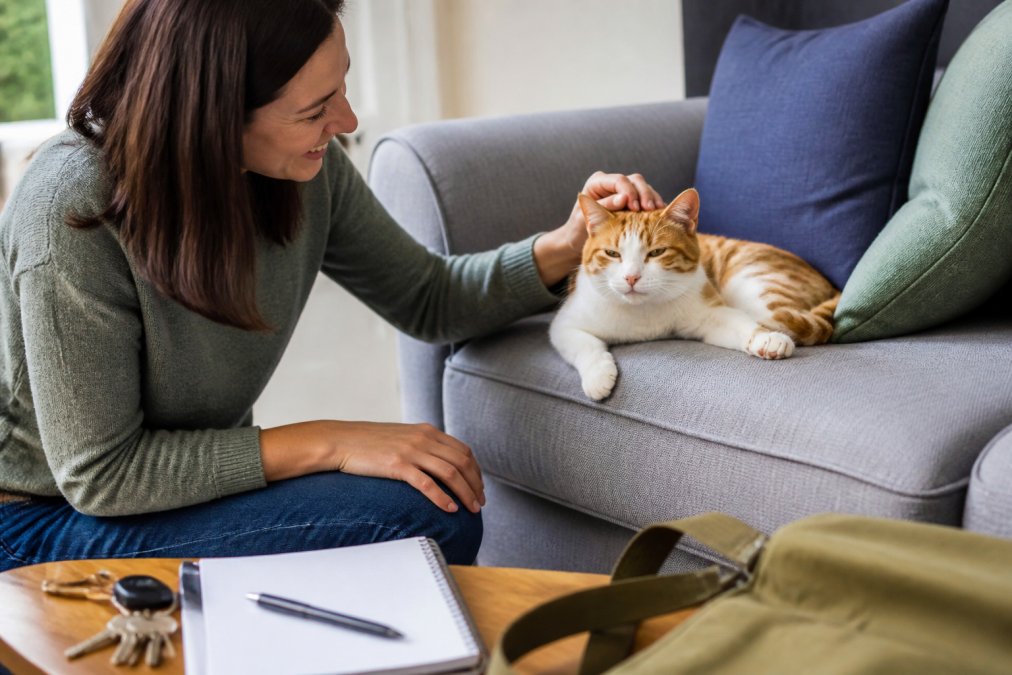
A meet-and-greet is a working interview, not a formality. It's your one chance to watch how the sitter behaves around your cat before you're gone.
During a proper visit, the sitter should:
- Ask about your cat's personality, hiding spots, and favorite toys
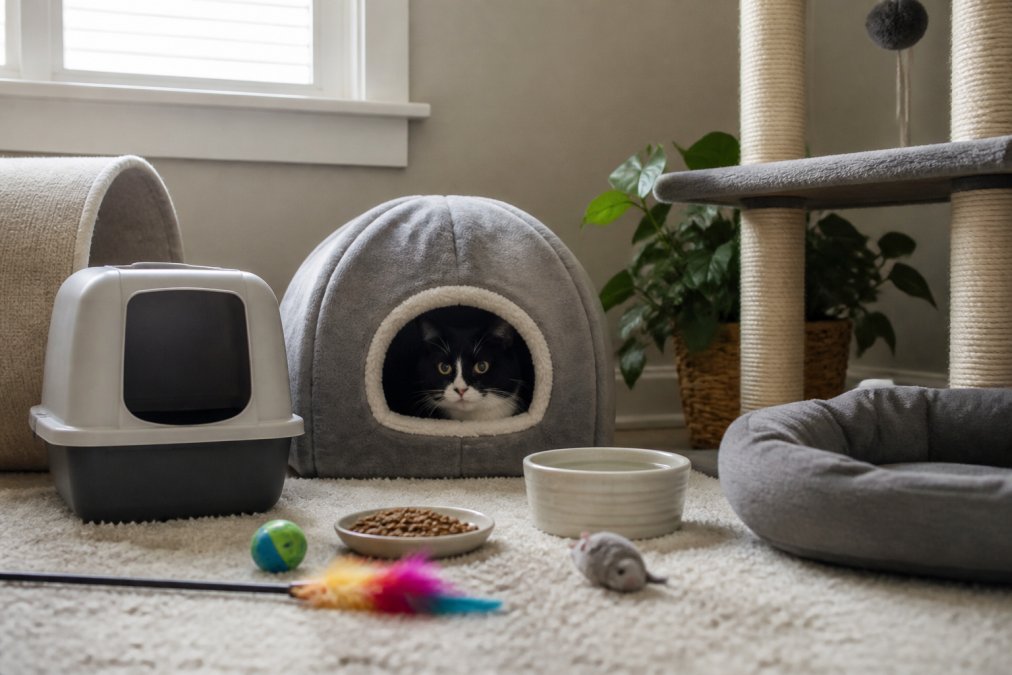
- Walk through feeding amounts, dietary restrictions, and litter box locations
- Review medication schedules and health conditions in writing
- Confirm emergency contacts and your veterinarian's information
- Discuss home access, alarm codes, and respect for your space
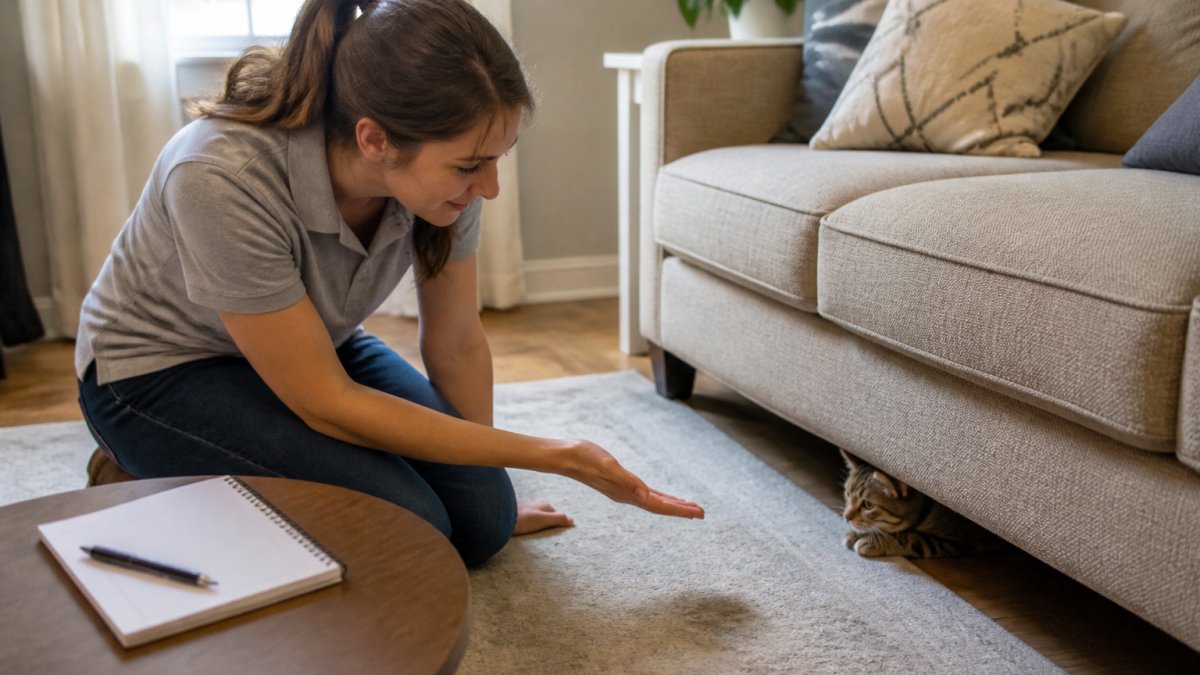
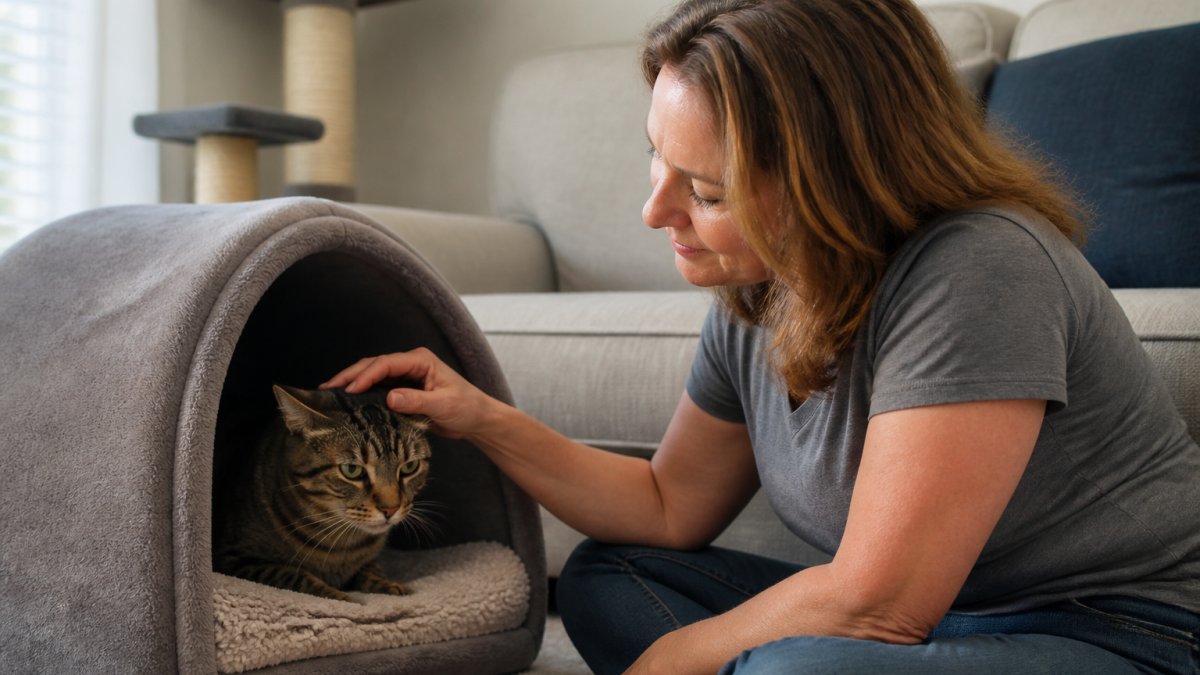
Watch how they approach a nervous cat. Experienced sitters read animal body language: they let the cat come to them, avoid direct staring, and never chase. If your shy cat hides the whole visit, that's normal. What matters is whether the sitter knows it's normal.
The Cat Sitter Daily Check-In Checklist
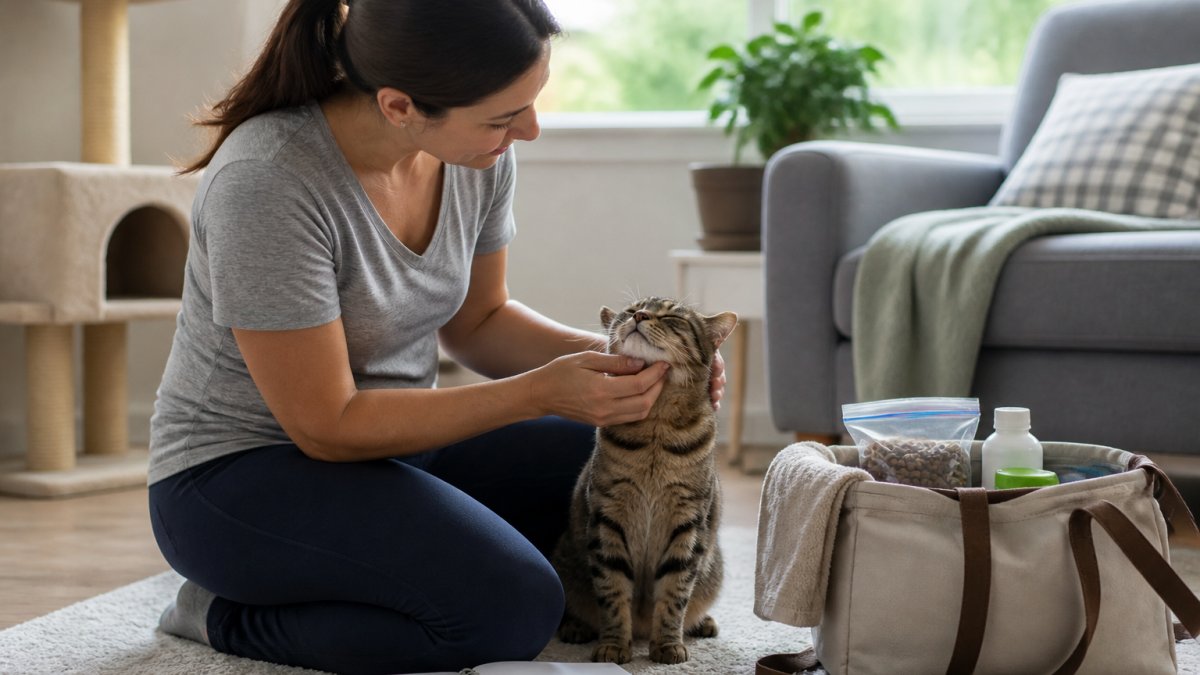
A dependable sitter follows a documented routine and reports on it. Ask to see their checklist before you book. Ours covers:
- Fresh food and water, with amounts noted
- Litter box scooped and condition recorded
- Medication given, with time logged
- Playtime and attention, however brief
- Photo update sent to you
- Any changes in appetite, behavior, or litter box use flagged
That last item is where real value lives. Cats hide illness well, and a sitter who notices your cat skipped two meals can prompt a vet call before a small problem becomes an emergency.
Pet Sitter Red Flags That Should End the Conversation
Some warning signs are deal-breakers. Walk away if a sitter:
- Can't or won't provide references or proof of insurance
- Answers questions vaguely or gets defensive about credentials
- Promises visits but won't put the scope in writing
- Has no emergency plan or backup sitter
- Dismisses your cat's shyness or special needs as "not a big deal"
- Pressures you to pay in cash with no contract
The Centers for Disease Control and Prevention offers CDC healthy pets and safe animal contact guidance that's useful context here: hygiene and disease prevention around animals depend on consistent, informed handling. A sitter who shrugs off basic protocols around litter and food isn't just unprofessional, they're a health risk.
Service Scope, Visit Duration, and Emergency Planning
Get the details in writing. Vague promises about "checking in" mean nothing without a defined scope. The gap most owners don't think about until they're already away is accountability: how do you know the visit actually happened, lasted as long as promised, and included the tasks you paid for?
Define the visit before you book
A standard drop-in visit runs about 30 minutes and includes feeding, fresh water, litter box cleaning, and playtime. Our own cat sitting service follows that structure. Confirm three things in the contract:
- Visit duration. Is 30 minutes the minimum, the target, or the maximum? Ask whether the clock starts at arrival or at the door.
- Number of visits per day. For most healthy adult cats, one visit per day is the floor; cats on medication, seniors, and kittens often need two. Ask the sitter to recommend a frequency and explain the reasoning.
- Exact tasks included. Feeding, water refresh, litter scoop, medication, play, and a photo update should each be listed. "General care" is not a task list.
How to confirm a visit actually happened
This is the accountability layer most guides skip. Ask your sitter how they document each visit, and expect at least two of these:
- A timestamped photo or short video sent after the visit
- A written note logging arrival time, tasks completed, and any changes
- A GPS-stamped check-in through a scheduling app
- A text or app notification at arrival and again at departure
If a sitter can't tell you how they'll prove they were there, assume you'll have no way to know. A sitter who sends a photo at 9:14 a.m. and a departure note at 9:47 a.m. is giving you a 33-minute visit you can verify. That's the standard to ask for.
Schedule changes and missed visits
Travel plans shift. Ask up front:
- How much notice is required to add, move, or cancel a visit, and whether a fee applies.
- What happens if a visit is missed, whether the sitter makes it up, credits it, or documents why it didn't occur.
- Who covers the visit if the sitter is sick or delayed, and whether that backup has been introduced to your cat.
Emergency planning
Emergency planning deserves its own line item. Ask your sitter to document:
| Scenario | What a Reliable Sitter Does |
|---|---|
| Cat won't eat for 24 hours | Contacts you, then your vet if no improvement |
| Suspected injury or illness | Calls your vet, then the emergency clinic you named |
| Sitter is delayed or sick | Activates a named backup sitter |
| You can't be reached | Follows the written care authorization you signed |
| Severe weather or travel disruption | Confirms whether the visit can proceed and notifies you either way |
Two documents make that table enforceable: a care authorization that names your veterinarian, an emergency clinic, and a spending limit for treatment, and a contact sheet with your reachable numbers, a local emergency contact, and your cat's microchip number. A sitter who can't fill in that table, or who hasn't asked you to sign an authorization, isn't ready for your cat.
Frequently Asked Questions
What are the signs of a reliable professional pet sitter?
A reliable pet sitter arrives on time, sends updates after every booked visit, and follows your cat's routine exactly as written. They carry proof of insurance and bonding, provide references you can call, and ask detailed questions about feeding schedules, medication, and temperament before the first visit. Professional pet sitters also confirm an emergency contact and veterinarian in writing, and they never pressure you to skip a meet-and-greet.
Should a professional pet sitter be insured and bonded?
Yes. Insurance covers accidents or damage during a visit, and bonding protects you if a sitter is ever responsible for theft. Ask for a certificate of insurance and confirm the policy is current. A trustworthy sitter will share this paperwork without hesitation. If someone dodges the question or says coverage is unnecessary because they are careful, treat that as a warning sign and keep looking for a reliable pet sitter.
What should a pet sitter do during a daily check-in?
A standard cat sitting visit covers feeding, fresh water, litter box cleaning, and playtime or attention. A thorough sitter also checks that your cat is eating, drinking, and using the litter box normally, and notes any behavior changes. Many sitters send a photo or short message after each visit so you know the cat is fine. If your cat takes medication, the check-in should include confirmation that the dose was given at the scheduled time.
What are red flags when hiring a pet sitter?
Watch for vague answers about experience, no references, reluctance to show insurance or bonding paperwork, and unwillingness to do a meet-and-greet. Other pet sitter red flags include slow responses before you have even booked, no written agreement or cancellation policy, and no plan for emergencies. If a sitter cannot describe how they would handle a cat that hides, refuses food, or needs a vet visit, that is a clear sign to look elsewhere.