 listicle
Best Cat Care for Shy Cats: A Complete Guide
Table of Contents
- Understanding Signs of Anxiety in Cats
- Creating a Safe Space for Cats
- Building Trust Through Patience and Positive Reinforcement
- Best Practices for Shy Cat Care at Home
- Professional Pet Sitting for Anxious Cats
- Multi-Cat Households and Age-Specific Considerations
- Conclusion
Last Updated: August 19, 2026
Understanding Signs of Anxiety in Cats
Shy cats display anxiety through specific behavioral and physical signals that owners often misinterpret as simple shyness. Recognizing these signs early allows you to intervene before stress compounds into more serious behavioral issues.
Common anxiety indicators include excessive hiding, dilated pupils, flattened ears, and a tucked tail. A shy cat may also exhibit stress signals like rapid breathing, loss of appetite, or excessive grooming. Some anxious cats become aggressive when cornered, while others freeze entirely when startled. The key difference between normal caution and clinical anxiety is intensity and duration, a shy cat that hides for hours after a visitor arrives needs different care than one who simply prefers solitude.
According to the American Veterinary Society of Animal Behavior, environmental stressors like loud noises, schedule changes, or unfamiliar people trigger fear responses in cats with predisposed temperaments. This guide addresses how to distinguish medical causes from behavioral anxiety, since some cats hide due to pain or illness rather than fear.
Medical conditions like hyperthyroidism, urinary tract infections, or dental disease can mimic anxiety symptoms. Before assuming your cat is simply shy, a veterinary assessment rules out underlying health issues. Once medical causes are excluded, behavioral interventions become the primary treatment approach.
Creating a Safe Space for Cats
A safe space is the foundation of care for shy cats. This dedicated area gives your cat control over their environment and a refuge when overwhelmed. Without one, anxious cats may choose inappropriate hiding spots like behind appliances or under furniture, making them difficult to monitor and care for.
Hide boxes and vertical territory
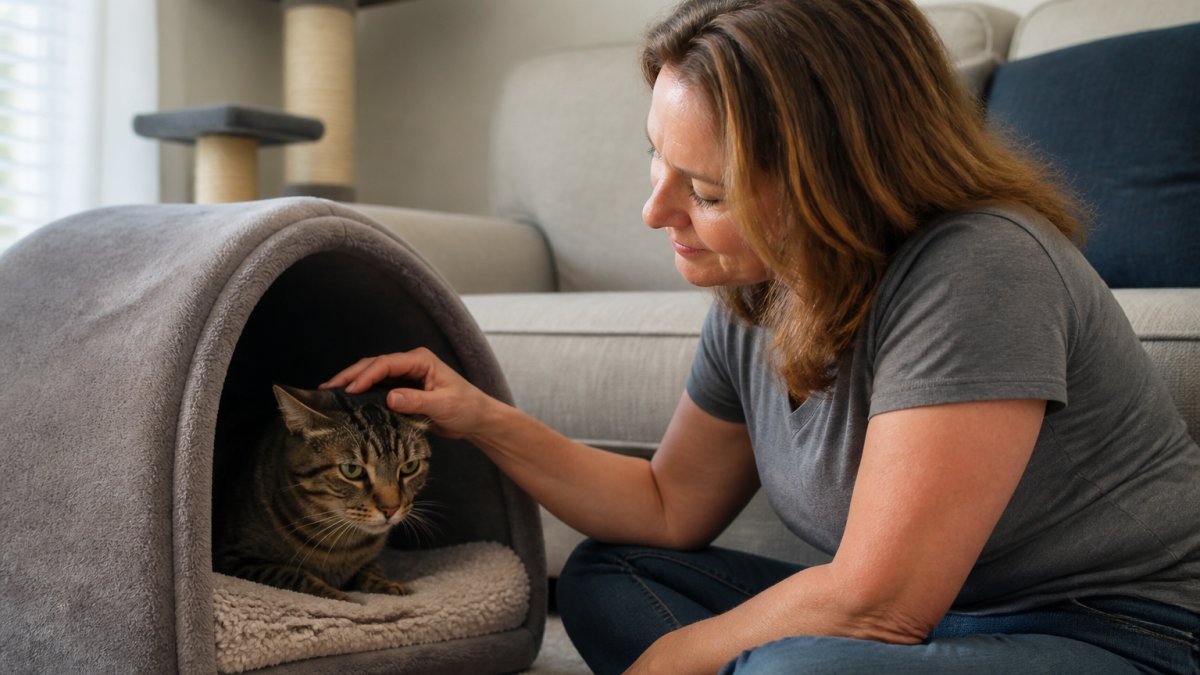
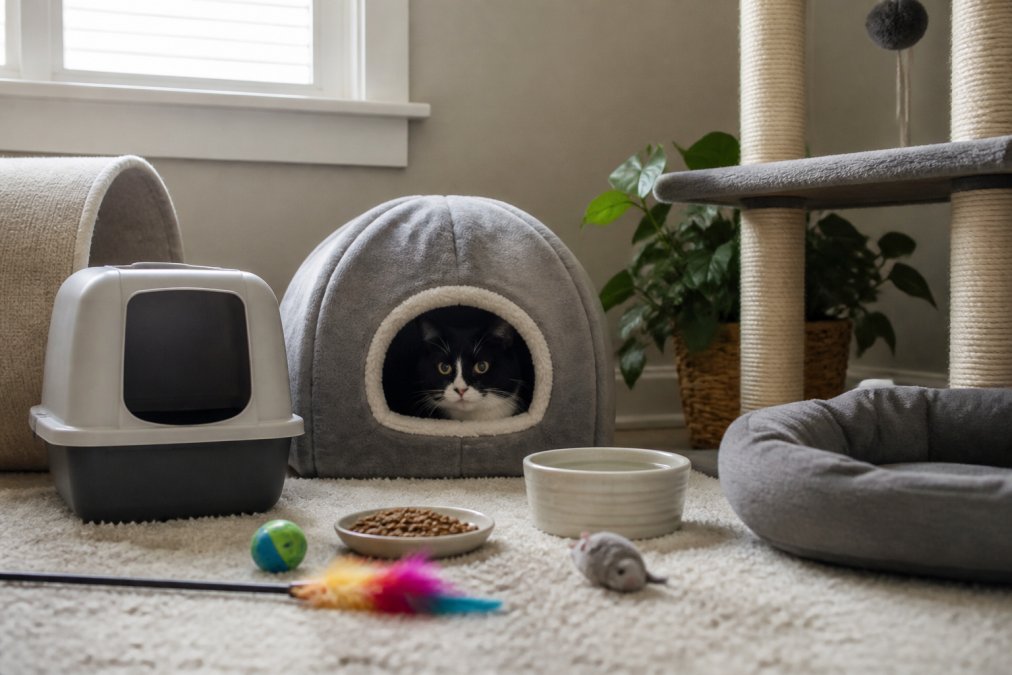
Hide boxes serve a critical function for anxious cats, they provide security and reduce visual exposure. A proper hide box should be enclosed on at least three sides, positioned away from high-traffic areas, and large enough for your cat to turn around comfortably. Many cats prefer elevated hiding spots because height provides a sense of control and escape routes.
Vertical territory matters as much as horizontal space. Tall cat trees, wall-mounted shelves, and climbing furniture give shy cats options to observe their environment from a safe distance. Cats feel more confident when they can monitor activity without being exposed. Multi-level setups allow a nervous cat to retreat upward when stressed.
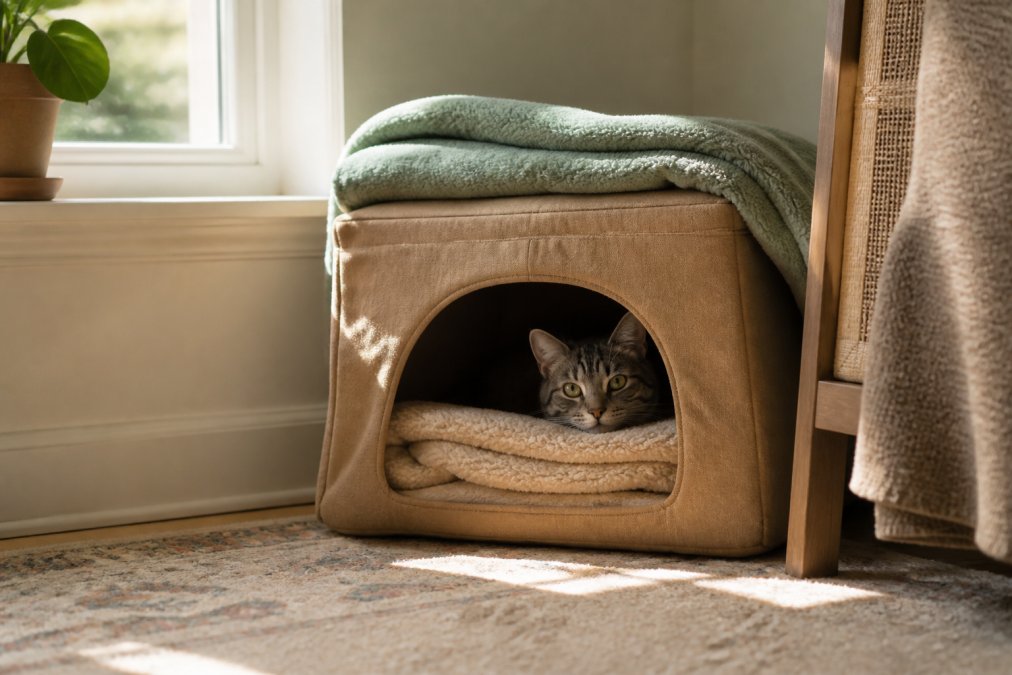
Position these spaces thoughtfully. Avoid placing hide boxes near loud appliances, heating vents, or areas where people frequently pass. A quiet bedroom corner or spare closet works better than a living room. The goal is creating a zone where your cat can decompress without interruption.
Environmental enrichment and routine
Environmental enrichment reduces stress by giving cats appropriate outlets for natural behaviors. Window perches allow safe observation of outdoor activity. Puzzle feeders engage their hunting instincts. Cardboard boxes and paper bags provide inexpensive enrichment that mimics natural hiding behavior.
Routine matters enormously for anxious cats. Unpredictable schedules increase stress because the cat cannot anticipate what comes next. Feeding at the same times daily, maintaining consistent play schedules, and keeping litter box locations static all contribute to a sense of predictability. When a shy cat knows exactly when food arrives and where resources are located, baseline anxiety decreases.
Pheromone support like Feliway mimics natural calming compounds cats produce. Spraying or diffusing these products in your cat's safe space can reduce stress markers during transitions or when strangers visit. This is particularly valuable when you use professional pet sitting services, the familiar scent helps your cat stay calm during your absence.
Building Trust Through Patience and Positive Reinforcement
Trust cannot be rushed with anxious cats. Many owners make the mistake of forcing interaction, which deepens fear and damages the relationship. Instead, allowing your cat to approach on their own timeline builds genuine confidence.
Slow blink communication and non-threatening posture
Slow blinking is the cat's equivalent of a kiss, a signal of trust and affection. When your shy cat slow blinks at you, respond by blinking slowly back. This non-verbal communication builds connection without physical contact or verbal pressure.
Body language matters as much as words. Sitting or crouching to your cat's eye level removes the intimidation factor of human height. Avoiding direct eye contact, keeping your body angled sideways rather than facing the cat directly, and moving slowly all communicate non-threatening intent. Many shy cats will approach a person who sits quietly on the floor and ignores them, because the absence of direct attention feels safe.
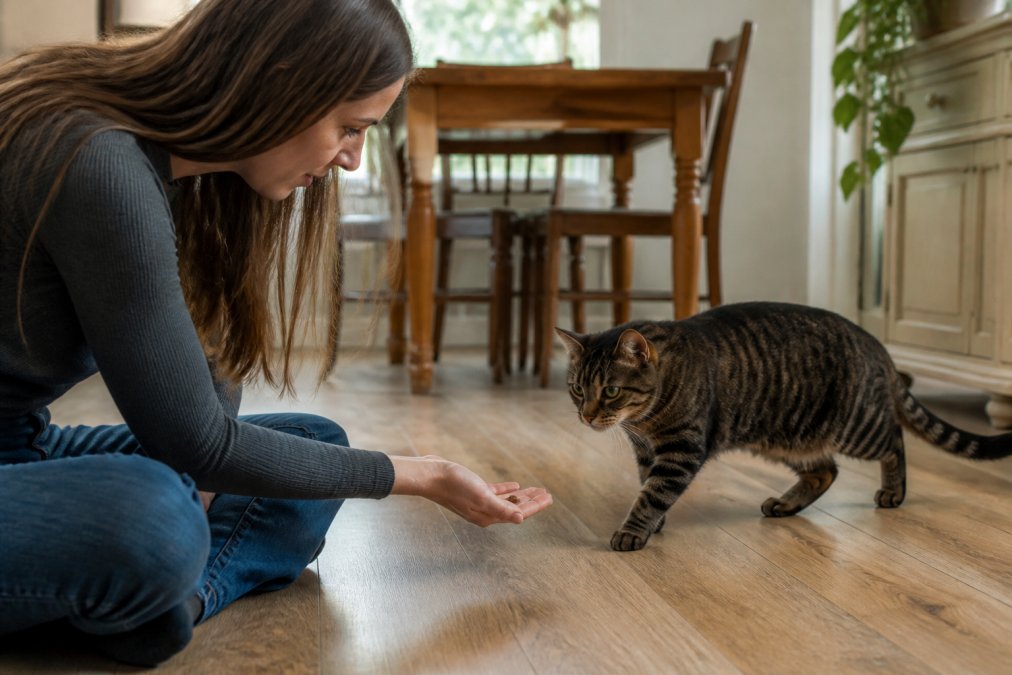
Let your cat initiate contact. If your shy cat approaches your hand, allow them to rub against it rather than reaching out to pet them. This reversal of control, where the cat decides when and how interaction happens, builds confidence faster than any amount of coaxing.
Treat-based training and desensitization
Treats create positive associations with your presence. Start by tossing treats near your shy cat without making eye contact or speaking. Gradually reduce the distance as comfort increases. Eventually, your cat may take treats directly from your hand.
Desensitization works by pairing something the cat fears with something positive. If your cat is afraid of visitors, have trusted friends visit briefly while offering treats. The friend stays quiet, doesn't make eye contact, and allows the cat to approach at their own pace. Over multiple visits, the cat learns that strangers predict good things.
Interactive play builds confidence in anxious cats. Wand toys allow engagement at a distance, letting your cat control the intensity. Start with short 5-minute play sessions to avoid overstimulation. As your cat gains confidence, gradually extend playtime. Play releases tension and creates positive associations with activity.
Best Practices for Shy Cat Care at Home
Daily routines and environmental management create the conditions where anxious cats can thrive. These practices address both immediate stress reduction and long-term confidence building.
Establishing a daily routine and interactive play
Consistent feeding times establish predictability. Feed your shy cat at the same times each day, in the same location. This removes uncertainty and allows your cat to anticipate positive events. Similarly, designate specific times for play and interaction rather than attempting engagement randomly throughout the day.
Interactive play specifically designed for shy cats uses lower-intensity toys and shorter sessions. Wand toys with feather attachments often appeal to anxious cats because the movement is controllable and the cat maintains distance from your hand. Laser pointers can work, but some behaviorists caution that the lack of "capture" may frustrate cats. Toys that mimic prey, like toy mice or small balls, allow your cat to engage hunting instincts independently.
Monitor play intensity. Overstimulation triggers aggression or retreat in anxious cats. Signs of overstimulation include tail twitching, ear flattening, or sudden disengagement. End play sessions before these signals appear, leaving your cat wanting more rather than overwhelmed.
Calming aids and pheromone support
Pheromone products like Feliway diffusers or sprays replicate the natural calming compounds cats produce from facial glands. These are particularly valuable during transitions, moving to a new home, introducing new pets, or when strangers visit. The familiar scent reduces baseline stress without sedation.
Some cats benefit from calming supplements containing L-theanine or tryptophan, though these should be discussed with your veterinarian first. Herbal options like chamomile or valerian root have mixed evidence but are generally considered low-risk for cats.
White noise machines or soft music designed for cats can mask household sounds that trigger anxiety. Sudden noises like vacuum cleaners or doorbells startle shy cats more than other cats. Masking these sounds reduces reactive stress.
Professional Pet Sitting for Anxious Cats
When you travel, leaving your shy cat with a professional pet sitter is often less stressful than boarding facilities. Anxious cats adapt better to familiar environments, and professional sitters trained in cat behavior can implement the calming strategies your cat needs.
Tracy's Kitty Care cat sitting service specializes in in-home care for cats, including those with anxiety and behavioral challenges. Background-checked, licensed, and insured sitters visit your home on your regular schedule, maintaining the routines your shy cat depends on. This consistency prevents the stress spike that often occurs when owners travel.
A good pet sitter for anxious cats understands that forcing interaction is counterproductive. They maintain quiet, predictable visits focused on meeting your cat's physical needs, fresh food, water, and litter box maintenance, rather than handling or play. For cats on medication, professional sitters ensure doses are administered correctly and on time, which is critical for cats with anxiety-related behavioral issues.
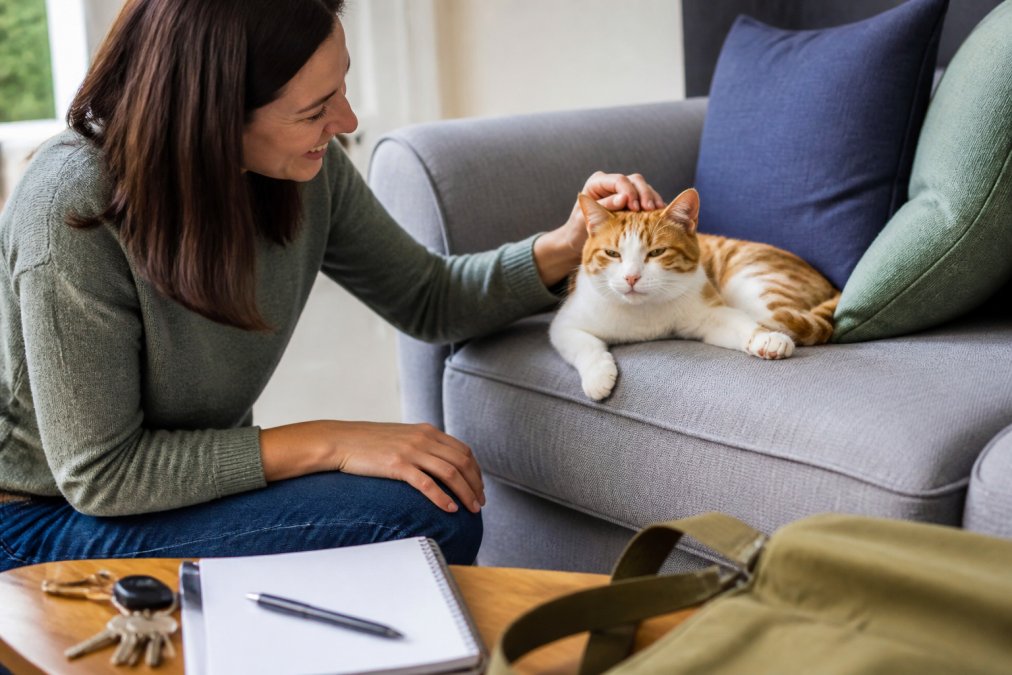
Before booking any pet sitter, discuss your cat's specific anxiety triggers and preferred handling methods. Provide written instructions on your cat's hiding spots, favorite treats, and warning signs of stress. A sitter who asks detailed questions about your cat's behavior is more likely to provide appropriate care than one who treats all cats identically.
Multi-Cat Households and Age-Specific Considerations
Shy cats in multi-cat homes face additional stress from dominant cats, territorial conflicts, or simple overstimulation from constant social interaction. Managing these dynamics requires intentional space design and behavioral management.
In multi-cat households, provide separate safe spaces for each cat. A shy cat should have access to resources, litter boxes, food, water, and hiding spots, that don't require passing through dominant cats' territory. The general rule is one litter box per cat plus one extra, distributed across different areas of your home.
Age affects how shy cats respond to interventions. Kittens are more adaptable and may overcome shyness faster with consistent positive exposure. Adult cats with established anxiety patterns require longer, more patient approaches. Senior cats may become more withdrawn due to pain or cognitive changes, so medical evaluation becomes even more critical with older anxious cats.
Young kittens benefit from early socialization, controlled exposure to different people, sounds, and environments during the sensitive period between 2-7 weeks of age. Kittens that miss this window often develop lasting shyness, though patient handling can still improve confidence.
Adult cats (1-7 years) with established anxiety respond well to the desensitization and environmental management approaches outlined above. Their behavioral patterns are more stable, making progress slower but more predictable.
Senior cats (7+ years) may show increased anxiety due to pain, cognitive dysfunction, or medical conditions. Before attributing increased hiding or avoidance to behavioral anxiety in older cats, rule out arthritis, thyroid disease, or other age-related conditions.
Conclusion
Best cat care for shy cats centers on understanding anxiety signals, creating predictable environments, and building trust through patience rather than force. The combination of safe spaces, consistent routines, positive reinforcement, and professional support addresses both immediate stress and long-term confidence building.
When you travel, professional in-home pet sitting eliminates the additional stress of boarding facilities or unfamiliar caregivers. A specialized cat sitter maintains the routines your shy cat depends on, ensuring medication administration, consistent feeding schedules, and appropriate handling that respects your cat's anxiety, giving you genuine peace of mind while you're away.
Frequently Asked Questions
What are the main signs of anxiety in cats?
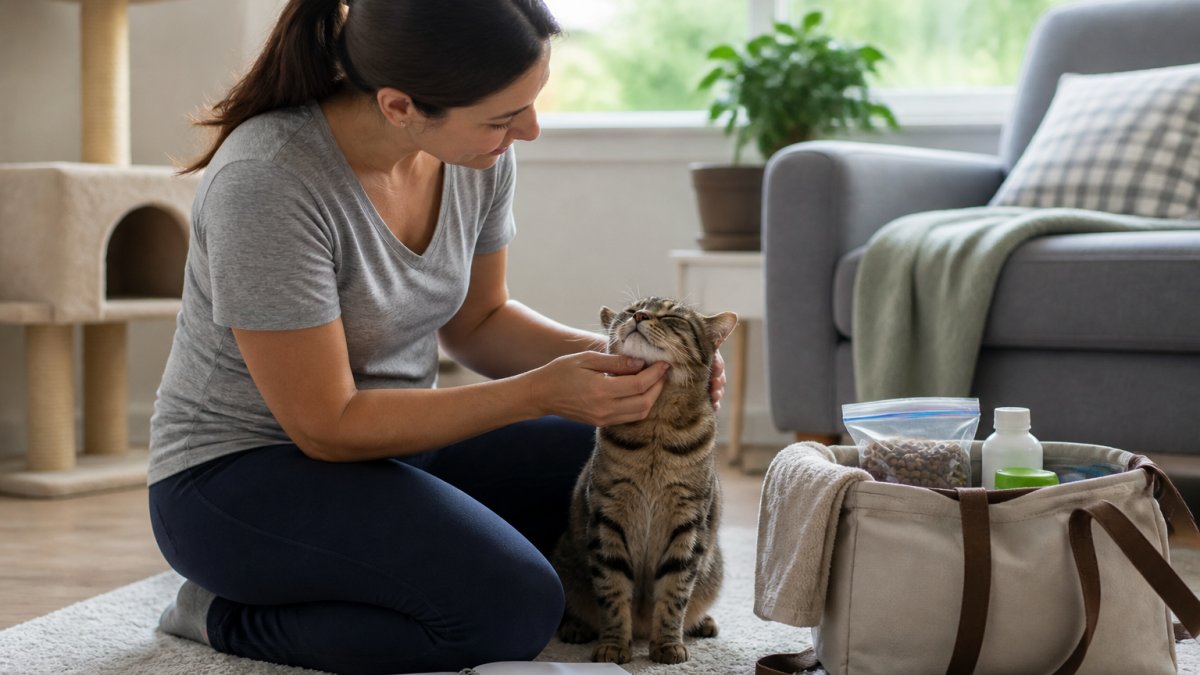
Anxious cats display hiding behavior, excessive grooming, loss of appetite, and stress signals like flattened ears or a tucked tail. Some cats become overly vocal or show aggression when frightened. Behavioral anxiety differs from medical issues, so a veterinary assessment helps rule out health problems. If your shy cat shows these signs, creating a safe space and maintaining a consistent routine can help them decompress and build confidence over time.
How long does it take for a shy cat to adjust to a new environment?
The 3-3-3 rule is a helpful guideline: three days to decompress, three weeks to settle in, and three months to feel truly at home. Every cat adjusts at their own pace depending on age, past experiences, and temperament. Patience is essential during this acclimation period. Avoid forcing interaction and instead allow your cat to approach you when ready. Consistent routines and environmental enrichment speed the process of trust building and confidence development.
How can professional pet sitting help anxious cats?
Professional pet sitting for anxious cats offers continuity of care in your cat's familiar home environment, reducing the stress of boarding facilities or unfamiliar handlers. Trained sitters understand feline anxiety and body language, allowing them to provide calm, non-threatening interactions. They maintain your cat's established routine, administer medication if needed, and monitor for stress signals. This specialized approach is especially valuable for shy cats who need consistency and a trusted presence while you travel.
Should I force my shy cat to socialize?
No. Forcing interaction increases fear and damages trust. Instead, use desensitization and positive reinforcement by allowing your cat to approach at their own pace. Reward curiosity with treats and gentle praise. Interactive play in low-pressure settings builds confidence naturally. Avoid eye contact initially and maintain a non-threatening posture. Patience and consistency matter far more than pushing socialization, which can worsen fearful behavior and delay the acclimation process significantly.
This article was written using GrandRanker