 blog
Cat Boarding vs In-Home Care: Which Is Better?
Table of Contents
- Cat Boarding vs In-Home Care: Key Differences at a Glance
- Signs of Stress in Boarded Cats: What to Watch For
- Cost of Cat Sitting vs Boarding: A Real Breakdown
- How to Prepare Your Home for a Pet Sitter
- Finding a Licensed and Insured Cat Sitter
- Medical Needs and Medication Administration
- Multi-Cat Household Dynamics and Post-Boarding Recovery
- Frequently Asked Questions
Last Updated: September 12, 2026
Cat Boarding vs In-Home Care: Key Differences at a Glance
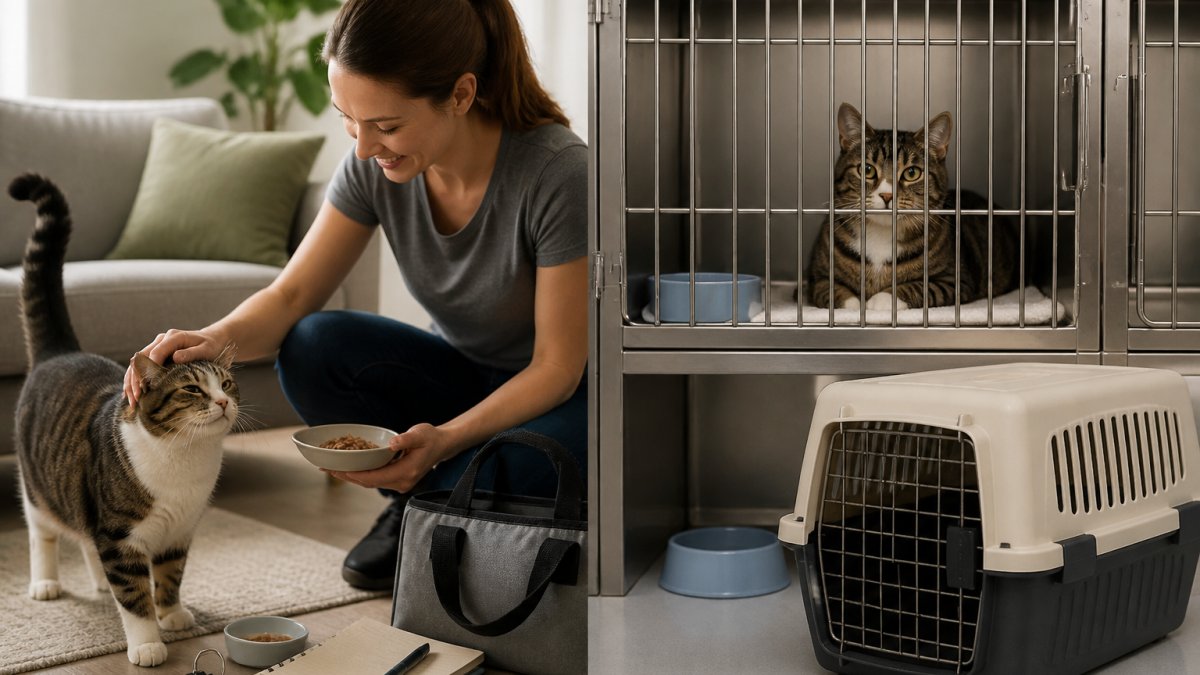
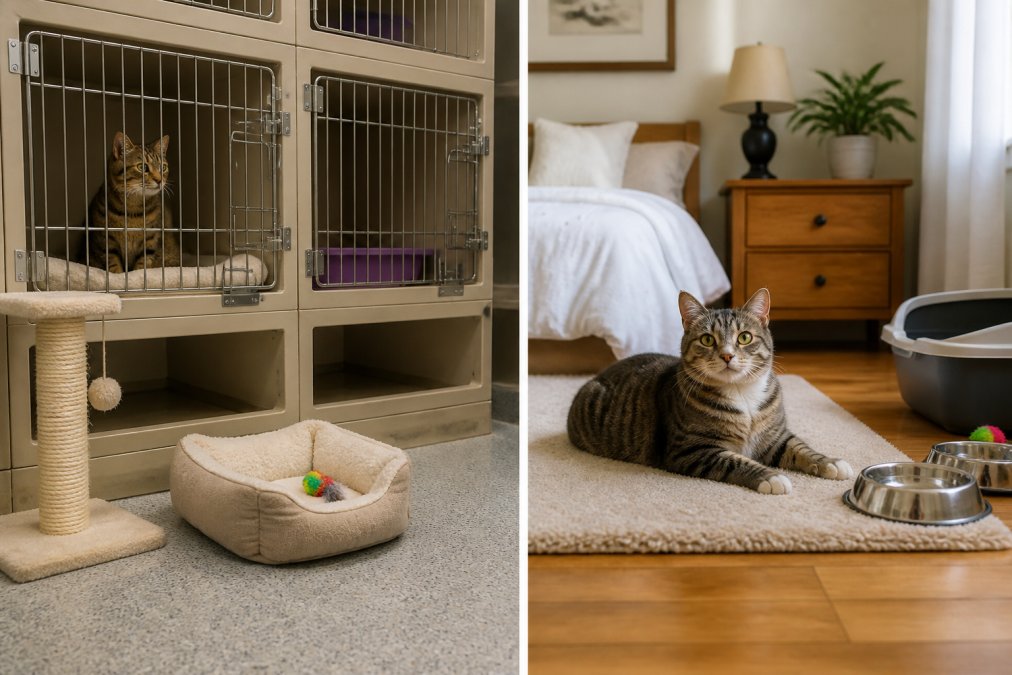
Choosing between cat boarding vs in home care comes down to one question: which option keeps your cat's stress lower while still meeting her needs? For most cats, staying in their own home wins. Feline behavior specialists at the American Association of Feline Practitioners note that cats are territorial animals who bond strongly to their physical environment, which is why a familiar setting often matters more than any other single factor.
Here is how the two options compare on the points that matter most:
| Factor | Boarding Facility | In-Home Care |
|---|---|---|
| Environment | Unfamiliar sights, sounds, smells | Cat's own territory |
| Stress level | Higher for most cats | Lower for most cats |
| Illness exposure | Shared airspace with other cats | No contact with outside cats |
| Medication handling | Staff-administered | Sitter-administered |
| Daily routine | Facility schedule | Your cat's normal routine |
| Cost structure | Nightly rate per cat | Per-visit fee |
The trade-off is real, boarding offers constant on-site supervision, while in-home care depends on the sitter you hire. That single variable determines whether in-home care works.
Signs of Stress in Boarded Cats: What to Watch For
The clearest signs of stress in boarded cats appear within 24 to 48 hours: hiding, refusing food, and eliminating outside the litter box. These signal that the environment, not the cat, is the problem.
Watch for these specific stress triggers:
- Appetite loss that lasts more than a day
- Vocalizing or pacing in the enclosure
- Over-grooming or pulling fur
- Aggression toward staff who approach
- Lethargy that replaces normal curiosity
Stress-induced illness is a genuine risk. Cats under prolonged stress can develop upper respiratory infections, cystitis, and digestive upset, often requiring veterinary supervision after pickup. A cat healthy at drop-off and sick at pickup tells you boarding was the trigger.
Cat-only rooms and quiet hours reduce some of this, but no kennel can replicate the scent markers and layout of your cat's own territory.
Cost of Cat Sitting vs Boarding: A Real Breakdown
The cost of cat sitting vs boarding depends less on the headline rate than on what each service includes. Boarding charges a nightly rate with add-ons for medication, playtime, or a private enclosure; in-home care charges a per-visit fee, and the total depends on visits per day.
Here is the structure most owners see when they price both options for a single cat on a five-day trip:
| Line item | Boarding Facility | In-Home Care |
|---|---|---|
| Base charge | Nightly rate per cat | Per-visit fee |
| Typical base range | $25-$60 per night | $20-$35 per 30-minute visit |
| Medication add-on | $5-$15 per dose or per day | Often included or a small per-visit bump |
| Playtime / one-on-one | $5-$20 per session | Included in the visit |
| Private or quiet enclosure | $10-$25 per night | Not applicable |
| Holiday surcharge | Common, often 20-50% higher | Common, often 20-50% higher |
| Multi-cat discount | Sometimes, per additional cat | Usually none needed, one visit covers all cats |
Ranges vary by market, facility type, and sitter experience. What matters is the shape of the bill: boarding stacks a nightly base with per-item extras, while in-home care charges a flat per-visit fee that bundles feeding, water, litter, and attention.
Run the math for a five-day trip with one cat:
- Boarding: five nights at the base rate, plus medication if needed, plus playtime if you want your cat handled daily, plus a private enclosure if she does not do well in a busy room. A nightly base with medication and playtime add-ons can quickly add up for the trip.
- In-home care: two 30-minute visits per day for five days. At $30.00 per visit, that is $300, and it covers meals, fresh water, litter box cleaning, and playtime or attention in every visit, with no add-on line items.
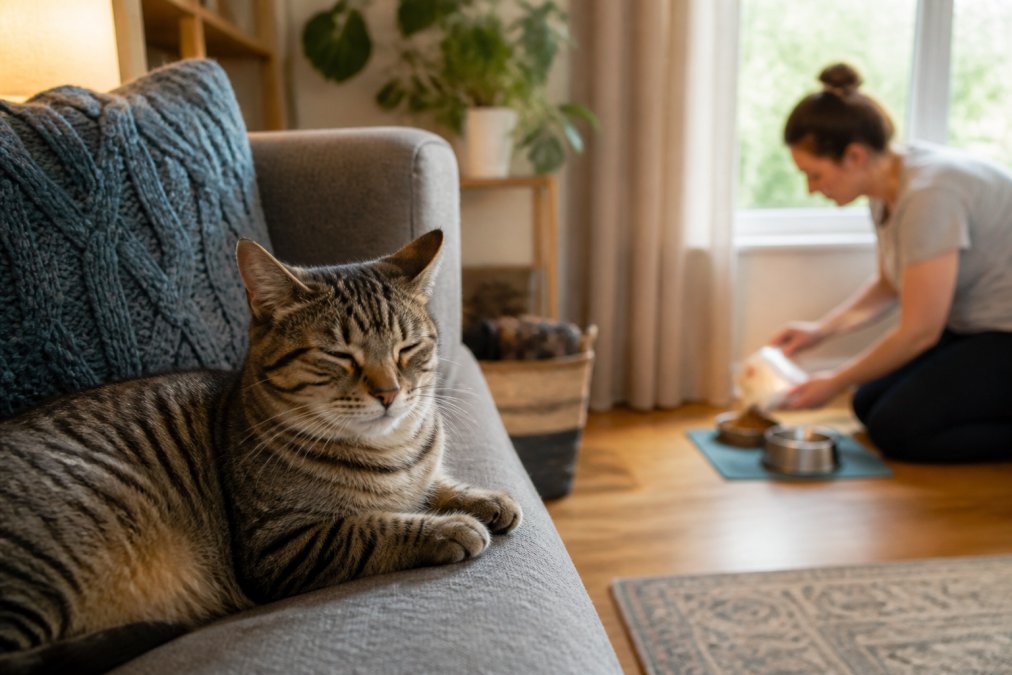
Tracy's Kitty Care charges $30.00 for a 30-minute visit including feeding, fresh water, litter box cleaning, and playtime or attention. Two visits a day for five days covers meals, litter, and companionship without the stress of a car ride and an unfamiliar cage.
The honest comparison: boarding often looks cheaper per night, but extras close the gap fast. For multi-cat households, in-home care usually wins, since most sitters charge per visit rather than per cat, a three-cat home pays the same fee whether the sitter feeds one cat or three.
Two cost traps to watch for on either side:
- Minimum-visit requirements. Some sitters require a minimum number of visits per day for cats, which raises the floor on short trips.
- Key pickup and drop-off fees. A few services charge for the initial key handoff or a lockbox setup. Ask before you book so the quote you compare is the quote you pay.
How to Prepare Your Home for a Pet Sitter
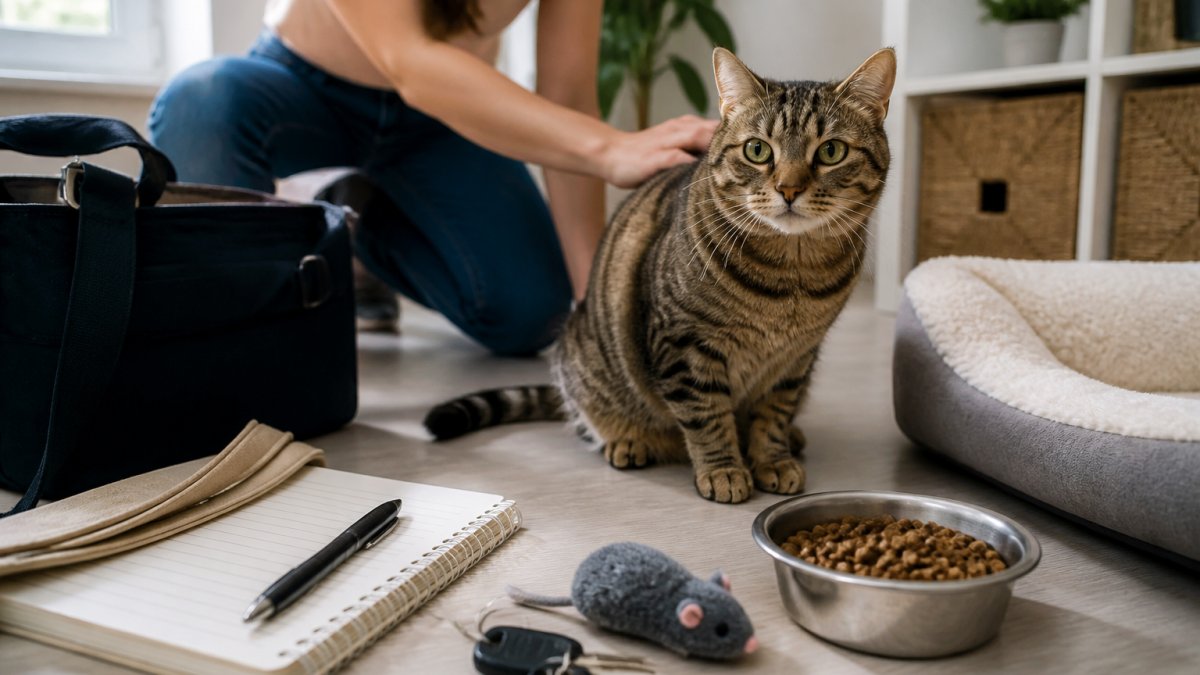
Preparing your home for a pet sitter takes about an hour and prevents most problems before they start by removing every question your sitter might guess at.
Run through this checklist before you leave:
- Leave your cat's vaccination records where the sitter can find them
- Write out the daily routine: feeding times, portion sizes, treat rules, play preferences
- Stage food, litter, and medications in one visible spot
- Test any automatic feeders or water fountains a day ahead
- Leave your vet's contact information and an emergency contact
- Note hiding spots so the sitter does not panic when your cat vanishes
- Close off rooms you do not want your cat entering
A common mistake is skipping the walkthrough. A 15-minute meet-and-greet lets your cat meet the sitter while you are still there and lets the sitter ask questions in person. For nervous cats, this single visit makes the first solo visit dramatically easier.
Finding a Licensed and Insured Cat Sitter
Finding a licensed and insured cat sitter means verifying credentials, not just reading reviews. Ask for proof of insurance and bonding, and confirm the sitter passed a background check.
What to verify before you book:
- Insurance and bonding that covers the sitter while inside your home
- Background check completed by the company, not self-reported
- Cat-specific experience, since cats and dogs require different handling
- A written service agreement covering visits, fees, and cancellation terms
- References from clients with cats similar to yours
Cats who hide from strangers need a patient approach: sitting quietly, letting the cat approach on her own terms, and never forcing interaction.
Tracy's Kitty Care builds this into every visit. All of our sitters are background-checked and the business is licensed, bonded, and insured, so the trust question is answered before the first visit, the difference between peace of mind and constant worry. You can review what a cat sitting service includes before you commit.
Medical Needs and Medication Administration
Medication administration is the biggest reason owners hesitate to switch from boarding to in-home care. The concern is fair: insulin injections, oral medications, and subcutaneous fluids require a sitter who knows what she is doing.
What matters is clear written instructions, a demonstration during the meet-and-greet, and a sitter who confirms each dose.
Senior cat care raises the stakes. Older cats with diabetes, kidney disease, or hyperthyroidism benefit from consistent routine and diet. Boarding introduces new food, stress, and handlers, all of which can destabilize a managed condition.
Before booking, confirm three things: the sitter's comfort with your cat's specific medication, a backup plan if a dose is missed, and a clear line of communication for updates.
Multi-Cat Household Dynamics and Post-Boarding Recovery
Most guides stop at the return trip. What happens in the days after is where multi-cat households feel the real cost of boarding.
Multi-cat households face a problem single-cat owners never see: non-recognition aggression. When one cat returns from boarding smelling like strange cats and disinfectant, the cats who stayed home may hiss, swat, or hide from her for days. This is territorial behavior, not a grudge, cats identify each other largely by scent, and boarding strips away the familiar smell.
The recovery timeline most owners observe:
- Hours 0-24: The returning cat hides, avoids the others, and may refuse food. The resident cats watch from a distance and may growl or block doorways.
- Days 1-3: Peak tension. Hissing, swatting, and standoffs are common. One cat may guard the litter box or the food bowl.
- Days 3-7: Scent profiles begin to blend again. You will see brief tolerance, then a setback, then more tolerance.
- Week 2 and beyond: Most bonded pairs return to normal. Sensitive cats, or pairs with a history of tension, can take longer.
A reintroduction protocol that works:
- Separate on arrival. Put the returning cat in a quiet room with her own food, water, and litter box. Do not let the others rush her at the door.
- Swap scents before faces. Rub a cloth on the returning cat's cheeks and leave it near the resident cats' feeding area. Do the reverse for her. Repeat daily.
- Feed on opposite sides of a closed door. This pairs the other cat's smell with something good, food, which is the fastest way to rebuild a positive association.
- Move to a cracked door, then a baby gate. Only advance when both sides eat calmly at the current stage.
- Supervise the first face-to-face meetings. Keep sessions short, end on a calm note, and separate again if tension rises.
When the sitter comes to your house, no cat leaves, no scent profile changes, and the household hierarchy stays intact. Everyone eats in the same spot and greets you at the door when you return.
When to call your veterinarian. Non-recognition aggression usually resolves on its own with time and scent work. Call your vet if you see any of these:
- A cat who refuses food for more than 48 hours after the trip
- Wounds from a fight that break the skin
- Litter box avoidance that lasts more than a few days
- Hiding that does not ease within a week
Post-boarding recovery can take a week or more for sensitive cats. Some hide, some over-groom, and some develop litter box avoidance that outlasts the trip. In-home care avoids this recovery period almost entirely.
Frequently Asked Questions
Is it better to board a cat or leave it at home?
For most cats, staying at home with a professional pet sitter can be less stressful than boarding. Cats are territorial and thrive in familiar environments. In-home care can help reduce the stress of travel, strange smells, and unfamiliar animals. Boarding can work for highly social cats, but it can sometimes trigger stress-induced illness and behavioral issues. Consider your cat's temperament and medical needs before deciding.
Do cats feel abandoned when boarded?
Cats may experience separation anxiety when boarded, especially if they are closely bonded to their owner. Signs include excessive vocalization, hiding, and refusal to eat. In-home care allows your cat to stay in its own territory, which can help reduce feelings of abandonment. A consistent daily routine with a familiar sitter can help maintain your cat's emotional well-being.
How does in-home cat sitting impact feline anxiety?
In-home sitting can help reduce feline anxiety because your cat remains in its familiar environment. There are no strange smells, sounds, or other animals. A pet sitter follows your cat's daily routine, including feeding and playtime, which provides stability. This consistency can help lower stress triggers and support both mental and physical health, especially for shy or senior cats.
What are the risks of boarding a cat in a kennel?
Boarding a cat in a kennel exposes it to potential risks such as stress-induced illness, territorial behavior from other cats, and exposure to infectious diseases if vaccination status is not verified. Some cats stop eating or develop upper respiratory infections. Kennels also lack the familiar environment that supports a cat's sense of security, which can lead to post-boarding behavioral recovery challenges.