 how-to
Is My Cat Stressed or Sick? Symptoms Explained
Table of Contents
- How to Tell If Your Cat Is Stressed or Sick
- Signs of Stress in Cats
- Signs of Illness in Cats
- Cat Not Eating and Hiding: Stress or Sickness?
- How to Calm an Anxious Cat
- When to Contact Your Veterinarian
- What to Record Before a Vet Visit
- Frequently Asked Questions
Last Updated: October 6, 2026
How to Tell If Your Cat Is Stressed or Sick
Telling whether your cat is stressed or sick is tricky because both cause similar stressed or sick symptoms, hiding, not eating, acting differently.
At Tracy's Kitty Care, we work daily with owners noticing sudden changes. This guide covers the signs of each, how to tell them apart, when to call your vet, and what to have ready.
Signs of Stress in Cats
Stress in cats shows up in behavior first: withdrawal, aggression, changed eating habits, or excessive grooming.
Behavioral changes and withdrawal
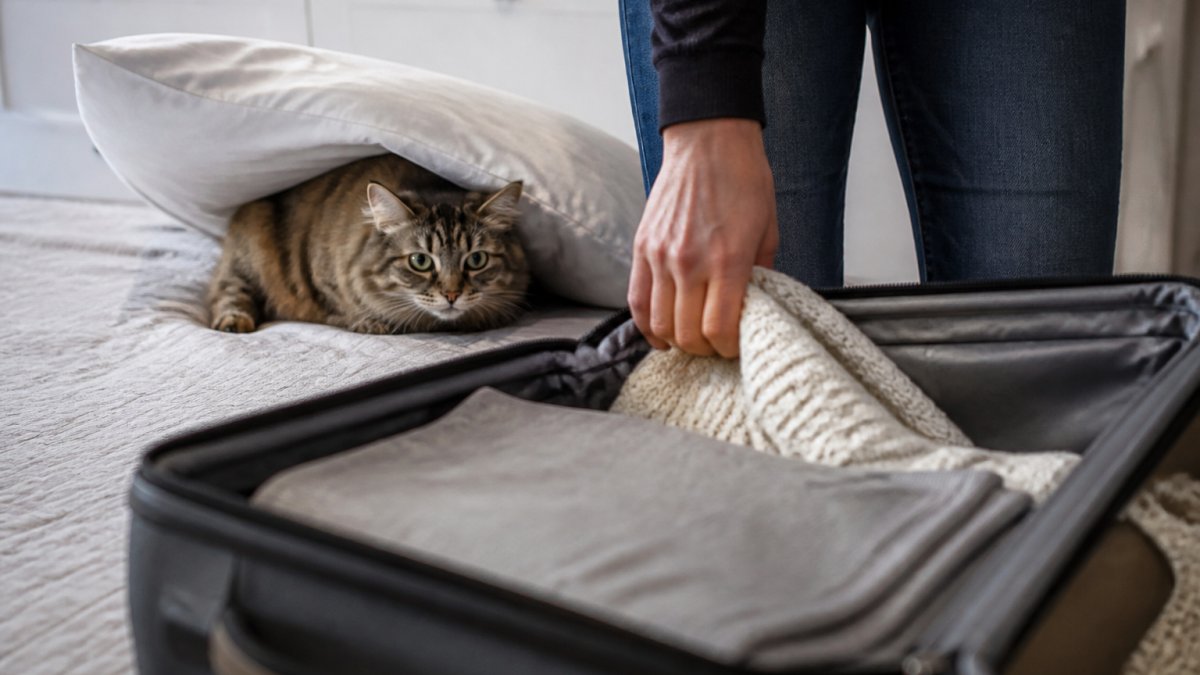
A stressed cat often hides more than usual, retreating under the bed or into a closet, avoiding family interaction and skipping playtime.
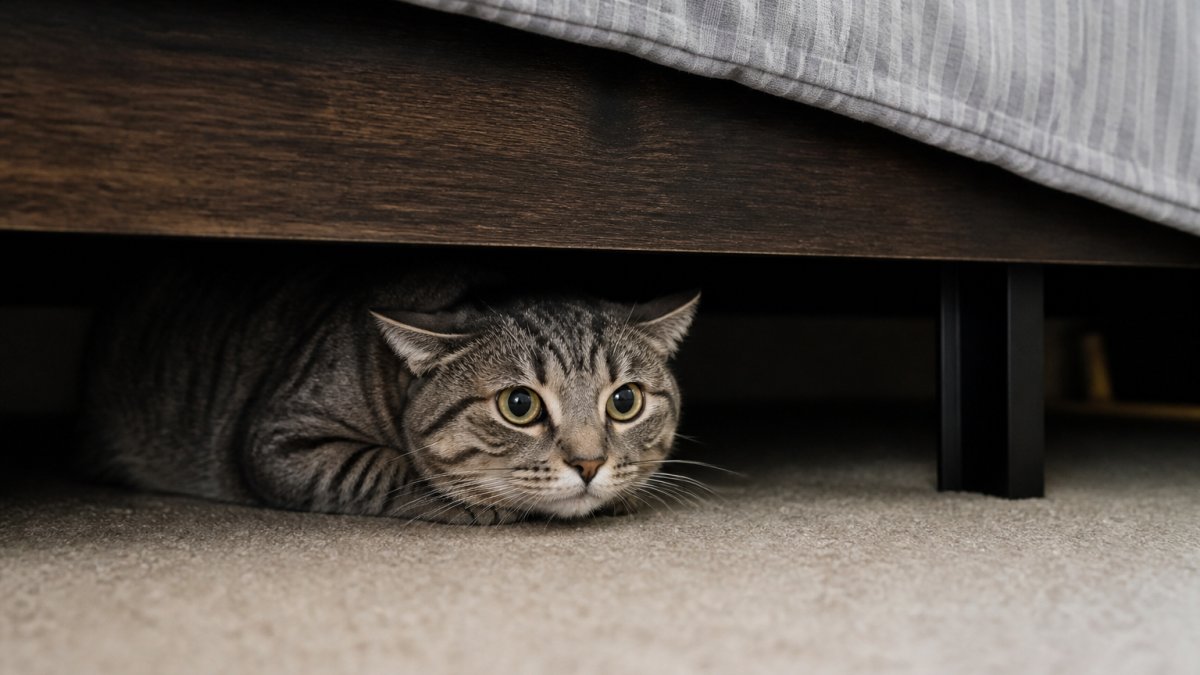
Some cats change routine: abandoning favorite spots, shifting their sleep schedule, and showing less energy or interest in interaction.
Aggression, irritability, and excessive vocalization
Stress can flip a calm cat into an irritable one that swipes or bites when touched, hisses more, and seems on edge. Some vocalize excessively, meowing constantly or crying at night.
Stress aggression differs from play: attacks are defensive, target hands or feet suddenly, and never settle into play mode. Watch reactions to routine things, petting triggers a swat, picking them up causes hissing.
Signs of Illness in Cats
Illness brings physical changes alongside behavior shifts: vomiting, a dull coat, different litter box habits.
Physical symptoms and coat changes
A sick cat's coat often suffers first, matted, unkempt, losing shine, shedding more than usual. Some overgroom one area, creating bald spots or raw skin, a pain response.
Watch for trembling or weakness: moving stiffly, wincing when jumping, resting more than usual. Other signs include eye or nose discharge, drooling, and facial or body swelling, which needs immediate attention.
Litter box changes and digestive issues
Illness often shows in the litter box first: more frequent urination, straining, or accidents outside the box can signal pain or illness.
Appetite changes happen with both, but illness usually brings weight loss, while a stressed cat may eat less yet hold weight temporarily. Some sick cats refuse food entirely; others eat but seem uncomfortable, chewing slowly or dropping food.
Cat Not Eating and Hiding: Stress or Sickness?
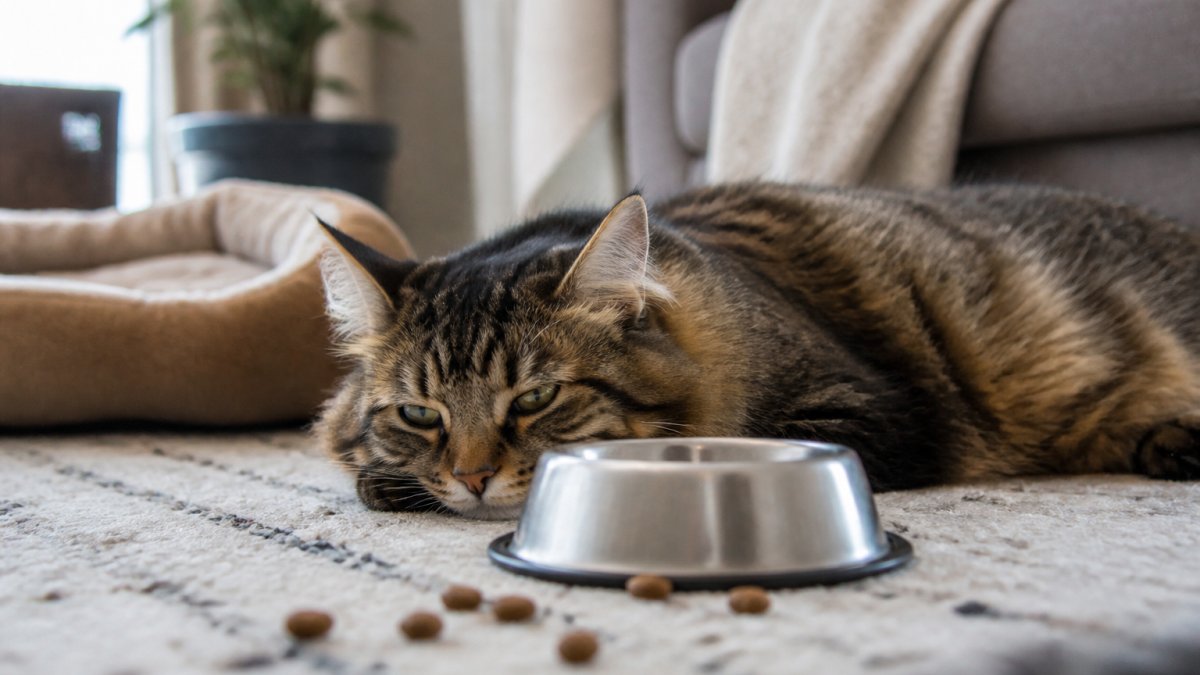
A cat that stops eating and starts hiding is the most common reason owners search for answers, and the hardest to interpret, since these stressed or sick symptoms are among the most nonspecific signs in feline medicine.
No symptom list can reliably tell you the cause, but it can help you organize what you're seeing, judge urgency, and give your vet better information.
Why these two signs overlap so much
Appetite loss is equally dual: stress suppresses it via the sympathetic "fight or flight" response, while illness suppresses it through nausea, pain, fever, or an inability to smell food.
Since the outward signs are identical, the useful question isn't "stress or illness?" but "how long, how severe, and what else is happening?"
A practical stress-versus-illness comparison
Use this as a starting point, not a diagnosis. The pattern matters more than any single row.
| Sign | More consistent with stress | More consistent with illness or pain |
|---|---|---|
| Onset | Often tied to a change (move, new pet, travel, schedule shift) | Often gradual, or sudden with no clear trigger |
| Eating | May skip a meal, then eat, especially favorite foods | Refuses even high-value treats; may approach food and walk away |
| Hiding | Comes out for you, play, or food | Stays hidden even for preferred people or treats |
| Posture | Normal when out, just more cautious | Hunched, tucked, or guarding a body area |
| Grooming | May overgroom a stress-related area | Coat looks dull, greasy, or unkempt; may stop grooming |
| Litter box | May avoid the box if it feels unsafe | Straining, frequent trips, accidents outside the box |
| Vocalization | Increased meowing, especially at night | Crying that sounds distressed, or unusual silence |
| Response to comfort | Settles when you offer calm attention | Does not settle, or seems worse when handled |
One row is not conclusive. Several rows pointing the same way, or any illness-column row plus a change in eating or litter box habits, is reason to call your vet.
The timeline that actually matters
A stressed cat's behavior shifts are usually reversible: offer a quiet room and steady routine, and within a day or two the cat eats and comes out again.
A common rule of thumb: a cat that has eaten nothing for 24 hours, or very little for 48 hours, should be seen.
If your cat is hiding and not eating, don't wait to see if it "snaps out of it." Call your vet and describe what you're seeing; they'll help you decide whether to come in now or monitor briefly.
What to do in the next few hours
- Move your cat to a quiet room with a litter box, water, and a hiding spot. Reduce noise and traffic.
- Offer a small amount of highly palatable food, such as warmed wet food or a favorite treat. Do not force-feed.
- Write down when you last saw your cat eat, drink, urinate, and defecate.
- Watch for physical signs: vomiting, diarrhea, coughing, sneezing, discharge, limping, or changed breathing.
- Call your vet with your notes: onset, duration, and what else you've seen.
If your cat eats a little and comes out within a few hours, stress is more likely, but keep watching for 24 to 48 hours. If the pattern repeats or any physical sign appears, treat it as medical until your vet says otherwise.
How to Calm an Anxious Cat
Most calming advice stops at "give them a safe space and keep a routine." Below is what actually reduces a cat's stress load and how to prevent stress rather than just react to it.
Start with the environment, not the cat
A cat's sense of safety comes from control over its territory.
Create vertical space. Cats relieve stress by getting up high.
Offer covered hiding spots. A box with a towel over it, a cat cave, or an open closet shelf gives a stressed cat somewhere to retreat.
Separate resources from litter boxes. A litter box next to the food bowl is a stressor. Keep them apart.
Reduce sensory and social pressure
Stress in cats is cumulative. A single loud event may be tolerated, but frequent noise, unpredictable visitors, or a new pet can push a cat past its threshold.
- Keep the volume down and avoid sudden loud noises. If work is happening in the home, confine your cat to a quiet room with its resources.
- Give your cat a predictable daily rhythm: feeding, play, and quiet time at roughly the same hours reduce uncertainty.
- Let your cat initiate contact. A stressed cat that is approached or picked up may become more stressed.
Use play as a stress reducer, not just exercise
Interactive play does more than burn energy: a successful hunt-and-catch sequence completes a natural behavior pattern, lowering arousal and building confidence. Aim for two 10-15 minute sessions daily, ending with a treat or small meal, this mirrors the hunt-eat-groom-sleep cycle and calms better than play that ends abruptly.
Pheromone and environmental products
Synthetic pheromone products, diffusers, sprays, and collars, mimic the facial pheromones cats deposit when rubbing against objects. Many owners report they help, and they're generally low-risk, but they work best as part of a broader plan, not a standalone fix. Place a diffuser in your cat's favorite room and give it a few days.
When to bring in your veterinarian
If stress signs persist for weeks despite environmental changes, or your cat is losing weight, overgrooming to skin damage, or eliminating outside the box, involve your vet.
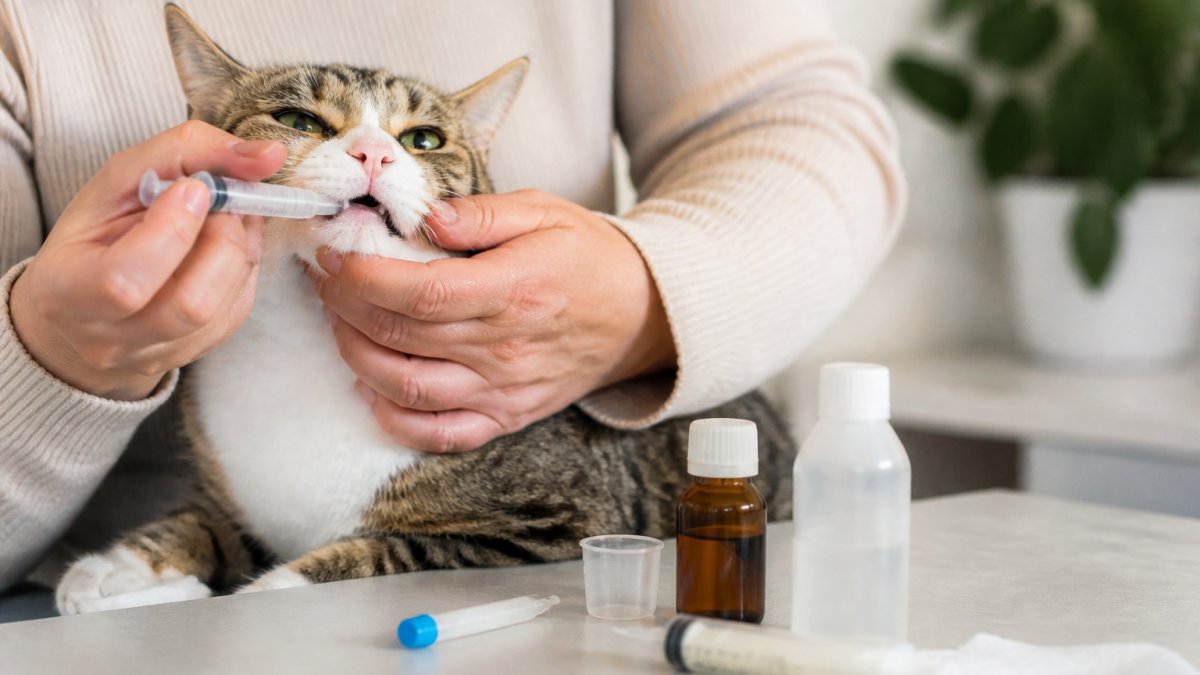
For severe or long-standing anxiety, your vet may discuss behavior-modifying medication or a veterinary behaviorist referral. Medication isn't a substitute for environmental change, it lowers arousal enough for behavior work to take hold.
Preventing stress before it starts
Prevention is where the biggest gains are.
- Plan for change. Before a move, new pet, or long trip, set up a quiet room with familiar items and let the cat adjust there first.
- Keep scent familiar. When you travel, leave a worn shirt or blanket in your cat's space, cats rely heavily on scent for security.
- Maintain routine during absences. A cat left alone with a disrupted feeding and play schedule is more likely to show stress behaviors. In-home care that keeps feeding, litter, and play on schedule reduces that disruption.
If you travel or face schedule changes, professional in-home cat sitting keeps your cat in its own territory with its own scent and routine, one of the most effective stress-prevention tools available. Tracy's Kitty Care sitters maintain feeding, play, and litter schedules in your home so your cat's environment stays predictable while you're away.
When to Contact Your Veterinarian
Some signs require immediate vet attention. Others need an appointment within a day or two.
Call your vet right away if your cat shows:
- Labored or open-mouth breathing
- Inability to urinate or defecate
- Repeated vomiting or diarrhea
Schedule an appointment within 24 hours if your cat shows:
- Loss of appetite lasting more than 12 hours
- Hiding for extended periods with other symptoms
- Excessive drooling
Monitor closely if your cat shows:
- Mild appetite decrease
- Brief hiding with normal behavior otherwise
- Minor coat changes
When in doubt, call. Your vet can assess over the phone. They'll tell you if your cat needs to be seen.
What to Record Before a Vet Visit
Preparation helps your vet diagnose faster. Write down specific observations before your appointment.
Record these details:
- When symptoms started (exact day and time if possible)
- What changes you noticed first
- Current appetite (how much, how often)
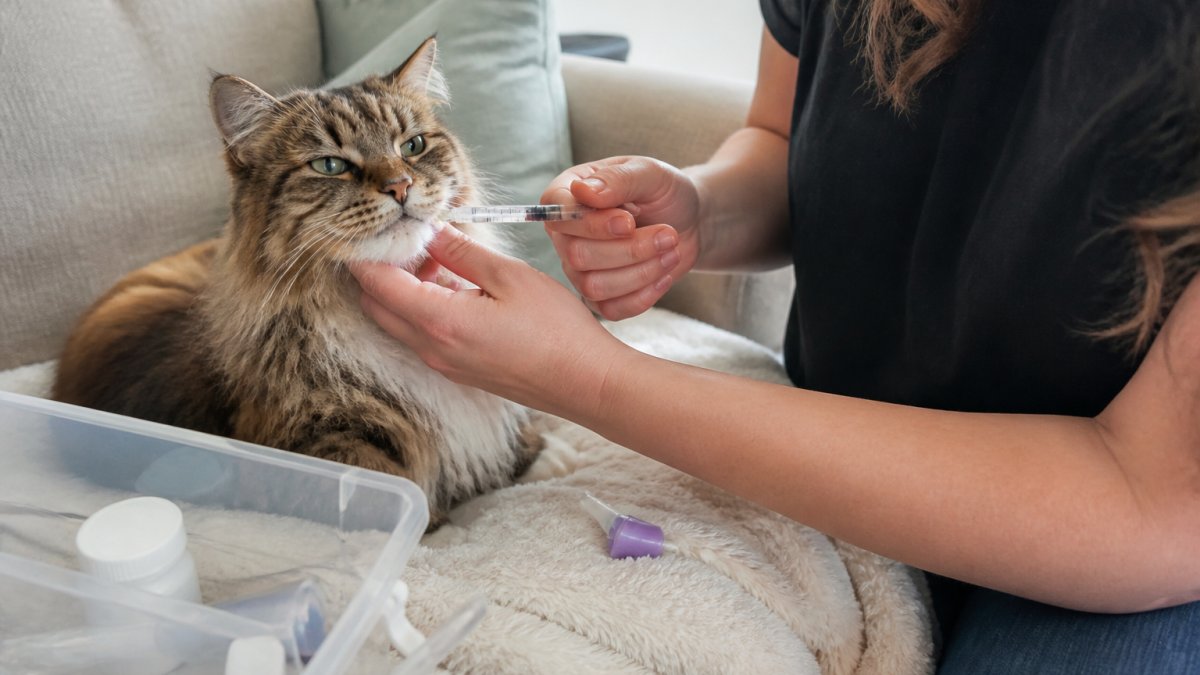
Take photos of visible symptoms, show your vet litter box contents if concerned, and bring a urine or stool sample if possible.
Describe behavior changes in detail.
If your cat has been stressed before, mention that and what triggered it, to help rule out stress-related issues.
Knowing the difference between stress and illness helps you protect your cat.
If stress is the issue, professional in-home care makes a real difference. Visit our cat sitting service to learn how we help stressed cats stay relaxed while you're away.
Frequently Asked Questions
What is the 3-3-3 rule for cats?
The 3-3-3 rule describes how long it takes a cat to adjust to a new environment: 3 days to hide and decompress, 3 weeks to learn the routine, and 3 months to feel truly at home. This rule applies when cats face major changes like moving, adoption, or boarding. Understanding this timeline helps you recognize whether your cat's withdrawal is normal adjustment stress or a sign of illness. Shy or nervous cats may take longer to settle, which is why consistent, familiar care at home reduces stress.
Can stress cause a cat to stop eating or hide?
Yes, stress commonly triggers both behaviors. Cats hide when anxious or frightened as a survival instinct, and stress can suppress appetite temporarily. However, if your cat hasn't eaten for more than 12 hours, is vomiting, or shows other physical symptoms alongside hiding and reduced appetite, contact your veterinarian. Illness also causes these signs, so the combination of factors and duration matters. Consistent in-home care helps reduce stress-related appetite loss by maintaining your cat's familiar environment and routine.
How can I tell if my cat is stressed or sick?
Stressed cats often show behavioral changes like hiding, aggression, or changes in vocalization that appear suddenly after an identifiable trigger (moving, travel, new people). Sick cats typically display physical symptoms: vomiting, diarrhea, excessive grooming, coat changes, or litter box issues. Illness often develops gradually or persists despite removing stressors. If your cat exhibits multiple signs from both categories, or if behavioral changes last more than a few days without an obvious cause, schedule a veterinary exam. Recording what you observe before your visit helps your vet distinguish between the two.
When should I take my cat to the vet for behavior changes?
Contact your veterinarian immediately if your cat stops eating, vomits, has diarrhea, shows difficulty urinating or defecating, trembles, has extremely dilated pupils, or appears to be in pain. Schedule an appointment within 24 hours if behavior changes persist for more than 3-5 days, even without physical symptoms. Sudden, severe aggression or extreme withdrawal also warrant prompt evaluation. If you're unsure, calling your vet's office to describe the symptoms helps determine urgency. Early intervention prevents minor issues from becoming serious.