 listicle
How to Choose Stain-Resistant Carpet for Pets
Last Updated: November 2, 2026
Quick Summary
Stain-resistant carpet slows how quickly liquids soak in, giving you time to blot spills from urine, vomit, and muddy paws before they set. The benefit is fewer permanent marks and easier cleanup, but it is a delay tactic, not waterproofing, and does not stop moisture from reaching the padding.
- Stain protection targets the surface and does little against moisture that reaches the backing or odor in the padding.
- Nylon is the durability leader, triexta has built-in stain protection, and polyester wins on softness and price.
- Choose low pile height and a moisture-resistant pad so pet accidents do not reach the subfloor.
- Loop pile can be risky in cat households because a claw can pull a loop and start a run.
- Many stain warranties exclude pet urine or limit coverage to one incident per square yard.
Table of Contents
- What Stain-Resistant Carpet for Pets Actually Protects Against
- Fiber Comparison: Nylon, Triexta, and Polyester for Pet Households
- The Best Carpet for Pets That Pee: Moisture, Odor, and Padding
- The Best Carpet for Pets and High Traffic: Durability and Wear Resistance
- Pet-Friendly Carpet Brands and How to Verify Their Claims
- Comparing Warranties and Exclusions Before You Buy
- Pet Carpet Cleaning Tips and a Practical Accident-Cleanup Protocol
- Booking Trusted Care So Your Carpet Survives Your Next Trip
- Frequently Asked Questions
What Stain-Resistant Carpet for Pets Actually Protects Against
Stain-resistant carpet is flooring engineered with fiber treatments or built-in protection that slows how quickly liquids soak in, giving you time to blot a spill before it sets.
Here's what most guides get wrong. Stain resistance is a delay tactic, not a shield. It buys you minutes, not immunity.
Stain-resistant carpet can help in cat households, but it has limits worth understanding.
Where the Protection Stops
Stain protection targets the surface. It does little against the things that actually ruin pet carpet: moisture that reaches the backing, odor that settles into padding, and wear from claws and traffic.
- Surface treatment resists spills and makes blotting easier.
- Built-in fiber protection lasts longer than a topical spray but still fades with heavy cleaning.
- Neither stops urine from wicking into padding if it sits.
Watch out: treating stain resistance as waterproofing is the most common and costly mistake. A cat that pees repeatedly in the same corner will defeat any surface treatment once the moisture reaches the pad.
Fiber Comparison: Nylon, Triexta, and Polyester for Pet Households
The fiber decides most of the outcome. Nylon, triexta, and polyester each behave differently around claws, spills, and traffic, and the right pick depends on your cat more than the showroom.
| Fiber | Stain Resistance | Durability | Best For |
|---|---|---|---|
| Nylon | Strong with treatment | Highest resilience | High-traffic homes |
| Triexta | Built-in, hardwearing | Very good | Busy households with pets |
| Polyester | Good, soft feel | Moderate | Low-traffic, budget rooms |
Nylon Carpet for Pets
Nylon is the durability leader. It resists crushing and bounces back under foot traffic, which matters in hallways and living rooms. Most nylon relies on a topical stain treatment, so protection depends on how well it's maintained. It's a strong choice for claws and wear, though it usually costs more than polyester.
Triexta Carpet for Pets
Triexta has built-in stain protection woven into the fiber itself, so it doesn't wash away the way topical treatments can. It handles spills and everyday messes well and holds up to traffic. The trade-off is that it can be harder to find in every color and style, and it isn't the cheapest option.
Polyester Carpet Considerations
Polyester wins on softness and price. It feels plush and comes in deep colors that hide marks. The catch: it's less resilient than nylon, so it can mat in high-traffic spots and show wear sooner. For a quiet bedroom or a low-traffic space, it's a sensible pick.
If you're weighing how different floors handle claws overall, our guide on what flooring holds up best to cat claws breaks down the trade-offs.
The Best Carpet for Pets That Pee: Moisture, Odor, and Padding
The best carpet for pets that pee combines moisture resistance at the surface with a padding and backing setup that keeps accidents from reaching the subfloor.
Urine is the real enemy. It soaks through the carpet face, hits the padding, and can reach the subfloor, where odor lingers.
What we'd prioritize:
- Low pile height so there's less fiber for liquid to travel through.
- A moisture-resistant pad rather than a sponge-like one.
- Tight construction that resists wicking.
Odor prevention starts with speed. The longer urine sits, the deeper it travels and the harder odor control becomes.
The Best Carpet for Pets and High Traffic: Durability and Wear Resistance
Durability comes down to fiber resilience and construction, not the stain label.
High-traffic areas take a double hit: foot traffic flattens the pile, and claws catch on loops and snag them.
Wear resistance also depends on density. A denser carpet with more fiber per square inch stands up longer than a loose, fluffy one, even if both carry the same stain claim.
Two practical habits protect your investment. Trim your cat's claws regularly, and vacuum often to lift grit that grinds fibers down. For more on keeping a textured, durable carpet clean, see our steps on removing pet hair from textured carpet, and if snags are your worry, these ways to prevent carpet snags from cat claws help.
Pet-Friendly Carpet Brands and How to Verify Their Claims
Pet-friendly carpet brands make bold claims, and the labels are not all equal. Verifying a claim means reading past the marketing and checking what the manufacturer actually guarantees.
Ask these questions before you buy:
- What exactly is covered? Stain, soil, wear, or all three?
- Is the protection built-in or applied? Built-in lasts longer.
- What voids the warranty? Most require professional cleaning on a schedule.
A "pet-proof" label means little without a warranty that backs it. The Federal Trade Commission's guidance on advertising claims requires marketers to substantiate claims, so a brand should be able to explain what its protection actually does.
Comparing Warranties and Exclusions Before You Buy
Warranties are where the real value hides, and exclusions are where most buyers get surprised. A generous stain warranty can be hollow if the fine print excludes the exact mess your cat makes. The unique angle most buying guides skip: treat the warranty as a contract you are pricing, not a badge on the sample.
Read the exclusions before the coverage
Manufacturers generally structure carpet warranties around four separate claims, stain, soil, wear, and texture retention, and each has its own rules. A "lifetime stain warranty" may say nothing about wear, and a wear warranty may say nothing about stains. Ask which claim applies to the problem you actually have.
The exclusions to hunt for first:
- Pet urine. Many stain warranties exclude urine, or limit coverage to one incident per square yard. Ask the salesperson to point to the exact clause.
- Improper cleaning. Most warranties require professional hot-water extraction on a set schedule, often every 12 to 18 months, and require you to keep receipts. Miss a cycle and the claim can be denied.
- Do-it-yourself treatments. Some warranties void coverage if you use off-the-shelf spot cleaners or apply your own protector. Check whether the brand sells an approved cleaner and whether using a different one matters.
Compare the cleaning requirements, not just the term
A "25-year" or "lifetime" label tells you little without the maintenance schedule attached. Two warranties with the same term can demand very different upkeep. Compare them on:
- Required cleaning frequency, annual, every 18 months, or on a manufacturer-set schedule.
- Approved cleaning methods, hot-water extraction versus dry cleaning versus encapsulation.
- Who must do the cleaning, a certified professional versus any licensed cleaner.
A common pattern is that a lower-priced carpet carries a stricter warranty, so the savings get eaten by required professional cleanings. A pricier carpet with simpler terms can cost less over its life. Price the cleaning schedule into the purchase before you decide.
Verify the claim, not the label
A "pet-proof" or "pet-friendly" label means little without a warranty that backs it. The Federal Trade Commission's guidance on advertising claims requires marketers to substantiate claims, so a brand should be able to explain what its protection actually does and point to the clause that covers it.
Watch out: a warranty that requires professional cleaning every 12 months can quietly cost more than the stain upgrade itself over a decade, factor that schedule into the budget before you sign.
Pet Carpet Cleaning Tips and a Practical Accident-Cleanup Protocol
Fast, correct cleanup is what makes stain-resistant carpet worth the money. The quicker you blot, the less the accident spreads and the less odor sets in.
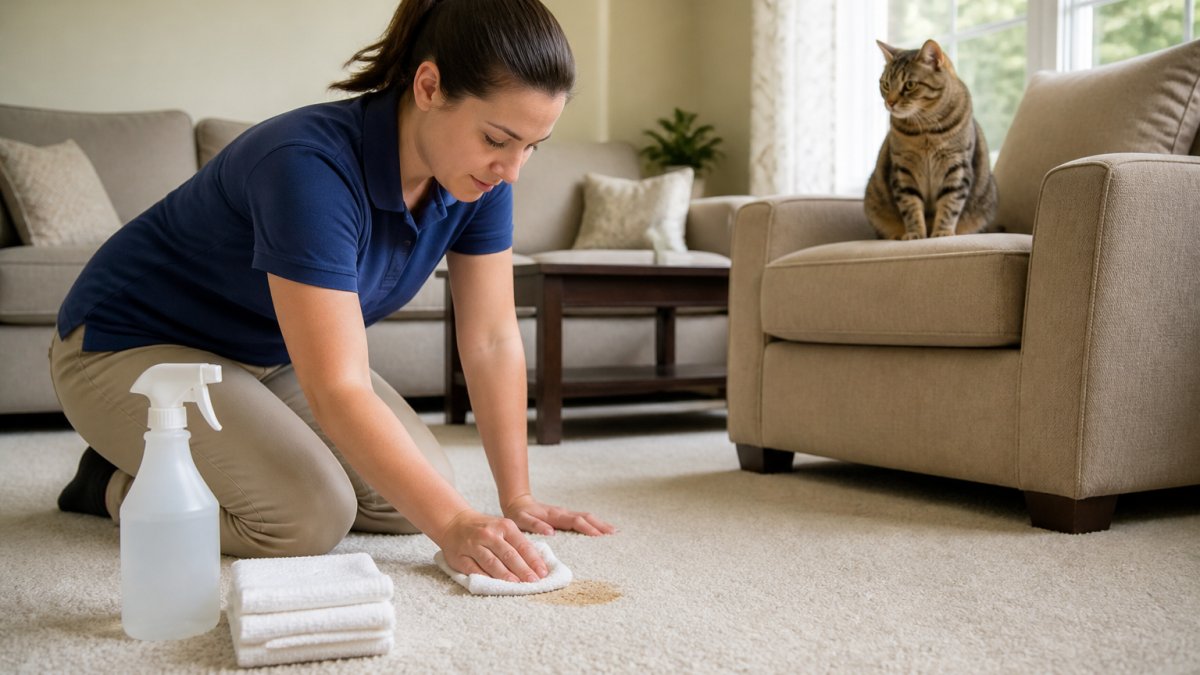
The cleanup protocol, step by step
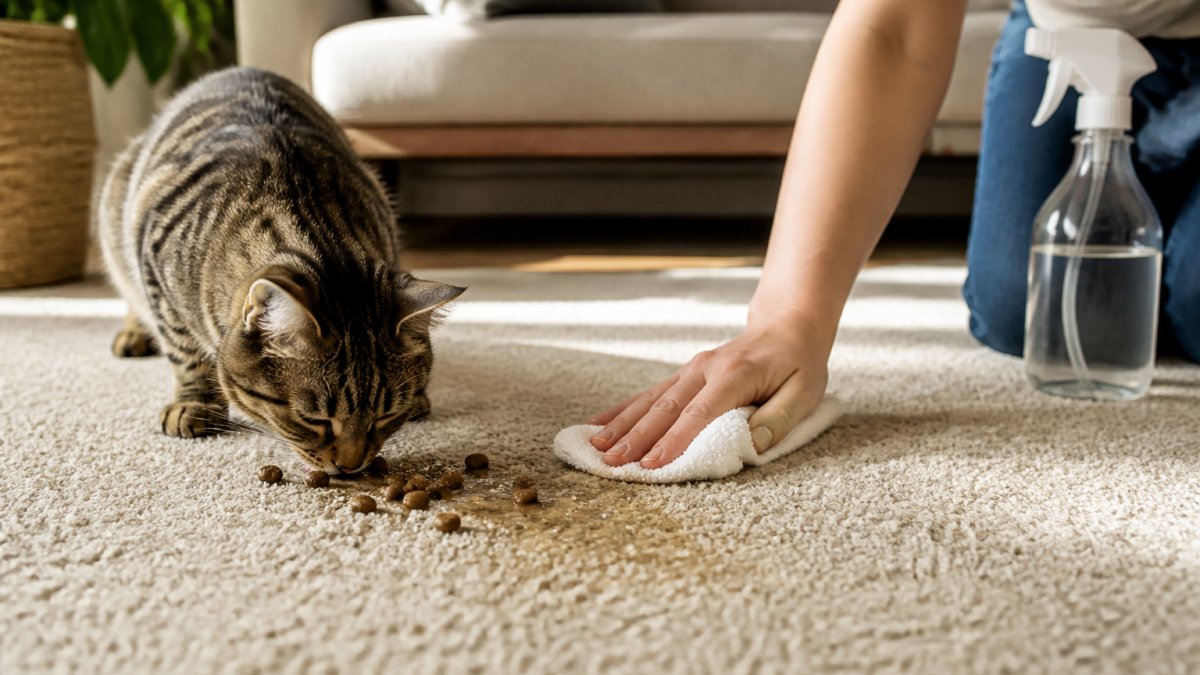
- Lift solids first. Scoop up anything solid with a paper towel or spoon before blotting. Solids pushed into the pile are harder to remove than solids lifted off it.
- Blot, don't rub. Press a clean white cloth straight down to lift liquid. Rubbing pushes liquid sideways and deeper into the backing. Work from the outside of the stain inward so you don't spread it.
- Flush with clean water. Apply a small amount of cool water, blot, and repeat two or three times to dilute residue. Residual cleaner attracts dirt and can leave a sticky patch that soils faster.
- Use an enzyme cleaner for urine. Enzymes break down the odor source rather than masking it. Follow the dwell time on the label, usually several minutes, and blot rather than scrub.
- Dry thoroughly. Blot dry, then air the room or use a fan. Trapped moisture is what feeds mildew and keeps odor alive.
- Check the pad. Press a dry paper towel into the spot and step on it. If the towel comes up damp or smells, the urine reached the padding and surface cleaning won't fix it.
Why heat and harsh products backfire
Heat sets protein-based stains, urine, vomit, and blood, by bonding them to the fiber, which is why steam cleaning a fresh accident can make it permanent. Use cool water on fresh messes and save hot-water extraction for routine deep cleaning after the spot is gone. Harsh cleaners, bleach, and too much water can also strip the topical stain treatment and damage the backing, so test any product on a hidden spot first.
Choosing a pet-safe cleaner
Look for enzyme-based formulas labeled for pet stains and check the label for the surface it's approved on. Our detailed 7-step deep clean for pet-stained carpet walks through tougher, set-in stains.
Watch out: if the spot still smells after it dries, the urine reached the pad, surface cleaning won't fix it, and the padding may need to be pulled, treated, or replaced.
Booking Trusted Care So Your Carpet Survives Your Next Trip
The best carpet still needs someone to handle accidents while you're away. A cat left alone too long, or a sitter who misses a mess, can undo months of careful upkeep.
Tracy's Kitty Care specializes exclusively in cats, with background-checked sitters who are licensed, bonded, and insured.
For travel planning, our guide on hiring a reliable cat sitter for vacations covers the steps to vet a sitter before you go.
Frequently Asked Questions
Is pet-resistant carpet worth it compared with regular carpet?
For most pet households, yes. Stain-resistant carpet adds a surface treatment or built-in fiber protection that buys you time to blot spills before they set, and it resists the everyday wear that claws and traffic cause. The value shows up over years: fewer permanent marks, less scrubbing, and a longer stretch before replacement. The catch is that no treatment is permanent, and protection fades with heavy cleaning and foot traffic. Budget for professional cleaning and check the warranty terms before you assume the carpet will handle everything.
Does stain-resistant carpet prevent pet stains and urine odor?
It slows them down but does not prevent them. Stain-resistant carpet for pets repels surface spills long enough for you to blot them, but urine soaks through the face fibers into the backing and padding, where most odor lives. If liquid reaches the pad, the carpet's top treatment cannot help. That is why the best carpet for pets that pee combines moisture resistance with a quality pad and quick cleanup. Pull up and replace soaked padding when accidents are frequent, and use an enzyme cleaner rather than a steam clean alone.
How long does stain-resistant carpet protection last?
Most mill-applied treatments hold up for several years under normal use, but the protection wears faster in high-traffic paths and after repeated hot-water extraction. Vacuuming regularly and blotting spills instead of scrubbing extends it. Some manufacturers allow reapplication of a protective treatment during professional cleaning, and a few tie warranty coverage to having that done. Ask your installer which treatments your specific carpet uses and whether reapplying them is part of the maintenance schedule.
What should I check in a pet warranty before buying carpet?
Read the exclusions first. Many stain warranties cover food and beverage stains but exclude pet urine, vomit, and feces, and most void coverage if you use a cleaning product the manufacturer has not approved. Look for language on matting and crush resistance, since high-traffic areas are where pet carpet fails first. Keep receipts for professional cleaning if the warranty requires it. A generous-sounding warranty with pet accidents excluded is worth less than a modest one that covers the wear your cat actually causes.
Choosing stain-resistant carpet for pets is really about matching fiber and construction to your cat's habits, then backing it with fast cleanup and reliable care. If you want your carpet to survive your next trip, get started with Tracy's Kitty Care and book trusted, background-checked in-home cat sitting that keeps accidents from becoming permanent.