 how-to
How to Remove Pet Hair from Textured Carpet: 7 Steps
Last Updated: October 23, 2026
Quick Summary
To remove pet hair from textured carpet, work in three phases: loosen the fibers dry, lift the hair with a targeted tool, then collect it before it resettles. Start with a crevice tool along edges, use a rubber broom on cut-pile, and vacuum in two crossing directions.
- Skip moisture at first, since damp carpet turns loose hair into a matted layer that clings harder.
- Turn the brush roll off entirely on looped or Berber-style carpet to avoid permanent snags.
- Overlap each vacuum pass by about half the head width and move slowly rather than pressing harder.
- Sprinkle baking soda on furniture footprints, let it sit several minutes, brush it in, then vacuum slowly.
- Vacuum high-traffic areas twice a week and keep a rubber broom by the door for quick passes.
Table of Contents
- What You'll Need Before You Start
- Step-by-Step: How to Remove Pet Hair from Textured Carpet
- Matching Methods to Textured, High-Pile, Looped, and Shag Carpets
- Tool Safety and Carpet Compatibility
- Troubleshooting Stubborn or Deeply Embedded Hair
- Prevention and Routine Maintenance
- Conclusion
- Frequently Asked Questions
What You'll Need Before You Start
Removing pet hair from textured carpet is a physical job, and the right tools do most of the work. Textured and high-pile carpets trap hair deep in the fibers, so a single pass with a vacuum rarely solves the problem. Technique matters as much as the tool.
Gather these items first:
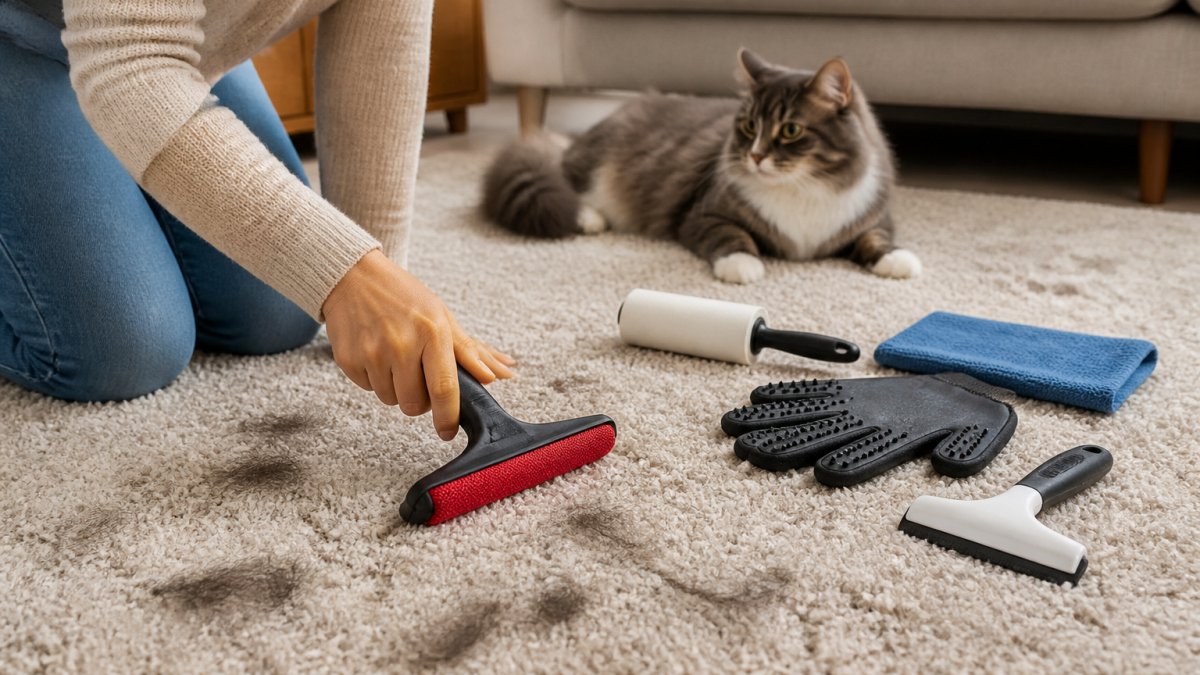
- A vacuum with strong suction and a brush attachment
- A rubber broom or rubber squeegee
- A spray bottle for water
- A carpet rake or brush
- Baking soda
- Rubber gloves
- A lint roller or damp paper towel
You do not need every item for every job. But having them ready saves trips to the closet mid-clean.
Step-by-Step: How to Remove Pet Hair from Textured Carpet
The best way to remove pet hair from textured carpet is a ranked, three-phase workflow: loosen the fibers dry, lift the hair with a targeted tool, then collect it before it resettles. The order matters because textured pile traps hair at different depths, and skipping a phase pushes hair deeper instead of removing it. Work through the phases below in sequence, and repeat the full cycle only on problem zones.
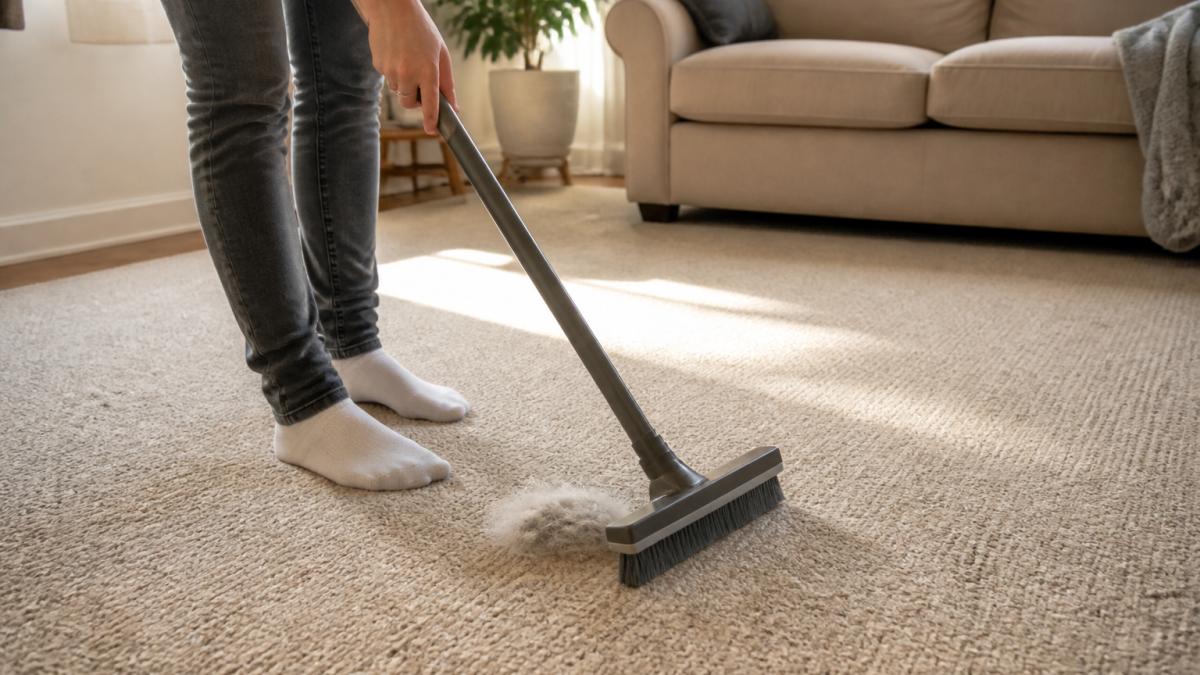
Phase 1, Dry Loosening (do this first, every time)
Start dry. Moisture on a hair-loaded carpet turns loose hair into a matted layer that clings harder.
- Clear the surface with a crevice tool. Run the crevice attachment along baseboards, stair nosings, and furniture edges first. Hair accumulates at these hard edges, and a wide floor head pushes it back into the room instead of picking it up.
- Set the vacuum for your pile height. On plush or high-pile textured carpet, lower the beater bar so the bristles graze the surface without digging in. On looped or Berber-style carpet, turn the brush roll off entirely, a spinning beater bar catches loops and pulls them into permanent snags.
- Make one slow pass with the wide floor head. Slow passes matter more than suction strength: a fast pass skims the tips of the fibers, while a slow pass lets airflow pull hair out of the pile. Overlap each pass by about half the head width.
Phase 2, Targeted Lifting (match the tool to the texture)
This is where textured carpet separates from low-pile. The tool you choose depends on pile height and loop structure.
- Rubber broom or squeegee (textured and cut-pile): Drag in short, firm strokes across the pile. Rubber creates friction that grabs fine, static-charged hair a vacuum misses. Push collected hair into a pile and pick it up by hand. This is the highest-yield single tool on cut-pile textured carpet.
- Carpet rake (high-pile and shag): Use a rake with stiff, angled tines and pull in one direction, then the opposite way. This lifts embedded hair and fluffs crushed fibers. On shag, choose a wide-tooth rake, narrow metal tines catch and tear long fibers.
- Damp cloth or rubber glove (fine, static hair): Lightly mist a small section, then rub with a damp paper towel or a rubber glove. The moisture helps hair cling to the cloth instead of floating away. Do not soak the carpet; a light mist is enough, and spot-test on a hidden patch first.
Phase 3, Collection and Reset
- Vacuum in two crossing directions. Run the vacuum north to south, then east to west. Crossing directions lifts hair that settled at different pile angles, a single direction leaves a stripe of missed hair.
- Finish with a slow brush-attachment pass. The brush attachment agitates the surface and catches the last fine hairs the floor head leaves behind.
- Repeat the full cycle only on problem zones. Most textured carpet clears in one cycle; high-traffic lanes and pet nap spots often need two. If a zone still sheds hair after two cycles, move to the troubleshooting fixes below rather than scrubbing harder, pressure pushes hair deeper into the pile.
Matching Methods to Textured, High-Pile, Looped, and Shag Carpets
Different carpet styles need different handling. A method that works on low-pile carpet can damage shag or snag looped fibers. Here is how to match the tool to the carpet:
| Carpet Type | Best Tool | Watch Out For |
|---|---|---|
| Textured | Rubber broom plus vacuum | Fiber snagging |
| High-pile | Carpet rake, low beater bar | Beater bar tangling |
| Looped | Beater bar off, soft brush | Pulled loops |
| Shag | Wide-tooth rake, hand pick | Rake teeth catching |
Textured carpet hides hair well, so use the rubber broom first. High-pile needs gentle suction and slow passes. Looped styles demand the beater bar off. Shag takes patience and a wide-tooth rake.
Tool Safety and Carpet Compatibility
Not every tool is safe on every carpet. A stiff metal rake can pull loops and leave snags. High suction on a delicate rug can fray edges. Test any new tool on a hidden corner first.
Keep these safety points in mind:
- Never use a beater bar on looped or Berber carpet
- Avoid sharp metal tines on wool or delicate rugs
- Keep the vacuum moving; holding it still can crush pile
- Spot-test moisture methods on a hidden patch
- Clean vacuum filters often so suction stays strong
Troubleshooting Stubborn or Deeply Embedded Hair
Some hair refuses to budge, and the fix depends on where it is trapped and why the normal workflow failed. Diagnose before you escalate: scrubbing harder pushes hair deeper into the pile and crushes the fibers. Use the location-based fixes below, then escalate only if the hair survives a second full cycle.
Diagnose by location
- Corners and baseboard edges: Hair packs into the gap between carpet and wall where a floor head cannot reach. Switch to the crevice tool, then follow with a rubber squeegee pressed into the corner at a 45-degree angle to drag hair out along the edge.
- Stairs and nosings: Hair wraps around the front edge of each tread. Work the crevice tool along the nosing, then use a rubber glove or damp cloth on the tread face. Avoid a beater bar here, it can catch the nosing and fray the edge.
- Furniture footprints and dense pile: Hair compacts under legs and in high-traffic lanes. Sprinkle baking soda over the area, let it sit several minutes so the powder grips the hair and adds friction, brush it in with a stiff brush, then vacuum slowly. Repeat on stubborn patches.
- Looped and Berber-style carpet: Hair trapped between loops will not release with suction alone. Use a soft brush or rubber squeegee with short strokes with the loop direction, never against it, and keep the beater bar off.
Escalation ladder (stop at the first step that works)
- Repeat the full three-phase workflow on the problem zone, dry loosen, targeted lift, cross-direction vacuum. Many stubborn patches clear on the second cycle.
- Increase friction, not pressure. Switch to a rubber squeegee with firm, short strokes, or mist lightly and rub with a rubber glove. Friction lifts hair; pressure buries it.
- Work against the pile direction with a carpet rake, then vacuum slowly with the brush attachment.
- Let baking soda sit longer before brushing, several minutes rather than a quick dusting, so it has time to grip embedded hair.
- Hand-pick the last fibers on shag or delicate rugs where tools risk snagging. Patience beats force every time.
Prevention and Routine Maintenance
Stopping hair before it settles is easier than removing it later. A simple routine keeps textured carpet cleaner between deep cleans. Brush your cat regularly to cut loose hair at the source. If you're getting ready to travel, our how to prepare your cat for a sitter checklist helps you get the home and cat ready before you leave. Place mats at doorways and near favorite nap spots.
For cat owners who want a calmer home, our guide on how to create a stress-free environment for cats pairs well with a regular cleaning routine. Less stress often means less shedding and less mess.
Quick maintenance habits:
- Vacuum high-traffic areas twice a week
- Keep a rubber broom by the door for quick passes
- Wash cat beds and blankets weekly
- Groom your cat a few times a week
- Refresh baking soda on problem spots monthly
Conclusion
Pet hair in textured carpet is a stubborn problem, but the right sequence solves it. Loosen the fibers, lift the hair, and collect it before it settles again. The EPA's guidance on indoor air and pet dander is a good reminder that clean carpets support a healthier home for you and your cat.
When travel or a busy schedule keeps you from staying on top of things, Tracy's Kitty Care can help. Our background-checked, licensed, bonded, and insured sitters care for cats in their own homes, so your cat stays calm and your routine stays intact.
Get started with Tracy's Kitty Care and give your cat reliable, trusted care while you're away.
Frequently Asked Questions
What removes pet hair from textured carpet?
A combination of a vacuum with strong suction, a rubber broom or squeegee, and a carpet rake removes most pet hair from textured carpet. Start by vacuuming with a motorized brush, then use a rubber tool to gather loose hair, and finish with a rake for embedded strands. For fine cat hair, a light mist of water helps hairs cling together before vacuuming. Always test tools on a hidden area first to avoid damaging fibers.
How do you get embedded pet hair out of carpet?
Embedded hair needs mechanical agitation before vacuuming. Use a carpet rake or rubber broom to loosen fibers, then sprinkle a small amount of baking soda to reduce static and help hairs release. Vacuum slowly in multiple directions with a brush roll. For stubborn spots, place a damp paper towel over the area, press with a rubber roller, and peel away. Repeat until no hair lifts. Avoid excessive moisture on textured carpet.
Do carpet rakes work on textured carpet?
Yes, carpet rakes work well on textured and high-pile carpets when used gently. Choose a rake with flexible, rounded tines to avoid snagging loops. Work in short strokes along the pile direction, then against it to lift embedded hair. Rakes are especially useful for shag and frieze styles where vacuum brushes cannot reach deep. Test on a small area first and avoid pressing too hard, which can distort the pile.
Should you vacuum before or after using a carpet rake?
Vacuum first to remove loose hair and debris, then use a carpet rake to loosen embedded strands, and vacuum again to collect what the rake lifts. This two-pass approach is more effective than either tool alone. For best results, vacuum in multiple directions on the second pass. If you use a rubber broom, follow the same order: vacuum, agitate, vacuum. This sequence also reduces wear on your vacuum filter.