 how-to
7 Ways to Prevent Carpet Snags From Cat Claws
Last Updated: October 25, 2026
Quick Summary
Preventing carpet snags from cat claws comes down to three habits: trim claws every two to three weeks to blunt the tips, add tall stable scratching posts near the spots your cat already targets, and snip any loose loop flush with sharp scissors instead of pulling it. Loop pile like Berber snags far more than cut pile, so choose tight, low-pile cut carpet in cat homes.
- Loop pile carpet snags far more than cut pile because every uncut loop is a target for a claw tip.
- A vertical scratching post should be at least as tall as your cat can reach, often 30 to 36 inches.
- A wobbly post gets abandoned, so weigh down or anchor the base before your cat loses interest.
- Never pull a snag, because pulling tightens the run and makes it longer.
- Walk each room weekly to snip loose loops, check high-risk edges, and confirm posts are stable.
Table of Contents
- Why Cat Claws Catch in Carpet (and What It Costs You)
- How to Stop Cats From Scratching Carpet
- Picking the Right Cat Scratching Post for Carpet Scratchers
- How to Trim Cat Claws Safely
- When a Claw Is Caught: Safe Steps to Free Your Cat
- How to Fix a Berber Carpet Snag
- Room-by-Room Prevention Checklist
- Booking Cat Care That Protects Your Home
- Frequently Asked Questions
Why Cat Claws Catch in Carpet (and What It Costs You)
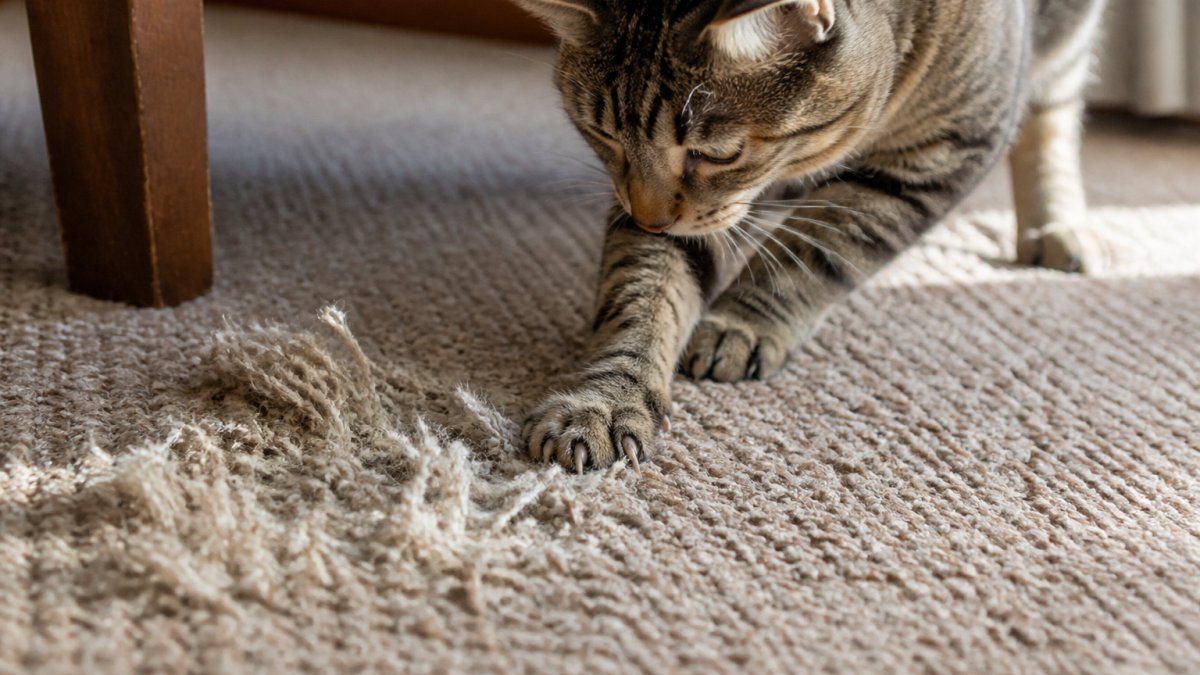
A snag starts with one claw tip catching a single loop of yarn, loosening a whole row of fibers and sometimes turning into a carpet run.
Cat claws are built to hook and hold.
Left alone, that spot gets worse fast: your cat returns to the same loosened loop, and one snag becomes a run of unraveling carpet.
Carpet snags are pulled or broken loops of carpet fiber that leave loose threads, tufts, or runs in the surface.
Loop Pile vs. Cut Pile: Which Carpet Snags More
Loop pile carpet snags far more than cut pile. Berber is the classic example: the yarn runs in continuous loops, and every loop is a target for a claw tip. Cut pile has the loop tops sheared off, so there is nothing for a claw to hook.
| Carpet Type | How It's Made | Snag Risk | Best For |
|---|---|---|---|
| Loop pile (Berber) | Continuous uncut loops | High | Low-traffic rooms, homes without cats |
| Cut pile (plush, frieze) | Loop tops sheared | Low | Homes with cats, busy rooms |
| Cut and loop | Mix of both | Medium | Moderate traffic |
| Tight, low-pile cut | Short sheared fibers | Lowest | High-traffic homes with pets |
The tighter the loop and shorter the pile, the less there is to catch. A loose, tall loop pile in a hallway is a snag waiting to happen.
How to Stop Cats From Scratching Carpet
Scratching is normal cat behavior, cats scratch to shed old claw layers, stretch, and mark territory. You cannot stop the instinct, but you can redirect it: give your cat a better surface, make the carpet less appealing, and keep claws trimmed.
- Add scratching posts near the spots your cat already targets.
- Use deterrents on carpet edges: double-sided tape, a plastic mat, or a temporary barrier.
- Trim claws every two to three weeks to blunt the tips.
A common mistake is removing the carpet scratch spot without offering an alternative, your cat will simply pick a new patch. For broader guidance, see how to create a stress-free environment for cats. Redirect first, then deter.
Picking the Right Cat Scratching Post for Carpet Scratchers
A good cat scratching post for carpet scratchers matches the way your cat actually scratches. Cats scratch in different orientations, heights, and textures, and a post that ignores those preferences gets abandoned while the carpet keeps taking damage.
Match the Post Orientation to the Scratching Style
Watch your cat for a few days before you buy. The direction of the scratch tells you what to shop for:
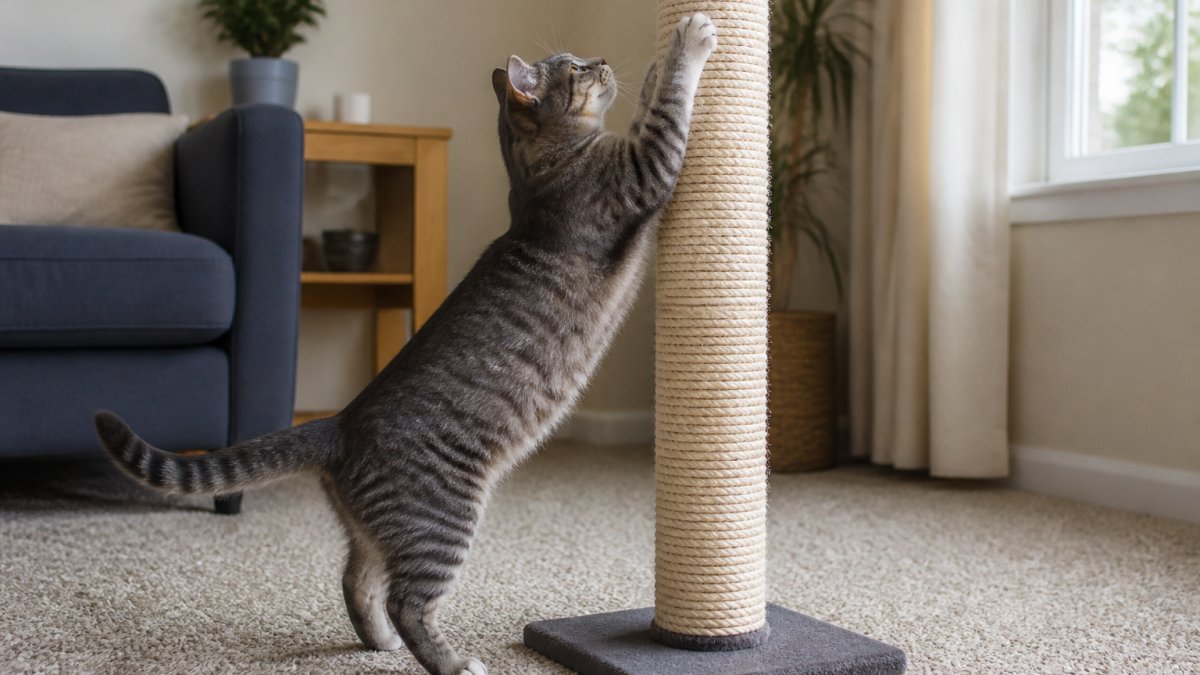
- Vertical scratchers stand on their hind legs and rake downward. They need a tall post, at least as tall as the cat can reach with front legs fully extended, often 30 to 36 inches for an average adult cat. A post shorter than that forces the cat to scratch at an awkward angle, and many cats simply walk away.
- Horizontal scratchers crouch and rake forward along the floor. They often ignore vertical posts entirely. Give them a flat sisal mat, a cardboard scratcher, or a carpet-covered incline laid on the floor.
- Inclined scratchers rake at a diagonal. A ramp-style scratcher or a post set at a slight angle suits them better than a straight vertical column.
A cat scratching the carpet at the base of a wall or doorway is usually a vertical scratcher using the only vertical surface available. Put a tall post right there and the behavior often transfers within days.
Choose a Texture That Beats Carpet Loops
Sisal rope and sisal fabric are standard choices because they shred in fine fibers much like carpet loops, giving a similar hook-and-pull feel. But texture preference varies:
- Sisal rope is firm and coarse. It suits cats that like a hard, resistant surface and holds up well to repeated scratching.
- Sisal fabric is softer and denser. Cats that shred carpet loops often take to it quickly because it gives slightly under the claw.
- Cardboard is soft and forgiving. It is a good low-cost test surface if you are unsure what your cat prefers, but it wears out fast and leaves debris.
A practical test: buy one inexpensive cardboard scratcher and one sisal post, place both near the cat's favorite carpet spot, and invest in a taller, sturdier version of whichever gets used.
Stability Is Not Optional
A wobbly post gets abandoned. The base should be heavy and wide enough that a full-stretch scratch does not tip or rock it. If it wobbles, weigh the base down with a sandbag or heavy book, or anchor it to a wall stud with a bracket, a post that moves under the claw feels unsafe to a cat.
Our honest take: a cheap, short post is worse than no post. It wobbles, your cat loses interest, and the carpet keeps taking the damage. Buy one tall, stable post instead of three flimsy ones.
Placement Decides Whether a Post Gets Used
Cats scratch where they wake up, eat, and walk. Put a post at each of those spots, plus one beside the carpet area your cat already targets. If the post is ignored, move it a few feet and try again, a post tucked in a back room rarely gets used.
For cats that need more mental engagement, interactive toys for shy cats can help keep them busy and away from carpet edges.
How to Trim Cat Claws Safely
Trimming claws every two to three weeks is the single most effective way to reduce snagging, shorter, blunter tips are far less likely to hook a loop. How to trim cat claws safely:
- Pick a calm moment. Wait until your cat is relaxed or sleepy.
- Hold one paw gently. Press the pad to extend a claw.
- Find the quick. It is the pink area inside the claw. Stay well away from it.
- Clip only the clear tip. Take a small slice, no more than the curved point.
- Reward and repeat. Do a few claws per session, then stop.
Use proper cat nail clippers, not human scissors. Cutting too close to the quick causes pain and bleeding and makes your cat hate the clippers, if unsure, trim less and trim more often.
Overgrown claws curl into the pad and cause real discomfort. If your cat's claws are thick, cracked, or curling under, ask your vet for a check. The ASPCA's cat grooming guidance covers basic claw care and when to get help.
When a Claw Is Caught: Safe Steps to Free Your Cat
A caught claw is scary for both of you. Stay calm, move slowly, and never yank the paw free:
- Calm your cat first. Speak softly and let the cat settle.
- Look before you pull. Find exactly where the claw is hooked.
- Support the paw. Cup the leg gently so the claw does not twist.
- Free the fiber, not the cat. Use your fingers or blunt scissors to lift or snip the loop around the claw.
- Check the claw. Look for bleeding, a split, or a torn quick.
- Call your vet if the claw is torn, bleeding, or your cat limps afterward.
Watch out: pulling the paw away can tear the claw from the quick and cause bleeding and infection. Snip the carpet fiber instead.
How to Fix a Berber Carpet Snag
Fix a Berber carpet snag by trimming the loose end, never pulling it, pulling tightens the run and makes it longer. Snip the loose fiber close to the surface with sharp scissors, then leave it alone.
Here is the step-by-step:
- Do not pull the snag. Pulling spreads the run.
- Snip the loose end with sharp scissors, flush with the pile.
- Tuck any loose fiber back into the carpet with a blunt tool.
Small DIY repair is fine. Once the snag is fixed, how to remove pet hair from textured carpet covers the cleaning side of keeping that carpet in good shape.
Room-by-Room Prevention Checklist
Prevention works best when it is specific to each room. Snags cluster where cats launch, land, turn, and stretch, doorways, stair edges, carpet borders, and existing scratch spots. Use this checklist weekly and fix small pulls before they become runs.
Living Room
- Sofa corners and carpet edges: these are the most common scratch targets. Put a tall sisal post beside the corner your cat already uses, and apply double-sided tape or a plastic deterrent mat to the carpet edge until the post takes over.
- Under windows and near cat trees: cats stretch and scratch when they wake up. A post within a body length of the nap spot gets used far more than one across the room.
- Area rugs over loop pile: a low-pile runner or mat over a Berber area reduces direct claw contact on the loops. Check the rug edges weekly, cats often hook the binding.
Bedroom
- Bedside carpet: cats scratch when they get up. A post or flat scratcher beside the bed catches the behavior before it reaches the carpet.
- Closet and door thresholds: loop pile at a threshold is a classic snag point. Check the seam and trim any loose loop flush.
- Claw trim schedule: every two to three weeks, trim just the clear tip. Shorter, blunter claws are far less likely to hook a loop.
Hallway and Stairs
- Stair edges and nosings: the bound edge of a stair runner is a high-snag zone. Run a finger along the edge weekly and snip any pulled loop rather than pulling it.
- Hallway loop pile: a low-pile runner over the highest-traffic stretch reduces claw contact and is easier to replace than the carpet underneath.
- Doorway transitions: where carpet meets hard flooring, the tack strip and seam are vulnerable. Keep the seam flat and trim loose fibers flush.
Home Office
- Chair and desk area: cats scratch the carpet under and beside a rolling chair. A flat scratcher or a small mat under the desk redirects the behavior.
- Cable and cord zones: loose cords near carpet edges invite clawing and chewing. Use cord covers and keep cables off the pile.
- Carpet edges along walls: check the perimeter weekly for pulled loops and tuck any loose fiber back with a blunt tool.
The Five-Minute Weekly Walk-Through
Walk each room once a week and do three things: snip any loose loop flush with sharp scissors (never pull it), check high-risk edges and seams, and confirm each scratching post is still stable and in use. Five minutes a week catches snags before they become runs and saves a repair bill.
Booking Cat Care That Protects Your Home
Travel and long workdays are when carpet damage sneaks up, a bored cat left alone often turns to the carpet, and a small snag can become a run before you get home. That is where in-home cat care earns its keep.
At Tracy's Kitty Care, our sitters are background checked, licensed, bonded, and insured. You can read about daily drop-in visits for indoor cats and the benefits of hiring professional sitters for cats to see how in-home care protects both your cat and your carpet.
You can also review our cat sitting service to see how visits work.
Frequently Asked Questions
How can I prevent my cat's claws from snagging carpet?
Start with regular nail trims every two to three weeks to blunt the sharp tips that catch in loops. Add a sturdy sisal scratching post near the spots your cat already targets, and keep the carpet pile short in high-traffic areas. For loop pile or Berber, place a scratching mat or protective runner where your cat likes to stretch. These steps reduce carpet snags without punishing normal scratching behavior.
What kind of scratching post is best for a cat that scratches carpet?
Cats that scratch carpet usually prefer a horizontal or angled surface with a rough texture. A sisal-covered post or a carpet-covered scratcher with tight loop pile works well, as long as it is tall enough for a full stretch and stable enough not to wobble. Place it directly next to the carpet area your cat targets, and reward your cat with treats or play when it uses the post instead.
Should I trim my cat's claws to prevent carpet snags?
Yes, routine nail trimming is one of the simplest ways to reduce carpet snags. Use cat-specific clippers and trim only the clear tip, avoiding the pink quick inside the nail. If you are unsure, ask your veterinarian or a professional groomer to show you the correct angle. Trim every two to three weeks, and never use scissors designed for humans, which can split the nail.
How do I fix a Berber carpet snag without making it worse?
Do not pull the loose fiber. Use sharp scissors or an X-Acto knife to cut the snag level with the carpet surface, then tuck any remaining loop back through the backing with a crochet hook or blunt needle. For a long run, trim the loose end and secure it with a small dab of clear carpet seam sealer. If the snag keeps reopening, call a carpet repair professional rather than pulling further.
Carpet snags are a small problem that grows fast, and the fix is consistent prevention: the right post, trimmed claws, and eyes on your cat while you are away. If travel or a busy schedule makes that hard, Tracy's Kitty Care can help. Our background-checked, licensed, bonded, and insured sitters specialize in cats, keep scratching redirected, and treat your home with care. Get started with Tracy's Kitty Care and come home to a calm cat and intact carpet.