 how-to
7 Steps to Deep Clean Pet Stained Carpet
Last Updated: October 27, 2026
Quick Summary
To deep clean a pet stained carpet, first locate every spot with a UV blacklight, then loosen the dried crust and apply a one-to-one vinegar and water solution. Follow with an enzyme cleaner, keeping the area damp for ten to fifteen minutes, then extract and dry completely.
- Blot fresh urine instead of rubbing so it does not sink into the backing and padding.
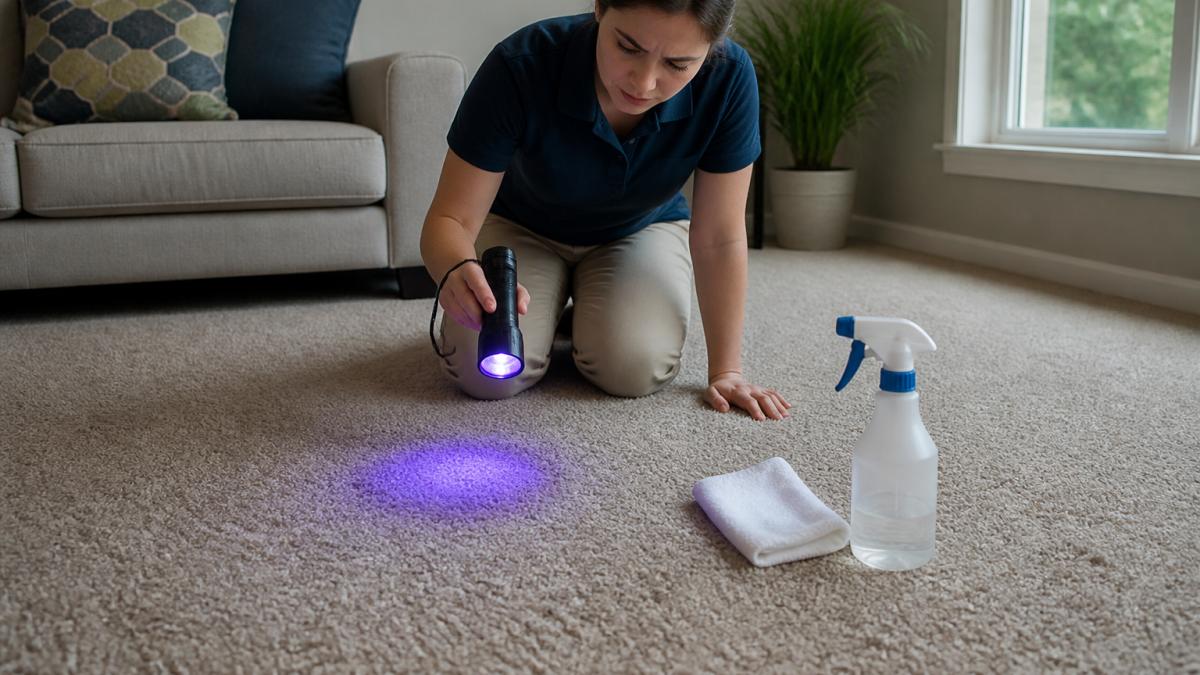
- Dried urine glows yellow-green under a UV blacklight; mark each spot with painter's tape.
- Never combine enzyme cleaners with bleach or ammonia, which can cancel the enzymes or create fumes.
- Sprinkle baking soda over a dry treated area and leave it overnight to remove cat urine smell.
- A carpet damp for more than 24 hours is a mold risk, so extract and dry it completely.
Table of Contents
- What You'll Need Before You Start
- How to Clean Pee from Carpet: The Fresh Stain Routine
- How to Remove Old Pet Stains from Carpet
- Choosing an Enzymatic Cleaner for Pet Stains
- How to Get Cat Urine Smell Out of Carpet
- Testing Carpet Fibers and Dye Safety First
- Drying, Ventilation, and Preventing Mold or Residue
- When to Call a Professional for Pet Stained Carpet
- Frequently Asked Questions
What You'll Need Before You Start
Deep cleaning a pet stained carpet works best when you gather supplies first. The right tools turn a frustrating afternoon into a manageable job.
Here's what you'll need:
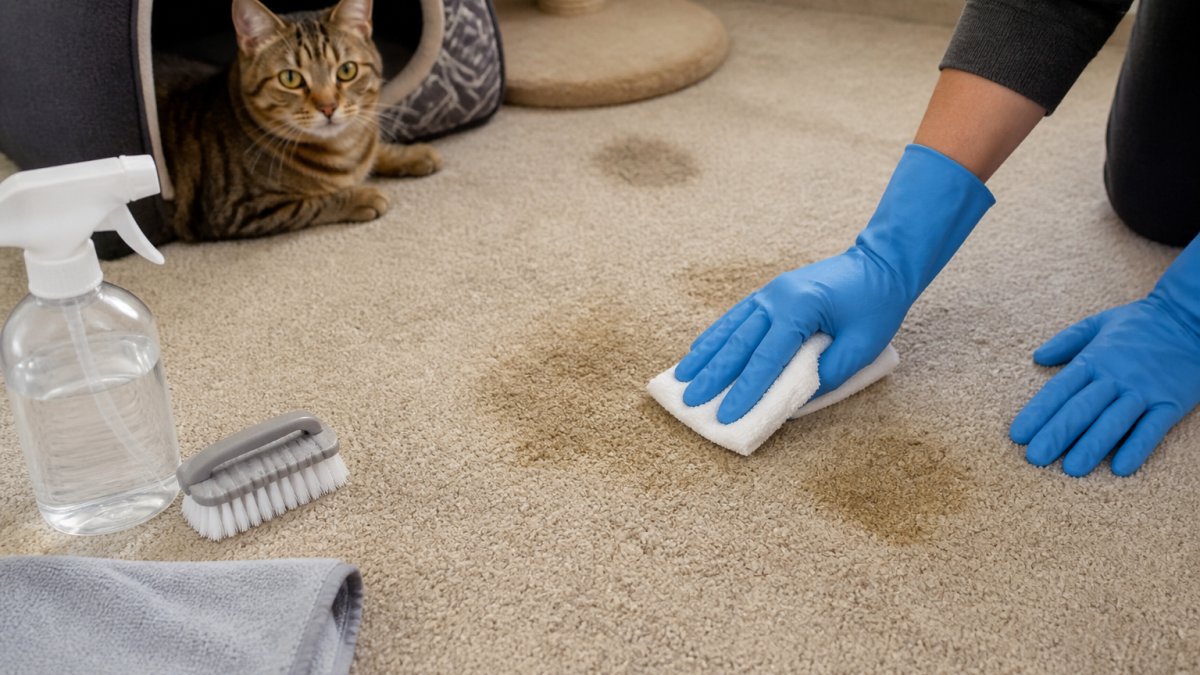
- Rubber gloves and a few clean cloths
- White vinegar and water
- Dish soap
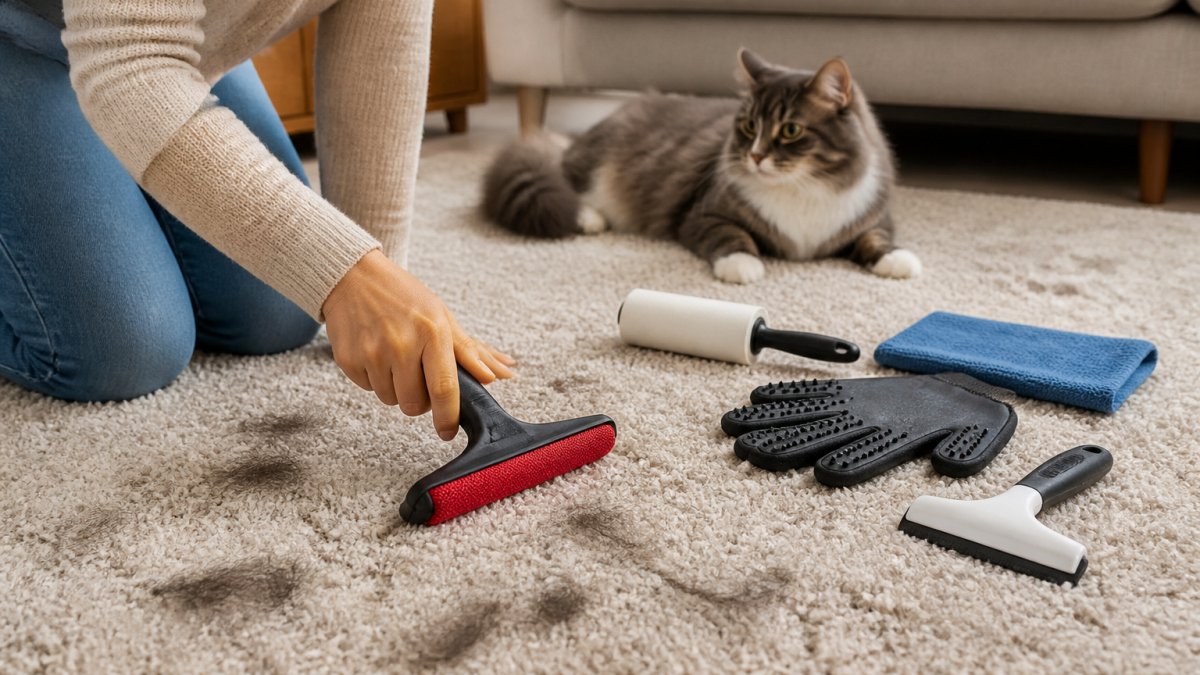
Before you start on pet messes, you may want to handle the fur already trapped in your rugs. Our guide on how to remove pet hair from textured carpet walks through it in seven steps.
Test every cleaner on a hidden patch of carpet first. Some dyes lift fast, and you do not want a bleach spot where the stain used to be.
How to Clean Pee from Carpet: The Fresh Stain Routine
Fresh pet urine is far easier to remove than old stains. The faster you act, the better your odds of saving the carpet.
Blot, Don't Rub: Removing Excess Liquid
Rubbing pushes urine deeper into the backing and padding. Blot instead. Press a clean cloth firmly onto the stain and hold it for a few seconds. Repeat with fresh sections of cloth until no more liquid transfers.
Stand on the cloth if you need extra pressure. Then move on before the stain dries.
The Vinegar and Water Solution
Mix a one-to-one solution of white vinegar and water in a spray bottle. Add a drop or two of dish soap.
Blot again with a clean cloth. Never soak the carpet, because excess liquid sinks into the padding and can cause mold. Rinse by blotting with plain water, then dry the area well.
How to Remove Old Pet Stains from Carpet
Old, set-in stains need a sequence, not a single scrub. Dried urine bonds to carpet fibers and wicks into the backing and padding, so surface cleaning alone often leaves both a visible ring and a smell that returns on humid days. Work through the steps below in order, and do not skip ahead to the enzyme cleaner before you have located the full extent of the contamination.
Step 1: Locate Every Spot, Including the Ones You Cannot See
Turn off the room lights and sweep a UV blacklight low across the carpet. Dried urine fluoresces as a yellow-green glow. Mark each spot with a small piece of painter's tape so you can treat them systematically.
Step 2: Check the Padding Before You Clean
Press a clean white cloth firmly into the center of each marked spot and hold it for several seconds. If moisture or a strong odor transfers, urine has reached the padding. In that case, surface cleaning will reduce the stain but will not eliminate the odor source. You have two options: lift the carpet at a corner and inspect the pad directly, or plan for professional extraction.
Step 3: Loosen the Dried Crust
Brush the stained area with a stiff scrub brush to break up dried residue. Work in short strokes and vacuum up the loosened material with a wet/dry vacuum. This step keeps you from smearing crust back into the fibers when you apply liquid.
Step 4: Apply a Vinegar Solution and Give It Dwell Time
Mix one part white vinegar to one part water in a spray bottle and add a drop or two of dish soap. Spray the spot lightly, damp, not soaked, and let it sit for ten minutes. Blot with a clean cloth, rinse by blotting with plain water, and repeat once if the stain lightens but does not disappear.
Step 5: Treat with an Enzyme Cleaner
Follow the label directions for dwell time, which is commonly ten to fifteen minutes. Keep the area damp during that window so the enzymes stay active. Cover the spot with a damp cloth or a piece of plastic wrap if the room is dry. Rinse thoroughly afterward, because leftover enzyme residue can attract dirt and leave a stiff patch.
Step 6: Extract and Dry
Pull up as much liquid as you can with a wet/dry vacuum or carpet extractor. Then dry the area completely, see the drying and ventilation guidance below. A stain that looks gone but stays damp can bloom back into an odor problem within days.
Work through these steps in order so you treat the full contaminated area, not just the visible ring.
| Step | What to do | Key detail |
|---|---|---|
| 1 | Locate every spot with a UV blacklight | Dried urine glows yellow-green; mark with painter's tape |
| 2 | Check the padding with a white cloth | Moisture or odor means urine reached the pad |
| 3 | Loosen the dried crust | Scrub brush, then vacuum up loosened material |
| 4 | Apply vinegar solution and give it dwell time | One part vinegar to one part water; sit ten minutes |
| 5 | Treat with an enzyme cleaner | Dwell time commonly ten to fifteen minutes; keep damp |
| 6 | Extract and dry | Wet/dry vacuum or extractor, then dry completely |
Choosing an Enzymatic Cleaner for Pet Stains
An enzymatic cleaner is a product that uses live enzymes to break down the proteins and acids in pet urine.
Look for a cleaner made for pet stains and follow the label.
A common mistake is mixing enzyme cleaners with other chemicals. Never combine them with bleach or ammonia, which can cancel the enzymes or create fumes.
How to Get Cat Urine Smell Out of Carpet
Cat urine smell lingers because the odor sits in the backing and padding, not just the surface. Removing the smell means removing the source, not masking it.
- Treat the spot with an enzyme cleaner and let it fully dry
- Sprinkle baking soda over the dry area and leave it overnight
- Vacuum it up in the morning
Warm, humid air pulls old odor back up, so a smell that seems gone can return. If it does, the padding likely still holds urine.
Testing Carpet Fibers and Dye Safety First
Not every carpet handles every cleaner the same way. Wool, synthetic fibers, and blended rugs all react differently.
Apply a small amount of your cleaner to an unseen spot, like a corner or under furniture.
Watch out: hydrogen peroxide can lighten or bleach colored carpet fibers. Use it only on light carpets, and always test first.
Drying, Ventilation, and Preventing Mold or Residue
Drying is the step most people rush, and it is the step that determines whether the job holds. A carpet that stays damp for more than 24 hours is a mold risk, and leftover cleaner residue acts like a magnet for dirt, you get a stiff, crunchy patch that looks dirty again within weeks.
Extract Before You Dry
Run a wet/dry vacuum or carpet extractor over the treated area in overlapping passes until you cannot pull up more liquid. Empty the tank and check the recovered water, if it is still cloudy, make another pass. Extraction removes both moisture and the dissolved residue that causes stiffness.
Move Air, Not Just Heat
- Open windows and run box fans or a floor fan pointed across the damp area
- Use a dehumidifier in humid weather; fans alone move moisture around without removing it
- Avoid sealing the room or running the HVAC in recirculation mode
A common pattern is a carpet that feels dry on top but is still damp at the backing. Press a paper towel into the spot after a few hours, if it picks up moisture, keep the fans running.
Watch for Residue
If the carpet dries stiff or crunchy, residue is the cause. Mix a small amount of white vinegar in water, mist lightly, blot, and re-extract. Do not add more soap; that compounds the problem.
Chemical Safety and Incompatible Cleaners
Read every label before you use a product, and never mix cleaners. Combining bleach with ammonia or with an acid-based cleaner can release hazardous fumes, and mixing enzyme cleaners with bleach or ammonia can cancel the enzymes or create irritating vapors. Use one product at a time, rinse between treatments, and ventilate the room while you work.
When Drying Does Not Solve It
If the carpet stays damp for more than a day despite fans and extraction, the padding is likely soaked. At that point, DIY drying will not reach the moisture, and mold can develop underneath. Call a professional carpet cleaner with truck-mounted extraction, or plan to replace the affected pad section. Weigh that cost against replacing the carpet, which is far higher.
When to Call a Professional for Pet Stained Carpet
Some stains are beyond a DIY fix. If urine reached the padding, if the smell keeps returning, or if the stain covers a large area, a professional carpet cleaner has the extractors and treatments to handle it.
For cat owners who travel, keeping the home clean is only part of the puzzle. If you are weighing options, read why cats hate boarding facilities and what to do instead.
For current rates and visit options, see our cat sitting service.
Frequently Asked Questions
How long should an enzymatic cleaner sit on a pet stain?
Most enzymatic cleaners need 10 to 15 minutes of dwell time on a fresh stain, but old or set-in stains often need longer. Follow the label directions and keep the area damp so the enzymes stay active. If the carpet dries out too fast, cover the spot with a damp cloth or plastic wrap. You may need to reapply and let it work again for stubborn spots before blotting and rinsing.
Can baking soda help clean pet stained carpet?
Baking soda absorbs moisture and neutralizes odors, which makes it a useful follow-up rather than a standalone fix. After cleaning and rinsing the spot, sprinkle a layer of baking soda over the damp area, let it sit for several hours or overnight, then vacuum it up. It won't break down the uric acid crystals that cause lingering odor, so pair it with an enzymatic cleaner for the best results.
Should you use a carpet cleaner on pet urine stains?
A carpet extractor can help flush out residue after spot treatment, but using one on a fresh stain without pretreatment can push urine deeper into the padding. Blot up excess liquid first, apply an enzymatic cleaner, let it dwell, then extract with clean water. Run the extractor slowly and make multiple dry passes so the carpet doesn't stay wet and develop mold or a musty smell.
What is the best way to deep clean carpet after a pet accident?
Start by blotting up as much liquid as possible, then treat the spot with a vinegar and water solution or an enzymatic cleaner. For old stains, use a UV light to find hidden spots and check the padding underneath. Test any product on a hidden area first, agitate gently with a brush, rinse, and extract. Dry the area with fans and ventilation to prevent mold and residue.
Pet stains are stubborn, and the mess never seems to happen at a good time. If you are traveling and want your cat cared for at home, Tracy's Kitty Care is here to help. Our background-checked, licensed, bonded, and insured sitters specialize in cats and offer reliable in-home visits. Get started with Tracy's Kitty Care and travel with peace of mind.