 how-to
Can You Socialize a Cat While Working Full Time?
Last Updated: October 24, 2026
Quick Summary
You can socialize a cat while working full time by building short, predictable sessions around your workday, since cats sleep 12 to 16 hours a day and your away hours overlap with their rest period. Most working owners need 20 to 30 minutes of focused, active time daily, plus passive company while home. Keep the same order and times each day, because predictability matters more than duration.
- Cats are crepuscular, most active at dawn and dusk when you are usually home.
- A sample routine uses 15-20 minutes before work, 20-30 minutes after work, and 5 minutes before bed.
- Skip the midday session if you cannot reliably make it, since unpredictable appearances teach randomness.
- For a shy cat, start with 5 minutes and build up slowly rather than pushing for longer sessions.
- Track progress weekly with markers like approach distance, time to emerge, and treat acceptance.
Table of Contents
- Why a Full-Time Job Doesn't Block Cat Socialization
- Your Cat Socialization Schedule Around a Workday
- How Much Time to Spend With a Cat Each Day
- How to Socialize a Shy Cat With Gradual Steps
- Cat Enrichment for Working Owners: Toys, Feeders, and Windows
- Recognizing Stress and Measuring Progress
- When to Bring In a Professional Cat Sitter
- Building Your Socialization Plan With Tracy's Kitty Care
- Frequently Asked Questions
Why a Full-Time Job Doesn't Block Cat Socialization
A full-time job does not block your plan to socialize a cat. Cats sleep 12 to 16 hours a day, and your away hours overlap with their rest period. Consistency matters more than quantity.
Cat socialization builds trust through short, repeated, predictable interactions. A working owner who shows up at the same times daily builds more trust than someone home all day but unpredictable.
How Cats Actually Bond (and Why Crepuscular Helps)
Cats are crepuscular, most active at dawn and dusk. Those two windows, early morning and early evening, are usually when you are home.
Bonding comes from predictable, calm contact: you appear at the same times, do the same things, and never force handling. That builds trust faster than long, irregular attention.
Your Cat Socialization Schedule Around a Workday
A realistic cat socialization schedule fits into the edges of your workday, not the middle. Make the minutes you have predictable enough that your cat can count on them.
A Sample Before-Work, Lunch-Break, and After-Work Routine
Adjust the clock times to your own commute, but keep the order and spacing consistent.
Before work (15-20 minutes, same time daily): Feed, refresh water, scoop the litter box, and sit quietly nearby. Let the cat come to you.
Midday (5-10 minutes, only if you can genuinely do it): If you work from home or nearby, a quick wand-toy session keeps the pattern going. If you cannot reliably make midday, skip it, an unpredictable lunch break teaches your cat your appearances are random.
After work (20-30 minutes, your main block): Most socialization happens here. Interactive play, then a meal, then gentle grooming only if your cat welcomes it.
Before bed (5 minutes): A small treat or a few minutes of quiet company. This closes the day the same way every time and gives your cat a final predictable anchor.
Adapting the Plan to Different Work Patterns
A 9-to-5 office schedule is easiest because your free hours line up with your cat's crepuscular peaks. Other schedules need small adjustments:
- Early shifts (starting before 7 a.m.): Move the main socialization block to the evening and keep mornings short, feed, water, litter, and a two-minute calm greeting. Skip the full play session.
- Late or swing shifts: Your cat's dawn peak may fall while you sleep. Protect one consistent anchor, usually the pre-bed session, and accept a lighter morning block. Rotate toys and puzzle feeders the night before for engagement during your sleep hours.
- Remote or hybrid work: The risk is the opposite of neglect, constant, unpredictable interruption. Keep work hours as work hours and hold the same before-work and after-work blocks. A cat that learns your laptop means "ignore me" is calmer than one getting sporadic attention all day.
Socializing Remotely and Safely
Technology supports socialization during long absences but does not replace interaction. Used well, it keeps the pattern alive between real sessions.
- Cameras: A pet camera lets you check whether your cat is eating, using the litter box, and coming out of hiding. Watch for patterns rather than reacting to a single quiet hour, many cats sleep through midday.
- Timed feeders: A feeder that dispenses a small portion at a set time adds a predictable event in the middle of your absence. Pair it with a puzzle feeder so the food becomes engagement rather than a quick swallow.
- Remote play: Some camera-and-toy systems let you trigger a laser or moving toy from your phone. Use them sparingly and on a schedule; unpredictable remote play can startle a shy cat.
The Takeaway
The schedule that works is the one you can repeat. Build the day around fixed anchors, before work, after work, before bed, and let enrichment and remote support handle the middle.
Here is how the sample routine breaks down across a workday.
| Time block | Length | What to do |
|---|---|---|
| Before work | 15-20 minutes, same time daily | Feed, water, litter box, sit quietly nearby |
| Midday | 5-10 minutes, only if reliable | Quick wand-toy session keeps the pattern going |
| After work | 20-30 minutes, main block | Interactive play, then meal, then gentle grooming |
| Before bed | 5 minutes | Small treat or quiet company as final anchor |
How Much Time to Spend With a Cat Each Day
Most working owners need 20 to 30 minutes of focused, active time with their cat daily, plus passive company while home.
Quality beats duration. Two short sessions at the same times every day work better than one long, unpredictable session. If your cat is shy, start with 5 minutes and build up, pushing for longer sessions too fast can backfire.
How to Socialize a Shy Cat With Gradual Steps
A shy or undersocialized cat needs a slow, step-by-step plan; rushing is the most common mistake we see. For why cats hide, see our guide on why your cat is acting shy and hiding.
Follow these steps in order, and only move forward when your cat is relaxed at the current step:
- Set up a safe room. A quiet room with food, water, a litter box, and a hiding spot. Let the cat settle there first.
- Be present without pressure. Sit in the room and read aloud or talk softly. Do not reach for the cat.
- Let the cat approach you. Wait for the cat to come close on its own terms. This can take days or weeks.
- Offer treats from a distance. Toss a treat near your feet, then closer over time.
- Try a hand offer. Hold a treat on your palm and let the cat take it. Keep sessions short.
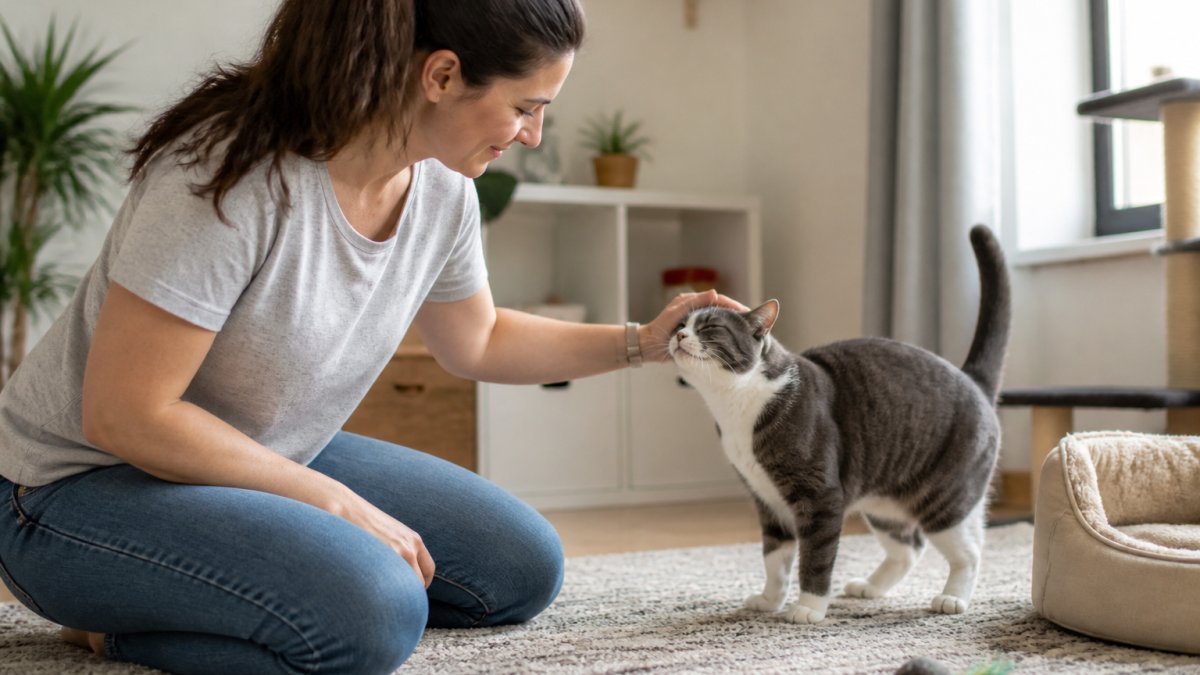
- Add gentle touch. Once the cat eats near you, try a brief chin scratch. Stop if the cat pulls away.
- Extend sessions slowly. Add a few minutes each week, never a big jump.
Watch out: skipping straight to picking up a shy cat sets trust back by weeks. Let the cat set the pace.
Cat Enrichment for Working Owners: Toys, Feeders, and Windows
Cat enrichment for working owners fills the hours you are away. A bored cat is a stressed cat, and stress shows up as hiding, over-grooming, or missed litter box visits.
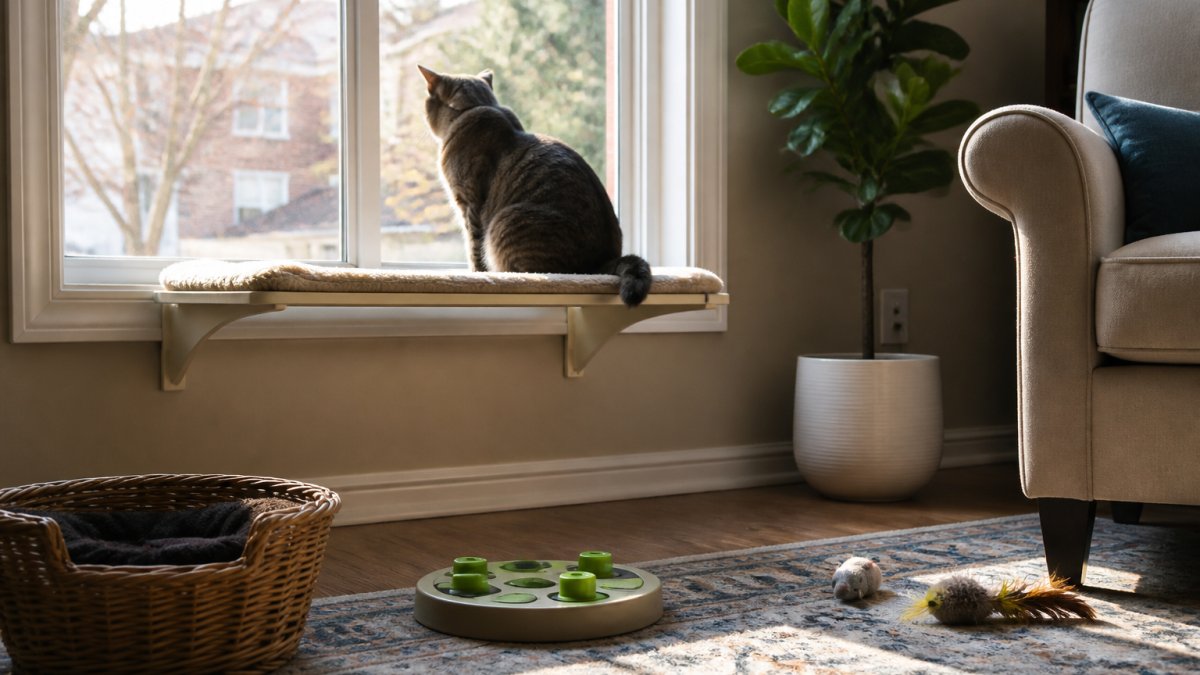
Build your setup around these basics:
- Window access: A window perch or clear view of birds gives hours of free entertainment.
- Puzzle feeders and food-dispensing toys: These turn a meal into a game and slow down fast eaters.
- Interactive toys: Wand toys for your active sessions, plus a few solo toys left out.
For cats that need gentler options, our guide to interactive toys for shy cats covers picks that do not overwhelm a nervous cat.
Recognizing Stress and Measuring Progress
Socialization only works if you can tell whether it is working. Watch for concrete signs, track progress weekly, and know when to slow down or bring in professional help.
Signs of Comfort Versus Distress
Cats signal comfort and stress through body language and daily habits. Look for clusters of signs, not a single behavior, and compare your cat to its own baseline.
Signs of growing comfort:
- The cat comes out of hiding sooner when you enter the room, or stops hiding altogether during your sessions.
- The cat eats normally and uses the litter box in its usual spot.
- The cat takes a treat from your hand or eats near your feet.
Signs of stress or fear:
- Increased hiding, especially hiding that lasts longer than before or starts earlier in the day.
- Over-grooming, bald patches, or skin irritation.
- Appetite changes, eating less, eating faster, or skipping meals.
A Simple Weekly Progress Tracker
Progress is slow and uneven, which makes it easy to miss. Track a few concrete markers once a week, at the same time of day, and write them down.
- Approach distance: How close does the cat let you get before it moves away? Note the distance in feet.
- Time to emerge: After you enter the room and sit down, how many minutes pass before the cat comes out of hiding?
- Treat acceptance: Does the cat take a treat from the floor, from your hand, or not at all?
- Session duration: How many minutes does the cat stay in the room with you before leaving?
- Daily habits: Eating, drinking, and litter box use, normal, reduced, or changed?
Expect two steps forward and one step back. A single bad week is not failure; a flat or worsening trend across three or four weeks means slow down and go back a step.
When to Slow Down, and When to Seek Help
Slow down when stress signs cluster or your tracker shows no improvement for several weeks. Go back to the previous step, shorten sessions, and reduce pressure, rushing a shy cat is the most common reason progress stalls.
Seek veterinary or qualified behavior support when:
- Fear, hiding, or aggression persists or worsens despite weeks of gradual, low-pressure work.
- The cat shows sudden behavior changes, appetite loss, weight loss, or litter box changes, rule out medical causes first.
- There is aggression toward people or other pets that risks injury.
A veterinarian can rule out pain, dental disease, thyroid issues, and other medical causes that mimic behavioral problems. Our guide on whether your cat is stressed or sick helps you tell the difference.
When to Bring In a Professional Cat Sitter
A professional cat sitter helps when your schedule includes travel, long days, or medical needs.
Our cat sitting service includes 30-minute visits with feeding, fresh water, litter box cleaning, and playtime or attention for $30.00 per visit.
A sitter also keeps your efforts to socialize a cat going while you are away, same times, same calm handling, same pattern.
If you are building a broader care plan around a busy schedule, our cat care guide for working professionals covers the full picture.
Building Your Socialization Plan With Tracy's Kitty Care
Consistency is the whole game. Short, predictable sessions beat long, irregular ones every time, and a working schedule leaves room for both.
Tracy's Kitty Care supports that plan from the outside. Our sitters are background checked, licensed, bonded, and insured, and we serve cats exclusively.
Get started with Tracy's Kitty Care and keep your cat's routine steady, even on your busiest weeks.
Frequently Asked Questions
Can you socialize a cat if you work full time?
Yes. Socialization depends on consistency and quality of interaction more than total hours. Two 15-minute interactive play sessions, a predictable feeding schedule, and enrichment left out during the day give a cat plenty of social contact. Cats are crepuscular, so they are naturally most active at dawn and dusk, which lines up with the time most full-time workers are home.
How much time should I spend socializing my cat each day?
Aim for 20 to 30 minutes of hands-on interactive play split between morning and evening, plus short check-ins for feeding, fresh water, and litter box cleaning. Shy cats may need this broken into 5-minute sessions at first. The quality of attention matters more than the clock: a focused wand-toy session beats an hour of passive company.
How do you socialize a shy or fearful cat?
Start in a quiet room and let the cat approach you. Sit on the floor, avoid direct eye contact, and offer treats or a wand toy at a distance the cat tolerates. Gradually shorten the distance over days or weeks. Never pick up a hiding cat or force contact. Pair your presence with food and play so the cat learns you predict good things.
When should I get professional help socializing my cat?
If a cat hides constantly, stops eating, over-grooms, or shows aggression after several weeks of gradual work, bring in your veterinarian first to rule out pain or illness. A qualified behavior consultant or a professional cat sitter can maintain a consistent routine while you travel or work long hours, which keeps progress from stalling.