 blog
Interactive Toys for Shy Cats: A Gentle Guide
Table of Contents
- Why Interactive Toys Matter for Shy Cats
- Signs of Anxiety in Cats and What They Mean
- How to Help a Shy Cat Feel Safe During Play
- Quiet Cat Toys That Won't Startle Nervous Cats
- Cat Puzzle Toys for Mental Stimulation Without Pressure
- A Gradual Introduction Plan for Shy Cats
- Reading Your Cat's Body Language and Knowing When to Stop
- Conclusion
- Frequently Asked Questions
Last Updated: October 10, 2026
Why Interactive Toys Matter for Shy Cats
Interactive toys shy cats need build confidence and reduce anxiety. A shy cat that engages with the right toy experiences small wins, a successful pounce, a catch, that gradually reshape how they perceive their environment and themselves.
Shy cats without enrichment develop deeper anxiety: they hide more, eat less predictably, and show stress when owners leave. Interactive play interrupts this cycle by channeling nervous energy into purposeful activity and stimulating natural hunting instincts.
The key is matching the toy to your cat's specific fears. A loud electronic toy will terrify a noise-sensitive cat. A fast-moving wand might overwhelm a cat still building confidence.
Signs of Anxiety in Cats and What They Mean
Anxiety signs include excessive hiding, flattened ears, tucked tail, reluctance to eat, and startling easily at minor sounds or movements.
These behaviors compound: a shy cat that never plays becomes more withdrawn, missing the confidence-building that comes from successful hunting behavior.
Choose toys that feel safe while engaging prey drive. Loud noises reinforce anxiety; unpredictable movement triggers fear responses.
How to Help a Shy Cat Feel Safe During Play
Creating safety is the foundation for any successful interactive play with a nervous cat. Your approach matters as much as the toy itself.
Begin with 2-3 minute sessions, ending before fatigue or stress appears. This teaches your cat that play is safe and brief.
Crouch or sit on the floor to be less intimidating. Let your cat approach the toy at their own pace; never chase or force interaction.
Play at the same time each day with the same person. Routine makes play feel safer and more predictable.
Quiet Cat Toys That Won't Startle Nervous Cats
Noise level is often the deciding factor for shy cats.
Silent, Human-Controlled Wand Toys
- Noise level: None
- Movement: Predictable; you control speed and direction
- Interaction distance: 1-3 feet; toy stays away from cat's body
- Best for: Cats fearful of sudden movement or close contact; cats that need to feel in control
- Examples: Feather wands, string wands, fabric-ribbon toys
- Confidence-building potential: High, your cat chooses when to engage and can disengage by stepping back
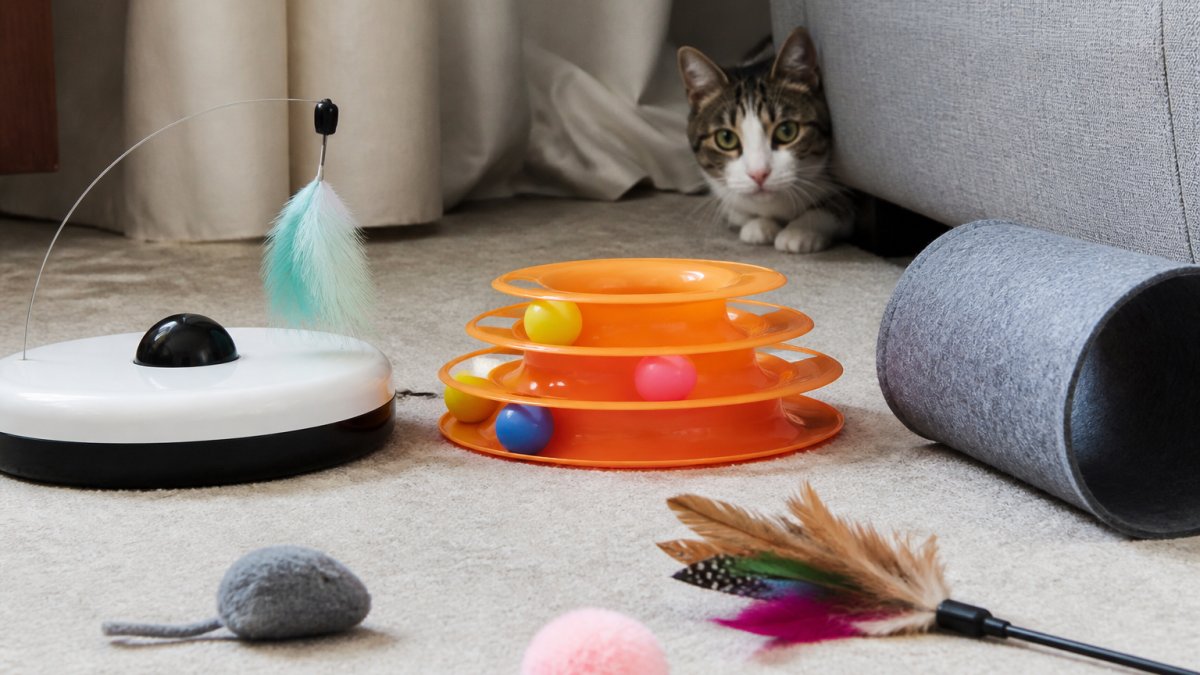
Wand toys are ideal starting points: you control the pace, the toy stays at a distance, and your cat can pounce without feeling trapped.
Silent, Self-Directed Prey Toys
- Noise level: None (or soft rustling if fabric-filled)
- Movement: Unpredictable; cat-initiated
- Interaction distance: Direct contact; cat carries or bats toy
- Best for: Cats that prefer independent play; cats overwhelmed by human interaction
- Examples: Soft mouse toys, fabric balls, small plush toys without bells
- Confidence-building potential: Moderate, builds hunting success without social pressure, but less interactive engagement
Self-directed prey toys let your cat play alone, reducing social anxiety and providing independence for cats that find human interaction stressful.
Low-Noise Electronic Toys (Use with Caution)
- Noise level: Minimal vibration; some produce soft chirping (under 60 decibels)
- Movement: Automatic or triggered by motion
- Interaction distance: Varies; some toys move across the floor
- Best for: Only cats that have already shown comfort with quiet play; not recommended as a first toy for noise-sensitive cats
- Examples: Motorized mice with soft chirps, vibrating toys
- Confidence-building potential: Low for anxious cats, unpredictable movement and even "quiet" electronics produce subtle high-frequency sounds that nervous cats detect
Shy cats perceive frequencies and vibrations humans don't. Even "quiet" electronic toys can trigger stress; avoid them until confidence is established.
Tunnels and Enclosed Play Spaces
- Noise level: None
- Movement: Cat-initiated; provides hiding and pouncing opportunities
- Interaction distance: Self-directed; cat controls entry and exit
- Best for: Cats that feel safer in enclosed spaces; cats that hide frequently
- Examples: Pop-up tunnels, fabric tunnels, cardboard boxes
- Confidence-building potential: High, combines safety (enclosed space) with play opportunity (pouncing through tunnel openings)
Matching Toys to Your Cat's Specific Fears
Identify your cat's primary fear before selecting a toy:
- Noise-sensitive cat: Choose silent wand toys or self-directed prey toys. Avoid any electronic component.
- Fearful of close contact: Use wand toys that keep distance, or tunnels that allow play without direct interaction.
- Overwhelmed by human interaction: Offer self-directed toys (mice, balls) and tunnels; reduce direct play sessions.
- Startled by sudden movement: Select wand toys you can move slowly and predictably; avoid motorized toys.
- Hiding frequently: Introduce tunnels and enclosed toys first; these feel safer than open-space play.
What to Avoid
Avoid toys with bells, crinkly materials, or electronic components if your cat shows sound sensitivity. Stick with silent, simple designs. Avoid dangling strings longer than 12 inches unless supervised.
Cat Puzzle Toys for Mental Stimulation Without Pressure
Puzzle toys offer a different kind of enrichment than wand toys.
Why Puzzle Toys Reduce Anxiety in Shy Cats
Interactive toys shy cats lack outlets for their natural hunting drive, compounding anxiety.
Puzzle toys don't require trust, tolerance of movement, or managing social pressure.
Difficulty Levels and Shy-Cat Suitability
Puzzle-toy difficulty directly affects whether a shy cat will engage or give up. A frustrated cat becomes more anxious, not less.
Level 1: Simple Access (Best Starting Point)
- Design: Treat sits in a shallow compartment or under a loose flap; minimal manipulation required
- Time to solve: 30 seconds to 2 minutes
- Best for: Cats new to puzzle toys; cats with low confidence
- Why it works: Quick success builds confidence without frustration.
Level 2: Moderate Manipulation (Progression)
- Design: Treat requires pushing, sliding, or lifting a barrier; 2-3 steps to access
- Time to solve: 3-8 minutes
- Best for: Cats that have mastered Level 1; cats showing increased confidence
- Why it works: Provides challenge without overwhelming.
Level 3: Complex Problem-Solving (Advanced)
- Design: Multiple steps, hidden compartments, or sequential unlocking required
- Best for: Only confident cats; not recommended for shy cats
- Why to avoid initially: Frustration triggers anxiety and may cause avoidance of puzzle toys.
Reward Timing and Motivation
The type and timing of rewards affects how engaging a puzzle toy is for a nervous cat.
- High-value treats: Use small pieces of your cat's favorite treat. A shy cat is more motivated if the reward is genuinely desirable.
- Portion control: Use tiny pieces (pea-sized) so your cat can solve the puzzle multiple times. Repeated small wins build confidence more effectively than one large reward.
- Predictable timing: Place the same treat at the same time each day. Predictability helps anxious cats feel secure.
- Avoid frustration: If your cat hasn't solved the puzzle within 10 minutes, it's too difficult. Return to an easier level.
Strategic Placement for Shy Cats
Where you place a puzzle toy affects whether your cat will investigate it.
- Near favorite hiding spots: Place puzzle toys near favorite corners or quiet rooms where your cat feels safe.
- Away from high-traffic areas: Avoid busy living rooms or near doors, which feel exposed to anxious cats.
- Multiple locations: Rotate puzzle toys between quiet spots to maintain novelty.
- Never force interaction: Let your cat discover the puzzle toy naturally.
Rotation and Novelty
Using the same puzzle toy daily loses its appeal. Rotation maintains engagement and prevents boredom-related anxiety.
- Active rotation: Keep 2-3 puzzle toys in regular use, rotating them every 3-5 days to maintain novelty.
- Storage: Store unused toys out of sight. Reintroduction after a week feels new to your cat.
- Seasonal variety: Introduce new puzzle designs every 4-6 weeks to keep mental stimulation fresh.
Combining Puzzle Toys with Other Enrichment
- Pair with wand play: Offer a puzzle toy on days when your cat seems less interested in interactive play.
- Use before interactive play: A 5-minute puzzle-toy session can warm up a shy cat's hunting drive before wand play.
- Monitor for signs of success: Consistent engagement builds confidence. Ignoring after the first week suggests the toy is too difficult or the reward isn't motivating.
A Gradual Introduction Plan for Shy Cats
Introducing new interactive toys to a shy cat requires patience and structure.
Week 1: Place the toy near favorite spots without pressure to engage. This builds familiarity and reduces fear.
Week 2: Move the toy slightly when your cat is nearby, but don't direct it at them.
Week 3: Begin gentle play if your cat shows interest. Move slowly and predictably; stop immediately if stress signals appear.
Week 4 and Beyond: Establish a regular play routine at the same time each day. This predictability helps anxious cats feel secure.
Watch your cat's behavior, not the calendar. Patience now prevents setbacks later.
Reading Your Cat's Body Language and Knowing When to Stop
Understanding your cat's body language is essential for keeping interactive play productive and stress-free. Your cat is constantly communicating, you just need to know what to look for.
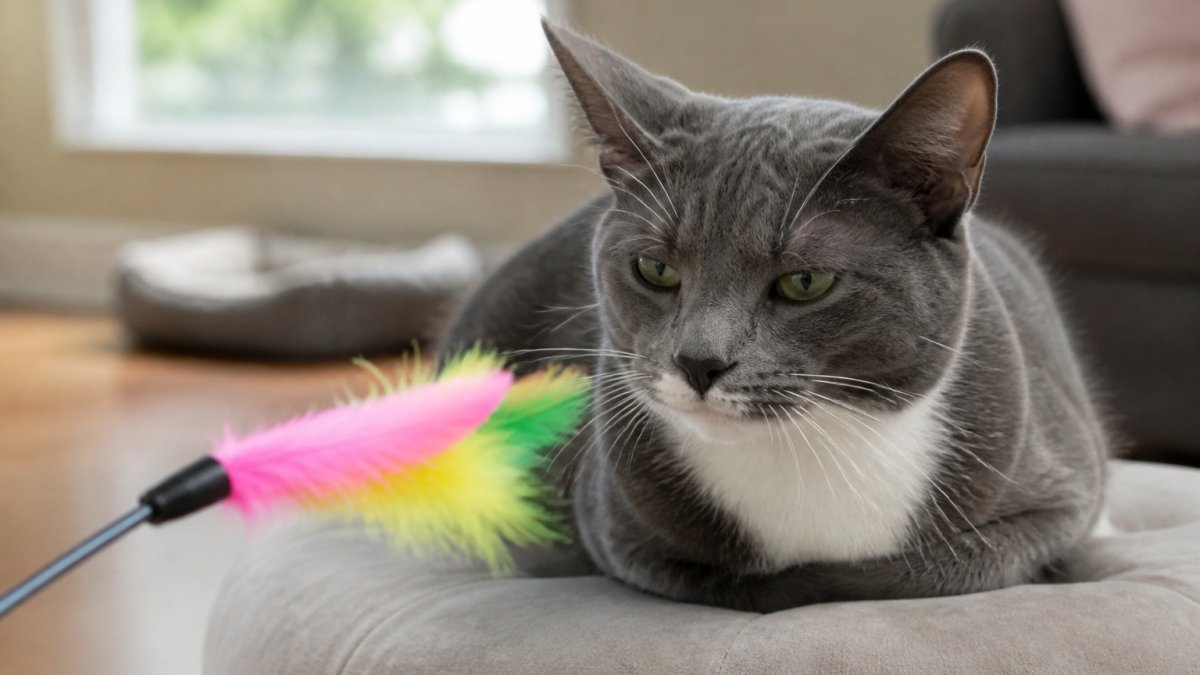
Signs your shy cat is enjoying play:
- Ears are forward or slightly to the side
- Eyes are soft; may blink slowly
- Tail is up or gently curved, moving fluidly
- Body posture is loose, not tense
Signs to stop immediately:
- Ears flatten against the head
- Eyes dilate or show the whites
- Tail thumps or swishes rapidly
- Skin ripples on the back
- Hissing, growling, or sudden stillness
- Attempt to bite or scratch your hand
- Retreat or hiding
A cat that was happily pouncing may suddenly show stress signals. Respect this communication by stopping play immediately.
Shy cats often have lower tolerance for play. A nervous cat might enjoy 2-3 minutes before needing a break. Pushing past their limit teaches them that play is stressful.
Some cats need 10-15 minutes of downtime between sessions to process stimulation. Playing before they're ready creates anxiety.
Conclusion
Interactive toys matched to your cat's specific fears create opportunities for success. Patience, consistency, and attention to body language transform nervous cats into more engaged, confident companions.
When you're away, the benefits of this foundation become even more apparent. A cat with established play routines and positive associations with enrichment handles your absence better. They have outlets for anxiety and familiar comforts to return to. At times when you need support, a cat sitting service can help maintain these routines, continuing play sessions and enrichment activities that keep your shy cat confident and secure while you're traveling.
Frequently Asked Questions
What is a good toy for a shy cat?
The best interactive toys for shy cats are quiet, low-pressure options that let them control the pace of play. Feather wands, soft mouse toys, and puzzle toys that dispense treats work well because they engage prey-like instincts without sudden movements or loud noises. Start with toys your cat can approach and retreat from safely, and avoid anything that makes unexpected sounds or movements.
How do you encourage a shy cat to play?
Introduce toys slowly in a calm environment where your cat feels secure. Use a feather wand at ground level or let it move gently near their hiding spot rather than waving it aggressively. Reward curiosity with treats and praise. Keep play sessions short (5-10 minutes), stop before your cat shows stress, and never force interaction. Consistency and patience build confidence over weeks.
Are quiet toys better for anxious cats?
Yes, quiet cat toys are significantly better for anxious cats. Electronic toys with beeps, whirring sounds, or sudden movements can trigger fear responses in timid cats. Opt for silent options like feather toys, soft prey-like toys, and treat-dispensing puzzle toys. These allow your cat to focus on play without the added stress of noise or unpredictable sounds.
Should you leave interactive toys out when you are away?
Yes, leaving quiet, safe interactive toys available when you're away can help reduce boredom and anxiety. Puzzle toys, cardboard boxes, and paper bags provide self-play opportunities. Avoid electronic toys that could malfunction or frighten your cat unsupervised. If your shy cat struggles with separation anxiety, in-home pet sitting ensures consistent interaction and monitoring while you travel.