 ultimate-guide
Cat Care for Working Professionals: A 2026 Guide
Table of Contents
- Why Cat Care for Working Professionals Matters
- Building a Daily Routine for Cats of Working Owners
- Enrichment Activities for Cats Home Alone
- How to Choose a Cat Sitter with Experience in Medication Administration
- Managing Separation Anxiety and Stress
- Health Monitoring and Wellness Checks
- Technology and Emergency Preparedness
- Making It Work: Practical Solutions for Your Schedule
Last Updated: August 30, 2026
Why Cat Care for Working Professionals Matters
Working professionals face a genuine conflict: your job demands your presence during hours when your cat needs attention most. Leaving a feline companion alone for 8-10 hours daily has real consequences for your cat's health, behavior, and stress levels.
Cat care for working professionals isn't a luxury, it's a structural problem requiring a structural solution. Your cat didn't choose a working owner; that responsibility falls on you. Modern solutions including professional in-home sitters, enrichment strategies, and technology make excellent feline welfare entirely possible even with a demanding career.
At Tracy's Kitty Care, we work exclusively with working professionals in the Amherst area who understand that their cat's wellbeing directly impacts their own peace of mind. This guide covers practical strategies that actually work.
Building a Daily Routine for Cats of Working Owners
A structured daily routine is the foundation of feline wellness for working owners. Cats thrive on predictability. Consistent feeding times, play sessions, and environmental structure measurably reduce anxiety and behavioral problems.
Morning Preparation Before Work
Your morning sets the tone for your cat's entire day. Spend 10-15 minutes with your cat before work. Feed them at a consistent time to anchor their circadian rhythm. While they eat, refresh their water bowl, cats prefer moving water, so a cat water fountain encourages hydration better than a static bowl.
After feeding, engage in 5-10 minutes of active play with a wand toy or laser pointer. This burns energy so your cat is more likely to rest while you're gone and provides essential social interaction. Before leaving, ensure your cat has access to a clean litter box in a quiet, accessible location away from food and water areas.
Midday Care Options
Without intervention, your cat experiences isolation and boredom after 4-6 hours alone. You have three realistic options: a midday visit from a pet sitter, automated enrichment devices, or a combination of both.
A midday visit, even 30 minutes, breaks the day's monotony. A professional sitter can feed your cat, refresh water, clean the litter box, and provide active play. Tracy's Kitty Care's cat sitting service includes exactly this, plus medication administration when needed.
If you can't arrange a midday visit, automated feeders with scheduled portions and interactive toys provide some enrichment but don't substitute for human interaction. The most effective approach combines both: sitter visits 2-3 times per week, supplemented with enrichment devices on other days.
Evening and Nighttime Rituals
When you arrive home, let your cat greet you naturally, then feed them their evening meal within 30 minutes. This reinforces the pattern of your arrival. After dinner, engage in 15-20 minutes of active play using the same toys and timing each evening so your cat learns when to expect engagement.
Before bed, provide a calm environment with dim lighting and comfortable sleeping areas. Cats sleep 12-16 hours daily; your job is making that sleep happen in a safe, comfortable space.
Enrichment Activities for Cats Home Alone
Environmental enrichment is the difference between a cat that merely survives your work hours and one that thrives. Enrichment addresses the core problem: cats are intelligent, curious animals that develop anxiety, destructive behaviors, and obesity when unstimulated.
Interactive Toys and Vertical Space
Cats hunt and climb. Interactive toys (wand toys, laser pointers, motorized toys) engage predatory instincts. Rotate toys weekly so they feel novel.
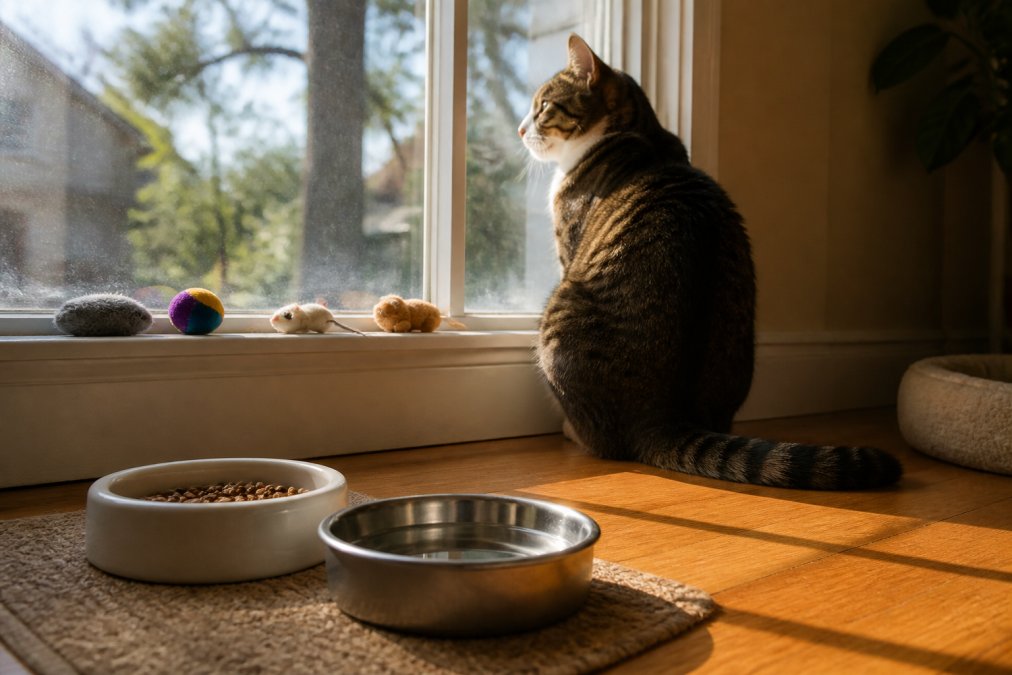
Vertical space is equally important. Install wall-mounted shelves, cat trees, or window perches. A cat perch by a window provides hours of visual stimulation from birds and movement.
Puzzle feeders and treat-dispensing toys force your cat to work for food, mimicking hunting behavior and providing mental stimulation.
Environmental Stimulation Strategies
Window access is non-negotiable. A sunny window with a comfortable perch becomes your cat's entertainment center.
Auditory stimulation matters. Some cats respond to music designed for felines, nature sounds, or talk radio. Background sound prevents isolation.
Scent enrichment works too. Rotate catnip, silvervine, and valerian root so your cat doesn't habituate to any single scent. Pheromone diffusers like Feliway reduce anxiety.
A static environment becomes boring; variation keeps your cat engaged and mentally active while you're away.
How to Choose a Cat Sitter with Experience in Medication Administration
Not every pet sitter can safely administer medication. If your cat requires insulin injections, daily pills, or topical treatments, you need a sitter with specific medical competency, not just cat experience.
Credentials and Background Verification
A professional cat sitter should be background-checked, bonded, and insured. Background checks verify no criminal history. Bonding protects you if the sitter steals or damages property. Insurance covers liability if your cat is injured during a visit.
Ask directly: "Are you background-checked, bonded, and insured?" A legitimate sitter will provide proof immediately. Tracy's Kitty Care sitters are all background-checked, licensed, bonded, and insured.
Beyond credentials, ask about experience. How many years have they worked with cats? Have they handled cats with medical needs? Ask for references from clients whose cats required medication administration and call those references.
Evaluating Medical Care Competency
Medication administration requires specific skills. A sitter who can feed and play with your cat is not automatically qualified to give injections or pills.
Ask these questions:
- Have you administered injectable medications (insulin, antibiotics) to cats?
- How many cats have you worked with that required daily medication?
- Can you provide references from veterinarians or clients whose cats you medicated?
- What training have you received in medication handling?
- How do you document medication administration?
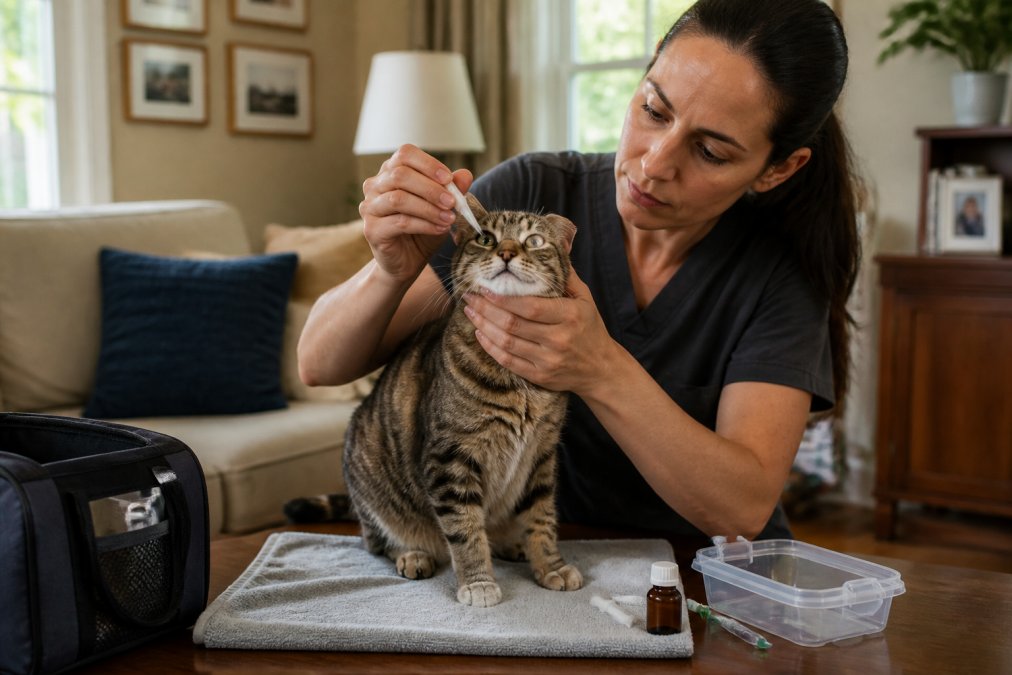
A sitter with genuine medical experience will have concrete answers and veterinary references. They'll document each medication administration. Never hire a sitter for medication administration based on willingness to try; your cat's health is too important.
Managing Separation Anxiety and Stress
Separation anxiety in cats is real and often underdiagnosed. Signs include excessive vocalization when you leave, destructive behavior, inappropriate elimination outside the litter box, and over-grooming.
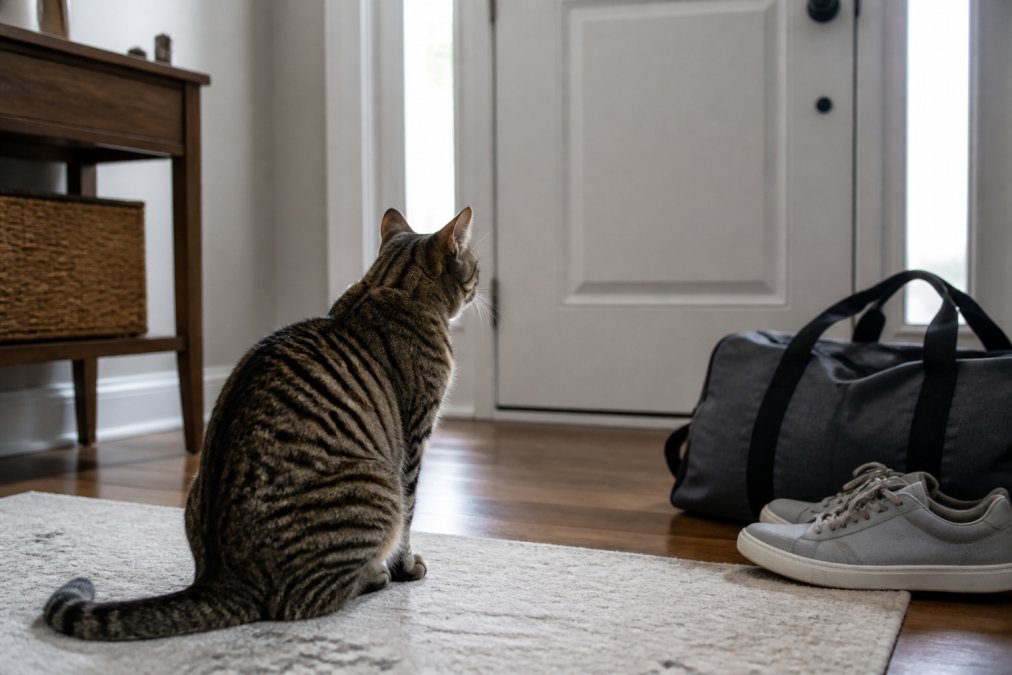
First, desensitize your cat to departure cues. If your cat panics when you put on shoes or pick up keys, practice these actions without leaving. Repeat dozens of times so the cues lose their anxiety association.
Second, create a safe space, a dedicated room with familiar scents, comfortable bedding, toys, and litter box. Use Feliway diffusers in this space to reduce anxiety.
Third, establish a calm, consistent departure routine. Don't make a big fuss leaving; a quick, matter-of-fact departure is less anxiety-inducing than an emotional goodbye.
Fourth, ensure adequate exercise and enrichment. Active play before you leave tires your cat out, making rest easier.
Fifth, consider professional support. A veterinary behaviorist can prescribe anti-anxiety medication if your cat's separation anxiety is severe.
Regular midday visits from a trusted sitter also reduce separation anxiety. Your cat learns that you leave, someone comes, and you return, the pattern becomes predictable and less frightening.
Health Monitoring and Wellness Checks
Your cat can't tell you when something's wrong. Working professionals are at a disadvantage because you're not home to notice subtle changes in behavior, appetite, or litter box habits.
Establish a baseline. Know your cat's normal eating and drinking patterns, litter box frequency, activity level, and temperament. Any significant change warrants a veterinary visit.
Schedule wellness checks twice yearly. Preventative care catches problems early. If your cat is on medication or has a chronic condition, a sitter can help by reporting observations: "Your cat ate less today" or "I noticed increased thirst."
Keep detailed records of your cat's health: vaccination dates, medication changes, behavioral observations, and weight trends.
Technology and Emergency Preparedness
Pet cameras with two-way audio let you check on your cat during the day and provide peace of mind. Automatic feeders with portion control ensure consistent feeding. Health tracking devices can alert you to unusual behavior patterns.
Emergency preparedness is often overlooked. If you're in an accident or hospitalization, who cares for your cat? Establish an emergency plan: identify a trusted person who can access your home and care for your cat. Leave detailed instructions, medication information, and veterinary contact details.
Keep your cat's microchip information current. Have your veterinarian's contact information and an emergency vet clinic's information readily available.
Making It Work: Practical Solutions for Your Schedule
Being a working professional and responsible cat owner requires intentional effort. Start by assessing your actual schedule. How many hours is your cat alone daily? Be honest.
If your cat is alone 8+ hours daily, you need a midday visit from a sitter. If your cat has medical needs, that sitter must be qualified for medication administration. If your budget is limited, start with visits 2-3 times per week, supplemented with enrichment devices on other days.
If your cat shows signs of separation anxiety or stress, address it now. Behavioral problems compound over time.
Technology helps but doesn't replace human interaction. The most successful working professionals treat their cat's care like their own health: as a non-negotiable priority.
The gap between a cat that merely survives your work schedule and one that thrives comes down to intentional care. Tracy's Kitty Care specializes in professional in-home cat sitting that keeps your feline companion engaged, healthy, and stress-free while you're at work. Our sitters are background-checked, licensed, bonded, and insured, with specific expertise in medication administration for cats with medical needs. A single 30-minute visit includes feeding, fresh water, litter box cleaning, and active playtime. Learn more about our cat sitting service and pricing to see how professional in-home care fits your schedule.
| Strategy | Best For | Time Commitment |
|---|---|---|
| Morning routine (feeding, play, litter prep) | All working professionals | 10-15 minutes |
| Midday sitter visit | Cats alone 8+ hours daily | 30 minutes, 2-7x/week |
| Enrichment devices (puzzle feeders, toys) | Budget-conscious owners | Setup only |
| Environmental enrichment (vertical space, windows) | All cats | One-time setup |
| Pet camera monitoring | Peace of mind, early problem detection | Passive |
| Veterinary wellness checks | Preventative health | 2x yearly |
| Emergency preparedness plan | All owners | One-time planning |
Frequently Asked Questions
How much does professional cat sitting cost compared to boarding?
In-home cat sitting typically costs more per visit than traditional boarding facilities, but the value differs significantly. Tracy's Kitty Care's cat sitting service is $30 for a 30-minute visit. Over a week (7 days), that's $210 if daily. A boarding facility might cost $25-40 per day, totaling $175-280 weekly. Your cat stays home in a familiar environment rather than in a cage-like setting. For anxious or shy cats, this difference in stress level alone justifies the cost.
Can a pet sitter really handle medication administration safely?
Yes, but only if they're properly trained and experienced. A qualified sitter has worked with multiple cats requiring injections or pills, can demonstrate proper technique, and has veterinary references. Never hire a sitter for medication administration based on willingness to try; hire based on demonstrated competency.
What if my cat is extremely shy and hides from strangers?
Shy cats can adjust to a consistent sitter over time. The key is consistency. The same sitter visiting regularly allows your cat to build familiarity and trust. Many shy cats eventually warm up to a regular sitter, especially if that sitter brings positive associations like food, treats, and play.
Is professional cat sitting necessary if I'm only gone a few days a year?
For occasional absences, a trusted friend or family member can work if reliable and knowledgeable about your cat's needs. However, a professional sitter brings expertise and liability protection. If you value peace of mind and your cat's optimal care, professional sitting is worth it even for occasional trips.
What should I do if I need to cancel a sitting appointment?
Check your sitter's cancellation policy before booking. Contact Tracy's Kitty Care directly for current policy details.
How do I know if my cat has separation anxiety?
Signs include excessive vocalization when you leave, destructive behavior, inappropriate elimination outside the litter box, over-grooming or hair loss, and lethargy or depression. If you notice these behaviors specifically when you're absent, separation anxiety is likely. A veterinary behaviorist can confirm and recommend treatment options.
Can technology replace a pet sitter?
No. Pet cameras, automatic feeders, and enrichment devices are helpful tools but don't replace human interaction, physical play, medication administration, or litter box cleaning. Technology supplements professional care; it doesn't replace it.
What if my cat needs care while I'm traveling for work?
Professional in-home cat sitting is the ideal solution. Your cat stays in their familiar environment, receives daily care and attention, and avoids the stress of boarding facilities. For working professionals who travel regularly, establishing a relationship with a reliable sitter eliminates the stress of finding care each time you leave.
=== FAQ ANSWERS (audit these too, same rules) ===
[1] Q: What should a daily routine look like for a cat when the owner works full-time? A: A working owner's cat needs feeding twice daily (morning and evening), fresh water throughout the day, litter box cleaning, and play or enrichment. Midday care, whether a pet sitter visit or automated feeder, prevents hunger and boredom. Most cats thrive with a consistent schedule that includes morning playtime before you leave, a midday feeding or visit, and evening interaction. This routine reduces stress and behavioral issues while maintaining wellness monitoring.
[2] Q: How do I choose a cat sitter with experience in medication administration? A: Look for sitters who are licensed, bonded, and insured with documented experience handling medications like insulin injections or daily pills. Request references from previous clients with medicated cats, ask about their training in feline medicine, and verify they understand proper storage and timing requirements. A trustworthy sitter should provide proof of background checks and be willing to practice medication administration with you before your first trip away.
[3] Q: What enrichment activities work best for cats home alone during the workday? A: Vertical spaces (cat trees, wall-mounted shelves), interactive toys (puzzle feeders, laser pointers on timers), window perches for bird watching, and rotating toys prevent boredom. Environmental stimulation like background music or cat TV videos also helps. A midday visit from a pet sitter who engages your cat in play provides crucial social interaction and breaks up the day, reducing separation anxiety and stress-related behaviors.
[4] Q: Is it worth paying for professional cat sitting versus boarding or asking a friend? A: Professional in-home cat sitting keeps your cat in a familiar environment, reducing stress and behavioral issues, especially important for shy or medicated cats. Unlike boarding facilities, your cat maintains its routine and home comfort. Professional sitters are trained in feline welfare, emergency response, and medication administration. For cats with medical needs or anxiety, the peace of mind and quality care justify the investment over informal alternatives.
Frequently Asked Questions
What should a daily routine look like for a cat when the owner works full-time?
A working owner's cat needs feeding twice daily (morning and evening), fresh water throughout the day, litter box cleaning, and play or enrichment. Midday care, whether a pet sitter visit or automated feeder, prevents hunger and boredom. Most cats thrive with a consistent schedule that includes morning playtime before you leave, a midday feeding or visit, and evening interaction. This routine reduces stress and behavioral issues while maintaining wellness monitoring.
How do I choose a cat sitter with experience in medication administration?
Look for sitters who are licensed, bonded, and insured with documented experience handling medications like insulin injections or daily pills. Request references from previous clients with medicated cats, ask about their training in feline medicine, and verify they understand proper storage and timing requirements. A trustworthy sitter should provide proof of background checks and be willing to practice medication administration with you before your first trip away.
What enrichment activities work best for cats home alone during the workday?
Vertical spaces (cat trees, wall-mounted shelves), interactive toys (puzzle feeders, laser pointers on timers), window perches for bird watching, and rotating toys prevent boredom. Environmental stimulation like background music or cat TV videos also helps. A midday visit from a pet sitter who engages your cat in play provides crucial social interaction and breaks up the day, reducing separation anxiety and stress-related behaviors.
Is it worth paying for professional cat sitting versus boarding or asking a friend?
Professional in-home cat sitting keeps your cat in a familiar environment, reducing stress and behavioral issues, especially important for shy or medicated cats. Unlike boarding facilities, your cat maintains its routine and home comfort. Professional sitters are trained in feline welfare, emergency response, and medication administration. For cats with medical needs or anxiety, the peace of mind and quality care justify the investment over informal alternatives.
This article was written using GrandRanker