 how-to
Pet Safe Carpet Cleaning and Maintenance Tips That Work
Last Updated: November 4, 2026
Quick Summary
Pet safe carpet cleaning means removing stains, hair, and odors with products and methods that won't harm your cat, your carpet, or your indoor air. Vacuum one to two times a week in main living areas with a HEPA filter, blot fresh accidents instead of scrubbing, and use enzyme cleaners for urine rather than soap. Always rinse, dry fully, and keep your cat out of the room until the carpet is dry.
- Vacuum main living areas one to two times a week and area rugs where your cat sleeps daily.
- Blot urine and never rub, because rubbing drives it into the backing and spreads odor sideways.
- Enzyme cleaners work on the uric acid crystals that cause urine stains and smell; soap does not.
- Sprinkle baking soda, leave it several hours or overnight, then vacuum to neutralize odors.
- Avoid bleach, ammonia, strong fragrance, and essential-oil cleaners around cats, and test products on a hidden patch first.
Table of Contents
- Why Pet Safe Carpet Cleaning Matters for Cat Owners
- Step 1: Vacuum Often and Remove Pet Hair and Dander
- Step 2: Blot Fresh Spills and Treat Pet Stains Immediately
- Step 3: The Best Way to Deep Clean Carpet Pet Urine Stains
- Step 4: How to Clean Carpet With Baking Soda to Neutralize Odors
- Step 5: How to Keep Carpet Clean in High Traffic Areas
- Choosing Pet-Safe Cleaning Products by Species and Carpet Type
- Booking Cat Sitting That Keeps Your Home Clean While You Travel
- Frequently Asked Questions
Why Pet Safe Carpet Cleaning Matters for Cat Owners
Your cat spends more time on the carpet than you do. She naps there, grooms there, and sometimes leaves a hairball there.
That is why pet safe carpet cleaning deserves more thought than grabbing whatever bottle is on sale. Cat owners often deep clean hard, then wonder why their cat sneezes or avoids the room for a day.
Pet safe carpet cleaning is the practice of removing stains, hair, and odors with products and methods that will not harm your cat, your carpet, or your indoor air. It covers vacuuming, spot cleaning, stain removal, and deep cleaning.
Cats are fastidious groomers. A residue left in the fibers gets ingested during a normal grooming session. The ASPCA Animal Poison Control guidance on household cleaners notes that many common cleaning ingredients cause GI upset or worse in pets.
Here is what most guides get wrong: they treat "pet safe" as a label on a bottle. In practice, it is a method. Below, we walk through five steps that keep carpet clean and your cat out of the danger zone.
- Vacuum more often than you think
- Blot, never scrub, fresh accidents
- Use enzyme cleaners for urine, not soap
- Neutralize odor, don't mask it
- Match your products to your cat's age and your carpet type
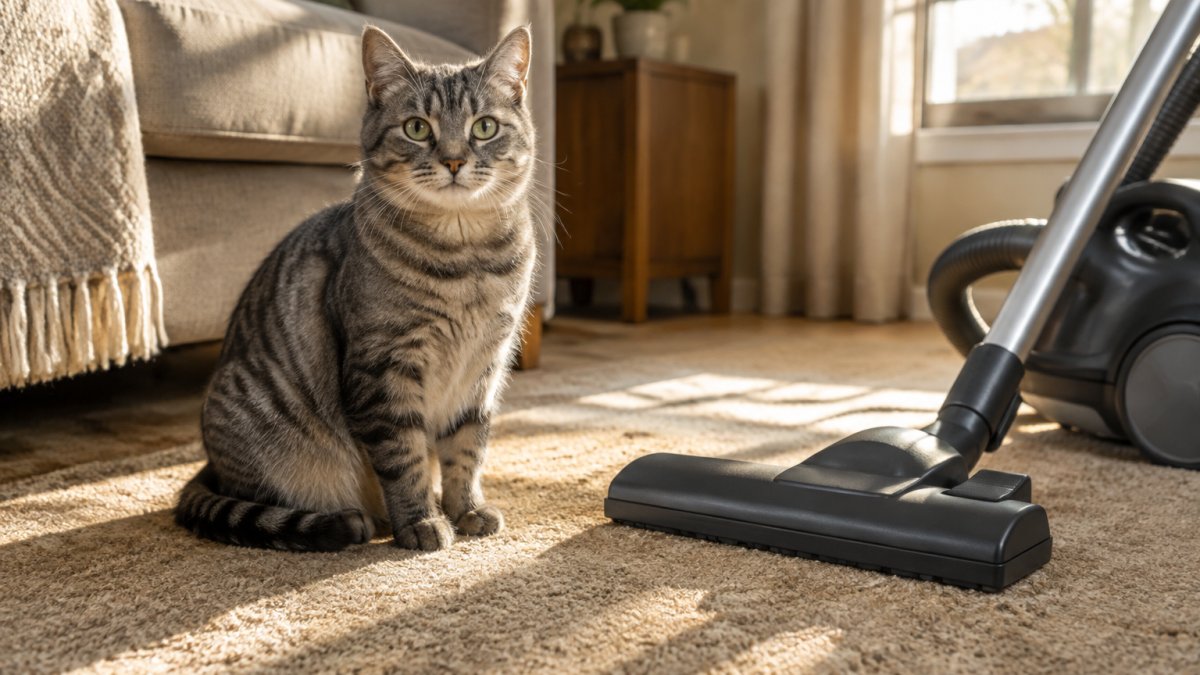
Step 1: Vacuum Often and Remove Pet Hair and Dander
Vacuuming is the highest-value habit in any cat household. It pulls out loose debris, dander, and shed hair before they work into the backing of the carpet.
How often depends on your cat. A short-haired cat in a low-traffic room needs less than a long-haired cat that sheds year-round. A common approach is:
- One to two times a week in main living areas
- Three to four times a week during heavy shedding seasons
- Daily on area rugs where your cat sleeps
Use a vacuum with a HEPA filter. It traps fine dander instead of blowing it back into the room. Go over the same strip twice, once forward and once back, so the beater bar lifts embedded hair.
Watch out: a beater bar set too low can fray loop-pile carpet and pull at tufts. Test on a hidden corner first.
If embedded hair is your main battle, our guide on how to remove pet hair from textured carpet walks through the full method step by step.
Step 2: Blot Fresh Spills and Treat Pet Stains Immediately
Solid waste, urine, and vomit each need a different first move, and the wrong first move is what sets a stain into the backing or pushes it into the pad.
Solid waste. Scoop with a paper towel or bag, working from the outside of the pile inward so you do not smear it across clean fibers. Do not scrub the spot afterward.
Urine. Blot first, never rub. Rubbing drives urine into the backing and spreads it sideways under the carpet, which is how a small accident becomes a large odor patch.
Vomit. Scoop the solids, then blot the liquid. Vomit is acidic and can dull some dye sites, so blot rather than scrub and rinse with a small amount of cool water.
Repeat marking. If your cat returns to the same spot, the pad likely still holds urine or the spot still smells like a bathroom to her. Surface cleaning will not fix that.
Watch out: never use a steam cleaner or hot water on a fresh urine spot. Heat can bond uric acid crystals to the fibers and make the odor permanent.
Then apply your cleaner and blot again. A common mistake is soaking the spot. Too much liquid reaches the pad, and the pad is where odor-causing residue hides.
Step 3: The Best Way to Deep Clean Carpet Pet Urine Stains
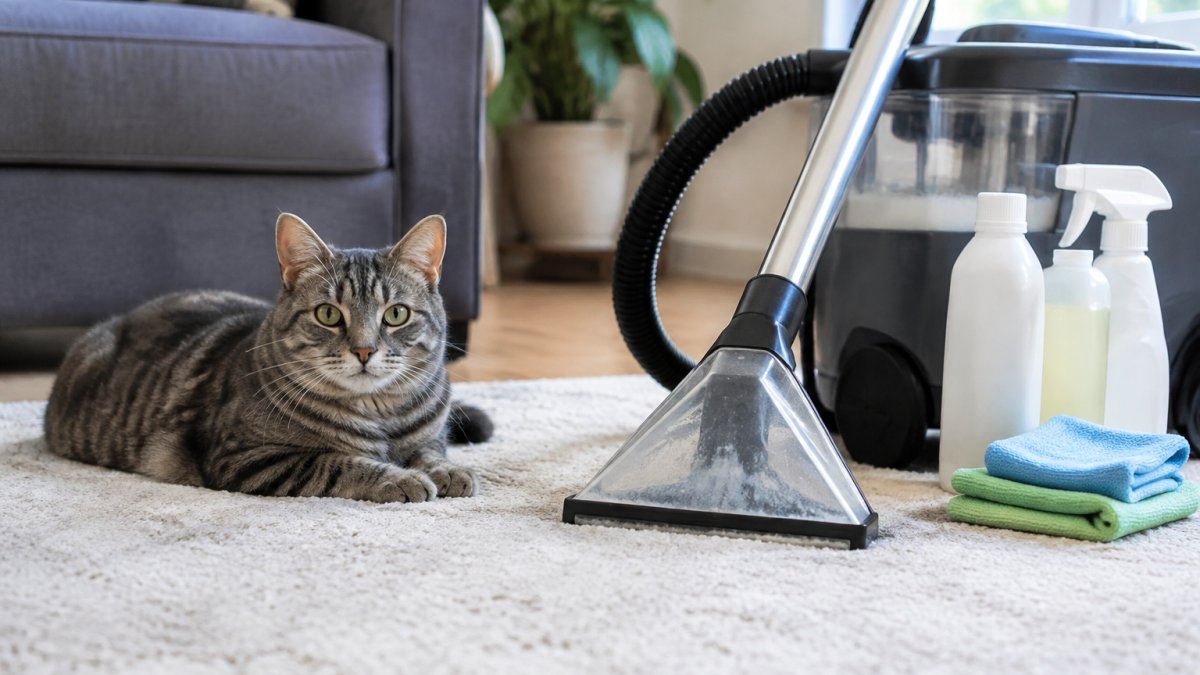
An enzyme-based cleaner is commonly recommended for pet urine stains rather than soap, because enzymes work on the uric acid crystals that cause both the stain and the smell.
Soap does not touch uric acid. It cleans the surface and leaves the crystals behind. That is why a spot can smell clean for a week and then return on a humid day.
A simple deep cleaning routine:
- Blot up as much moisture as possible.
- Apply an enzyme cleaner and let it sit for the full dwell time on the label.
- Cover the area with a clean towel and press down.
- Rinse with a small amount of water and blot dry.
- Let air circulate until the area is fully dry.
Watch out: if your cat keeps returning to the same spot, the pad may still hold urine. Surface cleaning will not fix that.
For a full walkthrough beyond this summary, see our 7 steps to deep clean pet stained carpet.
Step 4: How to Clean Carpet With Baking Soda to Neutralize Odors
Baking soda is a common household odor absorber. It absorbs moisture and traps odor molecules in the fibers rather than covering them up.
To clean carpet with baking soda:
- Vacuum the area first so the powder can reach the fibers.
- Sprinkle a generous layer over the spot or the whole room.
- Leave it for several hours, or overnight in a closed room.
- Vacuum it up completely.
For a stubborn spot, make a thick paste with baking soda and water, work it in gently, let it dry, then vacuum. The dried powder lifts residue as it goes.
Baking soda is not a disinfectant and not a stain remover. It is an odor neutralizer. Pair it with an enzyme cleaner for urine, not instead of one.
Step 5: How to Keep Carpet Clean in High Traffic Areas
High traffic areas need a schedule, not willpower. Doorways, hallways, and the path between the couch and the food bowl collect the most soil.
Build your cleaning schedule around traffic:
| Zone | Vacuum | Spot Clean | Deep Clean |
|---|---|---|---|
| Doorways and hallways | 3-4 times a week | As needed | 3-4 times a year |
| Living room seating | 1-2 times a week | As needed | 3-4 times a year |
| Bedrooms and low traffic | Once a week | As needed | 1-2 times a year |
| Area rugs | Once a week | As needed | 2-3 times a year |
A few habits make a real difference:
- Put a washable mat at each exterior door to catch soil at the source.
- Set up a designated pet area with a washable blanket where your cat eats and naps.
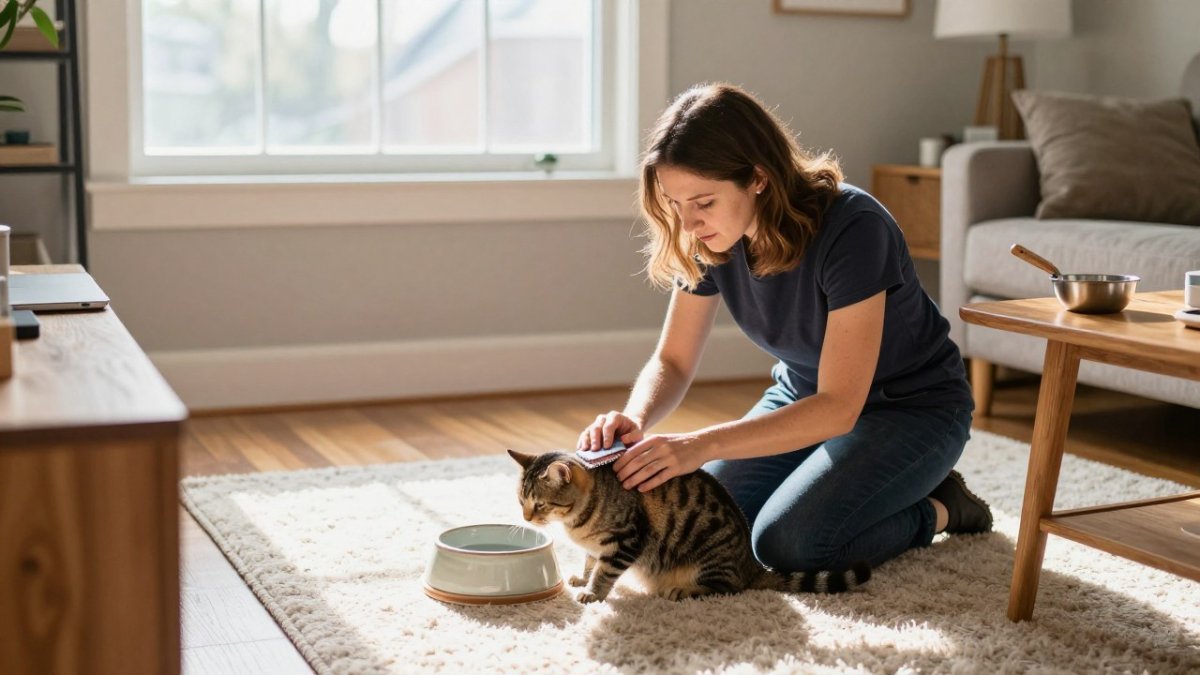
- Groom your cat regularly to cut down on shed hair before it lands.
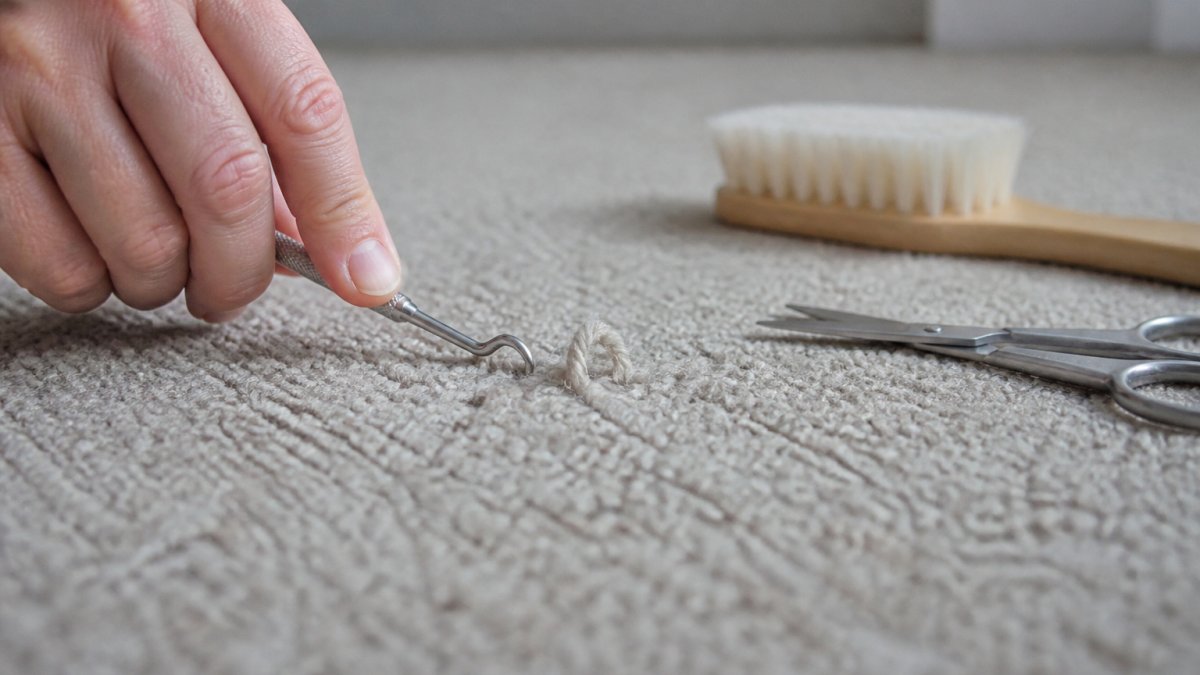
- Keep claws trimmed to reduce snags in loop-pile carpet.
On that last point, our article on preventing carpet snags from cat claws covers the tools and habits that protect fibers long term.
Choosing Pet-Safe Cleaning Products by Species and Carpet Type
Pet safe cleaning is not one label. Safety depends on your cat's age, your carpet material, and how the product is used.
How to read a label. Look for the full ingredient list, not just the front-of-bottle claims. "Natural" and "green" are marketing terms, not safety standards. Prioritize products that list enzymes (protease, amylase, lipase) for organic messes, disclose surfactants, and state a dwell time.
How exposure happens. Cats are fastidious groomers, so residue left in the fibers gets ingested during a normal grooming session.
Safety by life stage. Kittens and senior cats are the highest-risk group. Essential-oil-based cleaners are generally avoided around cats. The ASPCA's guidance on essential oils and cats explains why compounds like eucalyptus and citrus oils are a risk, especially for cats with liver or kidney concerns.
Safety by carpet type. Wool and natural fibers can react badly to strong alkaline cleaners, which can dull or yellow the fiber. Loop-pile and Berber carpets trap residue in the loops, so rinse thoroughly and vacuum with the beater bar raised.
Method compatibility. Water and steam are not universal. Steam can set stains and shrink some natural fibers. Foam and dry-cleaning compounds are often used on wool and delicate weaves.
Ingredient rules we follow:
- Choose enzyme-based cleaners for urine and organic messes
- Avoid bleach, ammonia, and strong fragrance near cats
- Test any new product on a hidden patch first
- Rinse and dry fully before your cat returns to the room
If you are still deciding what carpet to install, our guide on choosing stain-resistant carpet for pets covers the fiber and backing options that hold up best.
Booking Cat Sitting That Keeps Your Home Clean While You Travel
A stressed cat left alone may mark, vomit, or track litter, and a week of that can set into the carpet fast.
That is where in-home care earns its keep. At Tracy's Kitty Care, our sitters are background checked, licensed, bonded, and insured, and we specialize in cats only.
Our sitters can handle the basics that keep a home clean and fresh, and can manage medication routines for cats that need them.
You can review our cat sitting service and pricing to see how visits are structured. If you want help choosing a sitter before you book, our guide on how to choose the right cat sitting service covers the questions worth asking.
Carpet damage from a week away is expensive to fix. A sitter who catches a fresh spill on day one is not.
Frequently Asked Questions
Are common household carpet cleaners toxic to cats?
Many conventional carpet cleaners contain bleach, ammonia, or strong solvents that can irritate a cat's paws and respiratory tract, especially since cats groom themselves by licking their paws. Check the label for a pet-safe claim and an ingredient list you can read. Enzyme-based cleaners and simple solutions like baking soda and water are safer choices around cats. When in doubt, keep your cat out of the room until the carpet is fully dry.
How often should carpet be cleaned when you have pets?
Vacuum high-traffic areas one to two times a week, and vacuum the whole house at least weekly to control pet hair and dander. Spot clean accidents as they happen. Schedule a deeper clean, whether shampooing or professional cleaning, three to four times per year. Homes with multiple cats, senior cats, or cats prone to accidents may need deep cleaning more often.
What natural ingredients are safe for cleaning carpets around pets?
Baking soda, white vinegar diluted with water, and mild dish soap are common household options that are generally low-risk around cats when used properly. Baking soda absorbs moisture and odors; a diluted vinegar solution helps lift residue. Always test on a hidden patch of carpet first, ventilate the room, and let the carpet dry completely before your cat returns. Avoid essential oils, since many are toxic to cats.
How do I remove pet odors from carpet without harsh chemicals?
Start by blotting up as much moisture as possible, then apply an enzyme-based cleaner that breaks down the odor-causing residue rather than masking it. For a gentler approach, sprinkle baking soda over the dry area, let it sit for several hours or overnight, and vacuum thoroughly. Repeat for stubborn spots, and check below the carpet padding, since urine often soaks through and keeps releasing odor.
Your carpet takes a beating every day your cat lives on it, and the damage compounds quietly while you are away. Tracy's Kitty Care sends background-checked, licensed, bonded, and insured sitters into your home for cats only, with daily visits that include litter box care, feeding, medication support, and a quick eye on the carpet for fresh messes. Get started with Tracy's Kitty Care and come home to a clean carpet and a calm cat.