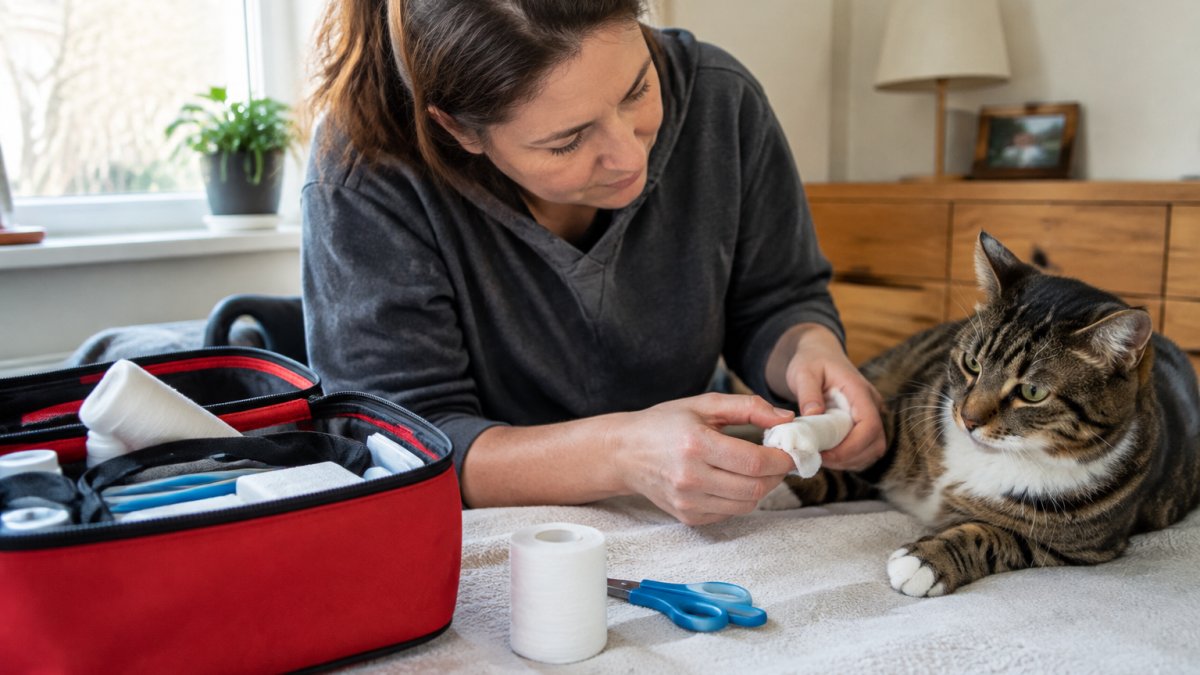
 how-to
Emergency Pet Care Protocols for Cat Owners
Last Updated: November 6, 2026
Quick Summary
Emergency pet care protocols for cat owners begin with staying calm, making the scene safe, and calling the emergency clinic while still at home. Describe your cat's age, weight, symptoms, and when they started, then ask whether to come in now and what to do during the drive. Never induce vomiting or give food, water, or human medication before a veterinarian tells you to.
- Check breathing, alertness, gum color, and visible bleeding in a ten-second scan before touching the cat.
- Wrap an injured cat in a thick towel with the head exposed instead of using bare hands.
- Open-mouth breathing, seizures, collapse, heavy bleeding, and suspected poisoning mean go immediately.
- Keep the carrier level and belted, crack a window, and skip the radio during transport.
- Store a labeled emergency kit near your carrier and check it twice a year for expired items.
Table of Contents
- What to Do in the First Five Minutes of a Cat Emergency
- Cat Emergency Symptoms That Mean Go Now
- A Veterinary Triage Flowchart for Deciding How Fast to Act
- First Aid for Cat Wounds, Bleeding, and Shock
- How to Transport an Injured Cat to the Emergency Vet
- Building a Cat Emergency Kit Before You Need It
- Medication and Home-Treatment Cautions Every Cat Owner Should Know
- Planning In-Home Emergency Coverage for Your Cat
- Frequently Asked Questions
What to Do in the First Five Minutes of a Cat Emergency
When a cat emergency hits, the first five minutes matter more than the next fifty. Emergency pet care protocols for cat owners start with one rule: stay calm, assess, and act. Cats hide pain well, so a visible crisis usually means something serious is already underway.
Panicked owners often make three common mistakes. They chase a hurt cat around the room. They skip the phone call to the vet. They try to give food or water to a vomiting cat.
Here is a prioritized checklist built for the moment itself, in the order that protects the cat and saves time:
- Make the scene safe first. Close doors, move other pets out of the room, and clear furniture the cat could hit if it thrashes. A frightened cat will bolt toward the nearest opening, so block exits before you approach.
- Look before you touch. From a short distance, check breathing (watch the chest rise and fall), alertness (does the cat track you?), gum color (pink is normal; pale, white, or blue is urgent), and whether there is visible bleeding. This ten-second scan tells you whether to move fast or call first.
- Call the emergency clinic while you are still at home. Describe the cat's age, weight, symptoms, and the time they started. Ask two questions: whether to come in now, and what to do during the drive. Write down the answers; stress makes it hard to remember instructions.
- Secure the cat with a towel or carrier, not bare hands. An injured cat bites and scratches out of fear. A thick towel wrap with the head exposed protects both of you and keeps the cat warmer than bare hands can.
- Gather the facts the vet will ask for. Note the time symptoms began, any possible toxin exposure (plants, human medications, household cleaners, antifreeze), the cat's current medications, and whether it has eaten, drunk, urinated, or defecated recently. A phone note or a scrap of paper is enough.
- Prepare the handoff before you drive. Put the cat's medical records, medication list, and your phone in one place. Call ahead so the clinic knows what is coming and can prepare.
- Drive calmly. A calm driver arrives safer than a fast one. Keep the carrier level and belted, crack a window for airflow, and skip the radio.
Watch out: do not induce vomiting, give food or water, or offer any human medication before a veterinarian tells you to.
The American Veterinary Medical Association's pet owner resources reminds owners that a quick phone call can save critical time.
Cat Emergency Symptoms That Mean Go Now
Some cat emergency symptoms mean drive to the clinic immediately, no waiting to see if things improve. Breathing trouble, seizures, collapse, heavy bleeding, and suspected poisoning top the list.
Watch for these red flags:
- Open-mouth breathing or loud rasping
- A seizure lasting more than a few minutes, or repeated seizures
- Collapse or loss of consciousness
A cat that is hiding, vocalizing oddly, or suddenly unable to use its back legs also needs urgent care. When in doubt, call. Emergency veterinarians would rather answer a question than treat a delay.
Breathing Problems, Seizures, and Loss of Consciousness
Breathing difficulty is the fastest killer on this list. A cat with an airway obstruction or open-mouth breathing needs oxygen and a vet, not home remedies.
For a seizure, time it. Move furniture away, dim the lights, and do not startle or restrain the cat. Most seizures stop on their own within a couple of minutes.
Loss of consciousness means check breathing and get moving.
A Veterinary Triage Flowchart for Deciding How Fast to Act
A veterinary triage flowchart turns panic into a decision.
Speed 1, Go now, do not wait for a callback. Any of these means load the cat and drive, calling the clinic from the car if needed:
- Open-mouth breathing, loud rasping, or obvious struggle for air
- A seizure lasting more than a few minutes, repeated seizures, or a cat that does not wake up afterward
- Collapse, loss of consciousness, or sudden inability to use the back legs
Speed 2, Call now, and be ready to go. These signs are urgent but usually allow a phone call first so the clinic can advise you:
- Vomiting or diarrhea that is repeated, bloody, or paired with lethargy
- A cat that is hiding, vocalizing oddly, or refusing food for more than a day
- A bite or scratch wound, especially from another animal
| Step | Question | If Yes | If No |
|---|---|---|---|
| 1 | Is the cat breathing normally and alert? | Go to step 2 | Speed 1: call from the car and go now |
| 2 | Is there heavy bleeding, a seizure, collapse, or a known toxin? | Speed 1: control bleeding or time the seizure, go now | Go to step 3 |
| 3 | Is the cat straining to urinate, vomiting repeatedly, or refusing food? | Speed 2: call the clinic now | Go to step 4 |
| 4 | Is the cat eating, drinking, and behaving normally? | Speed 3: call during normal hours and monitor | Speed 2: call the clinic now |
This flow keeps you from guessing. A cat that passes every step may still need care, but you have time for a phone call. A cat that fails any step goes to the emergency veterinarian.
Watch out: a cat that is "just quiet" or hiding can be further along than a cat that is crying.
First Aid for Cat Wounds, Bleeding, and Shock
First aid for a cat wound buys time, it does not replace veterinary attention.
For a bleeding wound, apply firm pressure with a clean cloth or gauze. Do not remove an object stuck in the wound; pack around it instead.
Shock is easy to miss. Signs include pale gums, rapid breathing, weakness, and a body temperature that feels cool to the touch.
Safe Restraint and Handling of an Injured or Distressed Cat
An injured cat may bite or scratch out of fear. Safe restraint protects both of you. Wrap the cat in a thick towel, leaving the head exposed, and support the body from below.
Speak softly and move slowly. If your cat panics at the vet, our guide to managing cat anxiety during medical care explains how to reduce stress during handling.
How to Transport an Injured Cat to the Emergency Vet
Transport is where many owners lose precious minutes. Have a carrier ready before you need it, and never carry a hurt cat loose in the car.
Follow these steps:
- Line the carrier with a towel for warmth and grip.
- Place the wrapped cat inside gently, head first.
- Keep the carrier level and secure it with a seatbelt.
If you have no carrier, a sturdy box with air holes works in a pinch. Keep the car quiet and skip the radio. A calm, dark space lowers a distressed cat's stress during transport.
Building a Cat Emergency Kit Before You Need It
A cat emergency kit turns a chaotic moment into a manageable one. Store it in a labeled bin near your carrier, and check it twice a year for expired items.
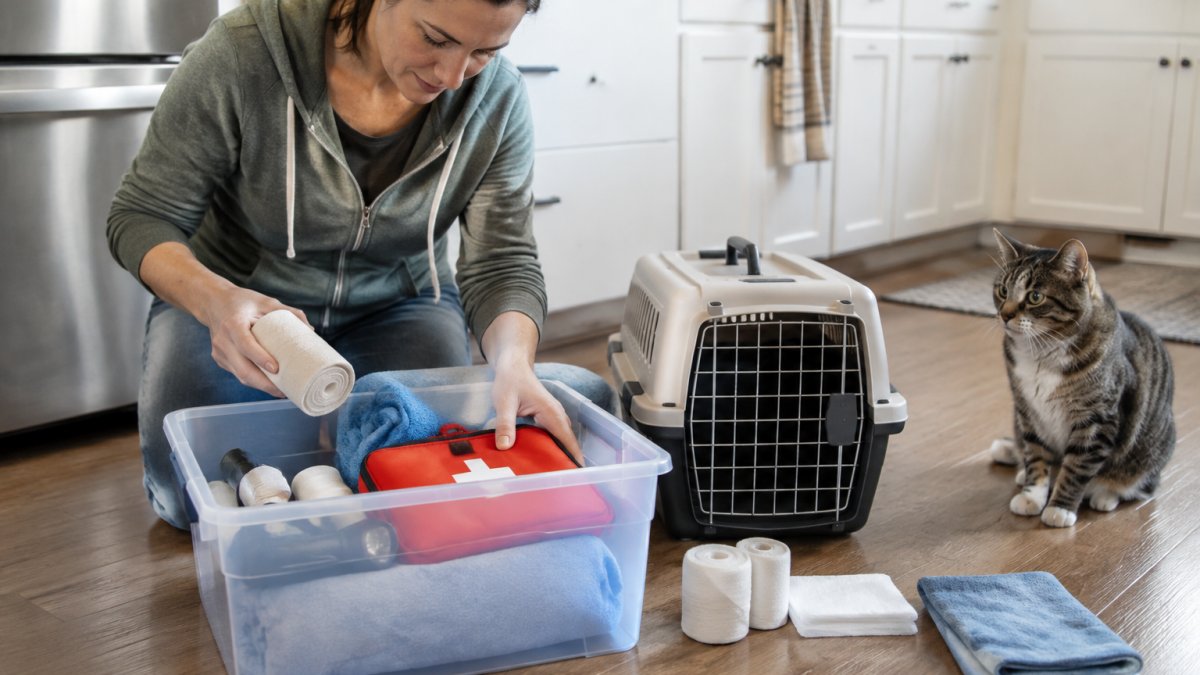
Pack these items:
- Gauze rolls, adhesive tape, and blunt scissors
- A digital thermometer and a slip lead
- A thick towel and a blanket
Add a small bag of cat litter and a collapsible bowl for longer trips. The FEMA's guidance on building emergency supply kits applies the same preparedness logic to pets: stock it early, store it where you can grab it, and check it often.
Medication and Home-Treatment Cautions Every Cat Owner Should Know
Never give human medication to a cat without veterinary approval. Common pain relievers like ibuprofen and acetaminophen are toxic to cats, and dosing errors cause real harm.
A few rules keep home treatment safe:
- Follow the exact dose and schedule your vet provides.
- Never split or crush pills without checking first.
- Store medications out of reach; cats knock bottles off counters.
If your cat needs liquid medication, our tips for administering liquid medication to cats walk through a low-stress method. When a cat refuses food or water for more than a day, call your vet rather than waiting.
Planning In-Home Emergency Coverage for Your Cat
The best emergency protocol includes a plan for when you are away. In-home care keeps a cat in its familiar space, which lowers stress and makes health changes easier to spot.
Build your coverage plan now:
- Choose a sitter who knows your cat's medical history.
- Leave written instructions for medications and emergency contacts.
- Stock extra food, litter, and supplies.
- Share your vet's number and your own travel contact.
A cat sitter checklist for special needs cats helps you brief a sitter on daily routines and warning signs. For cats with ongoing medical needs, our cat sitting for medically complex cats guide covers what to look for in a qualified sitter. You can also review how to ensure cat safety with a sitter before you travel.
Tracy's Kitty Care specializes in in-home cat sitting with background-checked, licensed, bonded, and insured sitters. If you are planning a trip, our cat sitting service can be reviewed for current options.
Frequently Asked Questions
What counts as an emergency for a cat?
Any breathing difficulty, open-mouth breathing, a seizure lasting more than two minutes, uncontrolled bleeding, suspected poisoning, or loss of consciousness is an emergency. So is a cat that cannot urinate, has been hit by a car, or shows pale gums and weakness. When cat emergency symptoms appear suddenly and worsen within minutes, call an emergency veterinarian while you prepare to transport. If you are unsure, call the clinic and describe what you see; staff can help you decide whether to come in.
What should I include in a cat emergency kit?
Pack a sturdy carrier, a thick towel for safe restraint and warmth, gauze pads and self-adhesive wrap, a digital thermometer, blunt-tipped scissors, a flashlight, disposable gloves, and a copy of your cat's medical records and medication list. Add a small bottle of drinking water and a slip lead. Keep the kit where you can grab it in seconds. Check it every few months and replace expired items. A cat emergency kit saves time when minutes matter.
How can I safely transport an injured cat to the emergency vet?
Move slowly and speak softly. Drop a thick towel over the cat to prevent scratching, then slide the cat onto a rigid surface such as a clipboard or cardboard sheet and lower it into a carrier. Keep the carrier level and secured in the car. Do not force restraint or pull on limbs. Cover the carrier with a light blanket to reduce visual stress. Call the clinic on the way so staff can prepare for your arrival and guide you on any first aid for cat wound care during transport.
What if my cat needs emergency care and I cannot afford it?
Ask the emergency clinic about its payment options before you arrive. Some clinics offer triage and stabilization first, then discuss costs. You can also call local animal welfare organizations for referrals to low-cost emergency services. Do not delay transport to sort out payment; getting the cat seen is the priority. Once stabilized, ask for an itemized estimate so you can decide on next steps. For ongoing care, in-home cat sitting services can help manage medication schedules while you budget.
A cat emergency is stressful, but a written plan turns fear into action. Build your kit, save your numbers, and line up trusted in-home care before you need it. Tracy's Kitty Care offers background-checked, licensed, bonded, and insured sitters who specialize in cats and can handle medication and special needs. Get started with Tracy's Kitty Care and give your cat reliable, calm care at home.