 how-to
How to Repair Pulled Carpet Loops and Stop Snags Spreading
Last Updated: November 3, 2026
Quick Summary
Repair pulled carpet loops by isolating the snag with painter's tape, cleaning it with rubbing alcohol, then re-anchoring the loop base with a carpet awl or a small dot of latex carpet adhesive. Trim only stretched or broken loops level with the surrounding pile, and weight the spot until the adhesive cures fully.
- The core repair takes about ten minutes per snag in good light.
- Re-anchor attached loops with latex adhesive instead of cutting them short.
- Most latex carpet adhesives need several hours to cure, some a full day.
- On olefin loop pile, seal every cut end with adhesive to stop fraying.
- Call a professional when backing is visible across a patch larger than a coin.
Table of Contents
- Why Pulled Carpet Loops Happen and Why You Should Act Fast
- What Goes in a Carpet Snag Repair Kit
- Step-by-Step: How to Repair Pulled Carpet Loops
- Berber Carpet and Other Loop Pile: Material-Specific Troubleshooting
- How to Fix Carpet Snags from Cats Without Making It Worse
- Safety First with Hot Glue and Sharp Tools
- Preventing Future Snags in High-Traffic Areas
- When to Call a Professional Carpet Repair Service
- Frequently Asked Questions
Why Pulled Carpet Loops Happen and Why You Should Act Fast
A single pulled loop in a loop pile carpet can unravel into a full carpet run within weeks if you ignore it. A cat digs in at a doorway, a claw catches one loop, and the damage can spread from there.
Carpet snags happen when something catches a single loop and pulls it above the surface. Common culprits include:
- Cat claws catching during a sprint or stretch
- Vacuum beater bars grabbing loose loops
- Furniture legs dragged across the pile
The faster you act, the easier the fix. A fresh snag sits loose on the surface. An old one has usually pulled backing yarn with it, and that turns a simple trim into a re-anchor job.
Identifying Carpet Loop Types Before You Touch Anything
Not all loop carpet behaves the same, and the repair method depends on what you're standing on. Loop pile carpet is built from uncut yarn loops tufted into a backing.
Check these details before you touch a single fiber:
- Loop height: Short, tight loops resist snags better than tall, loose ones.
- Fiber type: Nylon and wool loops can be re-anchored with adhesive. Some olefin loops fray badly when cut.
- Backing style: Tufted carpet has a primary and secondary backing. Glue-down carpet bonds directly to the floor.
If you own textured or loop carpet and also battle pet hair, our guide on removing pet hair from textured carpet covers the right technique so you don't pull more loops while cleaning.
A Quick Visual Check: Snag, Sprout, or Run
Run this 30-second check before you grab any tools. It tells you which repair you're facing.
- Snag: One loop pulled long and loose, still attached at the base. Usually fixable with trimming or re-anchoring.
- Sprout: A short tuft poking above the surface, often from a cut loop. Trim it level and monitor.
- Run: A visible line where multiple loops have pulled free and the backing shows through. This needs adhesive and possibly a professional.
If you can see backing between the rows, stop. That's a run, and it gets worse with every vacuum pass.
What Goes in a Carpet Snag Repair Kit
A basic carpet snag repair kit handles most household snags. Keep one on hand so you can fix a pull the moment you spot it, before it becomes a run.
Here's what we recommend keeping in a small box:
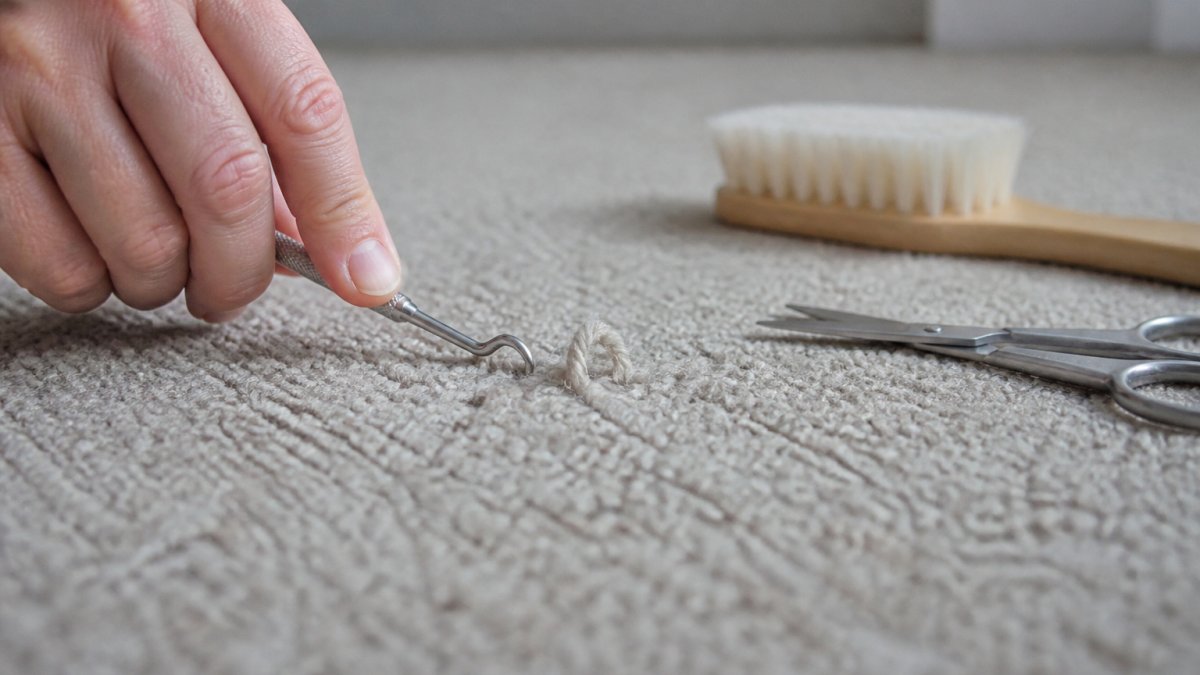
- Small sharp scissors with fine tips, for trimming sprouts
- A carpet awl or tapestry needle, for tucking loops back through the backing
- Latex carpet adhesive or seam glue, for re-anchoring loose loops
Craft glue may dry brittle, so latex carpet adhesive is generally the better choice for this repair. Latex carpet adhesive stays flexible, which helps the repaired loop stay in place.
Step-by-Step: How to Repair Pulled Carpet Loops
The core repair takes about ten minutes per snag. Work in good light, and don't pull anything tighter than it already is.
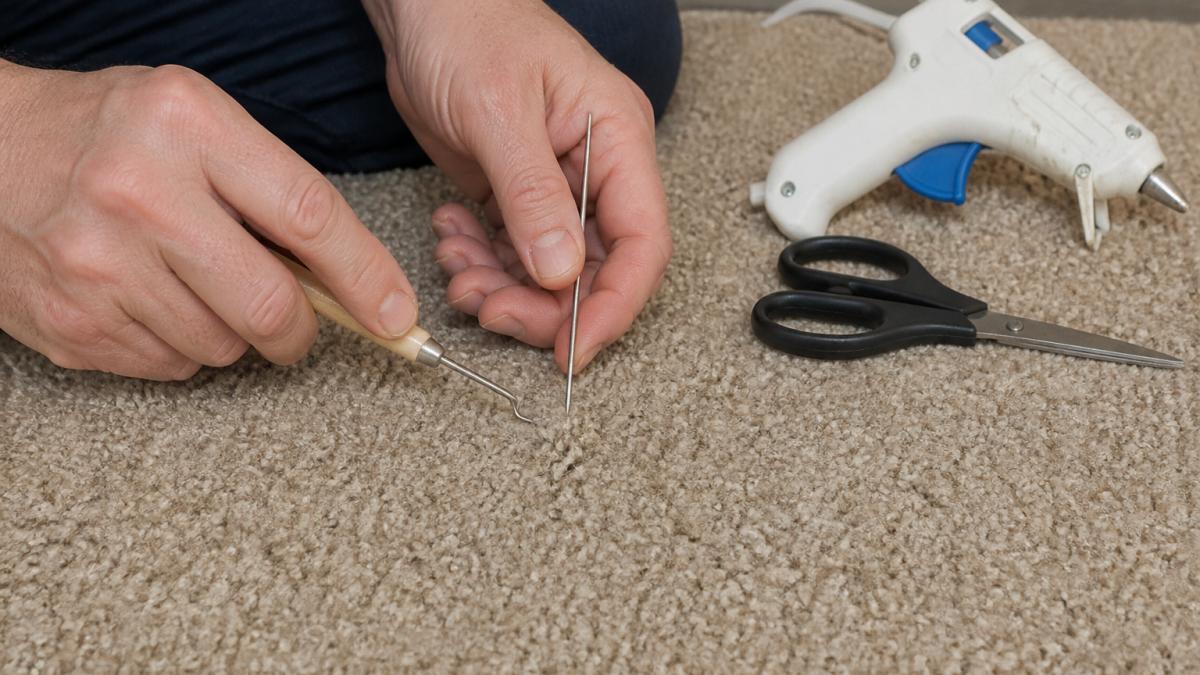
- Isolate the snag. Circle it with painter's tape so you don't snag nearby loops while working.
- Clean the area. Blot with a cloth dampened with rubbing alcohol and let it dry fully.
- Assess the loop. Is it still attached at the base, or is it a loose strand?
- Trim only if needed. If the loop is stretched and won't lie flat, snip it level with the surrounding pile using fine scissors.
- Re-anchor or tuck. Use the awl to push the loop base back through the backing, or apply a small dot of latex adhesive at the base.
- Hold it flat. Press the loop down and weight it for the adhesive's cure time.
- Groom the spot. Run your fingers or a soft brush over the repair to blend it with the surrounding pile.
Cut or Re-Anchor? Deciding Before You Snip
Re-anchor when the loop is still attached and only slightly stretched. Cutting a healthy loop shortens the pile and leaves a visible dip.
Cut when the loop is broken, badly stretched, or too long to tuck back. Trim it level, not short.
If the loop is attached but keeps popping back up, that's a backing failure, not a length problem.
Securing the Loop with Adhesive
Adhesive is what makes a repair invisible and permanent.
For a fast surface fix on synthetic carpet, a hot glue gun works, but use it sparingly.
Let the adhesive cure fully before walking on the spot. Most latex carpet adhesives need several hours, and some need a full day.
Here is the repair sequence at a glance, from isolating the snag to blending the finished patch.
| Step | What to do |
|---|---|
| 1 | Circle the snag with painter's tape |
| 2 | Blot with rubbing alcohol and let dry fully |
| 3 | Assess whether the loop is attached at the base |
| 4 | Trim level with surrounding pile only if needed |
| 5 | Re-anchor with awl or a dot of latex adhesive |
| 6 | Press loop down and weight it for cure time |
| 7 | Groom the spot to blend with surrounding pile |
Berber Carpet and Other Loop Pile: Material-Specific Troubleshooting
Berber carpet can be harder to repair than other loop piles, because the pattern makes mistakes more visible. A trimmed loop in a Berber weave shows as a gap in the pattern, so re-anchoring is almost always the better first move. This section goes fiber by fiber and pattern by pattern, which is where most guides stop at a bullet list.
Wool Berber: Bond Carefully, Don't Scrub
Wool fibers bond well with a wool-safe latex adhesive, but they felt when scrubbed or agitated wet. Blot the spot with a cloth dampened with rubbing alcohol and let it dry fully before applying adhesive; don't rub. Re-anchor the loop base with a needle and a small dot of latex, weight it flat, and leave it alone for the full cure.
Nylon Loop Pile: The Most Forgiving
Nylon is the most forgiving loop pile. The pile springs back, hot glue and latex both work, and a slightly stretched loop often recovers after a light grooming. For a permanent fix use latex; for a quick hold in a low-traffic spot, hot glue is acceptable. Nylon is also the fiber where a trimmed sprout is least likely to show, because the color runs through the fiber in most solution-dyed nylon styles.
Olefin Loop Pile: Seal Every Cut
Olefin is prone to fraying when cut. Trim minimally, and seal the cut end with a tiny dot of adhesive so the fiber doesn't unravel further. Re-anchor rather than cut whenever the loop is still attached. On olefin, a cut loop is a permanent weak point in the weave.
Solution-Dyed Loop Pile: Color Is Your Friend
Solution-dyed loop pile carries color through the fiber, so a trimmed sprout won't show a lighter tip. That makes trimming a viable option here where it wouldn't be on a surface-dyed carpet. Still trim level with the surrounding pile, not short.
Glue-Down Loop Carpet: Skip the Awl
Glue-down loop carpet bonds directly to the floor, so there is no secondary backing to push an awl through. Skip the awl. Push the loop back with a needle and secure it with adhesive from the surface, working the base down rather than pulling the loop up.
Patterned Berber: The Decision Tree
- Loop attached, slightly stretched: Re-anchor with latex. Do not cut; a cut loop breaks the pattern line.
- Loop broken but base intact: Re-anchor the base, then trim only the loose tip level with the pattern.
- Loop missing, backing visible in a single row: Re-anchor with a needle and latex; a single missing loop in a pattern is often recoverable.
When in doubt, tuck and glue. Cutting is the last resort on any patterned loop carpet.
On a Berber with a visible pattern, trimming a stretched loop below the surrounding pile can create a dip that is hard to blend, even after grooming.
How to Fix Carpet Snags from Cats Without Making It Worse
Cat claws are a common cause of household snags, and the wrong reaction makes them worse. Never pull a snagged loop to "see how long it is." That's how a single snag becomes a carpet run.
Here's the sequence that works for cat-caused damage:
- Move the cat away from the spot calmly. Don't scold, or you'll teach her to snag when you're not looking.
- Trim the cat's nail tips if the snag came from a sharp claw.
- Re-anchor the loop with a needle and a dot of latex adhesive.
- Weight the spot until it cures.
- Check the same area weekly, since cats return to favorite scratching spots.
If your cat has already done real damage in a busy room, our guide on deep cleaning pet-stained carpet covers the cleanup side so the repair doesn't sit on top of a stain.
Safety First with Hot Glue and Sharp Tools
Hot glue guns and carpet awls cause real injuries when used on the floor. Protect yourself before you start.
- Never touch the glue tip or fresh glue. Hot glue causes burns that blister fast.
- Keep the gun on a heat-safe tray, not on the carpet, between applications.
- Point the awl away from your body and keep your other hand clear of the tip.
Watch out: a hot glue gun left on the floor for "just a second" is how most carpet burns happen. Unplug it between uses, every time.
Preventing Future Snags in High-Traffic Areas
Prevention is cheaper than repair, and it takes about five minutes a week. Focus on the spots where snags keep coming back.
- Trim cat nails every two to three weeks.
- Vacuum with the beater bar off on loop and Berber carpet.
- Add a scratching post near the doorway or corner where your cat snags.
If you want to go further, our guide on preventing carpet snags from cat claws covers the longer-term setup in detail.
When to Call a Professional Carpet Repair Service
Call a professional when the damage has spread beyond a single loop.
Signs it's time to stop DIY:
- Backing is visible across a patch larger than a coin
- The run keeps spreading after your repair
- The carpet is wool Berber with a visible pattern
If the repair isn't worth it, it's worth knowing what holds up better. Our guide on flooring that holds up best to cat claws covers the alternatives before you replace the carpet.
A single snag is easy to ignore until it becomes a run that costs you a room's worth of carpet.
Frequently Asked Questions
Should I cut a pulled carpet loop or reattach it?
Reattach it whenever the loop is still intact. Use a carpet repair tool or awl to work the loop back through the backing, then secure it with a small dot of latex carpet adhesive. Only trim a pulled carpet loop when the fiber is broken or frayed beyond re-anchoring, and cut level with the surrounding pile rather than pulling it further. Cutting a healthy loop shortens that tuft permanently and leaves a visible dip in the carpet.
What tools do I need to fix pulled carpet loops?
A basic carpet snag repair kit covers most jobs: a carpet awl or repair tool, a blunt needle, small sharp scissors, and latex carpet adhesive or a hot glue gun. Add a clean cloth and a small weight for holding the loop flat while glue sets. For Berber carpet, a fine crochet hook helps lift tight loops without stretching the backing.
Can you repair a snag in Berber carpet without it showing?
Often yes, if you act before the snag becomes a run. Berber is a loop pile with continuous fibers, so a loose loop can unravel across the row if pulled. Re-anchor the loop into the backing with latex adhesive rather than cutting it, and avoid tugging the loose end to test it. Deep runs or lifted rows that expose the backing may need a professional carpet repair.
How do I stop my cat from pulling carpet loops?
Cats often pull carpet loops at doorways and stair edges where the pile catches on claws during a sprint. Trim your cat's claws every two to three weeks, add a sturdy doormat over the worst spot, and give your cat a scratching post near the area so the carpet stops being the target. If you travel and want your cat cared for while you're away, Tracy's Kitty Care offers in-home cat sitting.