 blog
How to Set Up Essential Supplies for a Cat Safe Room
Last Updated: October 29, 2026
Quick Summary
A cat safe room needs eight core supplies: food and water bowls, a litter box and litter, a washable bed, at least two hiding places, a scratching surface, three to five toys, grooming tools, and an enzyme cleaner. Buy the litter box, bowls, hiding spots, and bed before the cat arrives, then add the rest within the first week.
- Measure the room and find outlets before buying any supplies.
- Place food and water on opposite sides of the room, away from the litter box.
- Use two to three inches of unscented clumping litter and scoop twice daily.
- Give a nervous cat at least two hiding options and one high perch.
- Leave the carrier in the room with the door open for days before travel.
Table of Contents
- Start With a Cat Safe Room Checklist Before You Shop
- How to Cat-Proof a Room Before the First Supply Goes In
- Food and Water Setup: Bowls, Fountains, and Placement
- Litter Box Placement and Setup That Actually Works
- Building a Safe Space for an Anxious Cat
- Scratching Posts, Toys, and Daily Enrichment
- Calming a Cat During Travel and the First Nights Home
- Cleaning, Sanitation, and Supply Maintenance
- Frequently Asked Questions
Start With a Cat Safe Room Checklist Before You Shop
A cat safe room is a small, closed-off space stocked with everything a cat needs to eat, drink, eliminate, hide, scratch, and rest without leaving the room. The single biggest mistake people make is buying supplies before checking the room itself.
Many people shop first and rearrange later, which can cost money. A bed that won't fit beside the litter box, a fountain with a cord that reaches no outlet, a scratching post that blocks the closet door: these are returns waiting to happen.
So walk the room first. Measure the floor space. Find the outlets. Note where the door swings. Then buy against that plan.
Below, we'll show you exactly how to stock a safe room in the right order, from the eight core supplies to the hazard checklist most guides skip entirely.
The Eight Supplies Every Safe Room Needs
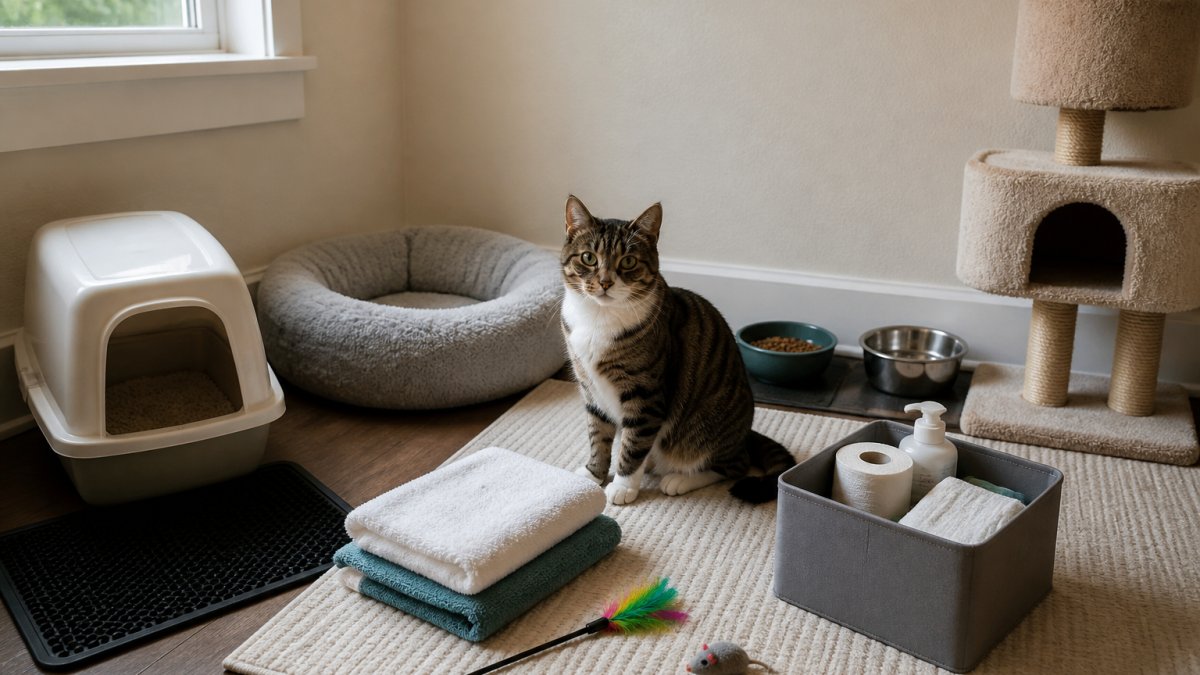
Every safe room needs eight categories of gear. Skip one and the room stops working as a self-contained space.
- Food and water setup - bowls or a fountain, plus a mat
- Litter box and litter - one box, low-sided for kittens and seniors
- A bed - washable, sized to the cat's full stretch
- Two or more hiding places - covered, dark, and easy to reach
- A scratching surface - vertical post or horizontal cardboard
- Toys - quiet ones for solo play, wand toys for your visits
- Grooming basics - brush or comb, nail clippers, toothbrush
- Cleaning supplies - enzyme cleaner, spare litter scoop, trash bags
That's the full cat safe room checklist. Everything else is optional.
A Prioritized Shopping List With Quantities
Here is the order we'd buy in, with quantities for a single cat in a single room.
| Priority | Item | Quantity | Why This Order |
|---|---|---|---|
| 1 | Litter box | 1 (2 if space allows) | Cat won't settle without it |
| 2 | Food and water bowls | 2 bowls or 1 fountain | Basic needs come first |
| 3 | Hiding spots | 2 minimum | Reduces stress on day one |
| 4 | Bed | 1 washable | Rest and body heat |
| 5 | Scratching post | 1 vertical, 1 horizontal | Protects your furniture |
| 6 | Toys | 3 to 5 | Solo enrichment |
| 7 | Grooming tools | 1 brush, 1 clipper set | Weekly upkeep |
| 8 | Enzyme cleaner | 1 bottle | Messes will happen |
Buy priority one through four before the cat arrives. The rest can follow within the first week.
How to Cat-Proof a Room Before the First Supply Goes In
Cat-proofing means removing or securing anything a cat can swallow, tangle in, tip over, or get trapped behind. Do this before you carry a single bowl into the room.
Start with a hands-and-knees pass. Look at the room from the cat's height and you'll spot hazards fast.
Then work through these fixes:
- Tape down or hide loose cords
- Move cleaning products into a closed cabinet
- Block gaps behind appliances with foam or towels
- Check window screens for tears
- Remove small objects that fit in a mouth
- Anchor bookshelves and unstable furniture
The ASPCA's poison control guidance for cats is worth bookmarking. Common houseplants and human foods cause a large share of emergency calls, and the list is longer than most owners expect.
Room-by-Room Hazard Checklist
This is the gap most safe-room guides miss. Hazards change by room, so check each space separately.
- Bedroom: blind cords tied up, jewelry and hair ties out of reach, closet doors latched
- Bathroom: toilet lid down, medicines in a locked cabinet, no dangling towels near the sink
- Laundry room: detergent pods stored high and sealed, dryer door closed, lint trap clear
- Home office: cables bundled, paper shredder unplugged, small parts in drawers
- Spare room: exercise equipment folded, plastic bags stored away, furniture anchored
Watch out: laundry pods and dangling blind cords are two hazards to check for. Both can cause serious injury and are quick to fix.
Food and Water Setup: Bowls, Fountains, and Placement
Place food and water on opposite sides of the room, away from the litter box. Cats are clean animals, and many will drink less when water sits beside waste.
Some cats prefer a wide, shallow bowl because whisker contact with deep sides can bother them.
Fountains help cats that ignore still water. They also add a cord and a filter to maintain, so weigh that against the benefit.
- Bowls: cheap, easy to clean, easy to tip
- Fountain: encourages drinking, needs weekly cleaning
- Dispenser: useful for short trips, no substitute for fresh food
Keep the food bowl in the same spot every day. Cats build a routine around feeding location, and moving the bowl mid-week resets that.
Litter Box Placement and Setup That Actually Works
Put the litter box in a quiet corner with two exits visible, far from food and water. A box jammed against a wall in a high-traffic spot is the most common reason cats stop using it.
Setup matters as much as placement:
- One box per cat, plus one spare if space allows
- Two to three inches of unscented clumping litter
- Low sides for kittens, seniors, and cats with mobility issues
- No lid on the box at first, since covered boxes trap odor
- Scoop twice daily, full change weekly
Watch out: scented litter and box liners can contribute to sudden avoidance. If a cat stops using a clean box, consider removing those extras and consulting a veterinarian about any ongoing change.
Building a Safe Space for an Anxious Cat
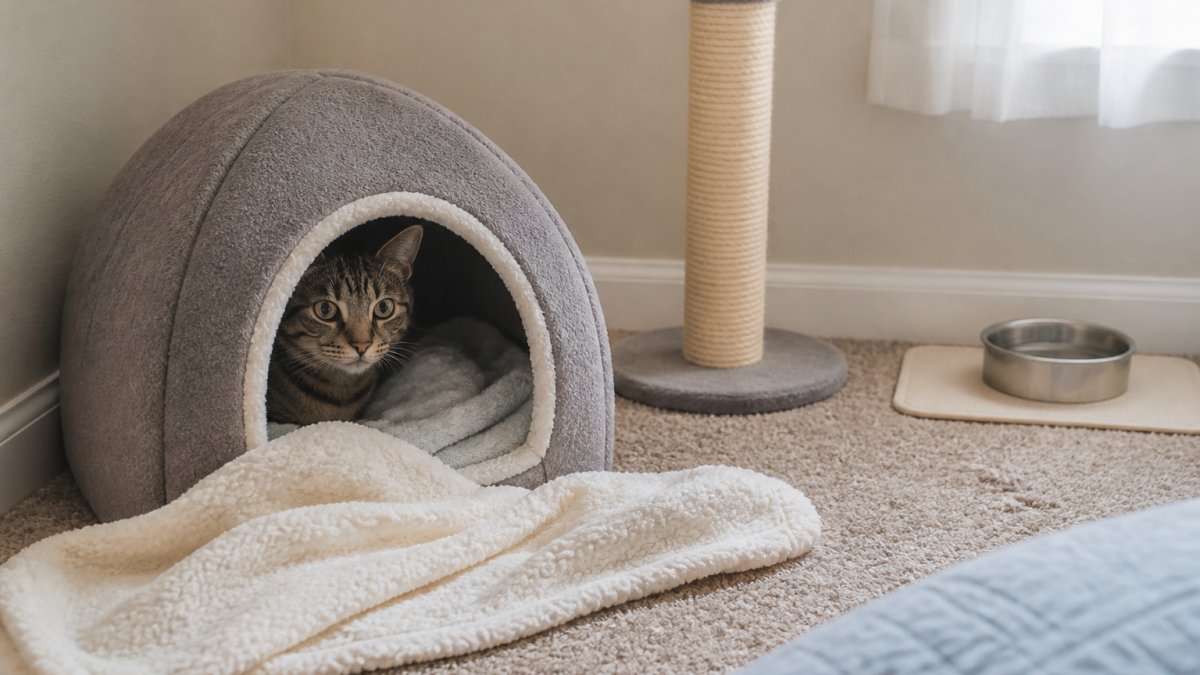
A safe space for an anxious cat is a room where the cat can hide, watch, and retreat without being cornered. The supplies matter less than the layout: dark spots to hide, height to climb, and a clear path to the litter box. Readers weighing whether to add a calming pheromone diffuser to the room can find guidance on that choice.
Beds, Hiding Places, and Vertical Space
Give a nervous cat at least two hiding options and one high perch. A covered bed, a cardboard box on its side, and a cat tree with a top platform cover all three needs.
Vertical space matters more than floor space. A shelf, a windowsill, or a cat tree lets a shy cat watch the room from safety. That distance is what helps most cats relax.
Don't force the cat out of hiding. Let it come to you on its own schedule. To explore safe herbal supplements that may complement the room, see the linked article.
Scratching Posts, Toys, and Daily Enrichment
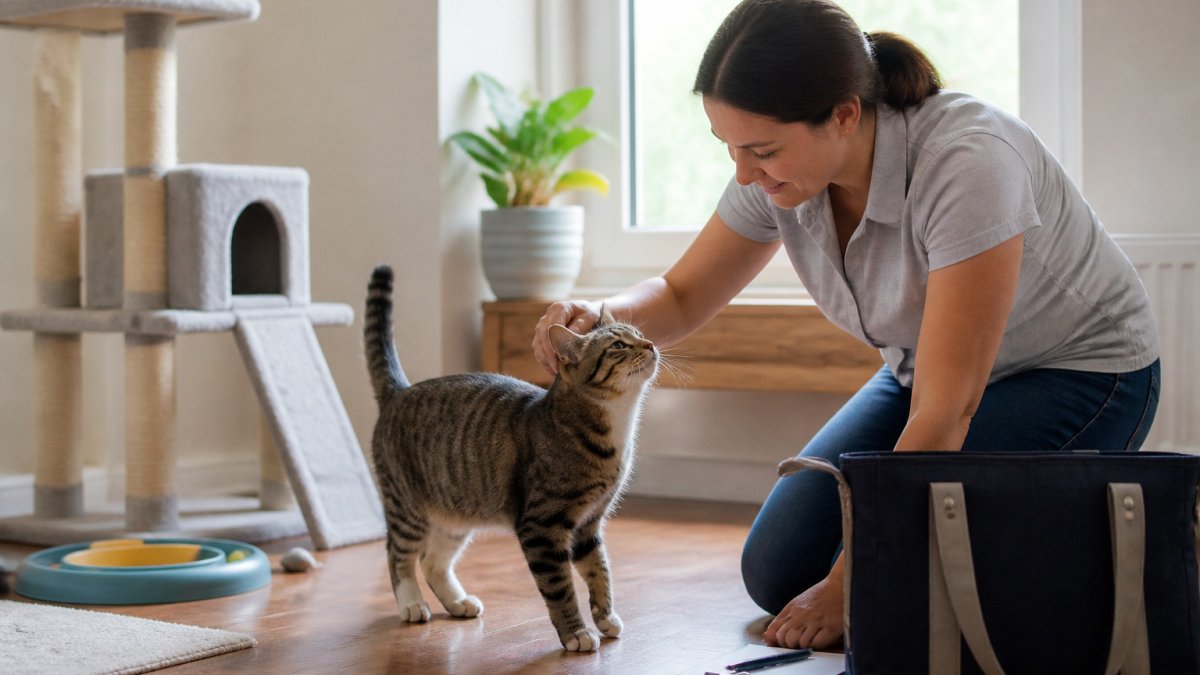
Scratching is a need, not a habit to correct. Provide a sturdy vertical post tall enough for a full stretch, plus a horizontal cardboard scratcher for cats that prefer the floor.
Toys should match the cat's confidence level. Shy cats often prefer quiet, solo toys over loud ones. Our guide to interactive toys for shy cats covers gentle options that won't overwhelm them.
- Solo toys: puzzle feeders, crinkle balls, kick toys
- Interactive toys: wand toys for your visits
- Rotate weekly: swap toys out to keep them interesting
Calming a Cat During Travel and the First Nights Home
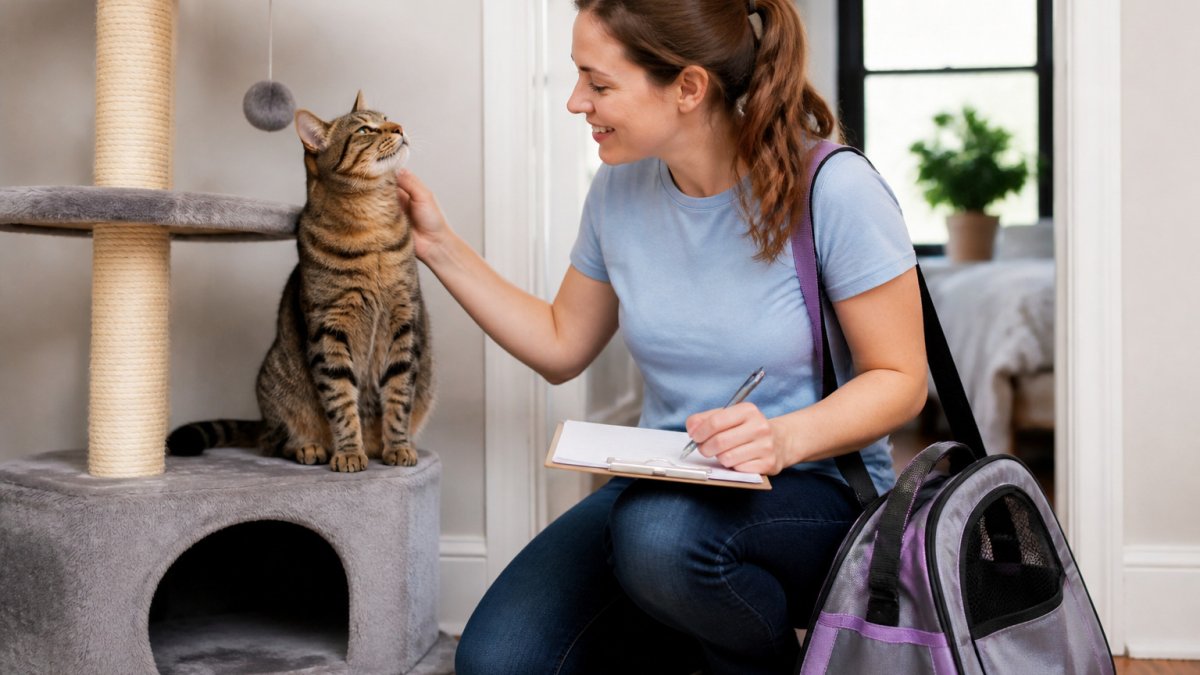
Calming a cat during travel starts before the carrier comes out. Leave the carrier in the room for days beforehand, door open, with a blanket inside. A carrier that lives in the room stops being a scary object.
For the first nights home, keep the room dim and quiet. Our guide to managing anxious cats during travel offers practical help with the transition. Sit on the floor and talk softly. Don't pick the cat up unless it approaches you.
Cleaning, Sanitation, and Supply Maintenance
A safe room needs a cleaning routine, not a deep clean once a month. Scoop litter twice daily, wash bowls daily, and wipe down surfaces weekly.
Enzyme cleaners are designed to break down urine and vomit residue, which can draw a cat back to the same spot. For tougher messes, follow our step-by-step carpet deep cleaning guide.
Replace litter box plastic when it scratches or holds odor. Wash beds and blankets weekly. Check toys for tears and toss anything with loose stuffing.
Setting up a safe room takes planning, but the payoff is a cat that settles faster and stays calmer while you're away. That's the whole point of the room.
Tracy's Kitty Care offers in-home cat sitting from background-checked, licensed, bonded, and insured sitters, so your cat can stay in its own home and routine while you travel. Visit details can be discussed with us directly. For cats you'd rather not leave unattended, our cat sitting service is available, and current pricing and availability are on our website. Visit Tracy's Kitty Care to learn more about in-home cat sitting.
Frequently Asked Questions
What essentials do you need in a cat safe room?
At minimum: a food bowl and water bowl (or fountain), a litter box with unscented litter and a scoop, a bed, at least one hiding place, a scratching post, and two or three toys. Add a carrier left open as a retreat, a grooming brush, and a copy of your cat's feeding schedule. Keep the room stocked with a spare litter bag, paper towels, and an enzymatic cleaner so cleanup does not require leaving mid-visit.
Where should you place a cat's food, water, and litter box in a safe room?
Put the litter box at the opposite end of the room from food and water, ideally in a corner with a clear exit path. Cats avoid eating near where they eliminate. Place water away from the food bowl too, since many cats drink more when the two are separated. Keep all three away from loud appliances and drafty doors, and leave at least one quiet corner empty so your cat has somewhere to retreat.
How long should a cat stay in a safe room?
New cats and cats recovering from stress often need three to seven days before you open the door. Watch for eating, drinking, using the litter box normally, and coming out of hiding when you enter. Once those signs are steady, let your cat explore one additional room at a time. If you are traveling, keeping your cat in the safe room for the whole trip is often calmer than giving full run of the house.
Can a cat safe room help reduce stress when you travel?
Yes. A familiar, contained room with consistent food, water, and litter removes the variables that spike anxiety while you are away. Your cat stays in its own territory instead of a boarding cage, and a sitter can check supplies and behavior in one place. Tracy's Kitty Care sitters work with shy cats in exactly this setup, and you can review visit options on the pricing page before you book.