 blog
Safe Herbal Supplements for Feline Anxiety
Table of Contents
- Understanding Feline Anxiety and When Herbal Support Helps
- Signs of Anxiety in Cats: What to Watch For
- How to Calm an Anxious Cat Naturally: The Herbal Approach
- Top Herbal Supplements for Cat Stress Relief
- Safety Precautions and Dosage Guidelines
- Natural vs. Pharmaceutical Anxiety Relief: What the Evidence Shows
- When to Consult a Veterinarian
- Frequently Asked Questions
Last Updated: October 2, 2026
Understanding Feline Anxiety and When Herbal Support Helps
Cats experience stress just like humans do. Common triggers include loud noises, changes in routine, new people in the home, or time away from their owners.
Safe herbal supplements for feline anxiety can help calm your cat's nervous system naturally. These plant-based remedies work by supporting relaxation without the side effects of some pharmaceutical drugs.
At Tracy's Kitty Care, we understand that anxious cats benefit most from a calm, consistent environment.
Common Environmental Triggers
Your cat's anxiety often stems from specific situations. Understanding these triggers helps you address the root cause.
Common stressors include:
- Thunderstorms and loud noises
- Vet visits and car rides
- Moving to a new home
- Introduction of new pets or people
- Changes in your work schedule or travel
- Separation from their owner
Why In-Home Care Reduces Stress
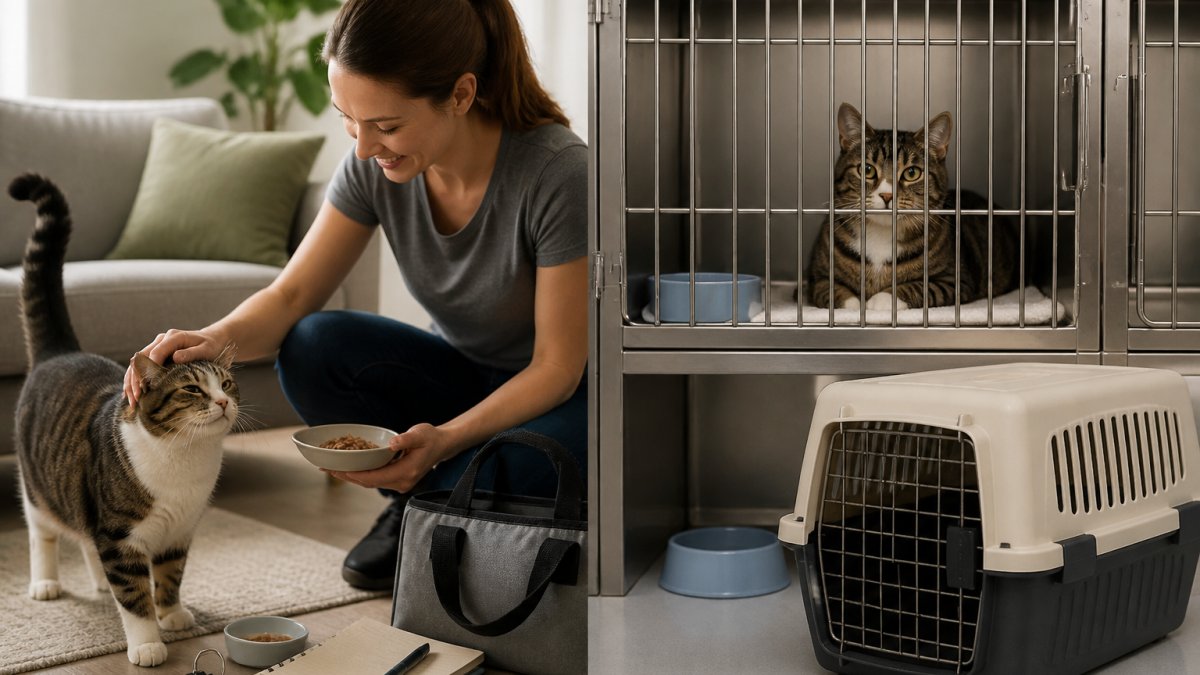
When you're away, your anxious cat stays in the home where everything feels familiar. The sights, sounds, and smells remain constant. A professional in-home sitter maintains your cat's normal routine, which is calming in itself.
Boarding facilities, even good ones, expose cats to new environments and unfamiliar people. This adds stress rather than reducing it. In-home pet sitting from a trusted provider like Tracy's Kitty Care keeps your cat's world stable.
Signs of Anxiety in Cats: What to Watch For
Recognize these behaviors as signs your cat needs help managing stress. Early intervention works better than waiting for anxiety to worsen.
Physical signs of anxiety:
- Excessive grooming or hair loss
- Loss of appetite
- Dilated pupils
- Crouched posture with ears back
- Hiding for extended periods
- Rapid breathing
Behavioral changes:
- Aggression toward people or other pets
- Excessive meowing or vocalization
- Destructive behavior like scratching furniture
- Litter box avoidance
- Excessive jumping at sounds
- Restlessness and pacing
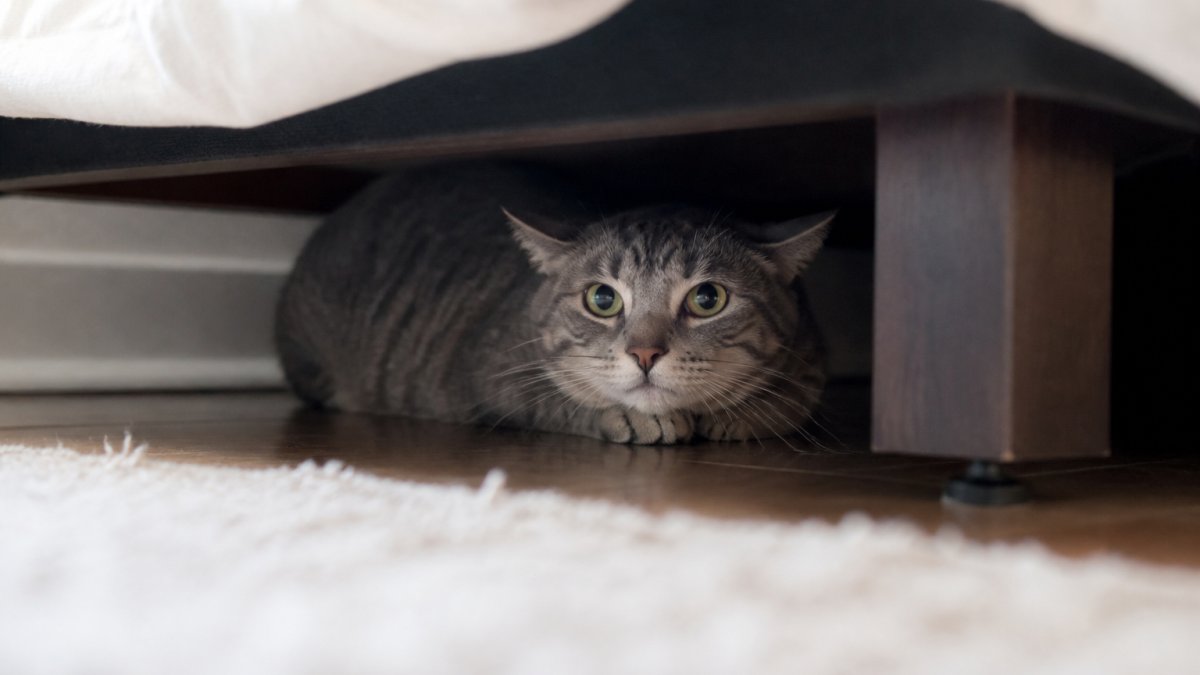
If your cat shows these signs regularly, herbal support combined with environmental changes can help. Many cats respond well to a combination approach rather than relying on one solution alone.
How to Calm an Anxious Cat Naturally: The Herbal Approach
Natural remedies work by supporting your cat's central nervous system. They help reduce the physical tension and mental restlessness that anxiety creates.
Herbal supplements for feline anxiety function differently than sedatives. They don't force sleep or knock your cat out.
The best results come from combining herbs with behavioral support. Remove stressors when possible, provide hiding spaces, and maintain a consistent routine. Add herbal supplements to this foundation for stronger results.
Amino Acids and Central Nervous System Support
L-theanine is an amino acid that promotes relaxation without drowsiness. It works by increasing calming neurotransmitters in the brain.
Taurine supports heart and nervous system health in cats. While cats need taurine in their diet anyway, some anxious cats benefit from supplemental amounts.
These amino acids address the neurological side of anxiety. They calm the central nervous system naturally without harsh side effects.
Top Herbal Supplements for Cat Stress Relief
Not all herbs work equally well for every cat. Start with one supplement at a time so you can see what helps your individual cat.
Valerian Root and Passionflower
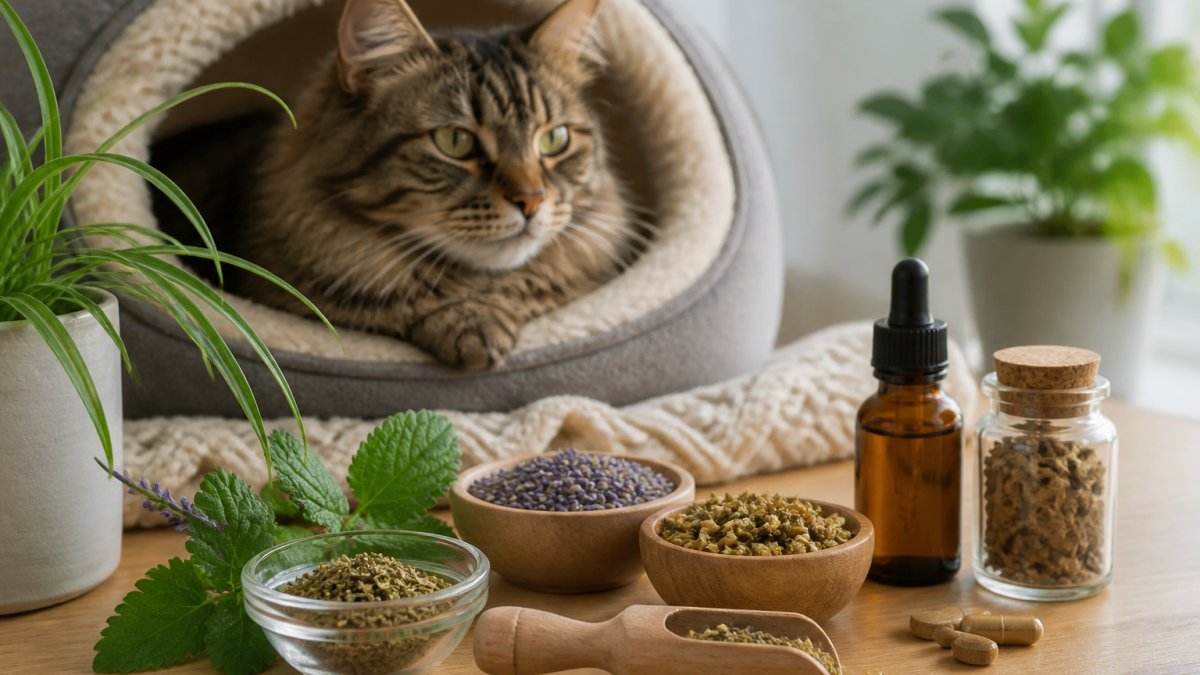
Valerian root has calming properties that help reduce anxiety and promote rest. Many cat owners report seeing results within a few days of starting valerian.
Passionflower complements valerian well. It reduces nervous tension and helps anxious cats feel more settled.
Both herbs have a strong smell that some cats reject. Mix them into wet food or use liquid formulations if your cat won't eat them plain.
Chamomile and Lemon Balm
Chamomile is gentle and widely recognized as safe for cats. It soothes the digestive system and nervous system simultaneously. Many anxious cats also have stomach issues, making chamomile doubly helpful.
Lemon balm has mild sedative properties without being heavy or forcing sleep. It smells pleasant to most cats and mixes easily into food.
These milder herbs work best for cats with low-to-moderate anxiety. Combine them with stronger herbs for severe anxiety cases.
L-Theanine and Melatonin
L-theanine promotes calm focus without drowsiness. It's particularly useful for cats that need to stay alert but less reactive.
Melatonin helps regulate sleep-wake cycles. Anxious cats often have disrupted sleep patterns. Low-dose melatonin can help restore normal sleep, which reduces overall anxiety levels.
Use melatonin carefully with cats. Start with very low doses and monitor your cat's response closely. Some cats respond well; others show no change.
Catnip and Probiotics
Catnip calms some cats while exciting others. If your cat is a "calm responder" to catnip, it can be useful.
Probiotics support gut health, which directly affects stress levels. A healthy microbiome reduces anxiety and improves digestion. Many anxious cats have compromised gut health, making probiotics valuable.
Probiotics work best as a long-term support, not an immediate anxiety fix. Give them consistently for 2-4 weeks to see results.
Safety Precautions and Dosage Guidelines
Start low and go slow with any new supplement. Cats process herbs differently than humans, and their smaller bodies mean smaller doses.
General dosing principles:
- Begin with the lowest recommended dose
- Give supplements for 3-5 days before increasing
- Watch for any changes in appetite, behavior, or litter box habits
- Never combine multiple new herbs simultaneously
- Keep a log of what you give and how your cat responds
Drug-Herb Interactions You Need to Know
If your cat takes any medications, check for interactions before adding herbs. Some combinations can reduce medication effectiveness or cause adverse reactions.
Common medication interactions:
- Valerian and sedatives may increase drowsiness
- Chamomile can interact with blood thinners
- Melatonin may conflict with diabetes medications
- L-theanine generally has few interactions but verify with your vet
Your veterinarian can review your cat's current medications and recommend safe herbal options. Never assume an herb is safe just because it's natural.
Age-Specific Considerations
Kittens (under 1 year): Use only mild herbs like chamomile. Their systems are still developing.
Adult cats (1-7 years): Most cats tolerate the full range of safe herbs at this life stage.
Senior cats (7+ years): Use gentler formulations and lower doses. Senior cats often take multiple medications, increasing interaction risk.
Pregnant or nursing cats should avoid most herbal supplements.
Palatability and Administration Methods
Cats are notoriously picky about what goes in their mouths. Getting your cat to actually consume the herb is half the battle.
Administration options:
- Mix into wet food (most effective)
- Sprinkle on treats or food
- Use liquid formulations added to water or broth
- Capsules hidden in pill pockets (if your cat will eat them)
- Herbal teas cooled and offered as a drink
If your cat refuses food with herbs mixed in, try a different delivery method. Some cats accept liquids better than powders. Others prefer capsules hidden in treats.
Consistency matters. Give herbs at the same time each day so your cat expects them.
Natural vs. Pharmaceutical Anxiety Relief: What the Evidence Shows
Both approaches have merit. The choice depends on your cat's severity of anxiety and your preferences.
Natural herbal supplements:
- Gentler on the system
- Fewer documented side effects
- Slower to take effect (days to weeks)
- Work best for mild-to-moderate anxiety
- Require consistent administration
Pharmaceutical options:
- Faster-acting (hours to days)
- Stronger for severe anxiety
- More potential side effects
- Require veterinary prescription
- Can be combined with herbs in some cases
Many vets recommend starting with herbal support for mild anxiety. If herbs don't provide enough relief after 3-4 weeks, pharmaceutical options become reasonable. Some cats benefit from both approaches used together.
When to Consult a Veterinarian
Don't wait to see if anxiety resolves on its own. Professional guidance ensures you're using the right approach for your cat's specific situation.
Contact your vet if:
- Anxiety appears suddenly (could indicate illness)
- Your cat stops eating or using the litter box
- Anxiety worsens despite herbal treatment
- Your cat takes other medications
- You're unsure about herb safety for your cat
- Anxiety severely impacts your cat's quality of life
Your vet can rule out medical causes of anxiety. Sometimes symptoms that look like anxiety are actually thyroid problems, pain, or infections.
A veterinary behaviorist can provide additional strategies beyond supplements.
Anxious cats need consistent, compassionate care. Whether you're home or traveling, your cat thrives when stress levels stay low.
Frequently Asked Questions
What natural supplements can help with cat anxiety?
Several herbal supplements support feline anxiety relief, including valerian root, passionflower, chamomile, L-theanine, and lemon balm. Many also contain amino acids that support the central nervous system. Probiotics and melatonin are additional options. The best choice depends on your cat's specific anxiety triggers, separation anxiety, thunderstorm phobia, or vet visit stress, and your cat's age and health status. Always consult your veterinarian before starting any supplement.
Are herbal supplements safe for all cats?
While most herbal supplements are generally safe, they're not appropriate for every cat. Kittens, senior cats, and cats taking medications require special consideration. Some herbs can interact with pharmaceuticals or may be too strong for very young or elderly cats. Pregnant or nursing cats should avoid certain supplements. Always verify safety with your veterinarian, especially if your cat is on prescription medications or has underlying health conditions.
How do I know if my cat is suffering from anxiety?
Anxious cats often display stress-related behavior including excessive vocalization, destructive behavior, litter box avoidance, hiding, loss of appetite, or aggression. Some cats show muscle tension or grooming excessively. Signs vary by trigger, separation anxiety appears when you leave, while thunderstorm phobia or vet visit stress emerges in specific situations. If your cat shows persistent behavioral changes, consult your veterinarian to rule out medical issues before assuming anxiety.
Should I consult a veterinarian before giving my cat herbal supplements?
Yes, veterinary consultation is essential before introducing any herbal supplement. Your vet can identify the underlying cause of anxiety, rule out medical conditions, check for potential drug-herb interactions if your cat takes medications, and recommend safe dosages based on your cat's age and weight. They can also monitor your cat's response to treatment and adjust recommendations as needed. This ensures your cat receives the safest, most effective care.