 blog
Calming Pheromone Diffusers for Anxious Cats: A Guide
Table of Contents
- How Cat Pheromone Diffusers Work
- Do Cat Pheromone Diffusers Work: What the Evidence Shows
- Stress-Related Behaviors Diffusers May Help Address
- Plug-In vs. Gel-Based Diffuser Formats
- FELIWAY vs Comfort Zone Diffuser: Key Differences
- How Long Do Cat Pheromone Diffusers Last and Where to Place Them
- Selecting the Right Diffuser for Your Cat's Situation
- Troubleshooting When Diffusers Don't Seem to Work
- Frequently Asked Questions
Last Updated: October 9, 2026
How Cat Pheromone Diffusers Work
A calming pheromone diffuser releases synthetic versions of natural feline facial-marking pheromones into your home. Cats produce these pheromones from facial glands when they rub against people, furniture, or objects to mark territory as safe. When a cat detects them, the brain registers the environment as secure, which can reduce anxiety-driven behaviors.
Most plug-in models release pheromones in a steady stream across a defined coverage area, typically one room or an open-concept space. The pheromones are odorless to humans, but your cat's olfactory system detects them immediately.
Your cat's vomeronasal organ, a sensory structure in the roof of the mouth, processes these signals and triggers a calming response without sedation. The diffuser simply recreates what your cat naturally produces, amplifying the "this space is safe" message.
Do Cat Pheromone Diffusers Work: What the Evidence Shows
The effectiveness of calming pheromone diffusers varies between individual cats. Some respond noticeably within days, while others show minimal change over weeks, a reflection of how differently cats' nervous systems work.
Diffusers are most effective for situational stress rather than deep-rooted behavioral issues. Cats anxious from a recent move, a new pet, or temporary environmental changes often respond well; those with long-standing fear or aggression may see modest improvement at best.
Realistic expectations: some cats become noticeably calmer and more social, others show subtle improvements like slightly less hiding, and a small percentage show no measurable change. The variation depends on your cat's temperament, the source of anxiety, and individual brain chemistry.
Diffusers work as a complementary tool, not a standalone solution. They reduce environmental stress but don't address underlying behavioral issues or medical causes of anxiety, so a diffuser alone won't resolve stress stemming from pain, illness, or severe behavioral problems.
Stress-Related Behaviors Diffusers May Help Address
Cats express stress and anxiety through specific, recognizable behaviors. A calming pheromone diffuser may reduce the frequency or intensity of several common stress responses.
Urine spraying and inappropriate urination are among the most common stress-related behaviors.
Excessive scratching and destructive behavior often correlate with stress. An anxious cat may scratch furniture, walls, or carpet more aggressively than normal; pheromones can lower the anxiety driving it, though scratching itself is normal and healthy.
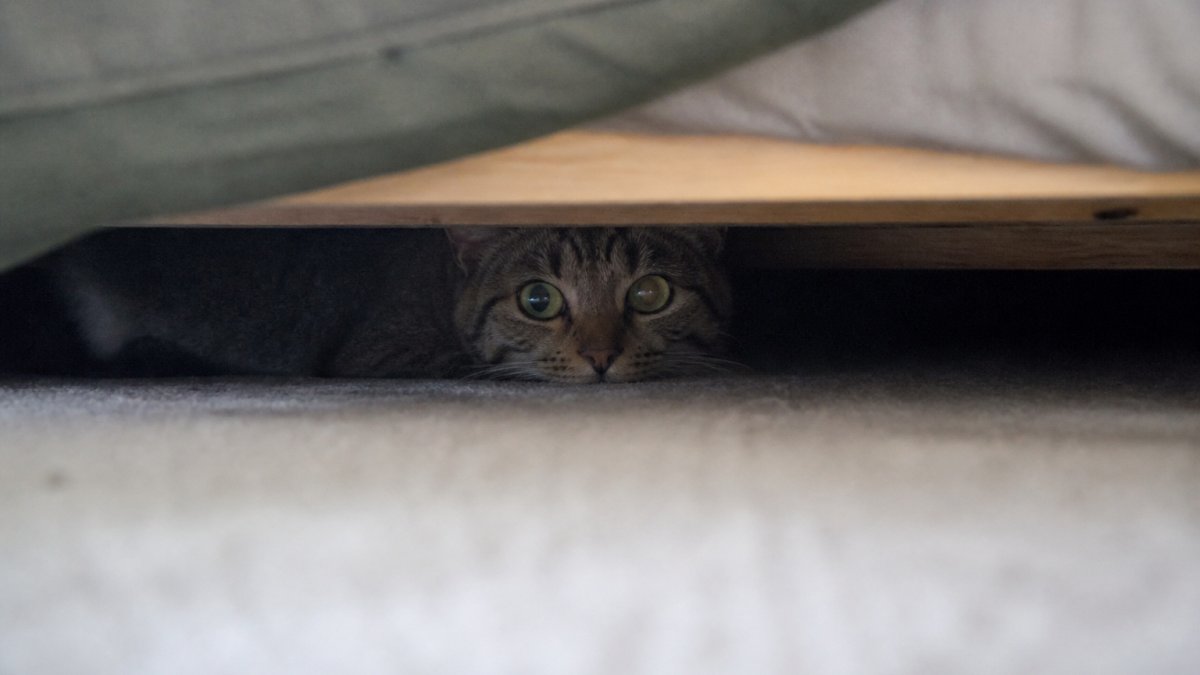
Hiding and withdrawal are classic signs of fear or stress.
Aggression toward other cats or people sometimes stems from anxiety rather than pure aggression. A nervous cat may lash out defensively, and reducing environmental stress can lower these reactions.
Excessive vocalization and restlessness during stressful periods (thunderstorms, fireworks, household changes) may decrease with consistent pheromone exposure.
The key distinction: these behaviors have multiple causes, and stress is only one.
Plug-In vs. Gel-Based Diffuser Formats
Cat pheromone diffusers come in two primary formats, each with distinct advantages and limitations.
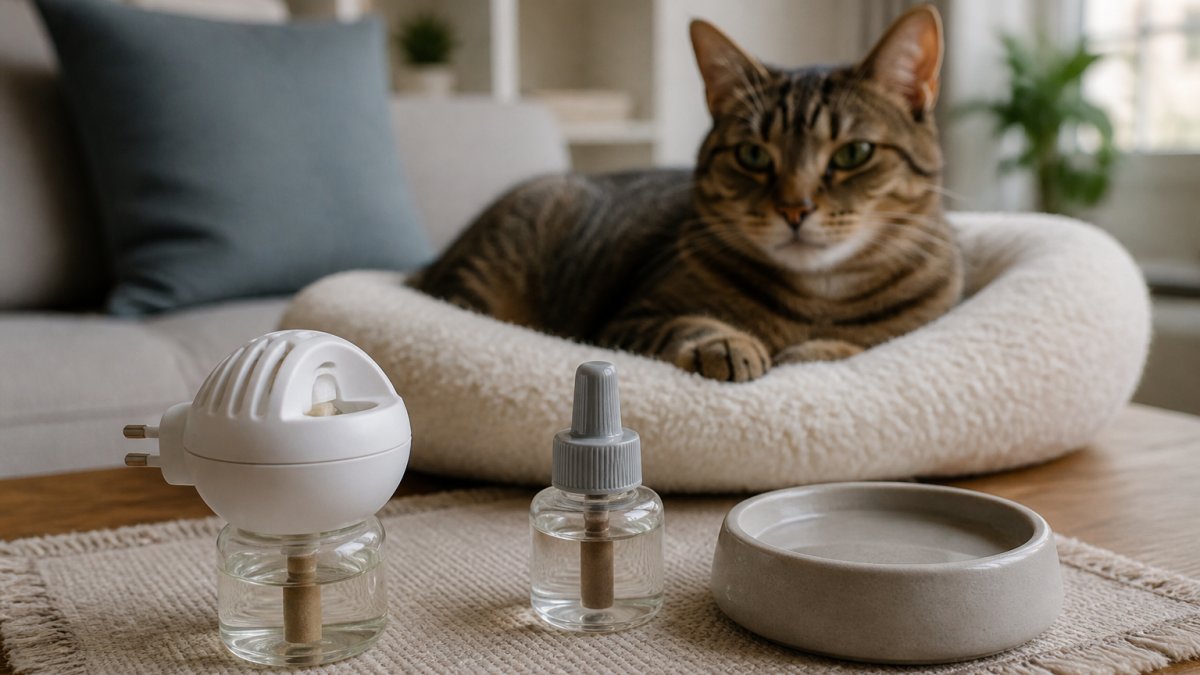
Plug-in diffusers are the most common format. They connect to a standard electrical outlet, and a cartridge of synthetic pheromones inside releases continuously via a heating element or fan.
Plug-ins release pheromones consistently 24/7 without manual intervention and are affordable and widely available. The downsides are dependence on electricity and regular cartridge replacement, which adds to long-term costs.
Gel-based diffusers are small, open containers filled with pheromone-infused gel. Placed in a room, the pheromones gradually evaporate into the air. No electricity is required, making them portable and useful for travel or temporary situations.
Gel diffusers work where outlets aren't convenient, but they cover a smaller area than plug-ins, typically a single room.
For most households, plug-in diffusers are the practical choice if you want consistent, long-term coverage. Gel diffusers work better for targeted, short-term use or for cats in specific rooms where they spend most of their time.
FELIWAY vs Comfort Zone Diffuser: Key Differences
When comparing FELIWAY vs Comfort Zone diffuser options, understanding the distinctions helps you choose the right fit for your cat's needs.
FELIWAY is the original feline pheromone product, developed through veterinary research and widely recommended by behaviorists. Its lines include FELIWAY Classic for general stress, FELIWAY MultiCat for multi-cat tension, and FELIWAY Optimized, a reformulated version with enhanced pheromone concentration.
Comfort Zone is a competing brand producing synthetic feline pheromone diffusers. Its plug-ins and refills are more widely available in mainstream pet stores and online marketplaces, and it works on the same principle as FELIWAY but with different formulations or concentrations.
The practical differences come down to availability, pricing, and individual cat response. Both brands use synthetic feline facial-marking pheromones, so the mechanism is identical, but some cats respond better to one brand, which is individual variation rather than a quality difference.
FELIWAY is available primarily through veterinary channels, meaning higher costs but direct professional guidance. Comfort Zone is more accessible through standard pet retailers, making it convenient and affordable for some households.
How Long Do Cat Pheromone Diffusers Last and Where to Place Them
The duration a diffuser remains effective depends on the format and how consistently you use it. Understanding both lifespan and placement maximizes your results.
Refill Duration and Replacement Frequency
Plug-in cartridges typically last 30 days of continuous use, so monthly refill costs become an ongoing expense if you use the diffuser year-round.
Gel-based diffusers vary more widely: some last 2-3 weeks, others 4-6 weeks depending on room temperature, humidity, and air circulation. As the gel evaporates, concentration decreases gradually, so effectiveness may wane before the gel is fully depleted.
For ongoing anxiety, year-round use is common, translating to 12 refill cartridges annually for plug-ins. Some owners use diffusers seasonally instead, during stressful periods like moving, introducing new pets, or holidays, which reduces costs.
Where to Place a Cat Pheromone Diffuser
Placement directly affects how well your cat receives the pheromone signal. The wrong location can significantly reduce effectiveness.
Place the diffuser where your cat spends the most time, such as a favorite sleeping spot or the area where they feel safest.
Position it at least 3-4 feet from air vents, fans, or air conditioning units, which disperse pheromones too quickly and reduce concentration where your cat needs it most. Avoid open windows or doors with high air exchange.
Don't hide it behind furniture or in a corner; it needs an open area where pheromones can circulate. A wall outlet in the main living space, away from direct air currents, is ideal.
For multi-room homes, many households use one diffuser in the cat's primary space and, if budget allows, another in secondary areas to ensure consistent exposure throughout the territory.
Keep the diffuser away from water, heat sources, and direct sunlight. These factors can damage the device or affect pheromone release consistency.
Selecting the Right Diffuser for Your Cat's Situation
Choosing the best diffuser depends on your cat's specific stressors and your household setup. A one-size-fits-all approach rarely works.
For cats with environmental anxiety (moving, new pets, household changes), start with a plug-in in the main living area. These cats typically respond well to consistent, 24/7 exposure.
For multi-cat households with tension or aggression, FELIWAY MultiCat or Comfort Zone's multi-cat formula targets territorial stress and may include additional pheromone components that reduce inter-cat conflict.
For shy or fearful cats, place the diffuser in the room where your cat naturally retreats, since a scared cat won't venture far to find pheromones.
For travel or temporary situations, gel-based diffusers are more practical: easy to transport and usable in unfamiliar environments without electrical outlets.
For cost-conscious households, use diffusers seasonally rather than year-round: run them when your cat's anxiety spikes and pause when stress is lower.
| Situation | Best Format | Best Approach | Placement Priority |
|---|---|---|---|
| Environmental stress (moving, new pets) | Plug-in | Continuous use for 4-6 weeks | Main living area |
| Multi-cat tension | Plug-in (MultiCat formula) | Continuous use, multiple units if possible | Common areas |
| Shy/fearful cat | Either | Place near cat's safe space | Bedroom or retreat area |
| Seasonal stress | Gel or plug-in | Use during stress periods only | Flexible |
| Travel/temporary | Gel | Portable, short-term use | Any accessible location |
When selecting a brand, consider veterinary recommendations. Your veterinarian may have experience with how different cats respond to various brands and can rule out medical causes of anxiety before you invest.
Troubleshooting When Diffusers Don't Seem to Work
If you've been using a diffuser for several weeks without noticeable improvement, several factors might be at play.
Check placement and coverage. A diffuser in the kitchen won't help if your anxious cat hides in the bedroom.
Verify the diffuser is functioning. Plug-ins should show an indicator light or noticeable warmth; if cold or inactive, test another outlet to rule out electrical issues.
Replace the cartridge or refill. After 30 days the cartridge may be depleted, and effectiveness decreases significantly as it ages even if product appears to remain.
Allow more time. Some cats take 2-3 weeks to respond meaningfully, others 4-6 weeks.
Consider the source of stress. A diffuser won't address anxiety from medical issues, pain, illness, or neurological problems.
Evaluate whether behavioral support is needed. Environmental enrichment, consistent routines, or behavioral modification alongside pheromone diffusers can help.
Switch brands. If one brand hasn't worked after a fair trial, try the alternative, since some cats respond better to one formulation over another.
Consult your veterinarian. If there's no effect after 6 weeks of consistent use and placement and equipment issues are ruled out, your cat may need additional support. Your veterinarian can evaluate whether anxiety medication, behavioral consultation, or other interventions would help.
Managing an anxious cat requires patience, the right tools, and professional support when needed. At Tracy's Kitty Care, our background-checked, licensed, and insured sitters provide the consistent, attentive care that anxious cats need, giving you peace of mind and your cat the stability they crave. Learn more about our cat sitting services and how we can support your cat's wellbeing.
Frequently Asked Questions
Do cat pheromone diffusers really work?
Cat pheromone diffusers show mixed but encouraging results. Studies indicate they can reduce stress-related behaviors in some cats, particularly in multi-cat households and during environmental changes. Response varies by individual cat, stress level, and situation. They work best as part of a broader approach to anxiety management rather than a standalone solution. Realistic expectations matter: expect gradual improvement over 2-4 weeks, not immediate behavioral transformation.
How long does it take for a cat pheromone diffuser to work?
Most cats show initial signs of calming within 24-48 hours, though full effects typically develop over 2-4 weeks of continuous use. Some cats respond faster, while others require longer exposure. Consistency matters more than speed, diffusers work best when left plugged in continuously rather than used intermittently. If you see no change after 30 days, the diffuser may not be the right fit for your cat's particular stress source.
What is the difference between FELIWAY and Comfort Zone diffusers?
Both contain synthetic feline facial-marking pheromones (F3 fraction), but differ in formulation and price. FELIWAY is the original and more widely studied product, with extensive veterinary research backing its use. Comfort Zone is a more affordable alternative that uses similar pheromone technology. Both come in plug-in and spray formats. Choice depends on budget, availability, and whether your cat responds better to one brand over the other, trial may be necessary to determine effectiveness for your individual cat.
Where should I place a pheromone diffuser in my home?
Place the diffuser in the area where your cat spends the most time or where stress behaviors occur most frequently. For urine spraying, position it near the marked area. Avoid placing it behind furniture or near air vents, which reduce effectiveness. A typical plug-in diffuser covers approximately 700 square feet, so one unit works for most single rooms. For multi-cat households or larger homes, you may need multiple diffusers in different zones where cats congregate.