 how-to
Tips for Administering Liquid Medication to Cats
Table of Contents
- Before You Start: Preparing the Medication and Your Cat
- How to Syringe Medicine to a Cat: Step-by-Step
- Can You Mix Liquid Cat Medicine With Food?
- What to Do If a Cat Spits Out Medicine
- Tips for Medicating a Difficult Cat
- Safe Head Position and Avoiding Choking or Aspiration
- Aftercare, Cleaning, and When to Call Your Veterinarian
- Conclusion
- Frequently Asked Questions
Last Updated: October 18, 2026
Before You Start: Preparing the Medication and Your Cat
Our tips for administering liquid medication to cats start with one main reason doses go wrong: people rush the setup. At Tracy's Kitty Care, we have watched plenty of cat owners win the dosing battle and still lose the war, because the cat now hides under the bed at the sight of a syringe. Preparation is the part that decides how the next ten seconds go.
Check the Label and Measure the Prescribed Dose
Read the label before you touch the bottle. Confirm three things: the dose, how often it is given, and whether it should be shaken. Some suspensions separate as they sit, so a quick shake keeps the dose even.
Then measure with the oral syringe or dropper that came with the medication. A kitchen spoon is not a measuring tool. Draw the plunger back slowly to the exact mark, and check for air bubbles before you go near the cat.
Set Up a Quiet, Well-Lit Space
Pick a small, calm room with the door closed. A bathroom or a spare bedroom works well. Bright overhead light helps you see the cat's mouth, and a closed door stops the escape attempt before it starts.
Lay out everything first: the measured syringe, a towel, and a treat for afterward. Fumbling for supplies mid-dose is how cats get dropped, and a dropped cat remembers.
How to Syringe Medicine to a Cat: Step-by-Step
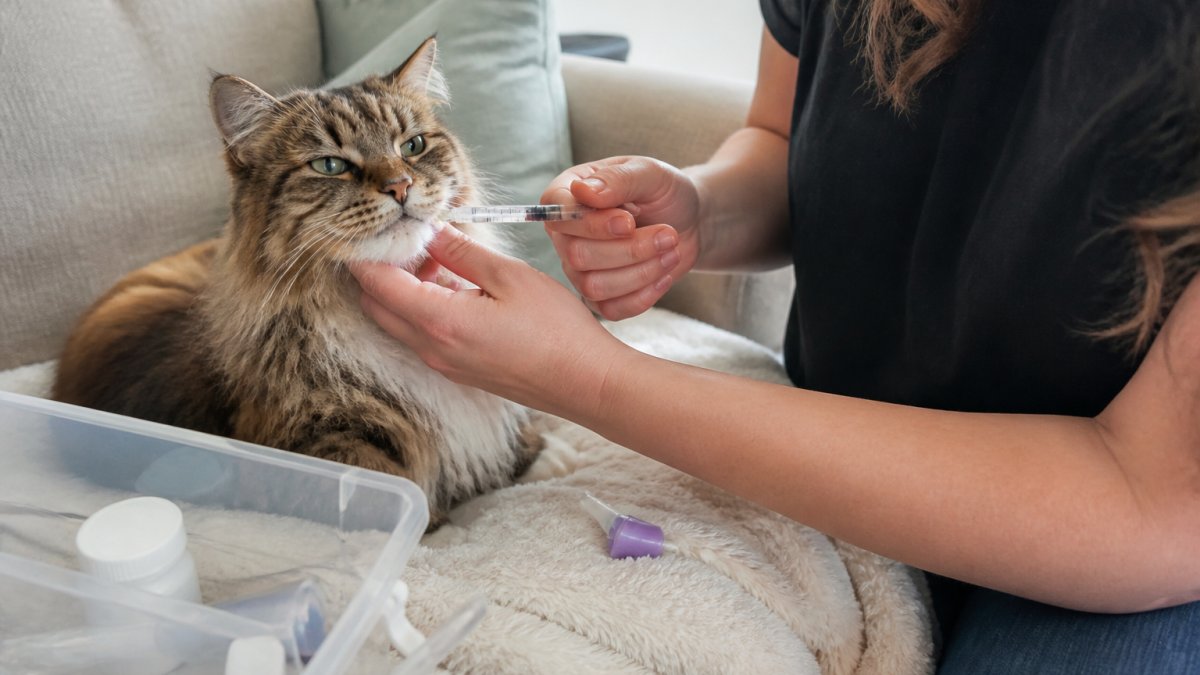
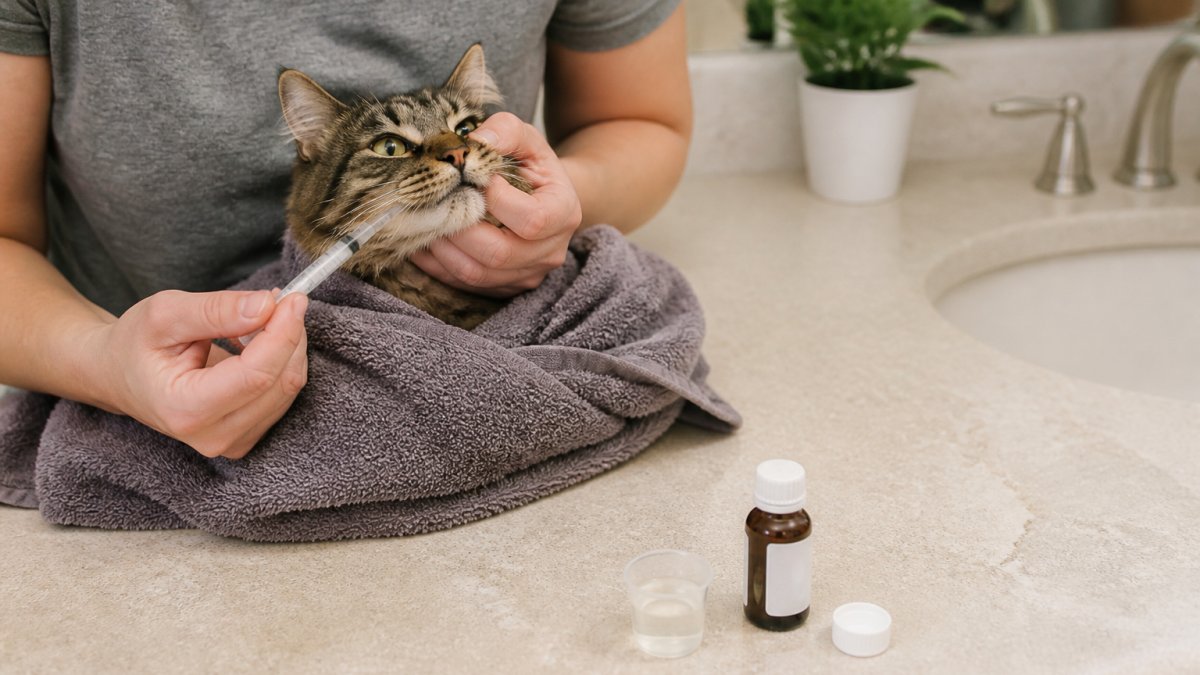
Here is the short version of how to syringe medicine to a cat: wrap the cat gently, approach from the side, place the syringe tip in the cheek pouch, and give the liquid in small amounts with pauses for swallowing.
Positioning and Gentle Restraint
Place the cat on a non-slip surface, or hold them in your lap facing away from you. A towel wrap works well: drape the towel over the cat's back, tuck the front paws, and wrap snugly around the body.
Keep the cat's body close to yours. A cat held at arm's length has room to twist, and twisting is how scratches happen.
Placing the Syringe and Administering Slowly
Follow this order:
- Hold the cat's head steady with your free hand, tilted slightly up.
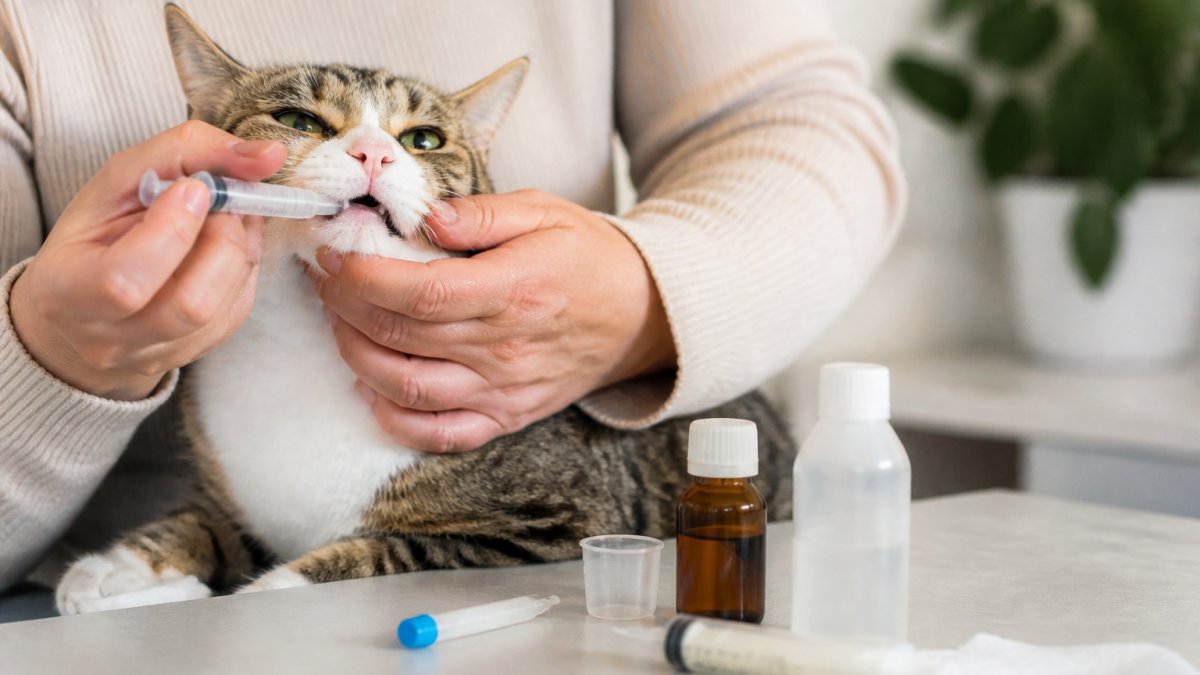
- Slide the syringe tip into the side of the mouth, into the gap behind the canine tooth.
- Aim toward the cheek pouch, not the back of the throat.
- Press the plunger slowly, in small amounts.
- Stop and let the cat swallow between each small squirt.
- Withdraw the syringe and give praise or a treat.
The cheek pouch is the key. It gives the liquid a place to pool so the cat can swallow at their own pace.
Can You Mix Liquid Cat Medicine With Food?
Sometimes, yes, but the answer depends on the drug, not on the cat's preferences. Before you stir a dose into a bowl, confirm with your veterinarian or pharmacist that the medication is safe to give with food. This is the single most important check, and it is the step most owners skip.
Why Food Compatibility Matters
Some liquid medications are formulated to be absorbed on an empty stomach, and mixing them into a meal can reduce how much active ingredient reaches the bloodstream. Others are deliberately flavored and designed to be mixed into a small amount of wet food.
A common pattern is that antibiotics and many anti-inflammatory suspensions tolerate a small food vehicle, while certain thyroid and cardiac preparations are specified to be given on an empty stomach.
How to Mix Safely If Your Veterinarian Approves
- Use a small portion, not the full meal. Mix the dose into one or two tablespoons of wet food so that if the cat walks away, you know exactly how much medicine was missed.
- Do not mix into a water bowl or a large bowl of food. You cannot confirm the dose, and a cat that eats slowly may get too little or too much.
- Offer the medicated portion first, before the rest of the meal. A hungry cat is more likely to finish it, and you can see whether the full dose went down.
- Do not add the medicine to a treat the cat has never tried. A new flavor is a new reason to refuse.
If the cat refuses the medicated food, do not force the issue. Switch to direct syringe administration for that dose and call your veterinarian about a flavored formulation or a different dosage form for the next one.
What to Do If a Cat Spits Out Medicine
Stay calm and do not re-dose on instinct. First, work out how much actually went down.
Call your veterinarian and describe what happened. They will tell you whether to wait for the next scheduled dose or give a partial one now.
If the cat vomits shortly after dosing, that is also a call to your vet. Timing matters, so note roughly how long after the dose it happened.
Tips for Medicating a Difficult Cat
Some cats fight every step, and that is not a failure on your part, these tips for administering liquid medication to cats focus on lowering stress instead. These tips for medicating a difficult cat focus on lowering stress and on changing the plan when the current one is not working, rather than on winning a wrestling match.
Lower the Stress Before You Lower the Dose
- Try a squeeze treat first. Many cats will lick liquid medicine mixed into a soft treat, which skips the syringe entirely. Confirm with your veterinarian that the medication can be given with food before you try this.
- Use a towel wrap every time. Consistency makes it predictable, and predictable is less scary.
- Work fast and quietly. No shouting, no chasing. If it turns into a chase, stop and try again in ten minutes.
- Pick the same spot and the same order of steps. Cats relax into routine faster than they relax into a new room.
When the Usual Approach Keeps Failing
If you are dreading every dose, the answer is not to force harder, it is to ask your veterinarian for a different plan. Concrete options to raise at that conversation:
- Flavored formulations. Many compounding pharmacies can prepare a chicken-, fish-, or malt-flavored liquid from the same prescription. Ask whether the medication can be compounded and whether the flavor affects absorption.
- A different dosage form. A transdermal gel, a small pill, or a chewable may suit your cat better than a liquid. Not every drug is available in every form, but the question is worth asking.
- A demonstration. Ask a veterinary technician to show you the cheek-pouch technique in person. Watching someone else do it once is often worth more than a dozen written instructions.
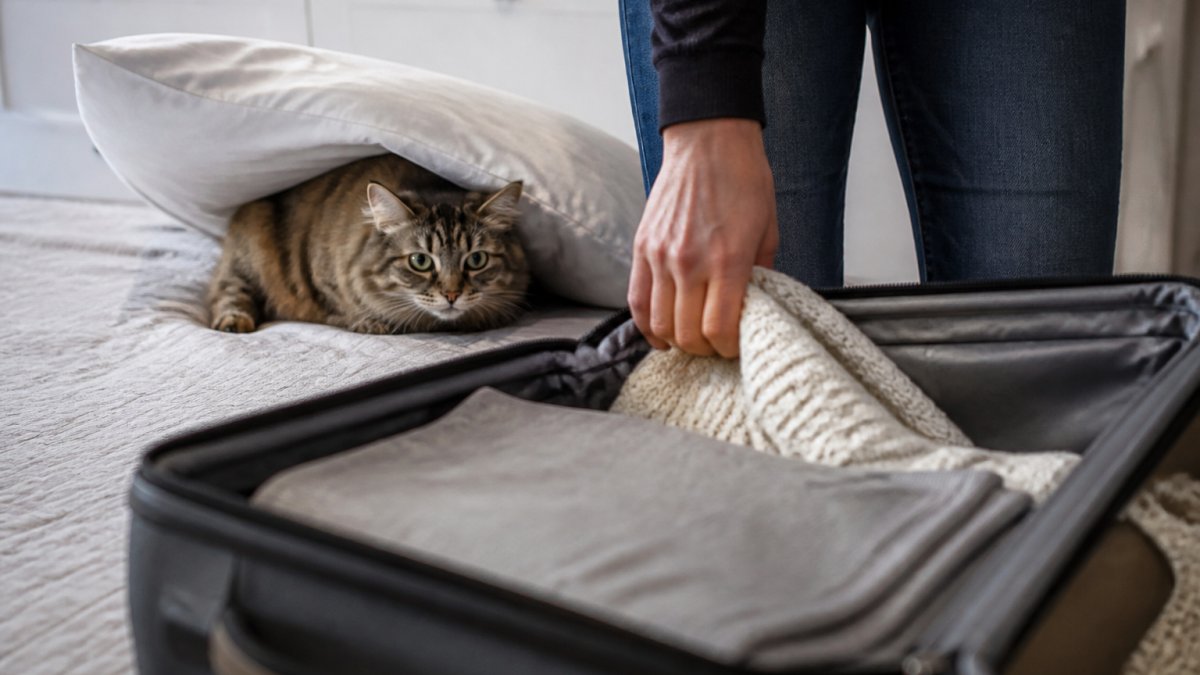
- A two-person method. One person holds and soothes while the other doses. If you live alone, ask a friend or a professional sitter to help for the first few doses until the routine settles, a cat sitting service like Tracy's Kitty Care can handle medication visits in your own home.
Know When to Stop
Stop the attempt and contact your veterinarian if the cat coughs, gags, breathes noisily, vomits repeatedly, or becomes severely distressed. A calm cat that is slightly under-dosed is safer than a panicked cat that is fully dosed and now terrified of you, and a terrified cat makes every future dose harder.
Safe Head Position and Avoiding Choking or Aspiration
Head position is a safety issue, not a comfort one. Tilt the cat's nose slightly up, but never tip the head far back.
Aim the syringe at the cheek pouch, never straight down the throat. Give small amounts and let the cat swallow in between.
Aspiration, where liquid enters the airway, is a medical emergency. Signs include coughing, trouble breathing, or a bluish tint to the gums.
Aftercare, Cleaning, and When to Call Your Veterinarian
Wipe the cat's mouth with a soft cloth, then offer praise or a treat. Keep the mood light so the next dose starts from a better place.
Rinse the syringe with warm water after each use and let it air dry. Store the medication as the label directs, and check the expiration date.
Call your veterinarian if any of these happen:
- The cat misses more than one dose in a row
- The cat vomits soon after dosing
- The cat coughs, gags, or has trouble breathing
- The cat refuses food or seems lethargic
- You are unsure how much medicine actually went in
Conclusion
Dosing a cat is a skill, and like any skill it gets easier with a calm setup and a steady routine. Measure carefully, wrap gently, aim for the cheek pouch, and go slow. When travel or a busy week makes that routine impossible, Tracy's Kitty Care can step in. Our cat-only sitters are background-checked, licensed, bonded, and insured, and we come to your cat rather than moving your cat to a stranger's building.
Frequently Asked Questions
How do you disguise liquid medicine for cats?
You can ask your veterinarian if the medication can be mixed with a small amount of wet food, a lickable treat, or a squeeze treat. Use only a spoonful so the cat finishes the full dose, and never mix into a full bowl of food because the cat may eat around it. Some liquid medications have a bitter taste that cats detect easily, so a strong-flavored treat helps. Always confirm with your vet that food does not interfere with how the drug is absorbed before you try this method.
What should you do if your cat spits out liquid medicine?
Do not immediately give another full dose. First, estimate how much was actually swallowed, then call your veterinarian for guidance on whether to redose. Giving extra can cause overdose. If the cat spat it out because of taste, try a different food pairing or ask your vet about a compounded flavored version. If spitting out happens every time, ask your vet to demonstrate the cheek pouch technique or consider a transdermal gel or pill alternative.
How do you get a cat to swallow liquid medication safely?
Place the syringe tip between the cheek and the back molars, not straight down the throat. Squirt a small amount at a time, let the cat swallow, and pause before giving more. Keep the head level or slightly up, never tilted far back, to reduce the risk of choking or aspiration. Follow with a small treat or a lick of wet food to reward cooperation and clear the taste. If the cat struggles violently, stop and try again later rather than forcing it.
Can you mix cat medicine with food or water?
Sometimes, but not always. Some liquid medications are absorbed best on an empty stomach, and mixing with a full meal can reduce the dose the cat actually gets. Water is usually a poor choice because the cat may not drink the entire amount. A small amount of strong-smelling wet food or a squeeze treat works for many cats, but check with your veterinarian first. Never mix medication into a shared water bowl or a food bowl other pets can reach.