 how-to
Managing Cat Anxiety During Medical Care
Table of Contents
- Why Medical Care Triggers Cat Anxiety
- Signs of Stress in Cats at the Vet
- How to Calm a Cat for a Vet Visit
- How to Give Medication to a Difficult Cat
- In-Home Cat Medication Administration
- Medication Safety and Vet-Prescribed Options
- When to Stop and Seek Urgent Help
- Frequently Asked Questions
Last Updated: October 12, 2026
Why Medical Care Triggers Cat Anxiety
Cat anxiety during medical care rarely starts at the clinic door, it starts at home, the moment the carrier comes out of storage.
Cats are territorial. Their sense of safety comes from familiar smells, familiar rooms, and predictable routines.
Most guides treat the car ride as the problem. The real problem is the weeks of negative associations that build up before the appointment.
Common Stressors at the Vet
The clinic is a sensory assault for a cat. Knowing the triggers helps you plan around them:
- Unfamiliar smells: Other animals, disinfectants, and strangers
- Loud sounds: Barking dogs, equipment beeps, metal doors
- Restraint: Being held still by unfamiliar hands
- Carrier confinement: A space the cat only enters before something bad happens
Don't assume a calm cat at home will be calm at the vet, stress signals often appear only under these triggers.
Signs of Stress in Cats at the Vet
Recognizing stress signals early lets you act before full panic. Cats show fear quietly, and by the time they vocalize or hiss, they've often been stressed for a while.
Watch for these signs:
- Flattened ears or ears rotated sideways
- Dilated pupils, even in normal light
- Tucked tail or crouched, low body posture
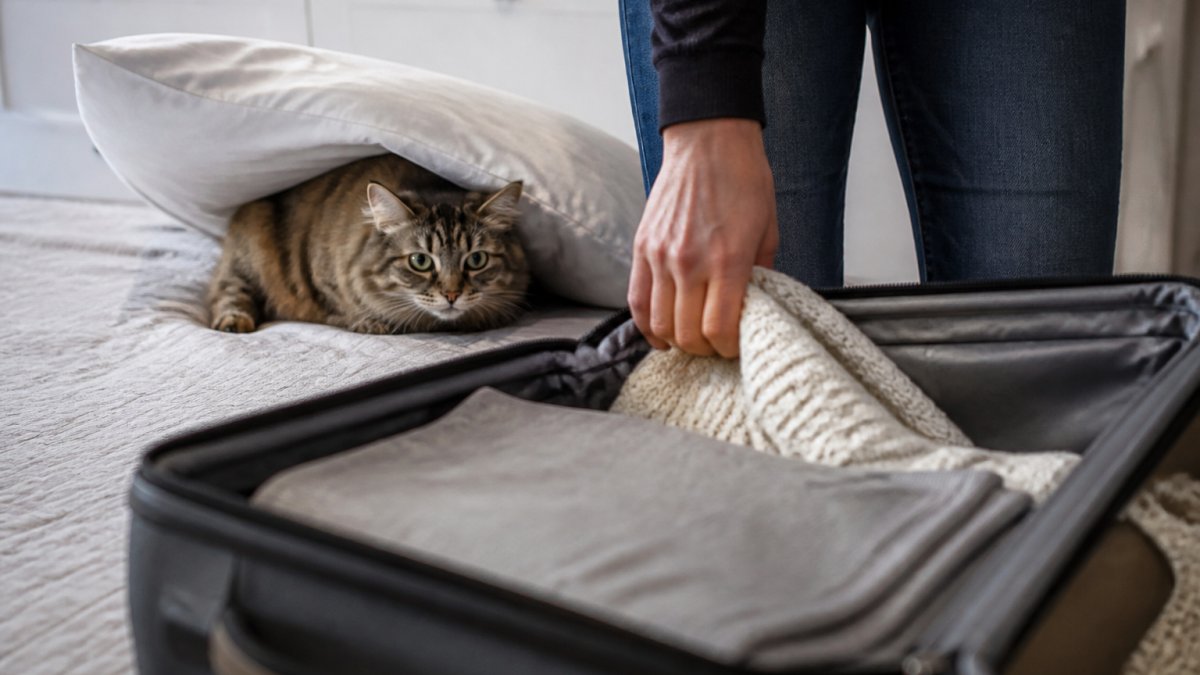
- Hiding under chairs, towels, or in the back of the carrier
The Cornell Feline Health Center's resources on cat behavior notes that subtle body language changes are often the earliest indicator of feline stress. Learn your cat's baseline at home so you can spot the shift.
How to Calm a Cat for a Vet Visit
Calming a cat for a vet visit starts days before the appointment, not in the parking lot. The best approach combines carrier training, scent familiarization, and a calm, unhurried morning.
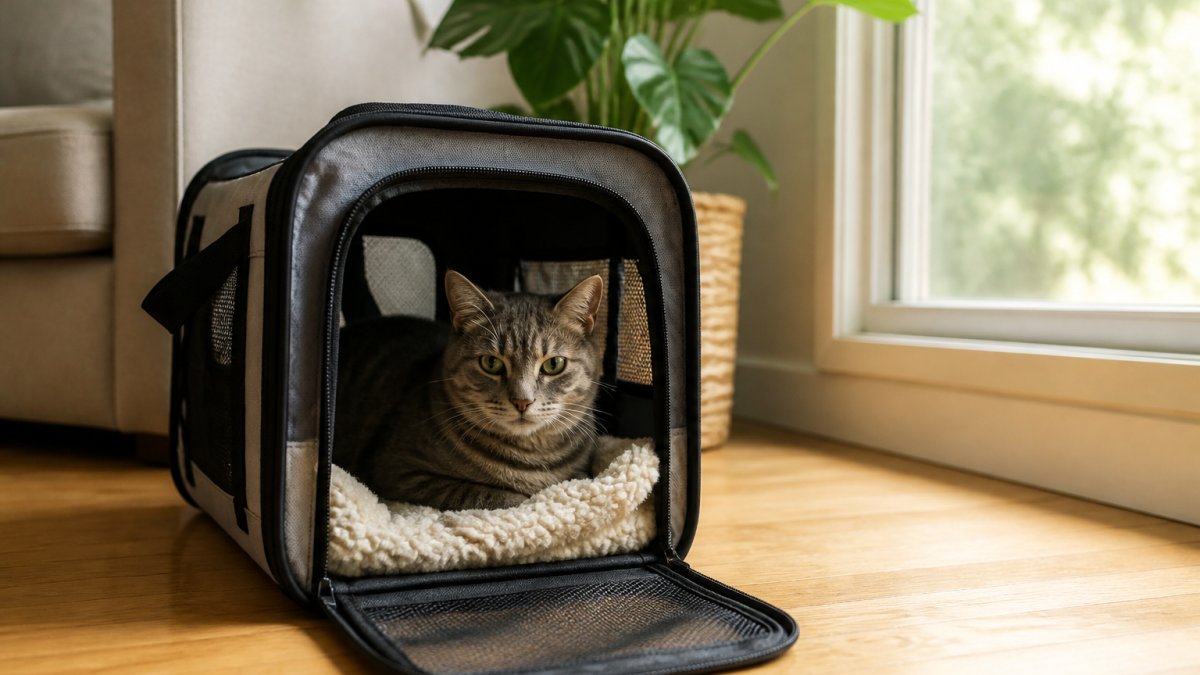
Carrier Training and Familiarization
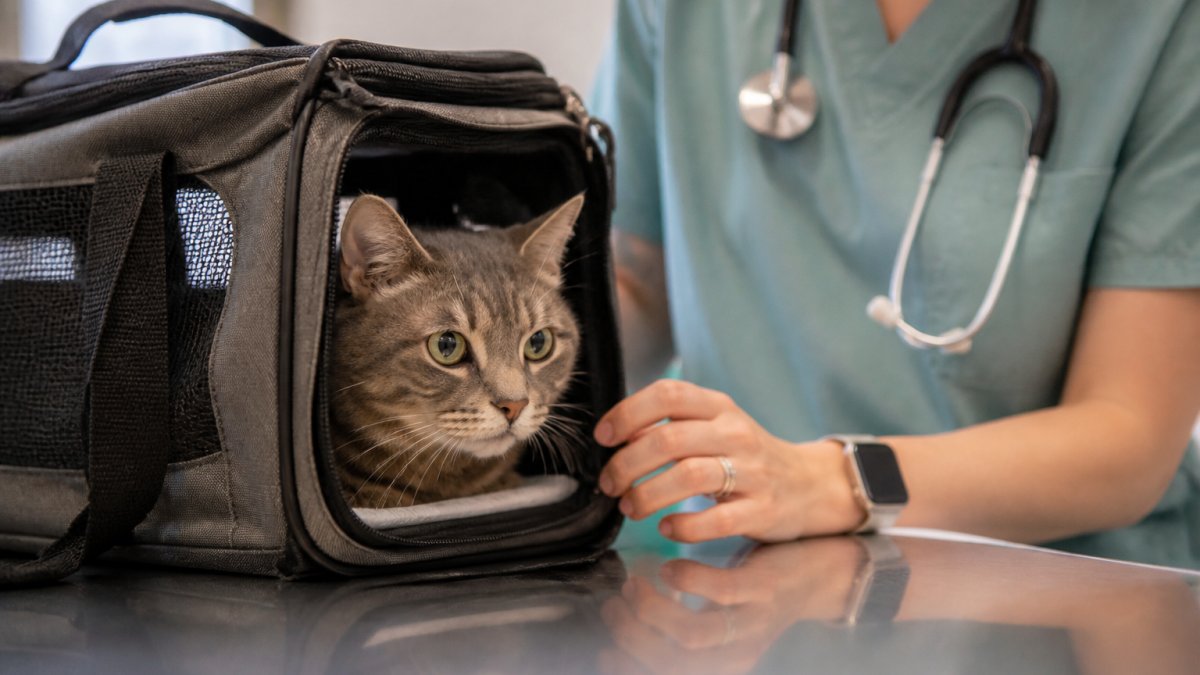
The carrier should live in your home permanently, not appear only before vet visits. Leave it open in a common area with a favorite blanket inside. Toss treats near it, then inside it. Over a few weeks, most cats will nap in it voluntarily.
- Keep the carrier out year-round
- Add familiar bedding and a worn t-shirt with your scent
- Feed meals near the carrier, then inside it
- Never force a cat into the carrier
Reducing Stress During Travel and Transport
Transport is where many cats hit peak anxiety. A few adjustments help:
- Cover the carrier with a light towel to block visual triggers
- Secure the carrier with a seatbelt so it doesn't slide
- Keep the car cool and quiet, no loud music
- Spray the carrier with a cat-safe calming pheromone 15 minutes before departure
Don't arrive 20 minutes early to wait in a loud waiting room, call ahead and ask to wait in the car until an exam room is ready.
How to Give Medication to a Difficult Cat
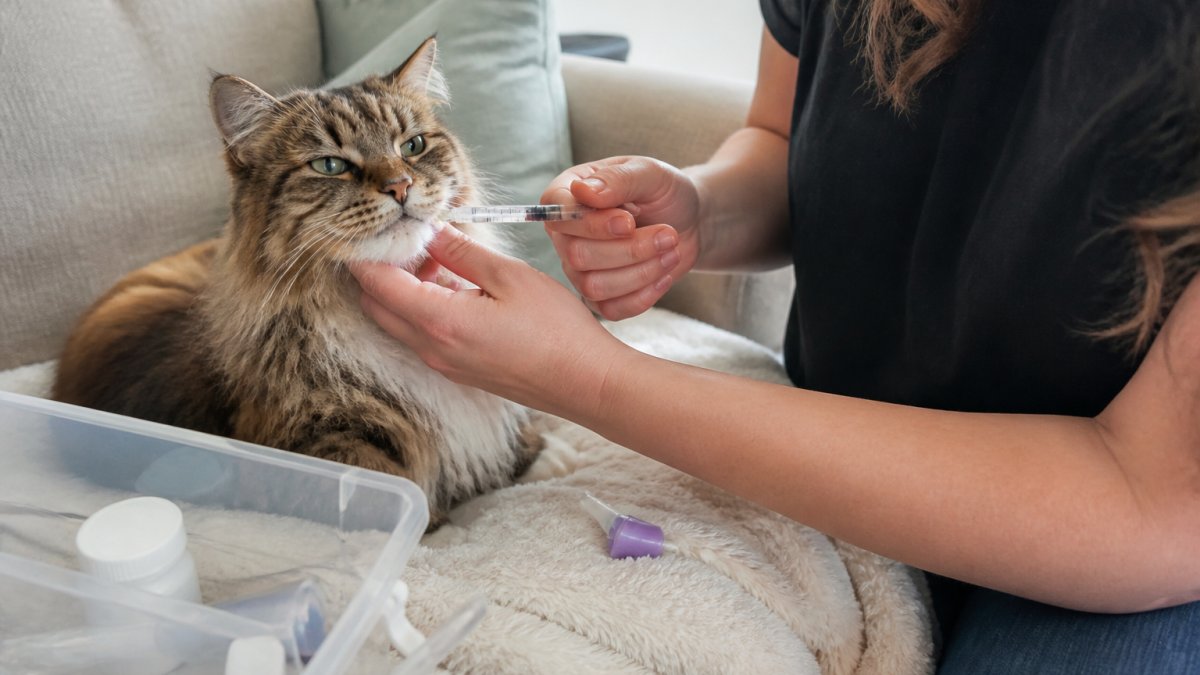
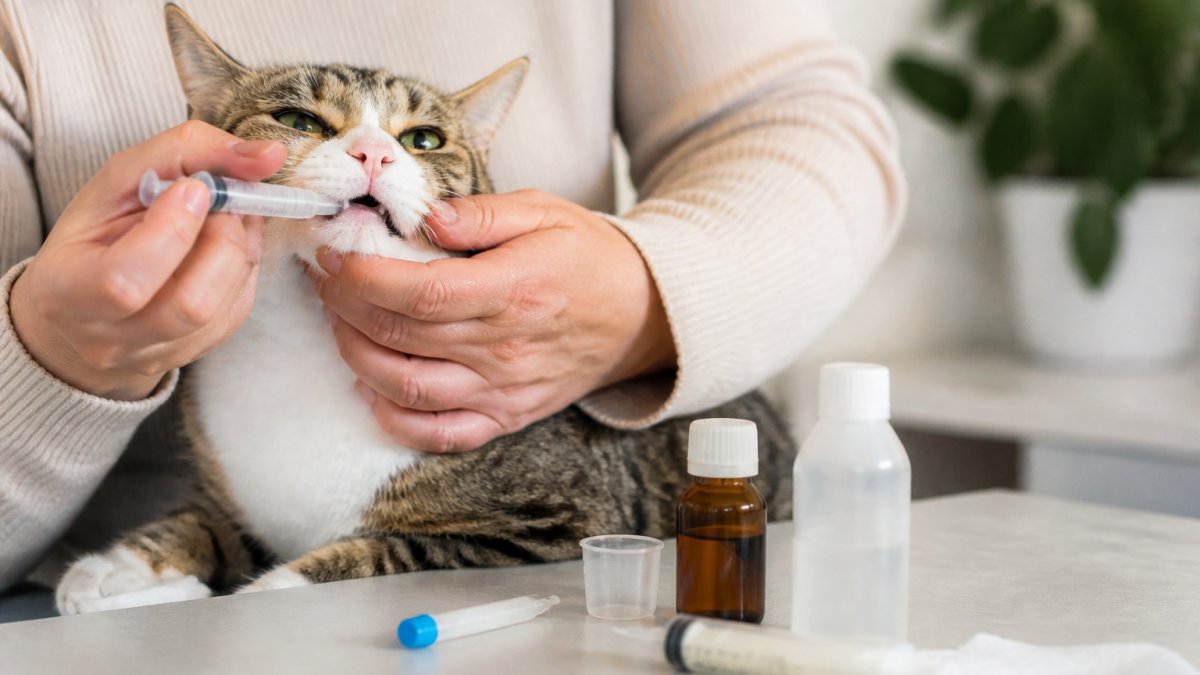
Giving medication to a difficult cat takes patience, technique, and often a second pair of hands. Never force a pill down a struggling cat's throat, it risks injury to both of you and teaches the cat that hands near the face mean danger.
Try this step-by-step approach:
- Gather everything first. Pill, pill pocket or treat, towel, and a calm space.
- Wrap the cat loosely in a towel with only the head out if needed.
- Approach from behind or the side, never head-on.
- Place the pill in a pill pocket or a small amount of wet food if the vet allows.
- If pilling directly, tilt the head gently up, place the pill at the back of the tongue, and close the mouth.
- Follow with a syringe of water or a treat to encourage swallowing.
- Praise and release immediately. Don't hold the cat longer than needed.
In-Home Cat Medication Administration
In-home cat medication administration is often easier than owners expect, because the cat stays in a familiar space. Our sitters give pills, liquids, and insulin injections for cats needing daily care while owners travel.
The home advantage is real. A cat who fights at the clinic may accept medication calmly on their own kitchen counter. Keep these points in mind:
- Stick to the same time each day
- Use the same location and the same routine
- Pair medication with a high-value treat
- Rotate treat flavors so the cat doesn't catch on
If you travel often, an in-home sitter who handles medication removes the stress of boarding a cat who hates change. Review our cat sitting service to see how daily medication visits work.
Medication Safety and Vet-Prescribed Options
Anti-anxiety medication for cats should only come from a veterinarian who has examined your cat. Dosages depend on weight, health history, other medications, and the procedure.
Most practitioners find the choice of medication matters less than timing and the plan around it: a calm cat at 8 a.m. can be panicked by 10 a.m. if the dose was given too early or too late.
| Situation | Common Approach | What to Watch For |
|---|---|---|
| Mild fear at routine visits | Pheromone spray, carrier training, calm handling | Give pheromone 15 minutes before travel; no drug needed |
| Moderate anxiety | Vet-prescribed oral sedative | Confirm exact dose and timing; do not stack with other sedatives |
| Severe panic or aggression | Gabapentin or a similar prescribed option | Onset and duration vary; report wobbliness or unusual breathing |
| Chronic illness or daily meds | Compounded liquid or transdermal gel | Store per label; check for interactions with existing meds |
Questions to Ask Your Veterinarian Before Giving Anything
A short list of questions turns a vague prescription into a workable plan:
- What is the exact dose, and is it based on current weight?
- How many hours before the appointment should I give it?
- Does it need to be given with food, or on an empty stomach?
- What side effects are expected, and which ones mean I should call you?
A trial dose at home is one of the most useful steps you can take: it reveals how your cat responds while you're still in a familiar environment, with time to call the clinic if something looks wrong.
Gabapentin and Other Anti-Anxiety Medications
Gabapentin is one of the most commonly prescribed medications for reducing cat anxiety before vet visits. This oral medication helps cats stay calm and easier to handle without full sedation; your vet may recommend other options depending on your cat's health and the reason for the visit.
A few things to know:
- Give the medication at the time your vet specifies, often 2-3 hours before the appointment
- Expect mild sleepiness and a relaxed posture, not full unconsciousness
- Some cats become paradoxically more agitated rather than calmer, report this
- Report any vomiting, wobbliness, drooling, or unusual breathing to your vet
When to Stop and Seek Urgent Help
Some stress responses cross the line from manageable to medical. Stop and call your vet or an emergency clinic if you see:
- Open-mouth breathing, panting, or obvious effort to breathe in a cat
- Collapse, extreme weakness, or unresponsiveness
- Repeated vomiting or diarrhea during travel
- A body temperature that feels dangerously high or low
- A cat who cannot be handled at all and is injuring themselves
These signs can point to a medical emergency, not just fear. A cat who hides, flattens its ears, or refuses treats is stressed but stable; a cat who is gasping, limp, or unresponsive needs immediate care.
Special-Needs Cats and Modified Care Plans
For cats with chronic illness, trauma history, or special handling needs, talk to your vet before the visit about a modified plan. Rescue cats, seniors, cats in pain, and cats needing repeated procedures often need a different approach than a healthy cat at a routine exam.
A few patterns worth raising with your care team:
- Rescue or trauma history: A cat who was previously handled roughly may panic at restraint. Ask about pre-visit medication and a slower exam pace.
- Senior cats: Older cats may have hearing loss, arthritis, or cognitive changes that make handling more painful or confusing. Ask about padded surfaces and shorter exams.
- Cats in pain: Pain amplifies fear. If your cat has a known painful condition, ask whether pain management should be adjusted before the visit.
- Repeated procedures: Cats who need frequent bloodwork or injections benefit from a consistent routine, the same handler when possible, and a predictable reward after each visit.
Clinic-Side Accommodations to Request
You can request accommodations that reduce stress before the cat reaches the exam table. Most clinics will work with you if you call ahead.
- A quiet appointment time, such as the first slot of the day or a low-traffic mid-afternoon slot
- Direct-to-room check-in so the cat skips the waiting room
- Waiting in the car until an exam room is ready
- A technician experienced with fearful or fractious cats
- A towel or pheromone spray in the exam room
Share your cat's history with the care team in advance: what triggers fear, what has worked before, what medications have been tried, and what handling the cat tolerates. The American Association of Feline Practitioners' cat-friendly practice guidelines outlines how clinics can adapt exams for anxious patients, and many practices now build these steps into their standard workflow.
After the Visit: Decompression and Follow-Up
Recovery can take a day or two. Give your cat a quiet room, familiar bedding, and space, and keep the household calm for the first few hours.
- Offer water and a small meal; some cats eat right away, others wait
- Keep the carrier open and available as a safe hiding spot
- Watch appetite, litter box use, and behavior for 24-48 hours
- Report persistent changes, not eating, hiding for more than a day, vomiting, or unusual lethargy, to your vet
- Note what worked and what did not, so the next visit can be easier
Frequently Asked Questions
What are common signs of anxiety in cats during a vet visit?
Common signs include hiding, flattened ears, dilated pupils, excessive vocalizing, trembling, and a tucked tail. Some cats become aggressive or freeze entirely. You may also notice appetite changes or litter box avoidance after the visit. Recognizing these stress signals helps you respond early and adjust your approach for future appointments.
How do I give medication to an anxious cat?
Start by creating a calm environment with familiar bedding and quiet surroundings. Use positive reinforcement like treats before and after. For pills, try hiding them in a small amount of wet food or a pill pocket. If your cat resists, ask your veterinarian about liquid formulations or transdermal options. Never force medication, as this increases fear and makes future doses harder.
When should I ask a veterinarian about medication for my cat's anxiety?
If your cat shows severe stress signals that interfere with exams or daily life, or if non-medication strategies fail, talk to your vet. They may prescribe Gabapentin or another anti-anxiety medication. This is especially important for cats with chronic illness or a history of trauma. Your veterinarian can assess whether medication is safe and appropriate for your cat's specific needs.
How can I help my cat recover after a stressful medical visit?
Give your cat a quiet, dimly lit space with familiar scent items and easy access to food, water, and litter. Avoid handling or introducing new people for several hours. Some cats benefit from a calming pheromone diffuser. If your cat hides, let them come out on their own. Monitor for appetite changes or diarrhea, and contact your vet if symptoms persist beyond a day.