 how-to
Signs Your Cat Needs Professional Medical Boarding: A Care Guide
Last Updated: November 8, 2026
Quick Summary
Your cat needs professional medical boarding if it requires daily medication such as injections, has a recent diagnosis or medication change, or has a chronic condition like kidney disease, diabetes, or hyperthyroidism. If two or more of these signs apply, medical boarding or skilled in-home care should be your baseline, not the upgrade.
- A cat that goes more than 24 hours without food can develop hepatic lipidosis, a serious liver condition.
- A cat on medication should not go more than 12 hours between checks.
- Confirm in writing before you leave that someone on staff can give injections.
- Pack enough medication for the whole stay plus a few extra days in case your trip runs long.
- Straining to urinate, particularly in male cats, is an emergency that needs a vet.
Table of Contents
- What Professional Medical Boarding Means for Cats
- 8 Signs Your Cat May Need Medical Boarding
- Medical Boarding for Cats With Ongoing Health Conditions
- Boarding a Cat With a Chronic Condition: Daily Medication and Timing
- When a Cat Sitter Experienced in Medication Administration Beats a Facility
- In-Home Cat Sitting for Cats With Medical Needs
- Questions to Ask Before You Book Medical Boarding
- Signs That Need a Vet, Not a Boarding Facility
- Frequently Asked Questions
What Professional Medical Boarding Means for Cats
Professional medical boarding is supervised care for a cat with health needs, delivered in a facility that can give medication, watch for changes, and respond when something goes wrong.
Knowing the signs your cat needs professional medical boarding matters before you book a trip, not after.
Some cats do fine in a basic setup. Others benefit from a trained eye. The difference usually comes down to medication, monitoring, and how the cat handles stress.
How Medical Boarding Differs From a Standard Cat Boarding Facility
A standard boarding facility runs on routine. Cats get a kennel or suite, scheduled feedings, litter changes, and play time.
Medical boarding typically adds three things:
- Medication administration on a fixed schedule, including injections and pills
- Health monitoring with written notes on appetite, litter box output, and behavior
- Access to veterinary support if a cat declines
That third point is the one owners underestimate. A good medical boarding setup should have a plan for what happens when a cat stops eating or starts vomiting.
Veterinary boarding, where the facility is attached to a clinic, sits at the most medical end of the spectrum.
8 Signs Your Cat May Need Medical Boarding
The clearest sign is a cat that needs medication or daily monitoring while you are away. Beyond that, watch for these eight signals.
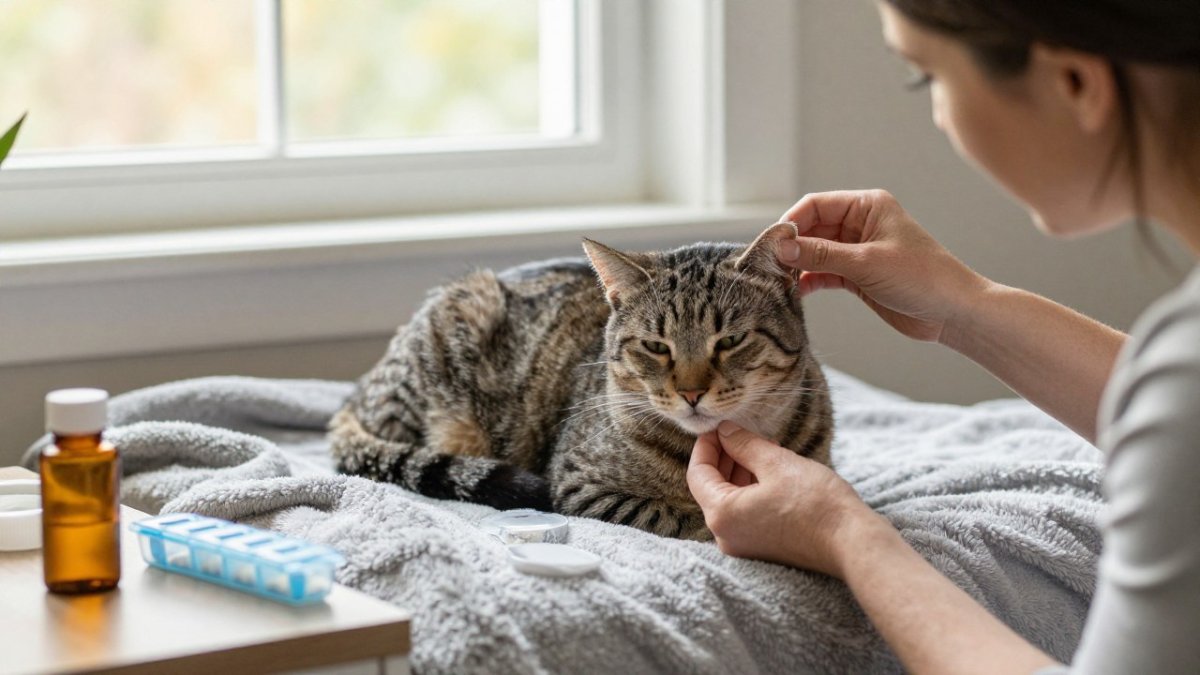
- Daily medication, especially injections. Insulin, seizure meds, or pain management cannot skip a dose. A cat on twice-daily insulin needs a caregiver who can give a shot at the same times every day, not a drop-in visitor who guesses.
- A recent diagnosis or medication change. New conditions need closer watching than stable ones. The first two weeks after a diagnosis or dose change are when adverse reactions and missed-dose errors are most likely.
- Senior age with slowing habits. Older cats dehydrate fast and lose weight quietly. A senior cat that drinks less, grooms less, or sleeps in new places is showing you something.
- Appetite changes or stress-related appetite loss. A cat that stops eating for a day or two is a real concern. Cats that go more than 24 hours without food can develop hepatic lipidosis, a serious liver condition, so appetite monitoring is not optional.
- A chronic condition like kidney disease, diabetes, or hyperthyroidism. These need consistent care and monitoring. Kidney cats need fluid therapy on schedule; diabetic cats need insulin timed to meals; thyroid cats need pills at the same hour daily.
- A history of stress responses. Excessive meowing, hiding, chewing, or behavior changes during past absences. A cat that hid under the bed for three days last time is telling you a strange environment is a medical risk, not just a comfort issue.
- A cat that hides illness well. Some cats show no signs until they are quite sick. If your cat has a history of masking symptoms, a caregiver trained to notice subtle litter box, appetite, and behavior changes is worth the extra cost.
- You are gone longer than a few days. Longer trips raise the odds something changes mid-stay. A weekend is one thing; a two-week trip with a cat on medication is another.
One sign alone rarely decides it. A stable senior cat on no medication may do fine with drop-in visits. A young cat on twice-daily insulin needs more than that. Use this quick decision checklist to sort your cat's situation:
- Medication frequency: Once daily or less, and the cat is stable? Drop-in visits may work. Twice daily, injections, or fluid therapy? Medical boarding or a skilled in-home sitter is the safer call.
- Monitoring needs: Does your cat need appetite, litter box, or behavior notes every day? If yes, the caregiver must be there at least twice daily.
- Mobility: Can your cat reach food, water, and the litter box without help? A cat with arthritis or recent surgery may need a facility with low-entry boxes and non-slip flooring.
If your answers point to injections, twice-daily monitoring, or a cat that has stress-related appetite loss, treat medical boarding or professional in-home care as the baseline, not the upgrade.
If two or more of these signals apply, medical boarding or skilled in-home care should be on your list.
| Sign | What it looks like | Why it matters |
|---|---|---|
| Daily medication, especially injections | Insulin, seizure meds, or pain management | Doses cannot be skipped or guessed |
| Recent diagnosis or medication change | New condition or new dose | First two weeks carry highest risk |
| Senior age with slowing habits | Drinks less, grooms less, sleeps in new places | Older cats dehydrate fast and lose weight quietly |
| Appetite changes or stress-related loss | Cat stops eating for a day or two | Over 24 hours without food risks hepatic lipidosis |
| Chronic condition | Kidney disease, diabetes, hyperthyroidism | Needs consistent care and monitoring |
| History of stress responses | Meowing, hiding, chewing during past absences | Strange environment is a medical risk |
| Cat that hides illness well | No signs until quite sick | Trained observation of subtle changes matters |
| Gone longer than a few days | Longer trips raise odds something changes | Two-week trip with medication is another matter |
Medical Boarding for Cats With Ongoing Health Conditions
Cats with an ongoing health condition are the core medical boarding case.
What matters most is consistency. The same food, the same medication times, and the same monitoring routine reduce the chance of a flare-up.
Some cats with pre-existing conditions do better at home.
If your cat is medically complex, a fuller guide on cat sitting for medically complex cats walks through the options in more detail.
Boarding a Cat With a Chronic Condition: Daily Medication and Timing
Medication timing is the part owners worry about most, and rightly so. Insulin, for example, works on a schedule, and a missed or late dose can cause real harm.
Before you book, write out a simple medication sheet:
- Drug name and dose for each medication
- Exact times for each dose, morning and evening
- How it is given, pill, liquid, injection, or transdermal gel
Hand this to whoever provides care. A facility or sitter that cannot follow a written schedule is not the right fit.
Watch out: a common mistake is assuming a boarding facility will "figure out" injection timing. Confirm it in writing before you leave.
When a Cat Sitter Experienced in Medication Administration Beats a Facility
For many cats, a cat sitter experienced in medication administration can be a good choice. The reason is simple: the cat stays home. No car ride, no strange smells, no new cats nearby.
In-home care also keeps the medication schedule intact. Your sitter gives the same dose at the same time in the same room your cat already knows. For cats on insulin or seizure medication, that consistency is not a small perk.
The catch is vetting. Our guide on how to choose a cat sitter for medication lays out seven steps to check credentials, ask about injection experience, and set up a backup plan. For a deeper look at medical needs, see our guide to cat sitters for medical needs.
In-Home Cat Sitting for Cats With Medical Needs
In-home cat sitting for cats with medical needs combines the comfort of home with trained care. The sitter comes to your cat, follows the care plan, and sends updates so you are not guessing.
Here is what good in-home medical cat sitting looks like:
- Drop-in visits timed around medication, often twice a day
- Feeding routine kept exactly as it is at home
- Litter box checks to catch appetite changes and urinary issues early
At Tracy's Kitty Care, every sitter is background checked, licensed, bonded, and insured. If you are comparing in-home care to a kennel, our cat sitting service is a good place to see how visits are structured, and our list of alternatives to boarding your cat is a good next read.
Questions to Ask Before You Book Medical Boarding
Ask direct questions before you book. The answers tell you quickly whether a place can handle your cat.
- Who gives the medication, and what is their training? Ask whether the person is a veterinary technician, a trained boarding attendant, or a kennel staffer with no medical background. The answer should name a role, not just "our staff."
- Can you give injections, and how often have you done it? Ask for a specific example, such as how many diabetic cats they have boarded in the past year. A facility that hesitates is telling you something.
- What is the medication schedule, and how do you handle a missed dose? They should be able to repeat your cat's schedule back to you and describe a written missed-dose protocol.
Bring your cat's medical history, vaccine records, and a written care plan. Pack enough medication for the whole stay plus a few extra days, in case your trip runs long. Label everything clearly.
What records and supplies to provide:
- Veterinary records: current diagnosis, medication list with doses and times, vaccine history, and your vet's phone number.
- Medication instructions: drug name, dose, exact times, how it is given (pill, liquid, injection, transdermal gel), and what to do if a dose is missed.
- Feeding details: food brand, amount, feeding times, and whether the cat needs warm food, hand-feeding, or a prescription diet.
Watch out: a facility that cannot tell you who gives injections, what happens after hours, or how missed doses are handled is not set up for medical boarding, no matter how nice the suites look.
Signs That Need a Vet, Not a Boarding Facility
Some signs mean your cat needs a veterinarian now, not a boarding booking. Do not wait on these.
- Not eating for more than 24 hours, especially in an overweight cat
- Repeated vomiting or diarrhea
- Trouble breathing or open-mouth breathing
If you see any of these, call your vet or an emergency clinic. Our emergency pet care protocols guide covers what to do step by step.
The hardest part of travel is leaving a cat you worry about. The right care plan removes most of that worry.
Frequently Asked Questions
Is it stressful for a cat to be boarded?
For many cats, yes. Unfamiliar smells, sounds, and routines can trigger a stress response, including hiding, excessive meowing, appetite changes, and stress-related appetite loss. Cats with pre-existing conditions or daily medication schedules feel this more sharply because stress can worsen symptoms. A cat-only facility with trained staff reduces some of that pressure, and in-home cat sitting removes the environment change entirely. If your cat hides from strangers or has needed consistent care during past absences, weigh that stress against the medical support a facility provides.
Can a cat sitter give medication at home instead of boarding?
Yes, provided the sitter is experienced in medication administration. A cat sitter can handle pills, liquids, and insulin injections on a fixed medication schedule, and stays in the cat's familiar environment, which limits stress. This works well for stable ongoing health conditions where the cat's needs are predictable. Medical boarding is the better fit when the condition needs daily veterinary monitoring, oxygen support, or IV fluids. Ask any sitter how they document doses and what they do if a cat refuses food or shows an adverse reaction.
What medical conditions may require supervised boarding?
Conditions that need daily veterinary oversight rather than routine medication often call for medical boarding: uncontrolled diabetes, kidney disease requiring fluid therapy, recent surgery, seizure disorders with frequent episodes, and cats recovering from an illness. Senior cats with several pre-existing conditions also benefit from a facility with trained staff on site. If your cat's care plan is stable and medication timing is the main concern, in-home cat sitting for cats with medical needs can cover it. Ask your veterinarian which category your cat falls into before booking.
What should I ask a boarding facility before booking for a cat with medical needs?
Ask who administers medication and how they confirm the medication schedule and timing, whether a veterinarian is on call or on site, and how they monitor for changes in health or worsening symptoms. Request details on how they handle stress-related appetite loss and what triggers a call to you or your vet. Ask what records and supplies they need: medical history, vaccination records, prescriptions in original packaging, and written feeding routines. Also confirm how you receive updates and what happens if your cat's condition changes mid-stay.