 blog
Cat Sitter for Medical Needs: A Complete Guide
Table of Contents
- Why Your Cat with Medical Needs Requires a Specialized Sitter
- In-Home Care vs. Boarding: What Works Best for Cats with Chronic Conditions
- Questions to Ask a Cat Sitter for Special Needs
- How to Choose a Cat Sitter with Experience in Medication Administration
- Pet Sitter Medication Administration Checklist
- Preparing Your Cat and Home for a Medical Sitter
- Conclusion
Last Updated: August 24, 2026
Why Your Cat with Medical Needs Requires a Specialized Sitter
A cat sitter for medical needs is far more than someone who refills a water bowl and scoops a litter box. When your feline companion has chronic conditions, requires medication administration, or needs specialized monitoring, the stakes shift dramatically. Missing an insulin injection, administering medication at the wrong time, or failing to notice subtle behavioral changes can quickly escalate into emergencies.
According to the American Veterinary Medical Association's guidelines on chronic feline health, consistency in medication timing and monitoring is critical for cats managing long-term conditions. At Tracy's Kitty Care, we understand that your medically complex cat requires more than basic pet sitting. Our background-checked, licensed, bonded, and insured sitters are trained to handle medication administration, recognize signs of distress, and communicate clearly about your cat's daily health status.
In-Home Care vs. Boarding: What Works Best for Cats with Chronic Conditions
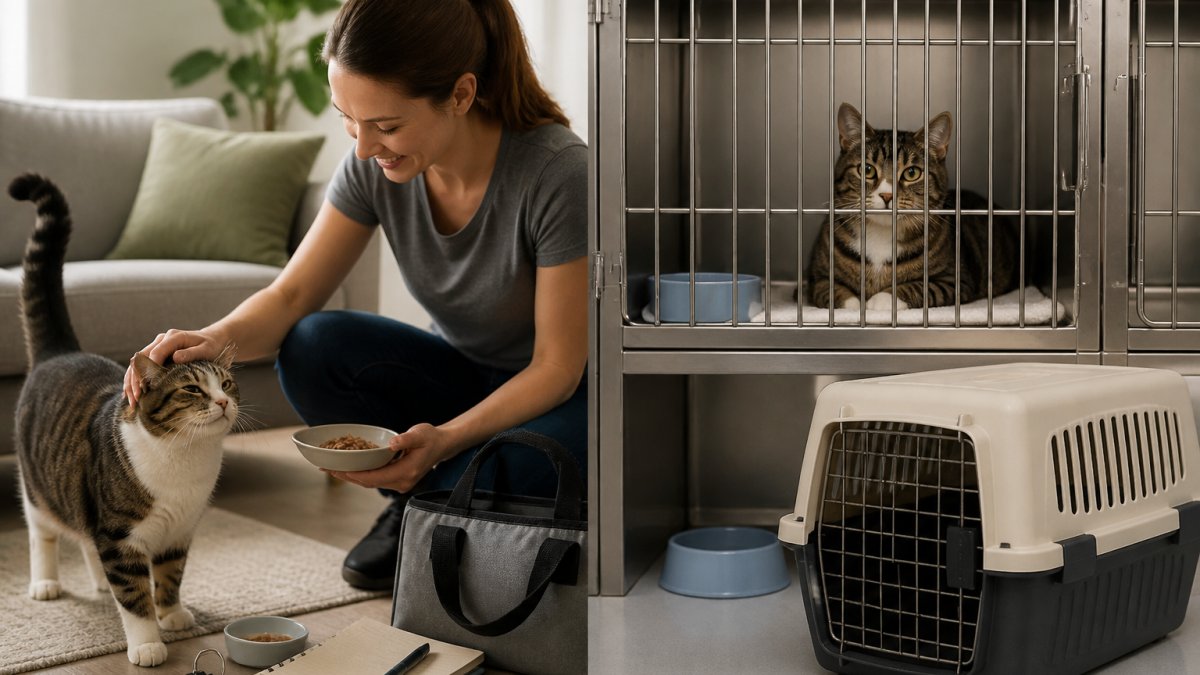
Boarding facilities can be stressful environments for medically fragile felines. The change in environment, exposure to other animals, and unfamiliar handling can trigger stress responses that destabilize a cat's medical condition. A cat with feline geriatrics issues, mobility problems, or cognitive changes may become disoriented in an unfamiliar space.
In-home care keeps your cat in the familiar, low-stress environment where they feel safe. Their medication schedule remains consistent, their diet and litter box routines stay exactly as they know them, and a trained cat sitter for medical needs can follow your specific protocols precisely. They can administer medications on your exact schedule, monitor your cat's appetite and litter box habits, and provide daily updates that give you real-time visibility into your cat's health status while you're away.
Questions to Ask a Cat Sitter for Special Needs
Vetting for Credentials and Experience
Start with the fundamentals: "Are you background-checked, bonded, and insured?" Ask to see proof of all three. Background checks verify trustworthiness, bonding protects you financially, and insurance covers liability.
Next, ask about their experience with medical cats specifically. "How many cats with chronic conditions have you cared for?" Listen for specificity about insulin administration, subcutaneous fluids, or medication schedules.
Pet CPR and first aid certification matters (avma.org). Ask directly: "Do you have pet CPR and first aid certification? When was it last renewed?" Ask about their approach to documentation: "How do you track medication administration and health observations?" A professional sitter will have a system for written notes, photos, or messaging app updates.
Finally, ask for references from other clients with medically complex cats and speak directly with those references about how the sitter handled emergencies and followed medical protocols.
Understanding Their Medical Handling Approach
Ask: "Walk me through how you would administer an insulin injection." Listen for proper technique, injection site checks, and site rotation knowledge. For subcutaneous fluids, ask how they would set up and administer them, including needle insertion and monitoring for complications.
Ask about medication compliance: "What would you do if my cat refused to take a pill?" A good answer involves multiple approaches and knowing never to force medication in a stressful way.
Ask about behavioral observation: "What signs would make you concerned about my cat's health, and what would you do?" They should mention changes in appetite, litter box habits, lethargy, or difficulty breathing, and know to contact your veterinarian immediately if alarmed.
Finally, ask about communication: "How often will you update me, and through what method?" Daily updates via text with photos aren't excessive for a medically complex cat.
How to Choose a Cat Sitter with Experience in Medication Administration
Checking Background, Licensing, and Insurance
Request copies of the sitter's background check, bonding certificate, and insurance policy. Don't accept verbal assurances. Background checks should be recent (within two years), bonding should be current with specified coverage amounts, and insurance should explicitly cover medication administration.
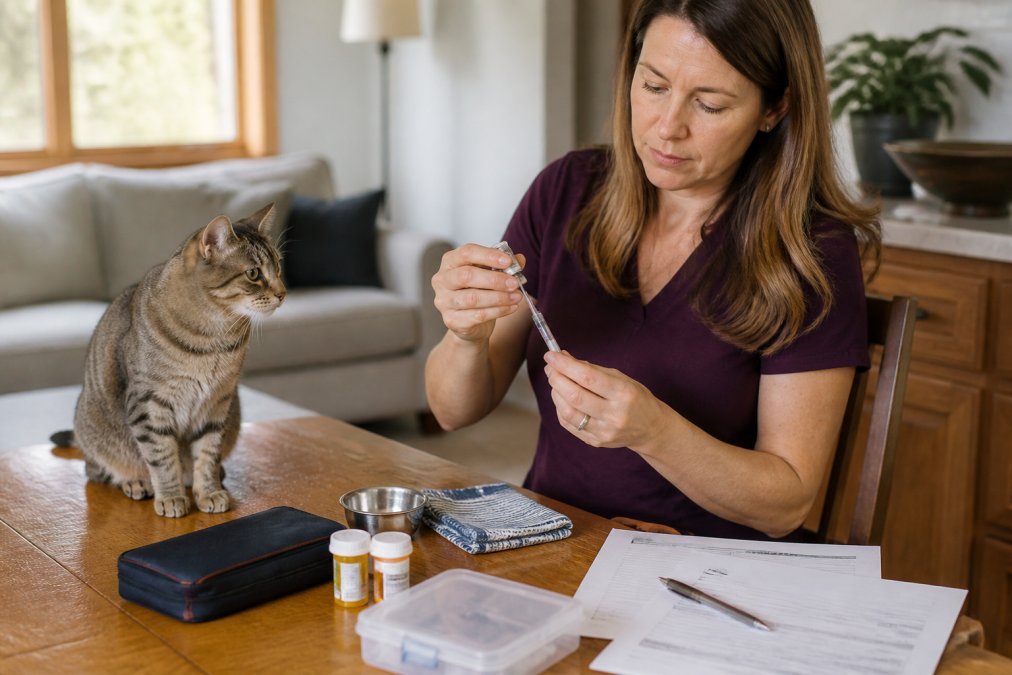
Ask whether they're licensed by any professional organization. Membership in organizations like the National Association of Professional Pet Sitters (NAPPS) indicates commitment to professional standards.
Evaluating Hands-On Medical Skills
Ask the sitter to describe their technique for the specific medications your cat needs. If your cat takes oral medications, ask how they would approach giving a pill while minimizing stress. If your cat needs injections, ask them to walk through the process step-by-step.
Ask how they would handle an emergency: "If my cat stopped eating, seemed lethargic, or had difficulty breathing during your visit, what would you do?" The right answer involves contacting you immediately, contacting your veterinarian, and arranging emergency transport if needed.
Request a trial visit before committing to regular care. Observe how the sitter interacts with your cat, whether they move calmly and confidently, handle your cat gently, follow your instructions precisely, and ask clarifying questions.
Pet Sitter Medication Administration Checklist
Before the First Visit
Create a one-page summary for each medication your cat takes, including the drug name, dose, frequency, route of administration, and special instructions. Include photos of the medication container.

Write out your cat's daily schedule with medication times, feeding times, and other care routines. Post this visibly in an agreed-upon location.
Provide emergency contact information including your veterinarian's name and phone number, emergency veterinary clinics with 24-hour numbers, your phone number, and an emergency contact.
Demonstrate the medication administration process in person and watch the sitter do it once under your supervision. Leave written instructions for what to do if your cat refuses medication, if the sitter suspects an adverse reaction, or if your cat shows signs of illness.
During Each Visit
The sitter should follow this sequence:
-
Check-in and observation. Spend a few minutes observing your cat's behavior, energy level, and appetite before administering medication.
-
Medication administration. Administer each medication exactly as instructed at the correct time and dose. Document the time and any notes.
-
Post-administration monitoring. Observe your cat for 10-15 minutes after medication to watch for adverse reactions.
-
Documentation. Record what was given, when, and observations. Include photos or a brief video showing your cat looking well.
-
Communication. Send a daily update including medication confirmation, behavioral observations, appetite and litter box notes, and any concerns.
Create a simple table your sitter can use to track each visit:
| Date | Time | Medication | Dose | Route | Given? | Cat's Condition | Notes |
|---|---|---|---|---|---|---|---|
| 8/24 | 8am | Insulin | 5 units | Injection | Yes | Alert, ate well | No issues |
| 8/24 | 6pm | Thyroid med | 0.1mg | Pill | Yes | Normal energy | Took willingly |
Preparing Your Cat and Home for a Medical Sitter
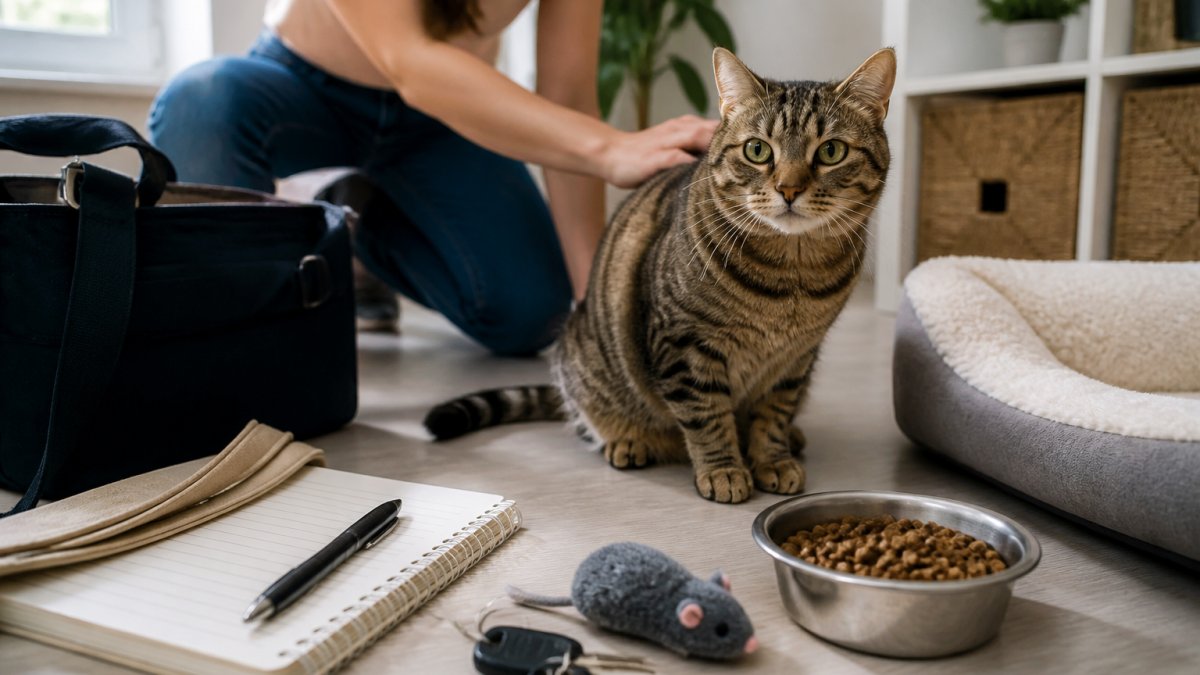
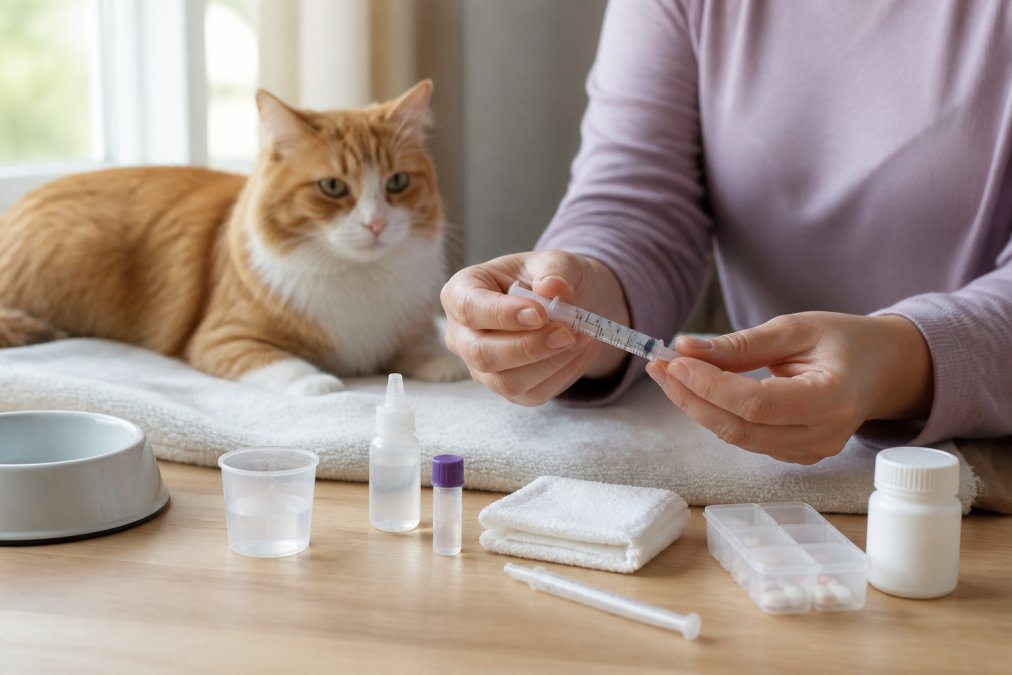
Set up a dedicated medication station in an accessible location with all medications, syringes, and supplies organized and clearly labeled. Include written instructions and emergency contact information.
Ensure your sitter has easy access to your cat. If your cat hides when strangers visit, create a quiet, comfortable space where they feel safe but can still be monitored.
Leave detailed behavioral notes about your cat's personality, preferences, and quirks. Does your cat hide under the bed when nervous? Do they prefer to be left alone? Are there behavioral triggers to avoid?
Stock the home with necessary supplies including extra medication, cleaning supplies for litter boxes, treats your cat enjoys, and extra food. Provide clear written protocols for different scenarios: what if your cat doesn't eat, vomits after medication, seems lethargic, or has digestive issues?
Test the communication system before you leave to ensure your phone number works and the sitter knows how to send updates.
Finding a trustworthy cat sitter for medical needs is one of the most important decisions you'll make as a cat owner with a medically complex pet. According to the American Animal Hospital Association's standards for pet care, professional caregivers should meet specific competency standards when handling medications and monitoring health.
Tracy's Kitty Care offers professional in-home pet sitting exclusively for cats, with background-checked, licensed, bonded, and insured sitters trained in medication administration and feline health monitoring. Our cat sitting service starts at $30 for a 30-minute visit, which includes feeding, fresh water, litter box cleaning, and personalized attention. Visit Tracy's Kitty Care cat sitting service to learn more about how we can provide the specialized care your medically complex cat deserves while you're away.
Frequently Asked Questions
Q: What qualifications should a cat sitter have for administering medication?
A: A qualified cat sitter for medical needs should be background-checked, bonded, and insured. They should have experience with medication administration, understand feline health conditions, and ideally have pet CPR and first aid certification. Ask about their training with insulin injections, subcutaneous fluids, and other treatments specific to your cat's condition. Background-checked sitters demonstrate accountability, while bonding and insurance protect both you and your pet in case of accidents or errors.
Q: How do I prepare my cat's medical records for a pet sitter?
A: Create a comprehensive medical documentation file including your cat's current medications with dosage and administration instructions, veterinary records showing chronic conditions, emergency contact information for your vet, and a list of any behavioral observations to watch for. Include your veterinarian's phone number and authorization to discuss your cat's care. Provide clear written instructions on medication schedules and special handling needs. Keep this documentation accessible and review it during your meet-and-greet so your sitter understands your cat's complete health picture.
Q: Can a professional cat sitter handle insulin injections for diabetic cats?
A: Yes, a professional cat sitter with proper training and experience can administer insulin injections. Before hiring, verify they have successfully handled insulin administration for other clients and understand blood sugar monitoring if needed. Ask how they've been trained and whether they have references from other diabetic cat owners. Ensure your sitter is comfortable with the specific injection technique, storage requirements, and recognizing signs of hypoglycemia or hyperglycemia. Your veterinarian can also provide guidance and demonstrate the injection process during a training session with your sitter.
Q: How much does a professional cat sitter for medical needs typically cost?
A: Medical-needs cat sitting typically costs more than standard visits due to the specialized care required. A basic 30-minute visit with medication administration starts at $30.00, though rates vary based on the complexity of your cat's medical needs, frequency of visits, and your location. Additional charges may apply for multiple medications, subcutaneous fluids, or specialized monitoring. Request a detailed quote based on your cat's specific requirements and compare services that include background checks, bonding, and insurance to ensure you're paying for qualified, protected care.
This article was written using GrandRanker