 how-to
How to Build Confidence in Timid Kittens: A Step-by-Step Guide
Last Updated: November 9, 2026
Quick Summary
Build confidence in timid kittens by first creating a quiet safe space they can retreat to, then letting them set the pace. Reward calm moments with treats, read their body language before approaching, and use short, low-pressure play sessions. Shyness that comes on suddenly should be checked by a vet first.
- Set up a quiet room or corner with a covered bed or box, and place a worn T-shirt with your scent inside.
- Sit on the floor and let the kitten come to you; avoid long, fixed eye contact at first.
- Keep training sessions short, about 5 to 10 minutes, and end on a good moment.
- Use wand toys, puzzle feeders and clicker training to build confidence through play.
- A kitten that suddenly becomes more withdrawn should have a veterinary exam before behavior training begins.
Table of Contents
- Why Kittens Become Timid and What Confidence Looks Like
- Step 1: Create a Safe Space Your Kitten Can Retreat To
- Step 2: Read Feline Body Language Before You Approach
- Step 3: Let Your Kitten Set the Pace With Positive Reinforcement
- Step 4: Use Play and Clicker Training to Build Confidence
- Step 5: Socializing Shy Kittens Gradually Over Time
- Rule Out Medical Causes and Track Your Kitten's Progress
- Booking Help for Your Timid Kitten While You Are Away
- Frequently Asked Questions
Why Kittens Become Timid and What Confidence Looks Like
Timid kittens are not broken; most are cautious by nature, and early experiences shape how bold they become.
Timid kittens hide, freeze, or flee around new people, sounds, or places.
Several factors commonly play a role:
- Limited handling during the critical socialization window, roughly weeks 2 to 7 of life
- A stressful move, separation from littermates, or a rough start in a shelter
- Genetics, since some kittens are naturally more reserved
Do not expect a shy kitten to act social overnight. Progress comes in small steps: staying in the room a little longer, or sniffing your hand before retreating.
American Veterinary Medical Association guidance on cat behavior and socialization
Wait for signs of trust: a relaxed tail, slow blinks, and a kitten that returns to your space on its own. (Why Your Cat Is Acting Shy and Hiding: A Guide covers signs and causes in more depth.)
Step 1: Create a Safe Space Your Kitten Can Retreat To
A shy kitten needs one room or corner where it always feels in control, a sanctuary room.
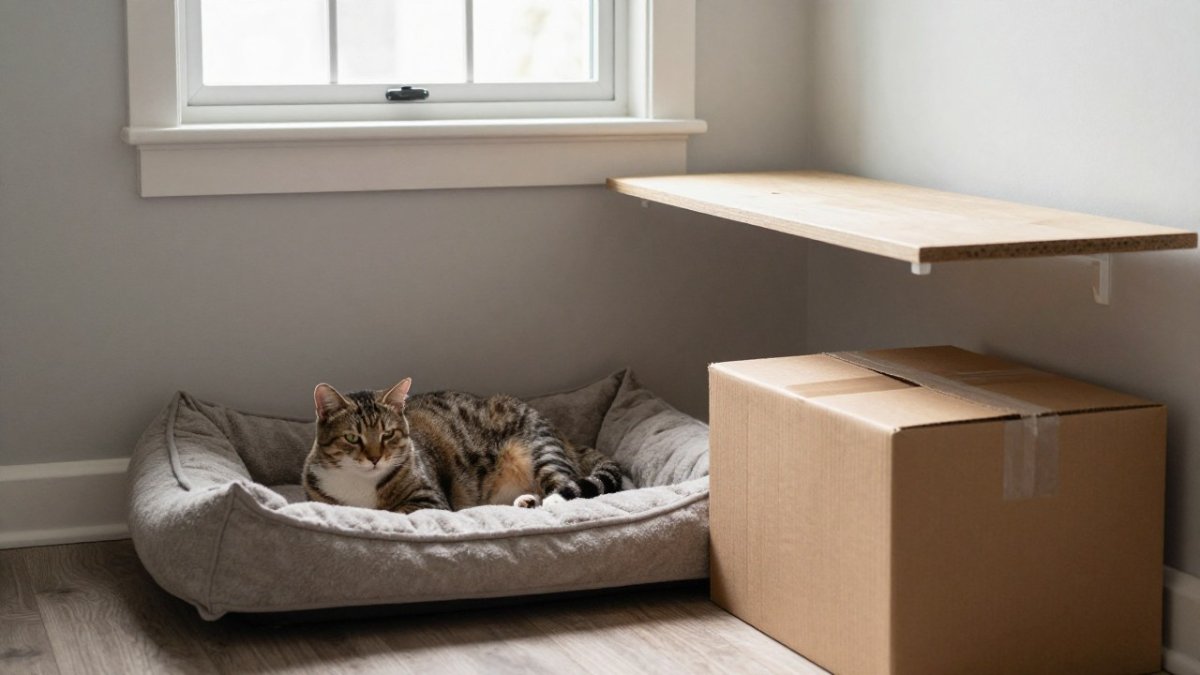
Here is a simple setup that works well:
- A quiet room with a closed door or a spot away from foot traffic
- A covered bed or cardboard box with an open side
- A low perch or shelf near a window for watching the world
Place a worn T-shirt with your scent inside the box; scent and pheromones help a nervous cat feel secure.
Keep the safe space calm.
ASPCA tips for helping a frightened cat feel safe at home
For more on helping a cat settle in, see step-by-step guidance on adjusting a shy cat to a new home.
A safe space is the foundation of confidence, and the key elements are summarised below.
| Element | Purpose | Note |
|---|---|---|
| Quiet room or corner | Keeps the kitten away from foot traffic | Use a closed door or quiet spot |
| Covered bed or cardboard box | Gives a hiding place | Open side lets the kitten watch |
| Low perch near a window | Lets the kitten observe the world | Keep it low and close to the floor |
| Food, water and litter box | Meets basic needs | Keep them at a distance from each other |
| Worn T-shirt with your scent | Helps the kitten feel secure | Place it inside the box |
Step 2: Read Feline Body Language Before You Approach
Cats tell you how they feel with their bodies. Learning to read those signals keeps interactions positive.
Signs of comfort:
- Slow blinks, which signal trust
- Relaxed ears pointing forward or slightly to the side
- A tail held upright or loosely curled
Signs of stress:
- Flattened ears and dilated pupils
- A tucked body, crouched low, or a puffed tail
- Hissing, growling, or swatting
Avoid direct eye contact at first; a long, fixed stare feels threatening to a shy kitten. Look away, or slowly blink from across the room.
Sit on the floor and let the kitten come to you. Offer a finger at nose height to sniff, and watch the tail and ears before going further.
Step 3: Let Your Kitten Set the Pace With Positive Reinforcement
Progress works best when the kitten chooses each next step. Pushing a timid cat into contact usually sets you back.
Use the 3-3-3 rule as a rough guide for newly adopted cats: about 3 days decompressing, 3 weeks learning the routine, and 3 months settling fully. Every kitten moves at a different speed, so treat these numbers as flexible.
Reward every calm moment with treats. Try these steps:
- Toss a small treat near the kitten, then step back
- Reward the kitten for coming a little closer each session
- Keep sessions short, about 5 to 10 minutes
Counter-conditioning pairs treats with your presence until your visits signal good things. Over time, many kittens associate you with food and comfort.
Consistency matters.
Step 4: Use Play and Clicker Training to Build Confidence
Play lets a shy kitten practice hunting skills in a low-pressure way, keeping the focus on the toy rather than on you.
Try these ideas:
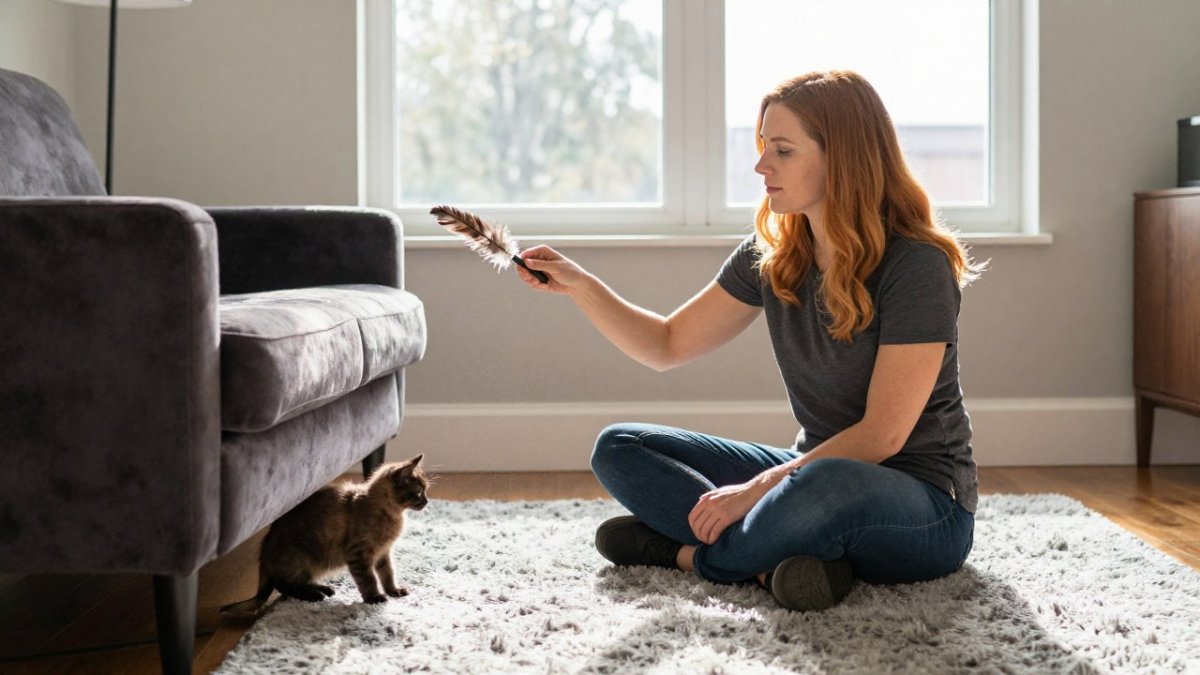
- Wand toys with feathers, moved slowly across the floor
- Puzzle feeders that reward problem solving
- Crinkle balls tossed to a distance the kitten is comfortable with
Clicker training also builds confidence. Click the moment the kitten does something brave, such as stepping toward a new object, then follow with a treat.
Watch for overstimulation: if the kitten swats or bites, stop and give it space.
Step 5: Socializing Shy Kittens Gradually Over Time
Socialization is a long game, but the game changes with the kitten's age. A 9-week-old and a 7-month-old need different plans, and a timid kitten in a home with a confident adult cat needs a third plan entirely.
Match the plan to the developmental stage
A kitten's brain is most receptive to new people, sounds, and animals during the socialization window, roughly weeks 2 to 7 of life. After it closes, new experiences take more repetitions and patience, but they are still very doable.
- 8 to 12 weeks: This is the easiest window to work with. Short, frequent handling sessions of 5 to 10 minutes, several times a day, do more good than one long session. Introduce one new person, sound, or surface per day. A timid kitten at this age often rebounds within a week of consistent, low-pressure exposure.
- 3 to 4 months: Many kittens hit a normal fear period around this age, when things they previously ignored suddenly seem scary. Do not interpret a sudden retreat as a permanent setback. Hold the routine steady, lower the intensity of new exposures, and let the kitten re-approach on its own. Pushing during a fear period is the most common way owners accidentally set a kitten back.
- 5 to 7 months: The second fear period often lands here, and adolescent kittens can become more suspicious of strangers and new environments. This is also when a kitten that was handled early but rarely since may start hiding again. Rebuild with the same treat-and-retreat pattern you used at 8 weeks, and expect it to take two to three times as long.
A simple progression that works across ages:
- A sound from another room, played softly
- A visitor who sits quietly and ignores the kitten
- A visitor who offers a treat from a low hand
- A short session of gentle petting, if the kitten asks for it
Add only one new item at a time, and repeat each step until the kitten is visibly relaxed, not merely tolerant, before moving on. Tolerance is not confidence.
Cornell Feline Health Center guidance on feline socialization
Socializing a timid kitten in a multi-cat household
This is where most generic advice falls apart.
Start with separation, not introduction.
Introduce by scent first.
Then move to controlled visual contact through a baby gate, cracked door, or screen door.
Watch the resident cat's body language as closely as the kitten's.
Give the timid kitten escape routes: furniture arranged so it can move without crossing the resident cat's path, plus vertical space such as cat trees or shelves.
Watch out: never let the two cats "work it out" through a fight. One bad scuffle can set a timid kitten back weeks and make the resident cat more territorial. Interrupt calmly with a toy or loud noise, separate them, and restart more slowly.
Socializing a kitten while working full time is possible with short, consistent sessions before and after work; trust builds through repetition, not marathon sessions. Practical scheduling guidance for socializing a kitten around a full-time job lays out how to fit these sessions into a busy week.
Rule Out Medical Causes and Track Your Kitten's Progress
Shyness can sometimes hide a health problem, and this is the step most guides skip. A kitten that is suddenly more withdrawn than usual, or that was never bold but is now hiding and eating less, needs a veterinary exam before you assume the issue is behavioral. Pain, infection, dental disease, and digestive trouble can all make a cat withdrawn.
When to call the vet instead of the trainer
Schedule a visit if you see any of the following, especially if the change came on suddenly:
- Hiding more than usual, or hiding in a new spot and refusing to come out for food
- Reduced appetite or refusing food entirely for more than 24 hours
- Weight loss, even mild, in a growing kitten
A kitten that was social and is now hiding is a different case from a kitten that was always shy.
Medical causes such as dental pain, ear infections, or intestinal parasites can sometimes make a cat withdrawn, so a veterinary exam is a sensible first step when a change in behavior appears sudden.
Cornell Feline Health Center on signs of illness in cats
What a vet visit can and cannot tell you
A physical exam can identify pain, dental disease, ear infections, and obvious illness. Bloodwork and a fecal test can catch things a hands-on exam cannot, such as parasites or organ changes.
If the exam comes back clean, that is useful information: you can commit to the behavior plan without second-guessing, and you have a baseline to compare against if things change later.
Track progress so you can spot a real setback
Keep a simple log of your kitten's progress:
- Date and time of each session
- How long the kitten stayed in the room
- Any new behaviors, such as approaching, eating, or playing
Review the log each week. Small wins add up, and the log helps your vet if concerns come up.
Watch out: a sudden regression after weeks of steady progress is a red flag for a medical issue, not a training failure.
If you are wondering whether your cat's behavior points to stress or illness, this guide explains the symptoms so you can tell them apart.
Booking Help for Your Timid Kitten While You Are Away
Building confidence takes daily routine, and that can be hard to keep up when you travel. A familiar in-home sitter can keep your kitten's routine steady while you are away.
Tracy's Kitty Care sitters are background checked, licensed, bonded, and insured, and the business focuses exclusively on cats. Visit our cat sitting service to see how it works and request a quote.
Frequently Asked Questions
How do I make a timid kitten less timid?
Start by giving the kitten a quiet safe room with a hiding spot, food, water, and a litter box. Let her approach you on her own schedule, sit quietly nearby, and offer treats or gentle play with a wand toy. Keep sessions short, usually five to ten minutes, and end on a positive note. Progress is gradual, so stay consistent day after day rather than forcing contact. Most shy kittens show clear improvement within several weeks of steady, low-pressure interaction.
How long does it take for a shy kitten to adjust?
Adjustment time varies by kitten. Some begin approaching within a few days in a calm environment, while others need several weeks or longer, especially if they had a rough start or limited handling before about eight weeks of age. Kittens that are fearful for many months, or that show worsening aggression, may benefit from a veterinary visit to rule out pain or illness. Patience and consistency matter more than speed.
What is the 3-3-3 rule for kittens?
The 3-3-3 rule is a guideline many shelters and adopters use to describe the stages a newly adopted cat often goes through: about three days to decompress and feel safe, about three weeks to settle into a routine, and about three months to feel fully at home. It is a rough framework, not a fixed timeline. Use it to set realistic expectations, and remember that a timid kitten may move through each stage more slowly than average.
Can a timid kitten be socialized if she is already past early kittenhood?
Yes, though the window of easiest socialization is roughly two to seven weeks of age. Kittens and young cats beyond that point can still build confidence with patient, predictable routines, positive reinforcement, and a gradual introduction to new people and sounds. Expect the process to take longer. If fear appears suddenly in an adult cat, a veterinary exam is a sensible first step to rule out pain or medical causes.