 how-to
Help a Shy Cat Adjust to a New Home: Step-by-Step Guide
Table of Contents
- What to Expect: How Long for a Cat to Adjust to a New Home
- Step 1: Set Up a Safe Room for Your Shy Cat
- Step 2: Recognize Signs of Anxiety in Cats During Transition
- Step 3: Establish a Consistent Daily Routine
- Step 4: Use the 3-3-3 Rule for Cats to Manage Expectations
- Step 5: Use Pheromones and Scent to Reduce Stress
- Step 6: Gentle Socialization and Building Trust
- Handling Multi-Pet Households: Introducing a Shy Cat to Other Animals
- Frequently Asked Questions
Last Updated: September 24, 2026
What to Expect: How Long for a Cat to Adjust to a New Home
A shy cat adjust new home typically follows a predictable timeline, though every cat moves at their own pace. Most cats need between 3 to 12 weeks to fully acclimate, with noticeable progress happening in distinct phases. Understanding this timeline helps you stay patient and recognize that hiding, fear, and cautious behavior are completely normal parts of the process.
The first few days are the hardest. Your shy cat may spend most of their time in a safe room, barely eating and refusing interaction. This isn't a sign something is wrong, it's a sign they're processing a massive change. By week three, many cats begin exploring beyond their safe room. By week twelve, most have settled into routines and show genuine confidence in their new environment.
The 3-3-3 rule for cats is a helpful framework that many cat owners use to manage expectations during this transition period. It breaks the adjustment into three distinct phases, each with its own behavioral markers and care priorities.
Step 1: Set Up a Safe Room for Your Shy Cat
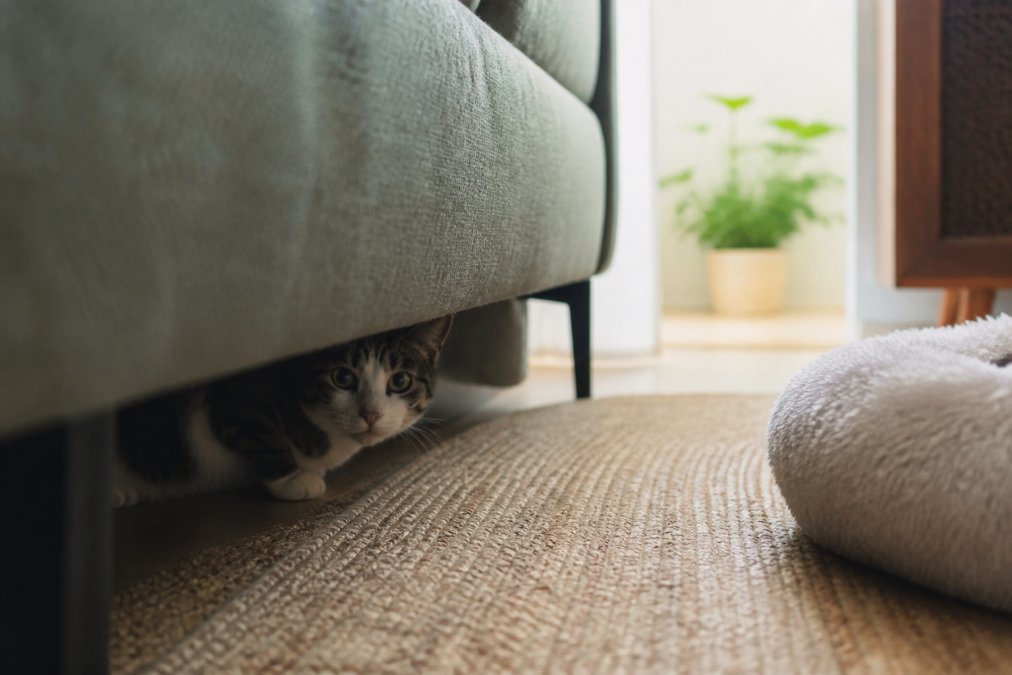
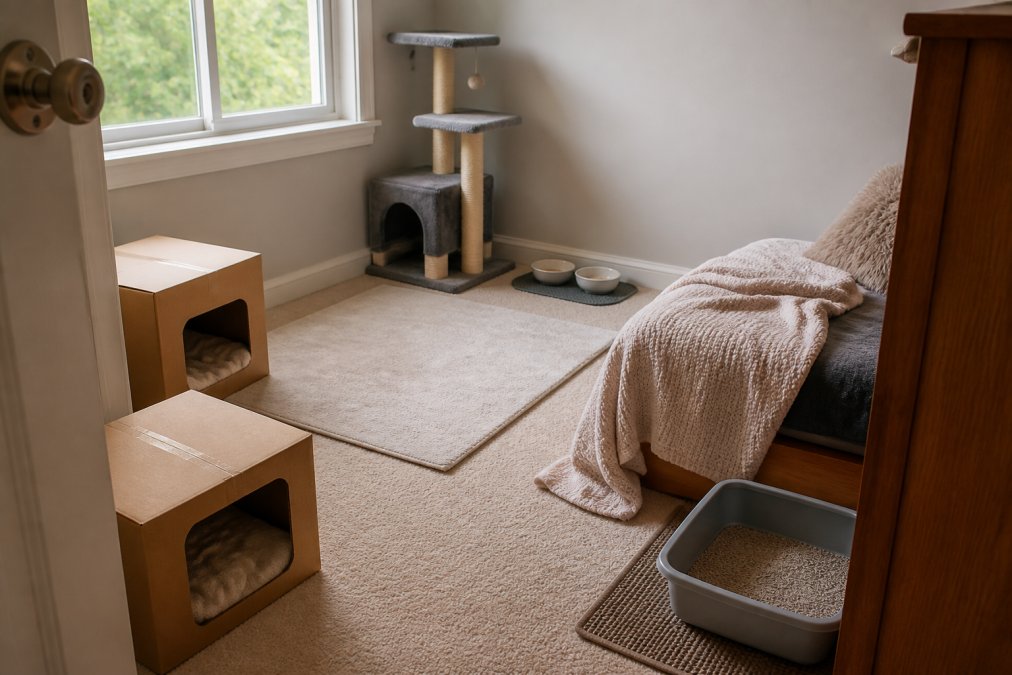
Your shy cat needs a dedicated safe room before they arrive at their new home. This single room becomes their entire world for the first few days, a place where everything is familiar, controllable, and safe. Without a safe room, a frightened cat will hide in walls, under furniture, or in unreachable spaces, making it nearly impossible to monitor their health or build trust.
Essential items to include
Your safe room should contain everything your cat needs within arm's reach:
- Litter box, Place it away from food and water bowls. A shy cat won't use a litter box near their eating area.
- Food and water bowls, Use separate bowls and refresh water daily. Some cats prefer running water from a fountain.
- Hiding spots, Cardboard boxes with cut openings, cat tunnels, or under-bed hideaways give your cat control over visibility.
- Scratching post, Provides stress relief and marks territory, which builds confidence.
- Soft bedding, A blanket or cat bed in a quiet corner offers comfort during anxious moments.
- Toys, Leave them available but don't force play. Interactive toys come later.
- Window access, If possible, position the room near a window so your cat can observe the outside world safely.
Keep the room quiet and dimly lit. Avoid high-traffic areas. A bedroom or spare bathroom works better than a kitchen or living room.
Why vertical space matters
Vertical space is critical for a shy cat's sense of safety. Cats feel more secure when they can climb up and observe their surroundings from above. A cat tree, wall-mounted shelves, or even stacked cardboard boxes give your cat an escape route and a vantage point.
When a frightened cat can climb high, they regain a sense of control. They're no longer trapped on the ground where they feel vulnerable. This confidence boost happens faster when vertical options are available from day one.
Step 2: Recognize Signs of Anxiety in Cats During Transition
Learning to read your shy cat's body language helps you know when to approach and when to give space. Anxious cats send clear signals, you just need to know what to look for.
Stress signals include:
- Flattened ears against the head
- Dilated pupils (wide eyes)
- Crouched posture close to the ground
- Tail wrapped tightly around the body or puffed up
- Hissing, growling, or excessive meowing
- Loss of appetite or refusing water
- Excessive grooming or hair loss
- Hiding for entire days without emerging
Calming signals that show progress:
- Slow blinks when looking at you
- Ears in a forward or neutral position
- Relaxed body posture
- Approaching your hand or rubbing against your legs
- Using the litter box consistently
- Eating regular meals
- Playing with toys or exploring the room
The slow blink is especially important. When your cat gives you a slow blink, they're showing trust. You can slow blink back, this is how cats communicate affection without pressure.
Step 3: Establish a Consistent Daily Routine
Shy cats thrive on predictability. A consistent daily routine reduces anxiety because your cat knows what to expect. Feed at the same times, visit the safe room at the same times, and maintain the same light and noise levels throughout the day.
A typical routine might look like this:
- Morning (7 AM): Refresh water, offer food, spend 10 minutes in the room quietly
- Midday (12 PM): Check litter box, refresh water
- Evening (5 PM): Feed again, spend 15 minutes sitting quietly nearby
- Night (9 PM): Final check, dim lights, ensure litter box is clean
The key is consistency. Your shy cat will start anticipating your visits. Over time, they'll move from hiding to greeting you at the door. This shift happens because your cat learns you're safe and predictable.
Avoid sudden changes to this routine. If you normally visit at 7 AM, don't skip a day or show up at 10 AM instead. Predictability builds trust faster than anything else.
Step 4: Use the 3-3-3 Rule for Cats to Manage Expectations
The 3-3-3 rule for cats breaks the adjustment timeline into three manageable phases. This framework helps you understand what's happening in your shy cat's mind and when to expect behavioral shifts.
The first 3 days: Hiding and adjustment
During the first three days, expect your shy cat to hide almost constantly. They may not eat much, may not use the litter box, and will likely avoid you entirely. This is survival mode. Your cat's brain is processing massive sensory input, new smells, new sounds, new spaces.
Your job is simple: leave them alone. Provide food, fresh water, and a clean litter box, then step back. Don't try to coax them out or force interaction. The more you push, the more frightened they become.
Some cats hide so effectively you'll barely see them for three days. That's okay. As long as they're eating small amounts and using the litter box, they're adjusting normally.
Days 4-21: Building trust and exploring
Around day four, something shifts. Your shy cat begins venturing out of their hiding spot for longer periods. They may explore the room more confidently. They'll eat more regularly. By day ten, many cats start showing curiosity about their human.
This is when you can begin gentle interaction. Sit quietly in the room without forcing attention. Let your cat approach you. When they do, offer slow blinks and gentle head scratches if they allow it.
Weeks 4-12: Full acclimation and confidence
After three weeks, your shy cat can begin exploring beyond the safe room. Open the door slowly and let them venture out at their own pace. Some cats will rush out immediately. Others will take days to explore the hallway.
Step 5: Use Pheromones and Scent to Reduce Stress
Pheromones are natural chemicals that cats produce to communicate safety and calm. Synthetic pheromone products mimic these signals and help reduce anxiety during transitions. The most common product is Feliway, which replicates the calming pheromones cats release from glands on their face.
Step 6: Gentle Socialization and Building Trust
Once your shy cat has spent a few weeks in the safe room and is eating regularly, gentle socialization can begin. This doesn't mean forcing interaction, it means creating low-pressure opportunities for your cat to choose engagement.
Reading body language and respecting boundaries
Your cat's body language tells you exactly what they need. Ears forward or neutral means they're calm. Ears back, dilated pupils, or a puffed tail means they need space. Respect these signals. A cat that feels pressured will regress in their adjustment.
Interactive play for confidence building
Interactive play with wand toys or feather toys helps shy cats build confidence. Play isn't just exercise, it's a way for your cat to express natural hunting instincts in a safe way.
Handling Multi-Pet Households: Introducing a Shy Cat to Other Animals
If you have other cats or pets at home, the introduction process requires extra patience. A shy cat meeting an existing pet is doubly stressful, they're adjusting to a new home AND meeting a new animal.
Frequently Asked Questions
How long does it take for a shy cat to adjust to a new home?
Most shy cats follow the 3-3-3 rule: 3 days of hiding, 3 weeks of gradual exploration, and 3 months to feel fully comfortable. However, some shy cats may take longer, up to 6 months, depending on their temperament and past experiences. Patience is essential. Avoid forcing interaction during the first few weeks, and let your cat set the pace for socialization and trust-building.
What are the main signs of anxiety in cats during a move?
Anxious cats may hide excessively, refuse to eat, vocalize more than usual, have accidents outside the litter box, or display defensive body language like flattened ears and a tucked tail. Some cats may hiss or swat when approached. These are normal stress responses. A safe room, consistent routine, and pheromone products can help reduce these signs and support your cat's acclimation.
What is the 3-3-3 rule for cats, and why does it matter?
The 3-3-3 rule describes the typical adjustment timeline: 3 days of shock and hiding, 3 weeks of cautious exploration, and 3 months to fully settle and show true personality. Understanding this framework helps you avoid frustration and unrealistic expectations. It reminds you that adjustment takes time and that hiding behavior is normal and healthy during the first phase.
How do I set up a safe room for a shy cat, and what should I include?
Choose a quiet, low-traffic room like a bedroom or bathroom. Include a litter box, food and water bowls (placed away from the litter box), hiding spots (cardboard boxes, cat caves), a cat tree for vertical space, and familiar-scented items. Keep the room dimly lit and quiet. This confined space helps your cat feel secure while you manage the introduction to the larger home gradually over weeks.