 ultimate-guide
Cat Stress During House Moves: Signs & Solutions
Table of Contents
- Physical Signs of Stress in Cats During a Move
- Behavioral Changes to Watch for During Relocation
- Creating a Safe Space for Cats During a Move
- How Long Does Cat Stress Last After Moving
- How to Calm a Stressed Cat After Moving
- Preparing Your Home and Managing the Move Itself
- When to Consult a Veterinarian About Move-Related Stress
- Conclusion
- Frequently Asked Questions
Last Updated: October 1, 2026
Physical Signs of Stress in Cats During a Move
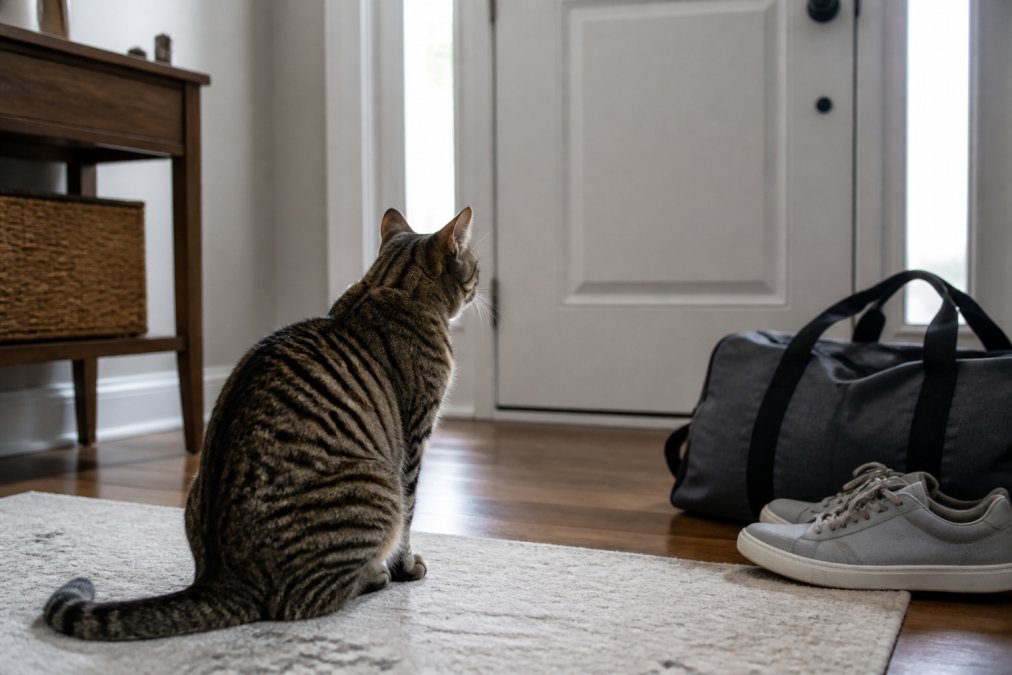
When cats experience stress during a house move, their bodies send clear signals. The most visible indicator is excessive grooming, where your cat licks or bites at their fur obsessively, sometimes creating bald patches. You might also notice dilated pupils, flattened ears pressed back against the head, or a tucked tail. Many stressed cats pant or breathe heavily, even in cool environments. Their gums may appear pale instead of their normal pink color, which signals elevated stress hormones affecting circulation.
Watch for restlessness and pacing. A stressed cat often cannot settle in one spot, moving between rooms or hiding repeatedly. Some cats experience appetite loss entirely, refusing their favorite foods. Others develop stress-induced cystitis, a condition where inflammation of the urinary bladder occurs without infection, leading to frequent urination or straining in the litter box.
Body language during cat stress during moving includes a hunched posture, where your cat crouches low with their body tense. Their whiskers may droop instead of pointing forward. If your cat normally approaches you for attention but suddenly withdraws, that behavioral shift combined with physical signs indicates genuine distress rather than normal adjustment.
Behavioral Changes to Watch for During Relocation
Behavioral shifts often precede or accompany physical stress signs. Vocalization increases dramatically, your cat may yowl, meow constantly, or make unusual sounds they've never made before. This vocalization reflects anxiety and disorientation in an unfamiliar environment.
Hiding becomes excessive during cat stress during moving. While cats naturally seek enclosed spaces, stress-induced hiding means your cat refuses to emerge even for meals or bathroom breaks. They may hide for days, which prevents you from monitoring their health and increases their isolation anxiety.
Litter box avoidance is a critical behavioral change. Your stressed cat may eliminate outside the box entirely, choosing corners, closets, or your bed instead. This isn't spite, it's a stress response where the litter box location feels unsafe or unfamiliar. Some cats develop such severe anxiety they stop using the box altogether.
Territorial behavior intensifies during moves. Your cat may scent mark excessively by rubbing their face on furniture or spraying urine, even if they've never marked before. This is their attempt to reclaim control and establish familiarity in an overwhelming new space.
Aggression or irritability can emerge in normally gentle cats. Petting aggression develops where your cat tolerates touch briefly then attacks without warning. Some cats become defensive around food or toys, guarding resources as if they're scarce.
Creating a Safe Space for Cats During a Move
The most effective strategy for managing cat stress during moving is establishing a dedicated safe room before the move begins. Choose a quiet, interior room away from moving activity, a bedroom, bathroom, or office works well. This room becomes your cat's refuge where they can decompress without exposure to the chaos of moving boxes, strangers, and open doors.
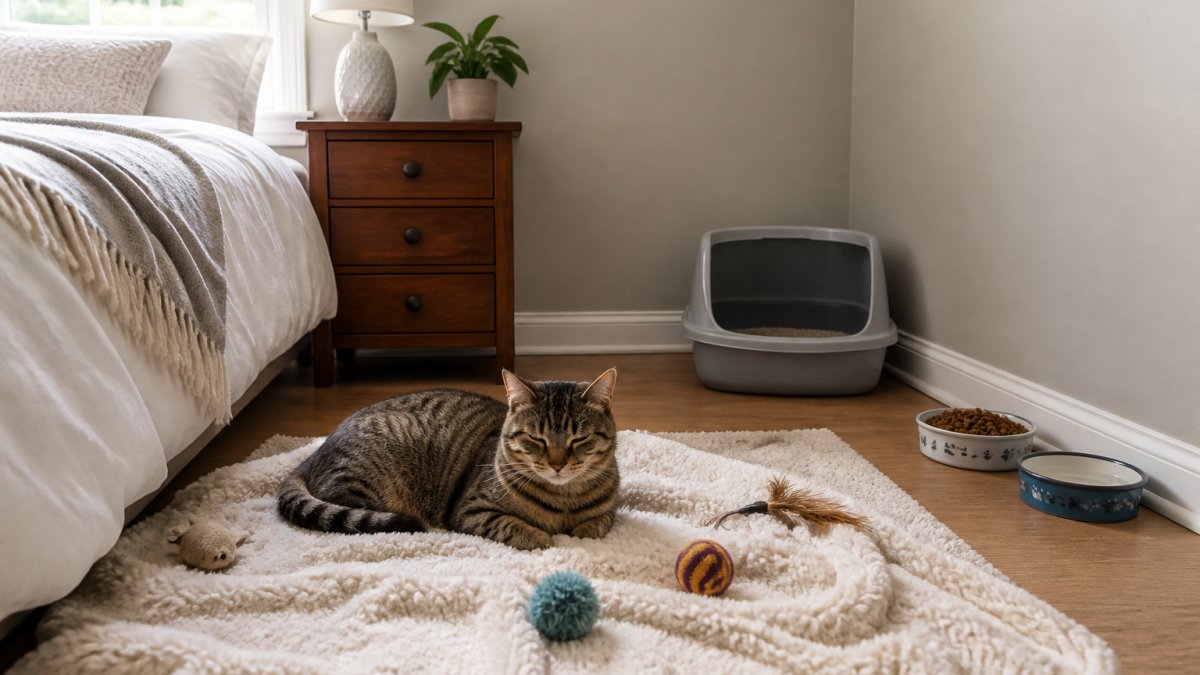
Stock this safe room with essential items before moving day. Place the litter box in one corner, far from food and water bowls. Cats naturally avoid eliminating near their eating area, so separation prevents litter box avoidance. Include familiar items like their bed, toys, and something with your scent, a worn t-shirt or blanket. These familiar objects reduce anxiety significantly.
Set up vertical spaces like cat trees or shelves. Cats feel safer when they can observe their environment from above. Vertical territory gives them an escape route and a vantage point, reducing their sense of vulnerability.
Keep your cat in this safe room for at least 24-48 hours before the move, then during the entire moving day. After the move, keep them confined to this room for several days before gradually introducing them to other areas of the new home. This staged approach prevents overwhelming your cat with too much new space at once.
Maintain their routine absolutely. Feed at the same times, play at the same times, and keep their schedule identical to their pre-move routine. Predictability reduces anxiety when everything else feels chaotic.
How Long Does Cat Stress Last After Moving
The duration of cat stress during moving varies significantly by individual cat. Most cats show noticeable improvement within the first 7-14 days in a new home, but full decompression typically requires 4-6 weeks. Some cats adapt in days, while others need months to feel completely secure.
The post-move decompression timeline follows a predictable pattern. Days 1-3 are typically the most acute stress phase, where your cat may hide constantly and refuse food. Days 4-7 show gradual improvement as your cat begins cautious exploration. By week 2-3, most cats resume normal eating and litter box use, though behavioral anxiety may persist.
Senior cats and cats with previous trauma histories often require extended decompression periods, sometimes 8-12 weeks. Their nervous systems recover more slowly from stress. Cats with pre-existing anxiety disorders similarly need longer adjustment periods than naturally confident cats.
Environmental factors influence recovery speed. A new home with similar layout to the previous one allows faster adjustment than a drastically different space. Multiple cats in a household may take longer to decompress because they feed off each other's anxiety.
Watch for the transition from acute stress to normal behavior. Once your cat resumes grooming, seeks your attention, plays with toys, and uses the litter box consistently, they've entered the recovery phase. This doesn't mean they're fully adjusted, it means the acute crisis has passed.
How to Calm a Stressed Cat After Moving
Pheromone therapy is one of the most effective evidence-based approaches for calming a stressed cat after moving. Products containing feline pheromones mimic the natural calming scents cats produce from glands on their face. These pheromones signal safety and familiarity, reducing anxiety without medication. Apply pheromone diffusers in the safe room and main living areas immediately after the move.
Environmental enrichment reduces stress by giving your cat positive activities to focus on. Provide puzzle feeders, interactive toys, window perches for bird watching, and climbing structures. These activities redirect anxiety into engagement and create positive associations with the new space.
Maintain absolute routine consistency. Feed at identical times, play at the same times, and follow the same daily schedule. This predictability is calming when your cat's environment has changed dramatically. Consistency signals that despite the new location, life still follows the same rules.
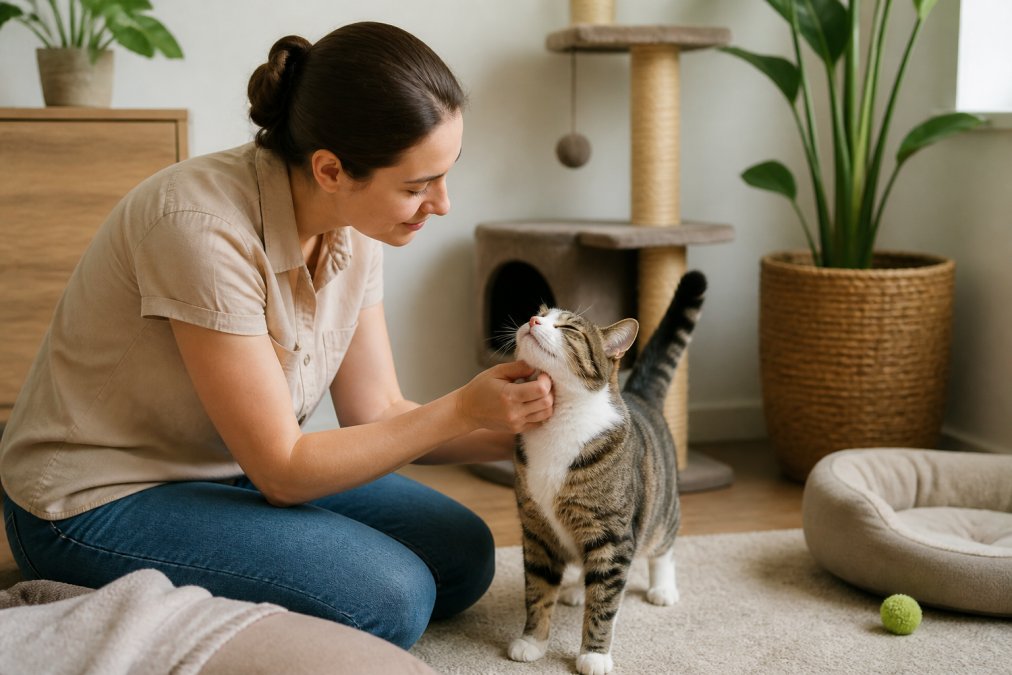
Positive reinforcement helps your cat associate the new home with good things. Offer high-value treats in different rooms, play with their favorite toys, and provide extra attention when they're calm and exploring. Avoid rewarding anxious behaviors like excessive meowing or hiding.
Create multiple escape routes and hiding spots throughout the home. Cats feel safer when they can retreat quickly. Provide boxes, cat tunnels, and enclosed spaces in multiple rooms so your cat never feels trapped.
Minimize sensory overload during the first weeks. Keep noise levels low, avoid inviting guests over immediately, and maintain dim lighting if your cat seems overwhelmed. Gradually increase stimulation as your cat adapts.
Preparing Your Home and Managing the Move Itself
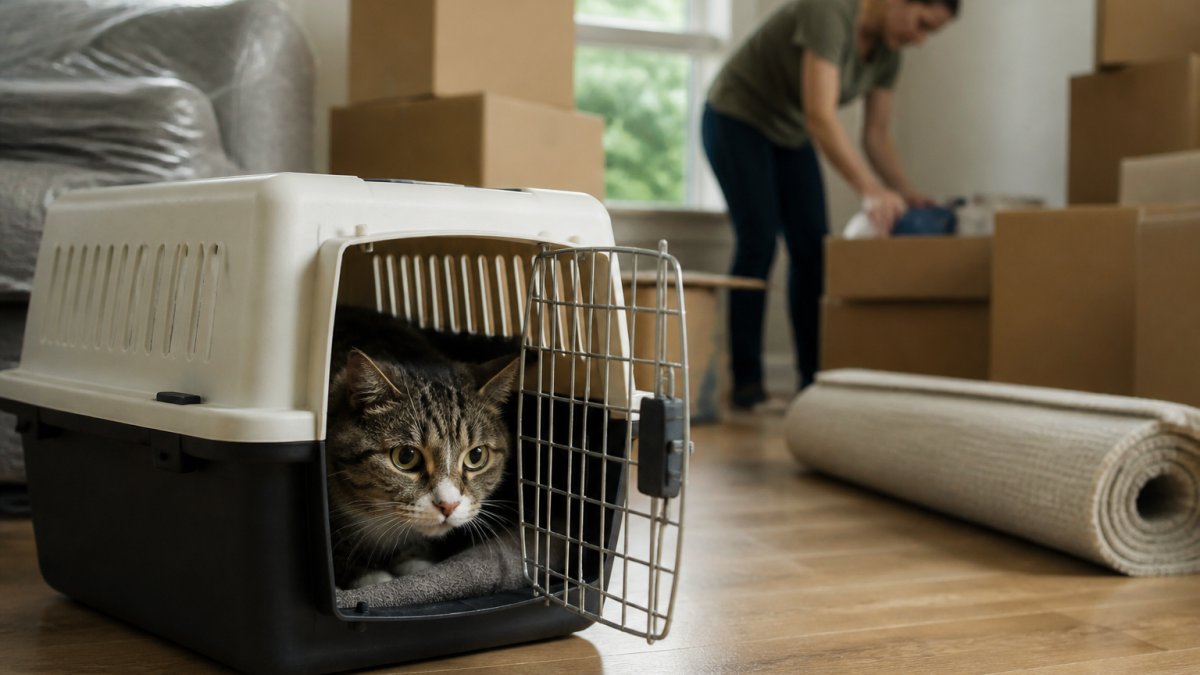
Preparation begins weeks before moving day. Gradually introduce your cat to moving boxes by leaving them in your current home. This familiarization reduces the shock of seeing boxes suddenly appear. Allow your cat to investigate boxes at their own pace.
Update your cat's microchip information and ID tags immediately.
When to Consult a Veterinarian About Move-Related Stress
Contact your veterinarian immediately if your cat shows signs of a stress-induced panic attack. Panic manifests as extreme panting, inability to move, dilated pupils that don't respond to light changes, or loss of consciousness. These are medical emergencies requiring immediate professional intervention.
Conclusion
Moving creates genuine stress for cats, but understanding the physical and behavioral signs allows you to intervene effectively. The most successful approach combines preparation, environmental management, and professional support when needed. A dedicated safe room, pheromone therapy, and maintained routine address the core causes of moving anxiety.
Frequently Asked Questions
What are the most common physical signs of stress in cats during a house move?
Common physical signs include dilated pupils, flattened ears, excessive grooming or hair loss, loss of appetite, panting, and changes in litter box habits. You may also notice trembling, a tucked tail, or tension in the body. Some cats develop stress-induced cystitis, which causes urinary issues. If your cat shows multiple signs, consult your veterinarian to rule out medical problems and discuss your cat's specific stress response.
How long does cat stress last after moving to a new home?
Most cats begin adjusting within 3 to 7 days, though the full decompression timeline can take 2 to 4 weeks or longer, depending on your cat's personality and age. Senior cats and those with prior anxiety may need extra time. During this period, maintain consistent routines, keep your cat in a safe room initially, and gradually introduce them to new areas. Patience and predictability help speed the transition.
How can I calm a stressed cat after moving to reduce anxiety?
Establish a calm environment by maintaining feeding and play schedules, using pheromone diffusers like Feliway to reduce territorial anxiety, and providing hiding spots and vertical spaces. Spend quiet time near your cat without forcing interaction, and use positive reinforcement with treats and praise when they explore. Avoid sudden loud noises, and consider environmental enrichment like window perches or puzzle feeders to redirect stress into normal behaviors.
Should I keep my cat in one room when moving, and how does this help?
Yes, confining your cat to a single safe room during the initial move period (24 to 72 hours) reduces overwhelming sensory input and helps them adjust gradually. This designated space should contain their litter box, food, water, and familiar items with their scent. Once they seem comfortable and less anxious, you can slowly open access to other rooms. This structured approach prevents hiding in dangerous places and allows you to monitor their stress levels closely.