 blog
Cat Sitter vs Boarding for Long Term Travel
Table of Contents
- Cat Sitter vs Boarding: Which Fits a Long Trip?
- How Often Should a Cat Sitter Visit During Long-Term Travel?
- In-Home Cat Sitting Checklist for Extended Absences
- Preparing a Cat for Boarding: What to Know Before You Book
- Questions to Ask a Cat Sitter Before Long-Term Travel
- Cost Comparison: Long-Term Cat Sitting vs Boarding
- Conclusion: Making the Right Choice for Your Cat
- Frequently Asked Questions
Last Updated: October 13, 2026
Cat Sitter vs Boarding: Which Fits a Long Trip?
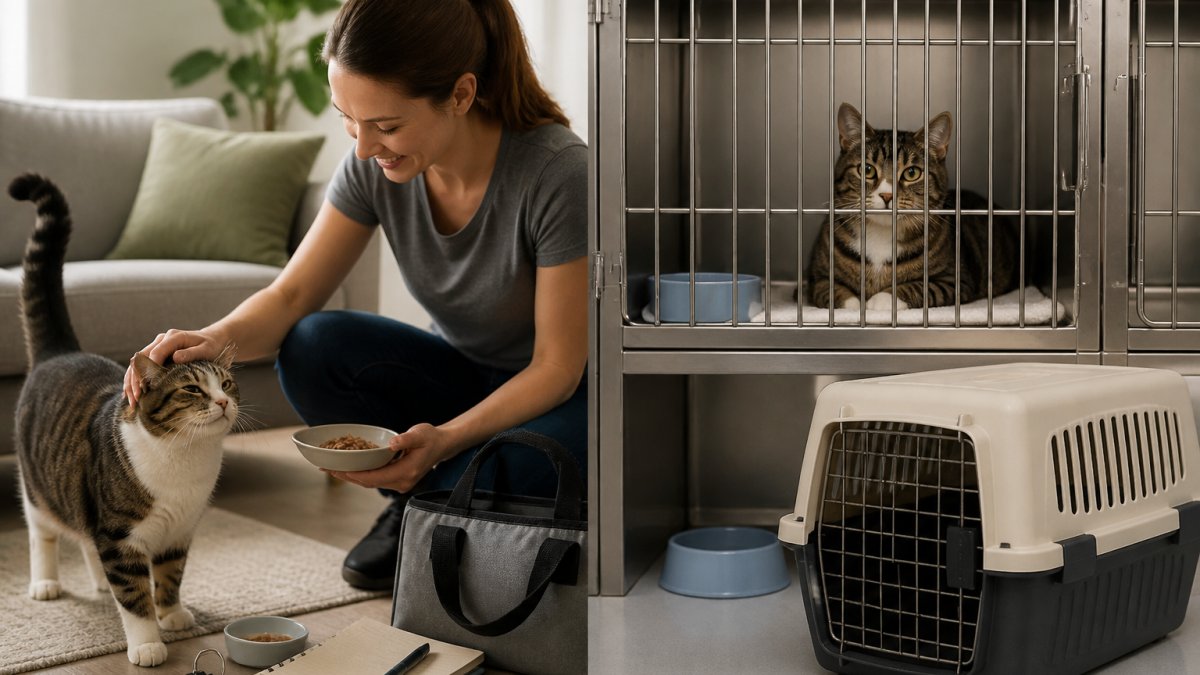
For most cats, a professional cat sitter wins for long-term travel, and it isn't close. Cats are territorial animals, and a boarding facility puts them in a strange space surrounded by unfamiliar sounds and smells. A cat sitter vs boarding decision really comes down to one question: does your cat handle change well, or does change handle your cat badly?
Environmental change is a leading trigger of stress in cats, which is why AAFP feline stress guidelines recommend minimizing disruption to a cat's routine whenever possible. That principle should drive your decision more than price or convenience.
Below, we break down how often a sitter should visit, what to check before you book, and how the real costs compare over a two-week trip.
How Often Should a Cat Sitter Visit During Long-Term Travel?
The short answer: once daily at minimum, twice daily for cats on medication or with medical conditions. Cats are social eaters, and most adjust poorly to a single giant bowl of food left out for days.
But visit frequency is only half the decision. The other half is matching your trip length and your cat's needs to the right care model, drop-in visits, overnight sitting, or boarding. Most guides skip this step and jump straight to a recommendation. Here's a framework you can actually apply.
Step 1: Classify your cat.
- Independent and healthy: Eats on schedule, uses the litter box reliably, no medication, no separation distress.
- Social or mildly anxious: Follows you room to room, vocalizes when alone, or has a history of stress behaviors during absences.
- Medically or behaviorally complex: Requires timed medication, injections, prescription food, mobility support, or has separation distress that escalates.
Step 2: Match the model to the trip.
| Trip Length | Independent, Healthy | Social or Mildly Anxious | Medically or Behaviorally Complex |
|---|---|---|---|
| 1-3 days | 1 drop-in per day | 1-2 drop-ins per day | 2 drop-ins per day or overnight |
| 4-7 days | 1 drop-in per day | 2 drop-ins per day | 2 drop-ins per day or overnight |
| 1-2 weeks | 2 drop-ins per day | 2 drop-ins per day plus an overnight every few days | Overnight sitting or boarding with medical capability |
| 2+ weeks | 2 drop-ins per day | Overnight sitting preferred | Overnight sitting or a facility with 24-hour staffing |
Step 3: Decide between drop-ins, overnights, and boarding.
Drop-in visits work when your cat's main needs are feeding, litter, water, and a daily wellness check. They fall short when your cat needs company for hours, not minutes, or when a medical event could happen between visits.
Overnight sitting adds a human presence through the night. It's the closest thing to your normal routine and is usually the best fit for social cats, cats with separation distress, and cats on medication that has to be given at specific times.
Boarding makes sense when your cat is outgoing and has boarded successfully before, when you cannot find a reliable sitter, or when your cat needs medical supervision a sitter cannot provide. It is generally the weakest fit for anxious cats and for cats who have never been away from home.
Step 4: Build in a buffer.
For any trip longer than a week, plan a backup. A neighbor with a key, a second sitter on call, or a facility that accepts short-notice drop-offs. Long trips have more days for something to go wrong, and the plan should account for that.
Cats with diabetes, thyroid conditions, or other chronic illness need timed feedings and medication, so twice-daily visits become non-negotiable, and for many of those cats, overnight care or boarding with medical staffing is the safer choice.
In-Home Cat Sitting Checklist for Extended Absences
A good sitter follows a written routine, not a vibe. Before you leave, put together a simple care sheet that covers the essentials so nothing gets missed on day one.
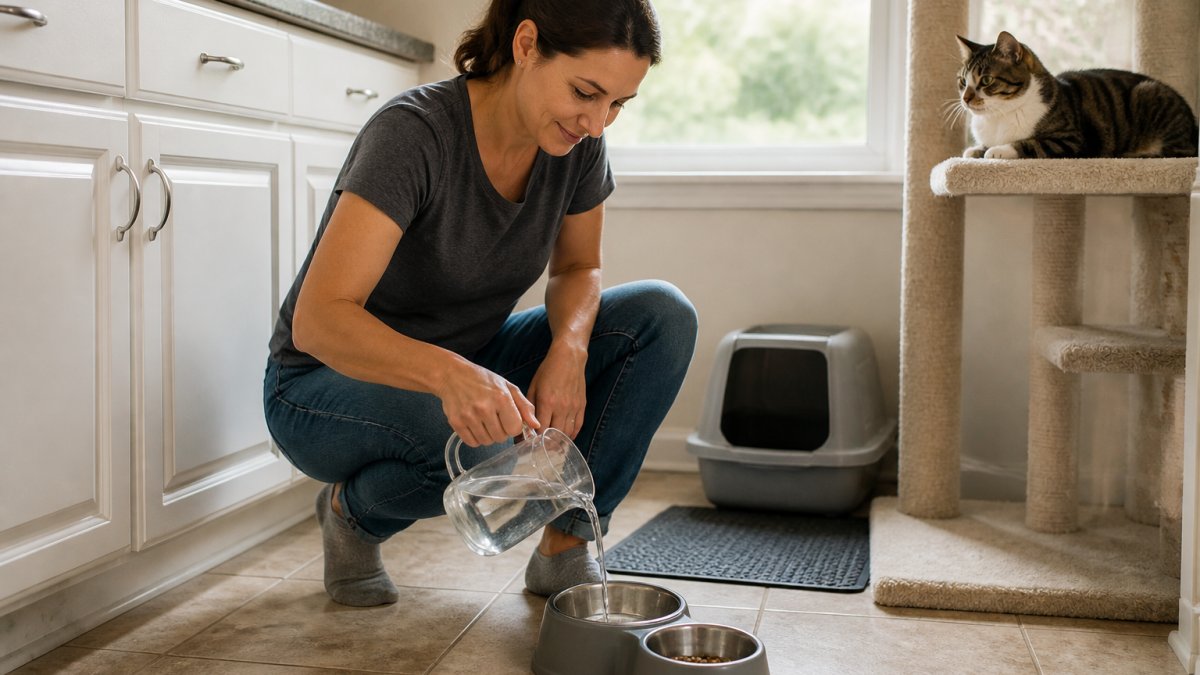
Here's what your checklist should include:
- Feeding schedule with exact portions and food location
- Fresh water refreshed at every visit
- Litter box scooped daily, fully changed weekly
- Medication instructions with dosage and timing
- Vet contact and emergency authorization
- Hiding spots your cat prefers, so the sitter knows where to look
- Any behavioral quirks (door dashing, counter surfing)
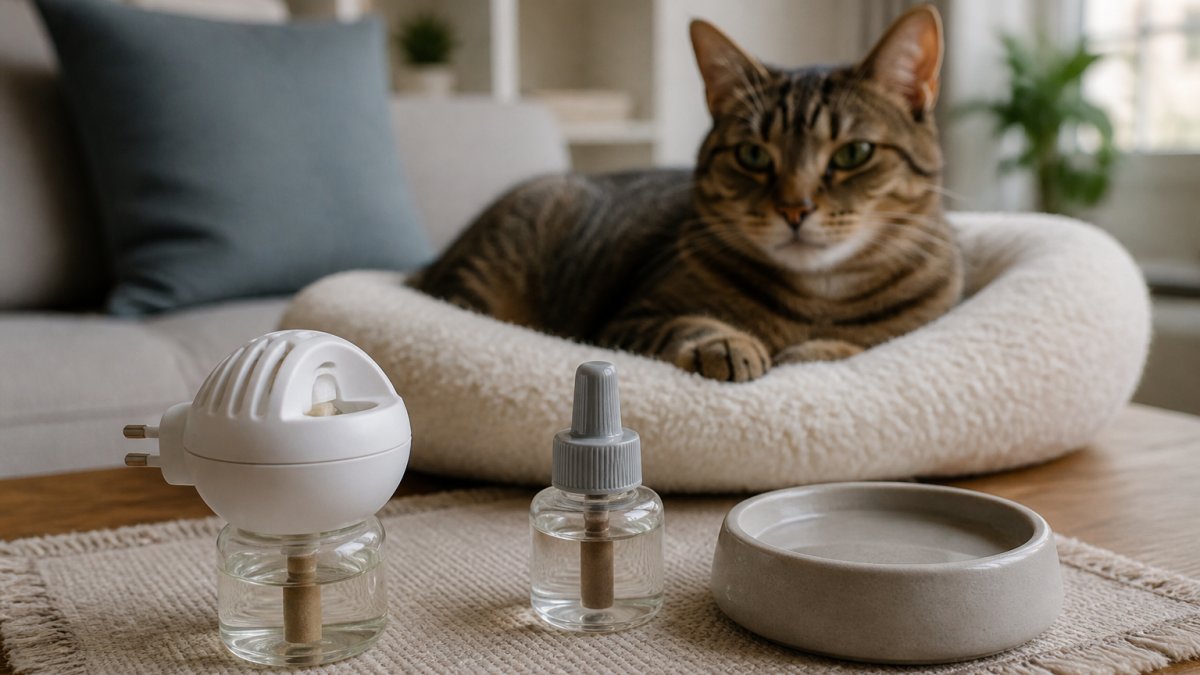
Leave a worn t-shirt in your cat's favorite sleeping spot. Your scent on familiar fabric reduces anxiety during the first few days of your absence, and it costs you nothing.
Preparing a Cat for Boarding: What to Know Before You Book
Boarding works for some cats. It's the better call if your cat is outgoing, has boarded before without issues, or needs medical supervision a sitter can't provide. It's also the right choice if you can't find a reliable sitter in your area.
What most guides miss is that boarding success depends heavily on preparation. Book early, especially around holidays, and ask about vaccination requirements. Most facilities require current rabies and distemper vaccines, and some require feline leukemia testing. The American Veterinary Medical Association recommends confirming vaccine status well before your trip so there's time to update anything that's expired.
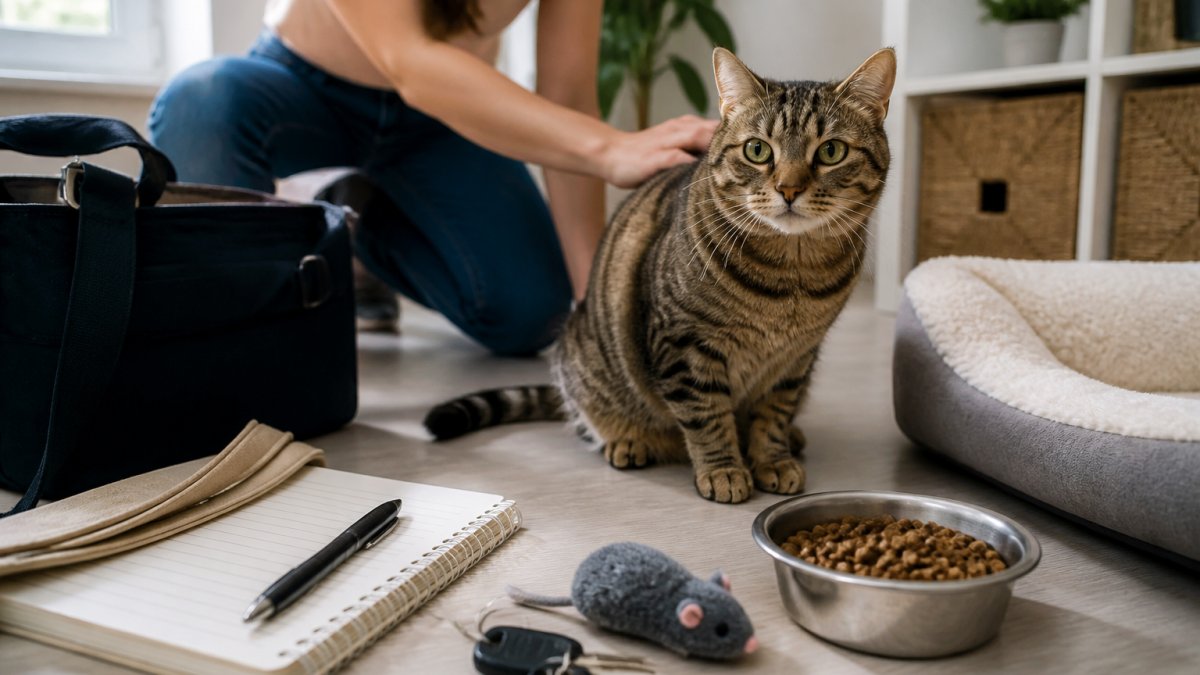
Pack your cat's own food, a familiar blanket, and a toy. Ask whether the facility allows personal items. A cat boarding in a strange place with its own scent markers settles faster.
Questions to Ask a Cat Sitter Before Long-Term Travel
Vetting a sitter takes fifteen minutes and saves you two weeks of worry. These are the questions we'd want answered before trusting anyone with our own cats.
Ask directly:
- Are you background checked, bonded, and insured?
- What's your plan if my cat gets sick or injured?
- How do you handle a cat who hides the entire visit?
- Can you administer medication, including injections?
- What's your cancellation policy if my travel dates shift?
- Will you send daily updates and photos?
That last one matters more than people expect. Daily photo updates confirm your cat is eating, moving, and behaving normally. Without them, you're guessing.
Cost Comparison: Long-Term Cat Sitting vs Boarding
Boarding often looks cheaper on paper. It rarely is once you factor in what's actually included. The problem is that most comparisons stop at the nightly rate and never build a real budget. Here's how to do it.
The line items that actually drive cost.
For in-home sitting:
- Base visit rate (per visit, not per night)
- Number of visits per day
- Overnight or extended-visit surcharge, if you need it
- Holiday or peak-season surcharge
- Medication administration fee, if applicable
- Mileage or travel zone fee, if the sitter charges one
For boarding:
- Base nightly rate
- Medication administration fee (often charged per dose or per day)
- Special feeding or prescription diet handling
- Playtime or one-on-one interaction add-on
- Vaccination or health documentation requirements
- Holiday or peak-season rate increase
- Transport to and from the facility
Sample two-week budget.
For Tracy's Kitty Care's 30-minute cat sitting service at $30.00 per visit:
- One visit per day for 14 days: $420
- Two visits per day for 14 days: $840
Using a typical boarding base rate:
- 14 nights at $30 per night: $420
- Add medication administration at $5 to $10 per day: $70 to $140
- Add playtime at $5 to $10 per day: $70 to $140
- Add holiday surcharge if applicable
That boarding total can land between $560 and $700 for the same two weeks.
The costs that don't show up on the invoice.
- Stress-related appetite loss or litter box avoidance after boarding, which can mean a vet visit
- Exposure to other animals and the illnesses they carry
- The adjustment period when your cat comes home, which can take days
- Your own time transporting the cat and managing drop-off and pick-up
For cats with medical needs, in-home care can be a suitable option. Insulin injections, timed medications, and monitoring for chronic illness can be handled in a familiar environment by a consistent sitter.
How to compare quotes fairly.
Ask every sitter and every facility for an all-in quote for your exact trip dates, your cat's medication needs, and any holiday coverage. Compare totals, not nightly or per-visit rates. A sitter who charges more per visit but bundles medication, playtime, and daily updates can be the cheaper option over two weeks.
If you're weighing whether it makes sense for shorter trips, the answer is usually yes. Even a few days away is easier on your cat when someone comes to them.
Build your budget around the total for the full trip, not the nightly or per-visit rate. The add-ons are where the two options converge, or diverge.
Conclusion: Making the Right Choice for Your Cat
Long-term travel puts real strain on your cat's routine, and the choice between a sitter and boarding should follow your cat's temperament, health, and comfort with change. Most cats do better at home.
Tracy's Kitty Care specializes exclusively in cats, with background-checked, licensed, bonded, and insured sitters who handle everything from daily feeding to medication administration. Our in-home visits keep your cat in a familiar environment and give you daily peace of mind. Get started with Tracy's Kitty Care and travel knowing your cat is cared for at home.
Frequently Asked Questions
Do cats do well when boarded for a long time?
Many cats struggle with extended boarding stays. Unfamiliar smells, sounds, and other animals can cause stress, reduced eating, and hiding. Cats with shy or nervous temperaments often take days to adjust, and a multiweek stay leaves little time to settle before the trip ends. In-home care keeps your cat in its familiar environment with its own routine, which typically reduces stress and health risks during long absences.
How often should a cat sitter visit during a long vacation?
For most healthy adult cats, one 30-minute drop-in visit per day covers feeding, fresh water, litter box cleaning, and playtime. Cats with medication needs, chronic illness, or senior status often need twice-daily visits. If your cat is shy or anxious, more frequent visits help build trust with the sitter. A reliable cat sitter can adjust the schedule based on your cat's temperament and medical requirements.
What should I ask a cat sitter before hiring them for long-term travel?
Ask about background checks, licensing, bonding, and insurance. Confirm how they handle medical emergencies and whether they can administer medication. Request daily updates, photos, and a written visit log. Ask what happens if your return is delayed. For a multiweek trip, schedule a meet-and-greet so your cat can adjust to the sitter before you leave. Get everything in writing, including cancellation terms and backup sitter availability.
How much does long-term cat sitting or boarding cost?
Costs vary by provider and region. In-home cat sitting services typically charge per visit, while boarding facilities charge per night. For a multiweek trip, per-visit pricing can add up quickly, so ask about extended-travel discounts. Tracy's Kitty Care offers 30-minute visits at $30.00 each, which includes feeding, fresh water, litter box cleaning, and playtime. Compare total trip costs, not just daily rates, before deciding.