 how-to
Manage Feline Anxiety During Fireworks and Storms
Table of Contents
- Why Fireworks and Thunderstorms Trigger Fear in Cats
- Signs of Anxiety in Cats During Thunderstorms
- How to Prepare a Safe Room for a Cat During Fireworks
- How to Calm a Cat During Fireworks
- Creating a Step-by-Step Event-Day Plan
- When to Ask a Veterinarian About Cat Anxiety
- Escape Prevention and Identification Checklist
- Frequently Asked Questions
Last Updated: October 6, 2026
Why Fireworks and Thunderstorms Trigger Fear in Cats
Cats experience genuine fear during feline anxiety fireworks storms. The loud, unpredictable noises create stress that activates their fight-or-flight response.
Fireworks and thunderstorms produce sounds that reach 150+ decibels. Cats hear frequencies up to 64,000 Hz, far beyond human range.
The fear response is real biology, not just nervousness. When a cat experiences feline anxiety during these events, their body releases stress hormones.
Signs of Anxiety in Cats During Thunderstorms
Recognizing anxiety in your cat is the first step toward helping. Common signs include hiding, refusing meals, overgrooming, and avoiding interaction.
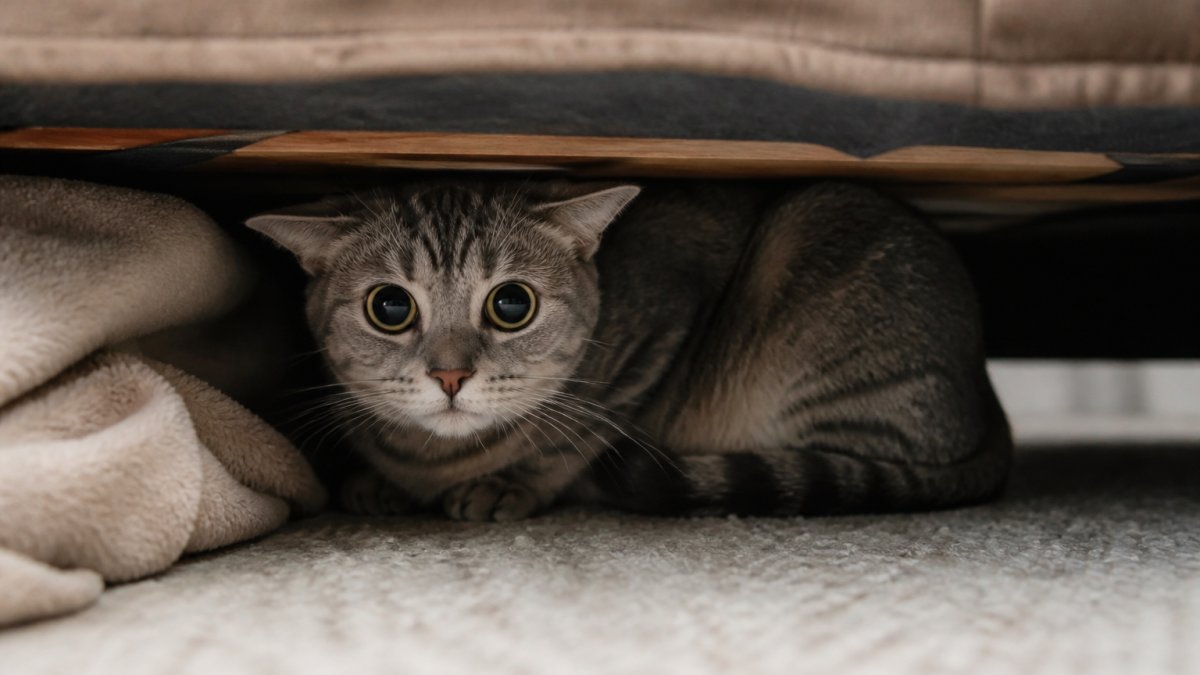
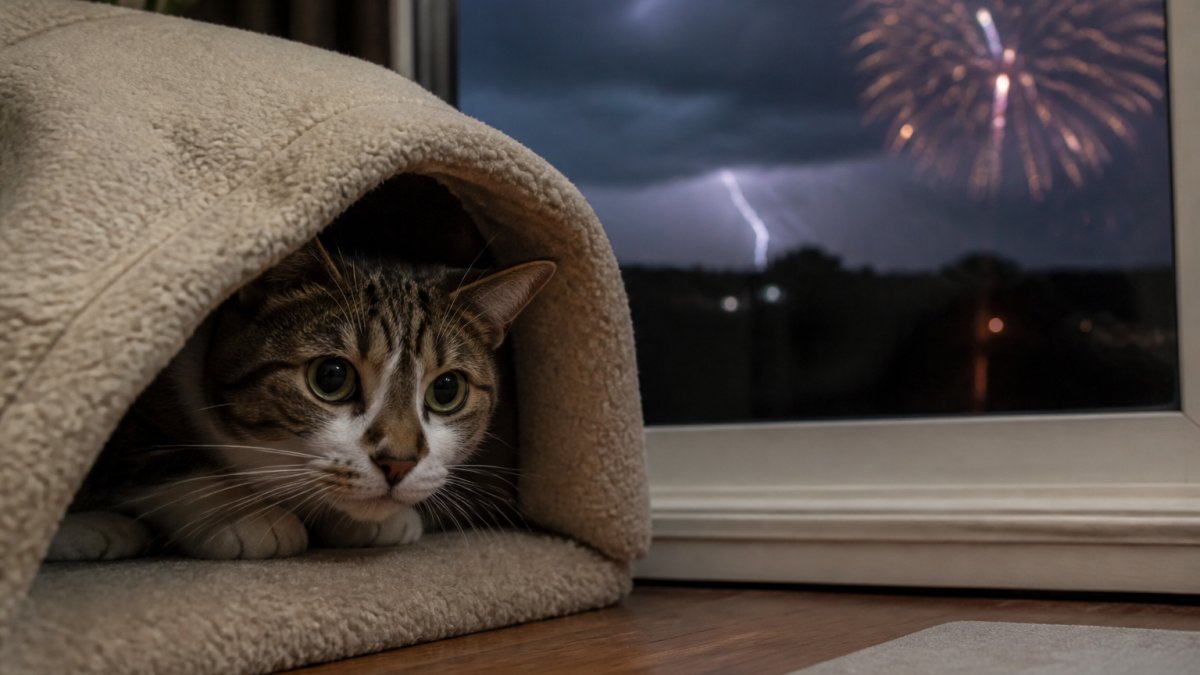
Some cats become extremely vocal during storms. Others go silent and won't come out from hiding for hours.
Watch for these specific behaviors:
- Hiding in closets, under beds, or behind furniture
- Refusing food or treats they normally love
- Excessive grooming or hair loss
- Trembling or shaking
- Dilated pupils and flattened ears
- Refusing to use the litter box
- Excessive vocalization or complete silence
- Attempting to escape through windows or doors
Not all cats show obvious signs. Some freeze and become completely still. Others pace constantly.
If your cat shows these signs regularly during storms, a veterinary behaviorist can help rule out underlying medical issues and recommend targeted strategies.
How to Prepare a Safe Room for a Cat During Fireworks
Creating a dedicated safe space is one of the most effective ways to manage feline anxiety fireworks storms. A safe room gives your cat a place to retreat where noise is reduced and they feel secure.
Choose a small, interior room away from windows. A bedroom, bathroom, or closet works well. Avoid rooms with exterior walls or windows where noise penetrates easily.
Essential supplies and setup
Stock your safe room with these items:
- Litter box, food, and water, place in separate corners from each other
- Hiding spots, covered beds, cat tunnels, or cardboard boxes
- Soft items, blankets, cushions, and familiar-smelling bedding
- A fan, running on low creates white noise and sound masking
- Toys and enrichment, interactive toys, puzzle feeders, or catnip toys
Make sure the room is dark or dimly lit. Close curtains or blinds to block flashes from lightning. Keep the temperature comfortable, around 70 degrees.
Place items strategically. Put the litter box far from food and water. Create multiple hiding spots so your cat can choose where they feel safest.
Advance preparation checklist
Set up your safe room at least one week before fireworks or storm season. Let your cat explore it without pressure. Leave treats and toys inside so they associate it with positive experiences.
Test your setup before the actual event:
- Room is interior with minimal outside noise
- Litter box is clean and accessible
- Fresh water and food are available
- Multiple hiding spots are set up
- Fan or white noise machine is ready
- Blankets and soft items are in place
- Toys and enrichment items are available
- Doors can be secured to prevent escape
- Windows and gaps are checked for escape routes
- Your cat has spent time in the room voluntarily
How to Calm a Cat During Fireworks
When fireworks or storms begin, your cat needs both physical comfort and environmental support. The goal is to reduce stress without forcing interaction.
Never force your cat out of hiding. Let them retreat if they choose. Forcing contact increases anxiety rather than reducing it.
Sound masking and white noise
Sound masking is one of the most effective techniques for managing feline anxiety during fireworks.
Running a fan creates continuous, predictable sound. The fan also provides air circulation, which many anxious cats find soothing.
Other sound masking options include:
- White noise machines or apps
- Classical music designed for cats
- Nature sounds (rain, forest ambience)
- Soft instrumental music
- Audiobooks or podcasts at low volume
Start the fan or white noise before the event begins. Don't wait until fireworks start. Your cat will be calmer if the masking sound is already established.
Distraction and enrichment strategies
Offering food and treats can redirect your cat's attention during stressful events. High-value treats work better than regular kibble.
Try these distraction techniques:
- Puzzle feeders, fill with treats or wet food; cats focus on solving the puzzle
- Lick mats, freeze wet food or treats on a mat; takes 15-30 minutes to consume
- Catnip toys, some cats become focused on play during stressful events
- Interactive toys, wand toys or laser pointers can redirect anxiety into play
- Long-lasting chews, dental chews or freeze-dried treats keep cats occupied
Offer these distractions in the safe room. Don't force your cat to engage. Simply make them available so your cat can choose distraction if they want it.
Calming products and their evidence
Many calming products are marketed for anxious cats. Some have research support, while others lack evidence.
Pheromone products mimic natural calming scents cats produce. Feliway is the most researched brand.
Anxiety wraps apply gentle, sustained pressure similar to swaddling.
Herbal supplements like valerian or chamomile have limited scientific support for cats.
Always choose products designed specifically for cats. Human products can be toxic to felines.
Creating a Step-by-Step Event-Day Plan
A structured plan helps you stay calm and respond consistently. Your cat picks up on your anxiety, so having a clear strategy reduces stress for both of you.
Hours before the event
Start preparation 4-6 hours before fireworks or expected storms:
- Move your cat to the safe room, do this calmly and matter-of-factly, not as a punishment
- Refresh water and food, provide fresh bowls; some anxious cats won't eat, but having food available matters
- Set up white noise or fan, start sound masking before stress begins
- Offer a high-value treat, give your cat something special to focus on
- Close all windows and doors, verify escape routes are blocked
- Turn off bright lights, dim the room or use soft lighting
- Stay calm yourself, your energy affects your cat's stress level
Don't make a big fuss about the preparation. Treat it as routine. Anxious energy from you will increase your cat's fear response.
During the event
Once fireworks or storms start, your role is to monitor without forcing interaction:
- Stay in or near the safe room, your presence can be reassuring without forcing contact
- Speak in calm, quiet tones, avoid high-pitched or excited voices
- Offer treats or toys, place them near your cat without pushing
- Keep the fan or white noise running, don't turn it off; consistency helps
- Don't force your cat out of hiding, let them retreat if they choose
- Avoid sudden movements, stay calm and predictable
- Monitor for signs of extreme distress, excessive panting, inability to move, or unresponsiveness may warrant veterinary attention
Some cats benefit from your quiet presence. Others prefer solitude. Observe your cat's signals and respect their preference.
After the event and recovery
Recovery matters as much as the event itself. Your cat may need time to return to normal.
- Keep the safe room available, don't force your cat out immediately
- Maintain calm behavior, anxiety doesn't disappear instantly
- Offer regular meals, some cats won't eat during stress but will eat after
- Return to normal routine gradually, don't suddenly change everything
- Monitor for ongoing stress, some cats remain anxious for hours or days
- Track patterns, note which strategies helped most for future events
If your cat shows continued signs of feline anxiety after the event ends, contact your veterinarian. Persistent stress can affect health and behavior.
When to Ask a Veterinarian About Cat Anxiety
Some cats need professional help beyond home management. Recognizing when to seek veterinary guidance is crucial for your cat's wellbeing.
Contact your veterinarian if:
- Your cat refuses food for more than 24 hours after the event
- Your cat shows signs of injury from escape attempts
- Anxiety is so severe your cat won't eat, drink, or use the litter box during events
- Your cat's behavior changes permanently after a stressful event
- Your cat shows signs of a medical problem (excessive panting, inability to move, trembling that doesn't stop)
- Home management strategies aren't working after multiple events
A veterinary behaviorist can evaluate your cat's specific anxiety and recommend targeted treatments. Anti-anxiety medication is sometimes appropriate for cats with severe fear responses.
For cats with medical conditions, medication needs, or advanced age, veterinary input is especially important. Senior cats and cats on medications may respond differently to stress.
Escape Prevention and Identification Checklist
Anxious cats often attempt to escape during fireworks or storms. Preventing escape is critical for safety.
Complete this checklist before storm or fireworks season:
- All exterior doors have secure locks and close completely
- Windows are closed and latches work properly
- Screens have no holes or tears
- Sliding doors have bars or locks preventing full opening
- Gaps under doors are sealed or blocked
- Vents and exhaust fans are screened
- Any cat doors are locked during events
- Your cat has a microchip with current contact information
- Your cat wears a collar with ID tags (even if microchipped)
- Your phone number and address are current on all ID
- You have recent, clear photos of your cat for lost-pet posts
- Your veterinarian has your cat's microchip number on file
If your cat does escape, immediate action increases the chance of recovery. Keep local animal shelter numbers, microchip company contacts, and lost-pet websites readily available.
When stress is high, cats can slip out through doors or windows you didn't realize were open. Vigilance during events prevents tragedy.
Managing feline anxiety during fireworks and storms requires planning, patience, and sometimes professional support. If you travel during storm or fireworks season, a professional cat sitting service can provide consistent, specialized care for your anxious cat while you're away, ensuring your anxiety management plan is implemented with the same attention and expertise you would provide.
Frequently Asked Questions
How do I know if my cat is experiencing anxiety during fireworks or storms?
Common signs include hiding, refusing meals, overgrooming, excessive vocalization, dilated pupils, and avoiding interaction with family members. Some cats may pace or show trembling. If your cat displays these behaviors specifically during loud events, feline anxiety is likely the cause. Track these signs to share with your veterinarian if the behavior persists or worsens.
What's the best way to create a safe room for my cat before fireworks start?
Set up a quiet interior room away from windows with familiar bedding, food, water, and a litter box. Add a fan or white noise source to mask outside sounds. Include hiding spots like covered beds or cardboard boxes. Close all windows and doors securely, and place a sign on the door to remind family members to keep it closed. Prepare this space at least 24 hours before the event so your cat can acclimate.
Should I stay with my cat during fireworks, or is it better to leave them alone?
Provide comfort without forcing interaction. Your presence can be reassuring, but respect your cat's need for space. Sit quietly nearby if they approach you, but don't pull them out of hiding spots. Forcing interaction can increase stress. Let your cat choose whether to seek comfort from you. If your cat remains hidden and calm, it's often better to minimize disturbances and check on them periodically.
When should I contact my veterinarian about my cat's anxiety?
Contact your vet if your cat shows extreme panic, stops eating for more than a day, injures itself from panic, or displays anxiety between events. Your vet can rule out medical issues, discuss calming products, or recommend a veterinary behaviorist. If your cat has pre-existing health conditions, medications, or is very young or senior, consult your vet before trying any calming aids to ensure safety and proper dosing.