 blog
Cat Anxiety: Medication vs Natural Remedies
Table of Contents
- Understanding Feline Anxiety and When to Act
- Signs of Anxiety in Cats: What to Watch For
- Natural Remedies for Cat Anxiety
- Prescription Cat Anxiety Medication: Options and Side Effects
- Environmental Enrichment for Cats: A Foundation for Calm
- Medication vs Natural Remedies: Cost and Effectiveness
- Creating a Long-Term Anxiety Management Plan
- Frequently Asked Questions
Last Updated: October 3, 2026
Understanding Feline Anxiety and When to Act
Anxiety in cats is common but often goes unrecognized, especially in quiet or reclusive cats. The key is recognizing when behavior changes warrant professional attention and deciding whether to pursue medication, natural remedies, or a combination of both.
Untreated anxiety often develops into secondary behavioral problems: inappropriate elimination, aggression, or destructive scratching. Early intervention prevents these complications.
Feline anxiety involves persistent fear or stress responses that interfere with daily functioning, ranging from mild (occasional hiding during thunderstorms) to severe (refusal to eat or use the litter box).
Anxiety severity determines treatment: mild cases may respond to environmental changes alone, while moderate to severe cases typically require veterinary guidance and often benefit from combined approaches.
Signs of Anxiety in Cats: What to Watch For
The most reliable indicator of anxiety is a shift from your cat's baseline behavior, what's normal for one cat signals distress in another.
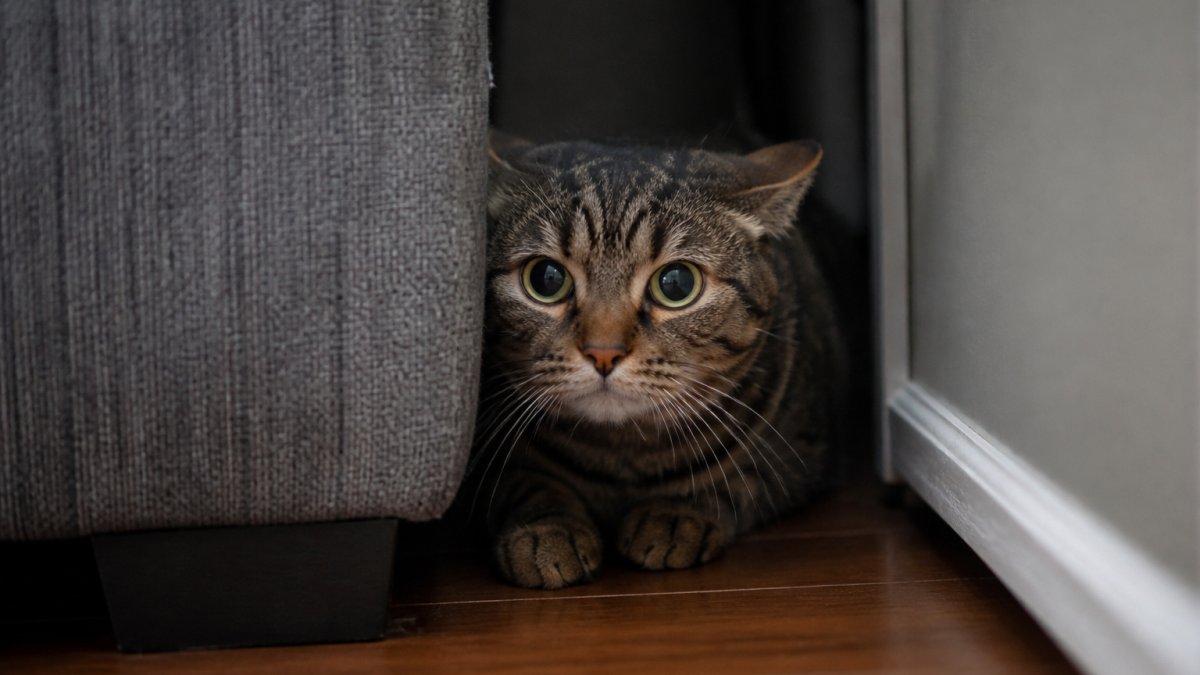
Behavioral signs include excessive vocalization, hiding, restless pacing, refusing food, neglecting grooming, inappropriate elimination, clinginess, or withdrawal.
Physical symptoms include dilated pupils, flattened ears, piloerection, tucked tail, overgrooming with bald patches, and gastrointestinal issues.
Identifying triggers, separation, storms, new people, helps determine whether anxiety is situational or generalized.
Natural Remedies for Cat Anxiety
Natural remedies address anxiety through behavioral modification, environmental changes, and supplements. They work best for mild to moderate anxiety and often complement medication.
Pheromone Diffusers and Sprays
Pheromone diffusers mimic natural calming chemicals cats produce, signaling safety and familiarity without sedation or side effects.
Diffusers show initial effects within 24-48 hours, with noticeable improvement in 1-2 weeks. Multi-room homes may need multiple units.
Pheromone sprays offer portable alternatives for bedding, carriers, or furniture, but require reapplication every few hours.
Herbal Supplements and Tryptophan
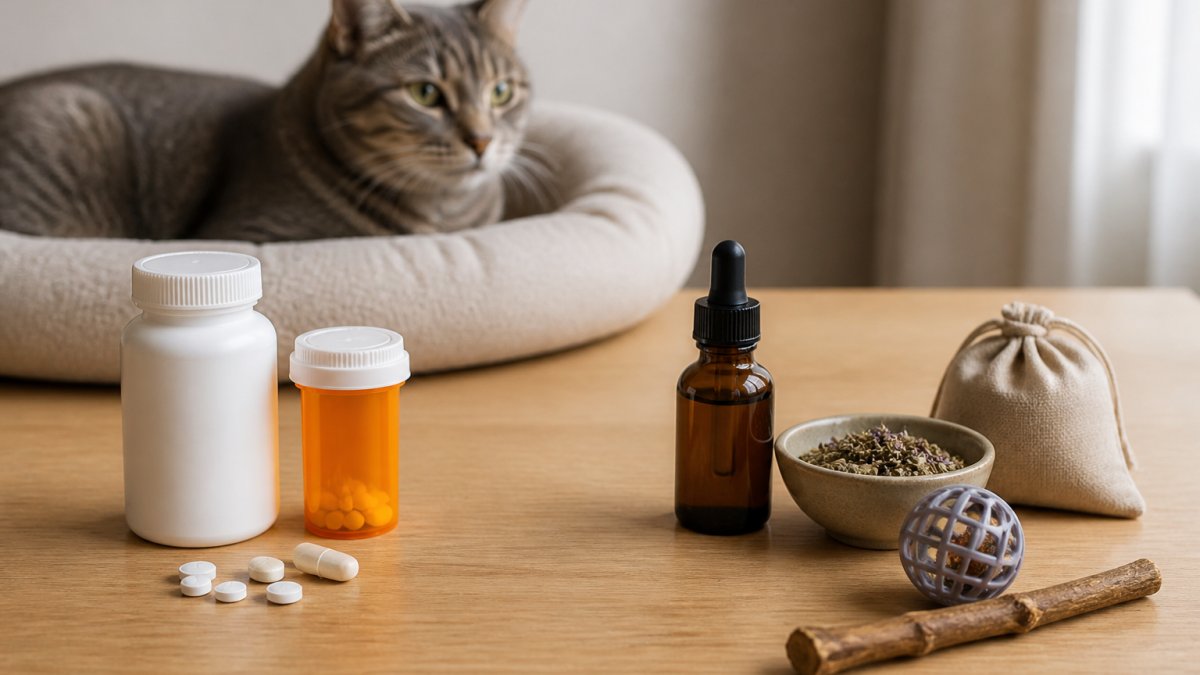
Herbal supplements (valerian root, chamomile, passionflower) and L-tryptophan promote relaxation by supporting natural mood regulation.
Supplements come in tablets, liquids, and treats, with results appearing in 2-4 weeks. Herbal approaches have minimal side effects but variable effectiveness.
Consult your veterinarian before starting supplements, as some interact with medications or health conditions.
Prescription Cat Anxiety Medication: Options and Side Effects
When natural remedies fail, prescription cat anxiety medication offers more predictable results. SSRIs are typically first-line treatment, increasing serotonin availability to stabilize mood.
SSRIs: Fluoxetine and Sertraline
Fluoxetine (Prozac) is the most commonly prescribed SSRI, requiring 4-6 weeks for full effectiveness. Typical dosing is 2.5-5 mg once daily.
Sertraline (Zoloft) is an alternative SSRI with similar onset (4-6 weeks) and is available in liquid form for cats resistant to pills.
Common side effects during the first 1-2 weeks include:
- Mild sedation or lethargy
- Decreased appetite or temporary food refusal
- Mild behavioral changes (increased vocalization or restlessness)
- Gastrointestinal upset (diarrhea or constipation)
Most side effects resolve as the cat adapts. Serious reactions are rare but can include increased anxiety, aggression, or persistent vomiting. SSRIs should not be combined with serotonergic supplements without veterinary approval.
Benzodiazepines: Alprazolam and Lorazepam
Benzodiazepines work within 30-60 minutes for acute episodes (vet visits, travel, storms) but carry dependency risks with long-term use.
Benzodiazepines are reserved for short-term use (a few times monthly) to avoid tolerance and withdrawal risks.
Side effects include:
- Sedation and reduced coordination
- Paradoxical anxiety or aggression in some cats
- Potential liver enzyme elevation with prolonged use
- Respiratory depression at high doses
Benzodiazepines should not be combined with alcohol, opioids, or other CNS depressants. If your cat is already on an SSRI, benzodiazepines can be used occasionally for acute episodes, but this combination requires veterinary monitoring.
Tricyclic Antidepressants: Amitriptyline
Amitriptyline (Elavil) is prescribed when SSRIs fail or for cats with concurrent pain or urinary issues. Typical dosing is 1-2 mg per kg once or twice daily.
Onset is faster than SSRIs (improvement in 1-2 weeks), available in tablets and liquid.
Side effects are more pronounced than SSRIs:
- Dry mouth and increased thirst
- Urinary retention or difficulty urinating
- Increased heart rate or arrhythmias
- Sedation and weight gain
- Constipation
Amitriptyline interacts with SSRIs, MAOIs, stimulants, and St. John's Wort. Your veterinarian will review your cat's full medication list.
Integration with Natural Remedies
Pheromone diffusers and environmental enrichment are safe with any prescription medication. Herbal supplements require caution:
- Valerian root and passionflower are generally safe with SSRIs and benzodiazepines, though some veterinarians recommend spacing them several hours apart to avoid compounded sedation.
- L-tryptophan should not be combined with SSRIs, as both increase serotonin availability and could theoretically cause serotonin syndrome (though this is rare in cats).
- St. John's Wort reduces the effectiveness of SSRIs, benzodiazepines, and tricyclic antidepressants and should be avoided if your cat is on prescription medication.
- CBD oil has limited research in cats and may interact with medications metabolized by the liver; discuss with your veterinarian before combining with prescriptions.
Always inform your veterinarian of supplements or natural remedies before starting prescription medication.
Monitoring and Adjustment
Commit to the full trial period (4-6 weeks for SSRIs) before evaluating effectiveness. Keep a symptom log to track changes.
If no improvement after the full timeline, discuss alternatives with your vet. Adjustments should be gradual under veterinary supervision.
Environmental Enrichment for Cats: A Foundation for Calm
Environmental enrichment creates a stress-free living space that reduces baseline anxiety and enhances other interventions.
Vertical space is essential, cat trees, shelves, and perches give anxious cats escape routes and safe observation points.
Create hiding spots in quiet areas using boxes, enclosed beds, or commercial furniture. Multiple escape routes prevent your cat from feeling trapped.
Maintain consistent daily routines, feeding, play, and sleep schedules, as predictability reduces anxiety.
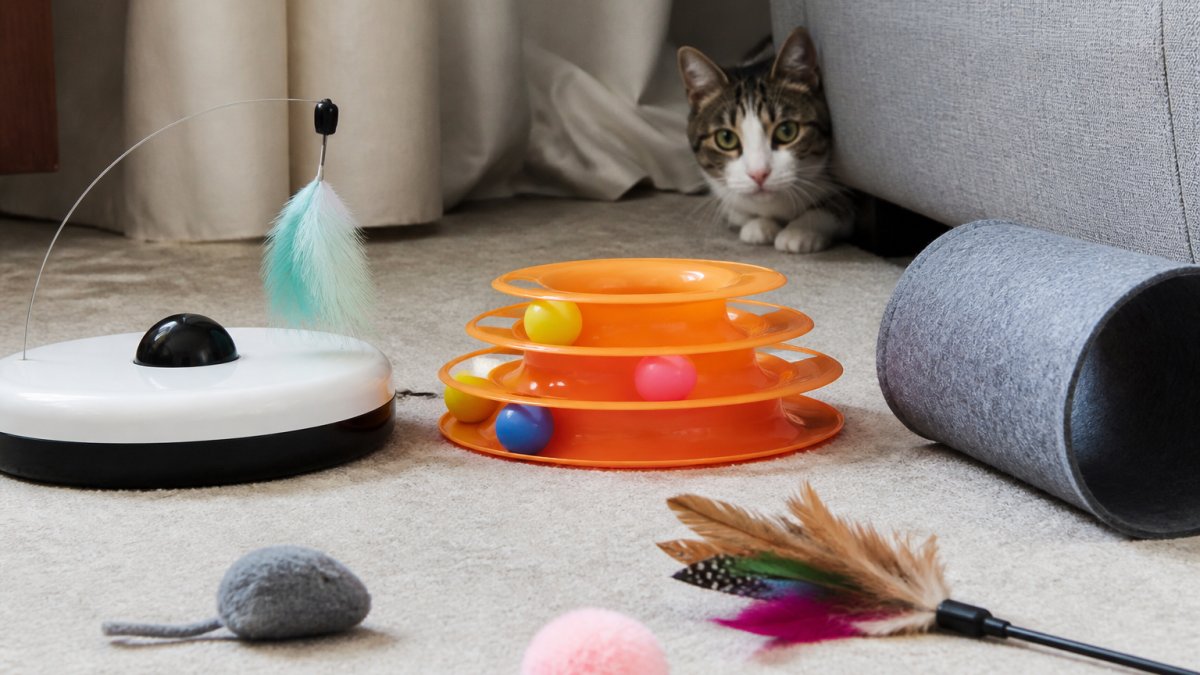
Interactive enrichment (puzzle feeders, wand toys, automated devices) channels anxious energy. Daily 10-15 minute play sessions reduce stress behaviors.
Species-specific calming music or white noise can reduce anxiety and mask triggering external sounds.
Medication vs Natural Remedies: Cost and Effectiveness
The choice depends on anxiety severity, individual response, budget, and timeline. Understanding costs and effectiveness trade-offs helps you decide with your veterinarian.
Cost Breakdown: Natural Remedies
Pheromone diffusers cost $25-$40 upfront with $15-$25 monthly refills. Multi-room homes may need 2-3 units ($30-$75 monthly, $180-$900 annually).
Herbal supplements cost $10-$25 per bottle (30-60 days), or $5-$15 monthly. Veterinary formulations cost $20-$40 monthly.
CBD oil costs $30-$80 per bottle (30-45 days), or $360-$960 annually. Note that CBD is not FDA-regulated and efficacy in cats is understudied.
Environmental enrichment requires $50-$300 initial investment with no recurring cost. Rotating toys add $20-$50 monthly.
Total annual cost for natural remedies: $200-$1,500.
Cost Breakdown: Prescription Medication
Veterinary consultation costs $100-$300 (one-time or annual).
Fluoxetine (generic SSRI) costs $10-$30 monthly; brand-name Prozac costs $40-$80 but is chemically identical.
Sertraline costs $10-$30 monthly.
Amitriptyline costs $8-$25 monthly; compounded formulations cost $20-$40.
Benzodiazepines cost $5-$15 monthly for occasional use, $15-$40 for daily use.
Veterinary monitoring every 3-6 months costs $75-$200 per visit.
Total annual cost for prescription medication: $350-$1,000 (medication plus veterinary visits).
Effectiveness Timeline and Severity Matching
Mild anxiety: Start with environmental enrichment and pheromone diffusers (results in 1-2 weeks). Add herbal supplements if ineffective after 4 weeks. Cost: $30-$75 monthly.
Moderate anxiety: Combine enrichment, pheromone diffusers, and herbal supplements. If no improvement after 6 weeks, discuss SSRIs. Cost: $50-$150 monthly (natural) or $300-$500 annually (with medication).
Severe anxiety: Prescription SSRI or tricyclic antidepressant combined with environmental enrichment. Natural remedies alone are insufficient. Cost: $350-$1,000 annually. SSRIs work in 4-6 weeks; benzodiazepines provide acute relief in 30-60 minutes.
The Combination Approach: When and Why
A typical combination includes environmental enrichment, pheromone diffuser ($30-$50 monthly), SSRI ($10-$30 monthly), and herbal supplement ($5-$15 monthly). This layered approach addresses anxiety from multiple angles. Total monthly cost: $45-$95.
Combination therapy often allows lower medication doses, reducing side effects and cost.
Cost-Benefit Considerations
Choose natural remedies for: mild to moderate anxiety, preference to avoid side effects, time to wait 4-6 weeks, limited budget, or other health conditions. Choose medication for: moderate to severe anxiety, failed natural remedies, secondary problems, need for faster results, or unavoidable triggers.
Hidden costs: Untreated severe anxiety leads to secondary problems costing more later. Medication non-compliance undoes progress. Inconsistent care during absence triggers spikes. Some cats need multiple medication trials.
Monitoring and Adjusting Your Investment
Regardless of which approach you choose, track your spending and results. Document your cat's anxiety patterns before starting treatment, then reassess every 4 weeks. If natural remedies aren't working after 6 weeks, the cost of switching to medication is justified by the likelihood of success. Conversely, if your cat stabilizes on medication, ask your veterinarian about gradual dose reduction after 6-12 months of stability, some cats can eventually maintain improvement on lower doses or with natural remedies alone.
The most cost-effective approach is often prevention through environmental enrichment and routine consistency, combined with early intervention when anxiety first appears. Waiting until anxiety becomes severe typically results in higher overall costs and longer treatment timelines.
Creating a Long-Term Anxiety Management Plan
Successful anxiety management requires a coordinated plan addressing immediate symptoms and long-term wellbeing. Work with your veterinarian to develop a strategy tailored to your cat's specific needs and your household situation.
Start with a veterinary assessment to rule out medical conditions mimicking anxiety. Hyperthyroidism, pain, and other health issues can cause behavioral changes identical to anxiety. Your vet will perform appropriate testing and establish baseline health status before recommending treatment.
Document your cat's anxiety patterns before starting any intervention. Note triggers, time of day, duration of episodes, and behavioral manifestations. This baseline helps you objectively measure whether treatments work. Many owners think interventions aren't helping when they're actually providing subtle improvements they haven't quantified.
Implement environmental enrichment immediately, these changes have no downside and benefit all cats. Simultaneously, consider starting natural remedies if anxiety is mild. If your cat shows no improvement after 4-6 weeks, discuss pharmaceutical options with your veterinarian.
When using medication, commit to the full trial period before evaluating effectiveness. SSRIs need 4-6 weeks to work fully. Stopping medication prematurely prevents you from knowing whether it would have helped.
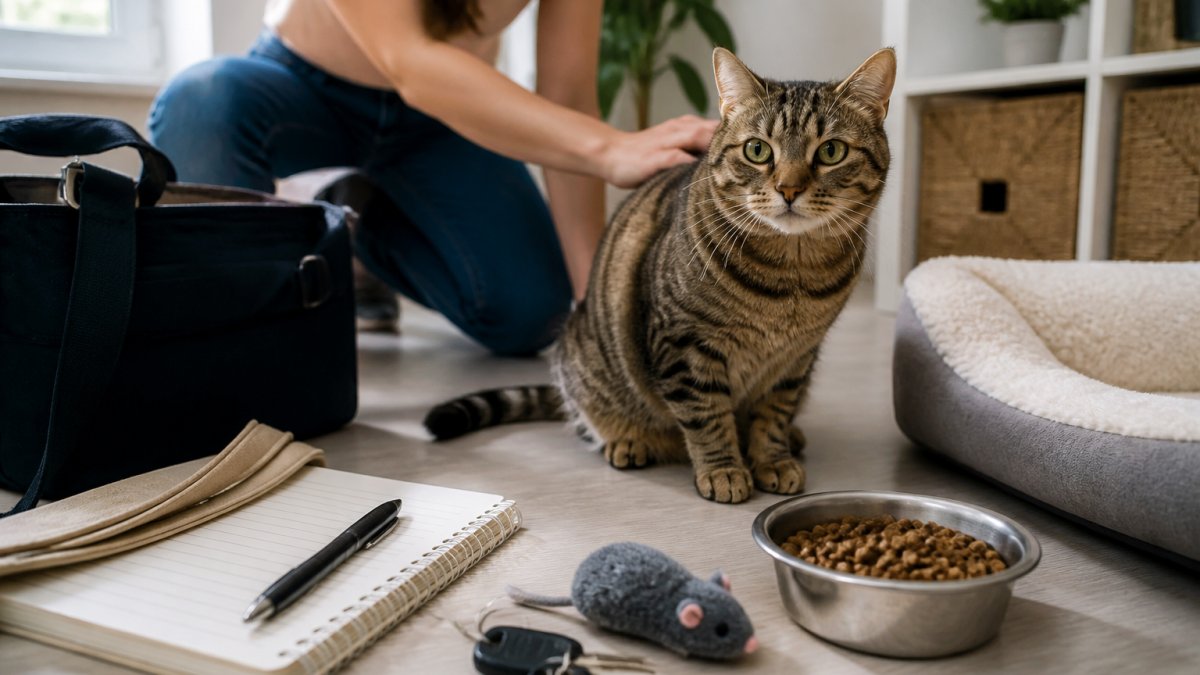
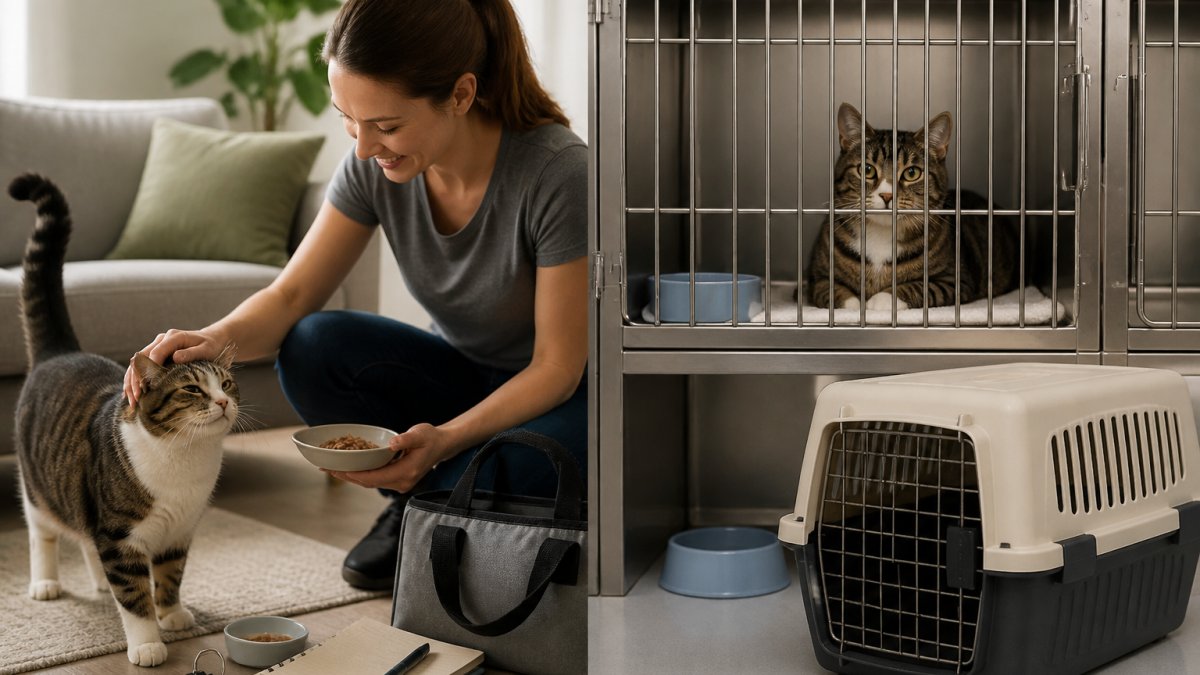
For cats using in-home pet sitting services like those provided by Tracy's Kitty Care, consistency becomes even more important. Our sitters can administer medication on schedule, maintain environmental routines, and monitor for anxiety signs during your absence.
Review your plan every 2-3 months. As your cat's anxiety improves, you may gradually reduce medication or supplements under veterinary guidance. Some cats achieve long-term stability with environmental management alone, while others need ongoing pharmaceutical support. Flexibility and regular reassessment ensure your approach remains appropriate as your cat's needs evolve.
Anxiety in cats creates genuine suffering for both your pet and your household. Whether you choose natural remedies, medication, or a combination approach, professional guidance matters. Your veterinarian can assess your cat's specific situation, recommend appropriate interventions, and monitor progress over time.
When you travel, maintaining your cat's anxiety management routine becomes critical. Inconsistent medication administration, disrupted feeding schedules, and unfamiliar caregivers can trigger anxiety spikes that undo months of progress. Tracy's Kitty Care's professional in-home sitters ensure your anxious cat receives consistent care, medication administration, and environmental stability while you're away.
Frequently Asked Questions
What are the most common signs of anxiety in cats?
Common signs include excessive meowing, hiding, loss of appetite, destructive scratching, and changes in sleep patterns. Some anxious cats also groom excessively, avoid interaction, or display aggression when touched. If your cat shows multiple signs, a veterinary consultation helps rule out medical issues and determine whether medication, natural remedies, or environmental changes are appropriate.
Are natural calming remedies safe for all cats?
Most natural remedies like pheromone diffusers and herbal supplements are generally safe, but individual cats respond differently. Some supplements can interact with medications or cause mild digestive upset. Always consult your veterinarian before starting any remedy, especially if your cat takes other medications or has underlying health conditions. Your vet can recommend products and dosages suited to your cat's age and health status.
How do prescription anxiety medications work for cats?
Prescription medications like SSRIs (selective serotonin reuptake inhibitors) work by regulating neurotransmitters that affect mood and stress response. These medications take 4-6 weeks to reach full effectiveness and require ongoing veterinary monitoring. Your vet will adjust dosage based on your cat's response and watch for side effects. Prescription options offer stronger, more predictable results than natural remedies for severe anxiety.
Can environmental changes reduce the need for anxiety medication?
Yes. Environmental enrichment, consistent routines, scratching posts, hiding spots, and interactive play often reduce anxiety significantly. Many cats benefit from a combination approach: enrichment plus natural remedies for mild stress, or enrichment plus medication for severe cases. When you're away, consistent in-home care maintains your cat's routine and reduces separation anxiety, which can complement any treatment plan.