 ultimate-guide
Tips for Hiring Insured Pet Sitters: A 2026 Guide
Table of Contents
- Why Insurance and Bonding Matter When Hiring Pet Sitters
- Questions to Ask a Cat Sitter During Your Meet and Greet
- Pet Sitter Interview Checklist: What to Verify Before Hiring
- How to Verify Insurance Policy Coverage and Liability Limits
- Cat Sitter Daily Check-In Process and Communication Standards
- Red Flags to Watch for When Hiring a Pet Sitter
- Post-Hiring Monitoring and Ongoing Trust Building
- Conclusion
Last Updated: August 26, 2026
Why Insurance and Bonding Matter When Hiring Pet Sitters
When you leave your cat in someone else's care, you're trusting them with your home and your most vulnerable family member. Insurance protects you financially if something goes wrong, a broken vase, property damage, or injury during a visit. Bonding protects you against theft or dishonesty. Together, these safeguards transform hiring a pet sitter from a leap of faith into a calculated, protected decision.
Many cat owners assume any professional pet sitter has these protections in place. They don't. Some sitters operate without insurance or bonding at all, leaving you entirely liable if an accident occurs. A single incident, a cat escaping, property damage, or a medical emergency mishandled, can cost thousands of dollars and create lasting trauma for your pet. Insurance and bonding are proof that a sitter has invested in their business professionally and understands the responsibility they're taking on.
Questions to Ask a Cat Sitter During Your Meet and Greet
Your meet and greet is the moment to ask the questions that matter. A professional pet sitter will expect detailed questions and answer them thoroughly. If a sitter seems annoyed or rushes through answers, that tells you something important about how they approach their work.
Start by asking about their experience with cats specifically. How long have they been sitting cats? How many cats do they currently care for? Do they have experience with shy, nervous, or senior cats? Cats have different needs than dogs, they're more sensitive to routine changes and unfamiliar people (peer-reviewed research). A sitter who understands feline behavior will handle your cat's anxiety differently than someone who treats all pets the same way.
Ask about their daily process. What exactly do they do during each visit? Do they spend time with your cat, or just complete tasks and leave? How long do they typically stay? Do they take photos or send updates? A sitter who engages with your cat is investing in your pet's wellbeing.
Ask about their backup plan. What happens if they get sick or have an emergency on a scheduled visit day? A reliable sitter has contingencies in place.

Verifying Professional Credentials and Certifications
A pet sitter with formal training in pet first aid and CPR can respond effectively if your cat has a medical emergency (redcross.org). Ask whether they're certified in pet first aid and CPR, and when they last renewed their certification. Certifications expire, a certificate from 2019 isn't current.
Ask about their business structure. Are they licensed? Do they carry liability insurance specifically for pet sitting? A sitter who maintains a full business license and carries comprehensive professional liability coverage has invested in accountability.
Understanding the Difference Between Insured and Bonded
Liability insurance covers accidents and damage during a sitter's visit, a broken lamp, property damage, or injury to your cat caused by the sitter's negligence. If your cat gets out because a sitter left a door open, liability insurance covers those costs.
Bonding is different. A bonded sitter has posted a financial guarantee against theft, dishonesty, or failure to perform their contracted duties. A third-party company has vetted the sitter and trusts them enough to back them with money.
A sitter can be insured but not bonded, or bonded but not insured. Ideally, you want both. Request copies of their insurance certificate and bonding documentation. Don't accept verbal assurances.
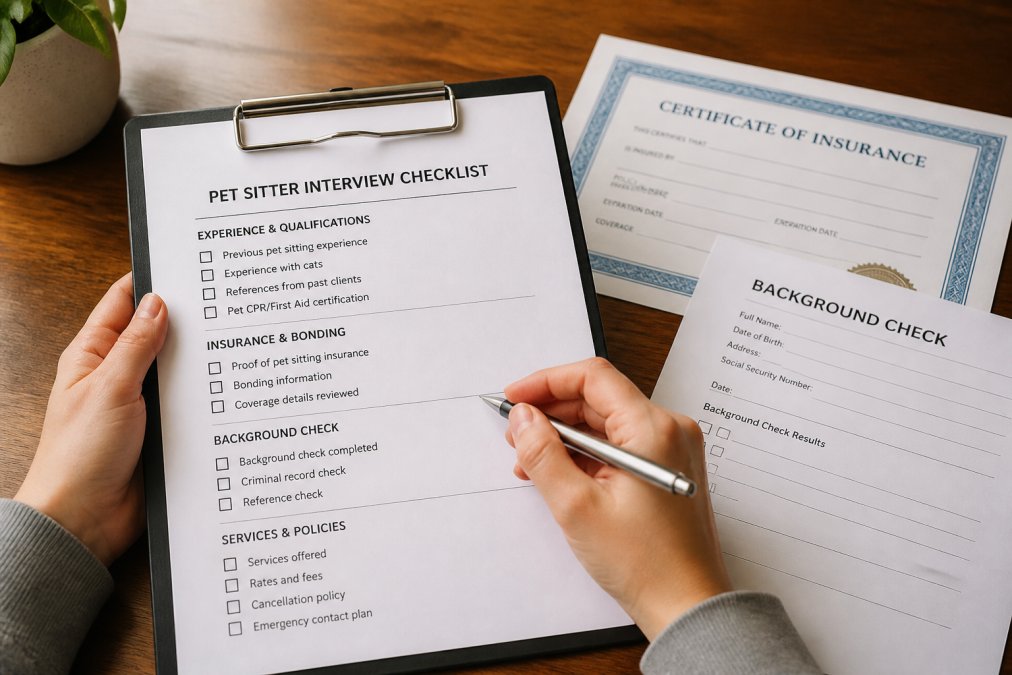
Pet Sitter Interview Checklist: What to Verify Before Hiring
Create a checklist and work through it systematically. Start by confirming that the sitter is background-checked. Ask what type of background check they've undergone and when. A criminal record screening is standard.
Next, confirm their insurance and bonding status in writing. Ask for the name of their insurance provider and policy number, and the bonding company and policy details. Verify that these policies are current, insurance and bonding expire.
Ask for references from current clients who have cats similar to yours. Actually contact them. Ask how long they've used this sitter, whether they trust them with a key to their home, and whether they've ever had concerns.
Ask about their experience with medication administration if your cat needs medication. Can they give pills? Can they handle injections? If your cat has medical needs, this question is non-negotiable.
Checking References and Client Testimonials
Contact at least two current clients. Ask specific questions: How long have you used this sitter? Would you trust them with a key to your home? Has anything ever gone wrong? How do they communicate? Listen for hesitation or vague answers. Strong references are enthusiastic and specific.
Ask for written testimonials or reviews if available. Read these carefully and look for patterns. If multiple clients mention reliability, communication, and genuine care for their pets, that's a strong signal.
Ask whether the sitter has ever had a client complaint filed against them. What matters is how they handled it. Did they take responsibility and fix the problem?
Confirming Background Checks and Criminal Record Screening
Ask what type of background check they've had. A thorough check includes criminal history, sex offender registry verification, and sometimes financial history (the CDC). Ask when it was completed and which company conducted it.
Request a copy of the results or at least verification that the check was completed and cleared. If a sitter resists providing this documentation, that's a serious concern.
How to Verify Insurance Policy Coverage and Liability Limits
Ask for the insurance certificate directly from the sitter. When you receive it, check whether the policy is current and what type of coverage it includes. Look at the coverage limits, a policy with $100,000 in coverage is very different from one with $1 million.
Ask whether the policy covers specific incidents you're concerned about. Does it cover injury to your cat? Property damage inside your home? Some policies have exclusions or limitations.
Verify that the insurance is specific to pet sitting. Ask the sitter directly: Is this policy specifically for pet sitting services, or is it general business liability?
Cat Sitter Daily Check-In Process and Communication Standards
Establish clear expectations about communication before you hire. How often will they update you? What form will those updates take? Will they send photos or videos?
A professional pet sitter should have a daily check-in process that keeps you informed. Many sitters send a brief text or email after each visit confirming that the visit happened and your cat is fine.
Ask how they handle emergencies. If something goes wrong, your cat seems sick, there's an accident, or they can't access your house, how quickly will they contact you? A sitter with a clear emergency protocol has thought through what could go wrong.
Discuss whether they'll provide access to photos or videos of your cat during visits. This gives you peace of mind and lets you see how your cat's doing while you're away.
Red Flags to Watch for When Hiring a Pet Sitter
If a sitter is unwilling or unable to provide proof of insurance and bonding, that's a dealbreaker. The same applies to background checks. If they haven't been background-checked or won't provide proof, move on.
If a sitter is defensive about your questions or seems annoyed that you're asking for references and documentation, that's a signal. You're being responsible, not unreasonable.
If their pricing seems unusually low, ask why. Unrealistically cheap pricing often means they're cutting corners, maybe they're not actually insured, maybe they're rushing through visits, or maybe they're less experienced than they claim.
If a sitter has vague answers about their experience or seems evasive about specific details, trust that instinct. A genuinely experienced sitter can talk specifically about their approach and how they handle common situations.
If they don't ask you detailed questions about your cat, that's concerning. A good sitter wants to know about your cat's personality, behavioral quirks, medical needs, preferences, and fears.
Service Agreement and Contractual Red Flags
Every professional pet sitter should provide a written service agreement. Read it carefully. Look for clarity on payment, cancellation policies, and what's included in each visit.
Check whether the agreement includes a liability waiver. A reasonable waiver acknowledges that accidents can happen while the sitter takes reasonable precautions. A waiver that says "we're not responsible for anything" is a red flag.
Look for clarity on your cat's medical care. If your cat needs medication, the agreement should specify that you're authorizing the sitter to administer it and that you're providing clear instructions.
Look for any terms that seem unreasonable. If the cancellation policy is extremely strict or if there are hidden fees, ask why.
Digital Safety and Home Access Security
Ask how the sitter will access your home. Will they use a key? A keypad code? A smart lock? If they use a physical key, ask how they store it securely. A sitter who's careless about key security is careless about your home security.
If you use a smart lock, ask whether they're comfortable with a temporary access code. Smart locks are more secure than physical keys because you can change the code after they're done and track who accessed your home and when.
Ask what they'll do with sensitive information they learn about your home, alarm codes, valuables, your vacation schedule. A professional sitter keeps this information confidential.
Ask whether they take photos or video during visits and what their policy is on those images. Do they share them only with you? Do they post them on social media? Your home's interior and security are private.
Post-Hiring Monitoring and Ongoing Trust Building
After the first few visits, check in with your cat. Does your cat seem stressed or anxious? Trust your cat's reaction. If your cat is clearly uncomfortable after multiple visits, it's okay to try a different sitter.
Review the updates and photos the sitter sends. Are they detailed and thoughtful? Do they show engagement with your cat? Over time, you should see evidence that the sitter is actually spending time with your cat.
Ask for ongoing feedback. After a few visits, check in with the sitter. Ask how your cat seems to them. A sitter who's paying attention will notice behavioral patterns and health changes.
Stay in touch even when you're not away. A brief check-in message or thank-you note keeps the relationship positive and reminds the sitter that you're engaged and paying attention.
If something concerns you, address it directly. Professional sitters want feedback and want to do the job right. If there's a pattern of problems, you have the right to find a different sitter.
When you find a sitter who's reliable, trustworthy, and genuinely cares for your cat, invest in that relationship. Sitters with loyal, long-term clients tend to be more invested in doing excellent work.
At Tracy's Kitty Care, we understand that hiring the right pet sitter is about finding someone you can trust completely, someone who's background-checked, properly insured, and genuinely invested in your cat's safety and happiness. The process of vetting a sitter thoroughly might feel time-consuming, but it's the best investment you can make in your cat's wellbeing while you're away. If you're looking for a professional cat sitting service that meets all these standards, we're here to help.
Hiring an insured and bonded pet sitter requires diligence, but the peace of mind is worth it. When you take the time to verify credentials, check references, and confirm insurance coverage, you're protecting your cat, your home, and your own peace of mind. Tracy's Kitty Care has made this process central to how we operate, every sitter on our team is background-checked, licensed, bonded, and insured. We believe that's the standard every cat owner should expect. Start with the checklist above, ask the hard questions, and trust your instincts. Your cat deserves a sitter you can completely trust.
| Verification Step | What to Check | Why It Matters |
|---|---|---|
| Background Check | Criminal history screening | Confirms sitter has no disqualifying offenses |
| Insurance | Current liability policy with adequate limits | Protects you financially if accidents occur |
| Bonding | Active bonding certificate | Protects against theft or dishonesty |
| References | Contact info from current clients | Reveals how sitter performs in real situations |
| Credentials | Pet first aid and CPR certification | Shows sitter can handle emergencies |
| Service Agreement | Written terms and cancellation policy | Clarifies expectations and protections |
| Communication Plan | Daily check-in and photo updates | Keeps you informed while you're away |
Frequently Asked Questions
What is the difference between being insured and bonded for pet sitters?
Insurance protects you if your pet is injured or your property is damaged due to the sitter's negligence. Bonding is a financial guarantee that covers losses if the sitter steals from you or fails to fulfill their contract. Both are essential for hiring insured pet sitters. A professional sitter should carry both types of protection to demonstrate accountability and professional standards.
What questions should I ask a cat sitter during the meet and greet?
Ask about their pet care experience, certifications (pet first aid or CPR training), how they handle emergencies, their contingency plan if they get sick, what daily updates you'll receive, and how they manage medication administration if needed. Also ask about their business license, how long they've been in business, and what happens if your travel plans change. These questions to ask a cat sitter help establish trustworthiness and professional standards.
How can I verify that a pet sitter is actually insured and bonded?
Request proof of current insurance and bonding certificates directly from the sitter. Contact their insurance provider independently to confirm coverage limits and that the policy is active. Ask specifically about liability insurance coverage for property damage and veterinary care authorization. Don't rely on verbal claims alone. A legitimate professional will provide documentation without hesitation and should list their business license number for verification.
What should a cat sitter's daily check-in process look like?
A professional sitter should provide daily updates through photos, messages, or a pet sitting contract that specifies communication frequency. The cat sitter daily check in process should include confirmation of visit completion, details about your cat's behavior and appetite, medication administration records, and emergency contact protocols. You should receive updates the same day or within a few hours of each visit to maintain accountability and peace of mind.
What are the biggest red flags when hiring a pet sitter?
Watch for sitters who cannot provide references, lack insurance or bonding documentation, have no business license, refuse background checks, or seem uncomfortable discussing their experience with shy or nervous cats. Red flags include unclear service agreements, reluctance to provide daily updates, inability to explain their emergency contingency plan, and unwillingness to discuss veterinary care authorization or medication handling procedures.
Should I ask about a pet sitter's background check before hiring?
Yes, absolutely. A professional pet sitter should have completed a background check and be willing to share results. This protects your home security and your cat's safety. Ask specifically about criminal record screening and DBS-equivalent checks. Reputable sitters understand this is standard practice and won't view the question as an insult. It's part of establishing trust and professional accountability in the pet care industry.
What should a pet sitting contract include to protect me?
The service agreement should outline visit frequency, duration, pricing, cancellation policy, emergency protocols, liability limits, and your cat's specific care instructions. It should specify who has key security access, what happens if the sitter becomes unavailable, and how veterinary care authorization will be handled. Include details about daily updates, medication administration procedures, and what constitutes grounds for termination. A clear contract protects both you and the sitter.
This article was written using GrandRanker