 ultimate-guide
What Causes Cat Separation Anxiety: A Complete Guide
Table of Contents
- What Is Feline Separation Anxiety?
- Signs of Anxiety in Cats: How to Recognize the Problem
- Root Causes: Why Your Cat Develops Separation Anxiety
- Enrichment Activities for Indoor Cats: Building Independence
- Behavioral Modification: Step-by-Step Desensitization
- Hiring a Professional Pet Sitter for Anxious Cats
- When to Consult a Veterinarian or Behaviorist
- Pheromone Therapy and Calming Supplements
- Frequently Asked Questions
Last Updated: September 19, 2026
What Is Feline Separation Anxiety?
Cat separation anxiety is a condition where cats experience significant distress when separated from their owners or familiar environments. Unlike the independent reputation cats have earned, many felines develop intense emotional attachments to their human companions and struggle when left alone. This isn't a behavioral quirk, it's a genuine anxiety disorder that manifests through destructive behavior, inappropriate elimination, and excessive vocalization.
The condition falls under what veterinarians call feline behavioral health issues, distinct from simple loneliness or boredom. A cat with separation anxiety doesn't just miss you; the animal experiences a stress response that triggers physiological and behavioral changes. Understanding the distinction matters because it shapes how you approach treatment and management.
The good news is that with proper identification and intervention, most cats improve significantly.
Signs of Anxiety in Cats: How to Recognize the Problem
The first step in addressing separation anxiety is recognizing its symptoms. Anxious cats display a range of signs that intensify when you prepare to leave or during your absence. Common indicators include excessive vocalization (yowling, meowing, or crying), destructive behavior directed at doors or windows, and self-grooming problems like over-grooming that leads to hair loss or skin irritation.
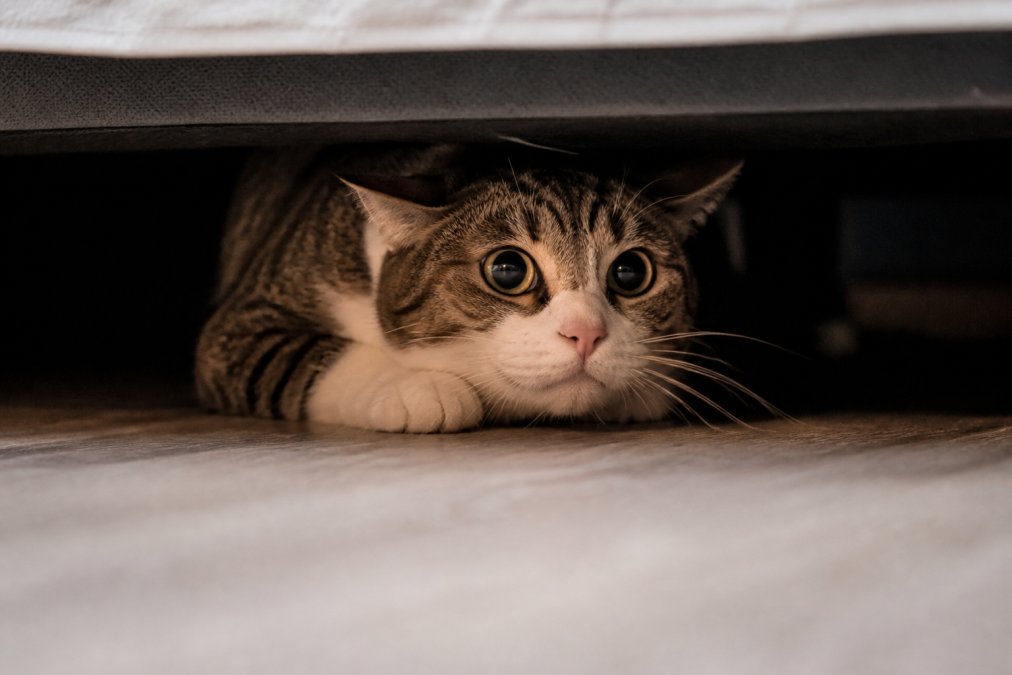
Many anxious cats also exhibit inappropriate elimination, urinating or defecating outside the litter box, particularly near exits or your sleeping area. This isn't a litter box problem; it's a stress response. You might notice your cat following you from room to room, refusing to eat when you're gone, or displaying aggressive behavior when you attempt to leave.
Physical signs matter too. Cats experiencing anxiety often show changes in self-grooming habits, resulting in a dull or matted coat. Some develop psychogenic alopecia, where stress-induced over-grooming causes patchy hair loss. Watch for dilated pupils, flattened ears, and a tucked tail, all signals your cat is in a heightened stress state.
The intensity varies. Some cats show mild signs like increased vocalization; others display multiple severe symptoms simultaneously. Duration matters as well. A cat that fusses for five minutes after you leave differs significantly from one that remains distressed throughout your absence.
Root Causes: Why Your Cat Develops Separation Anxiety
Separation anxiety doesn't develop randomly. Specific factors and experiences shape whether a cat becomes anxious when separated from its owner. Understanding these root causes helps you address the underlying issue rather than just managing symptoms.
Hyper-attachment and early socialization
Cats that form unusually strong bonds with their owners, what behaviorists call hyper-attachment, are prone to separation anxiety. This often traces back to early socialization experiences. Kittens separated from their mothers too early, hand-raised bottle-fed kittens, or cats that were only children in a household frequently develop intense attachment-based anxiety.
The critical window for feline socialization occurs between two and seven weeks of age. Cats socialized primarily with humans during this period may struggle to self-soothe when separated from their attachment figure. They've learned that humans provide comfort and security, making independence feel threatening.
Interestingly, the opposite extreme also creates problems. Cats with minimal early socialization sometimes develop anxiety because they lack confidence in unfamiliar situations. The difference is nuanced: hyper-attachment anxiety stems from dependency, while under-socialization anxiety stems from fear.
Disruption to predictable routine
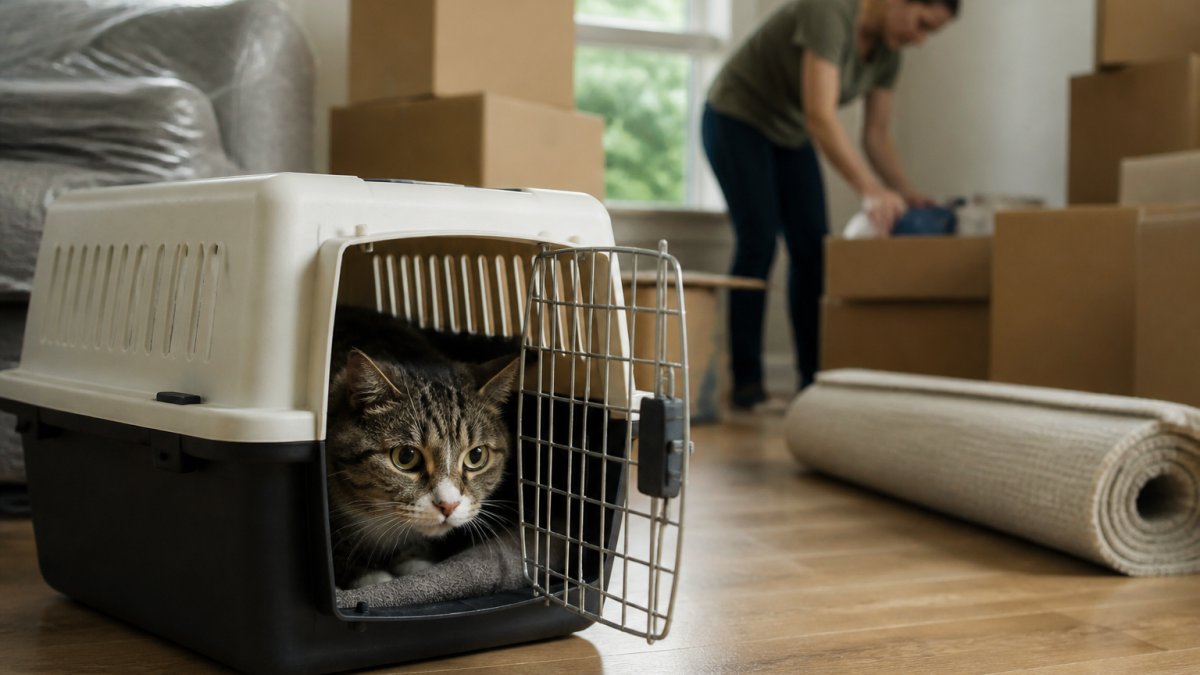
Cats thrive on routine. A predictable schedule creates a sense of control and security. When that routine breaks, through schedule changes, moving to a new home, or sudden changes in your work situation, cats experience significant stress.
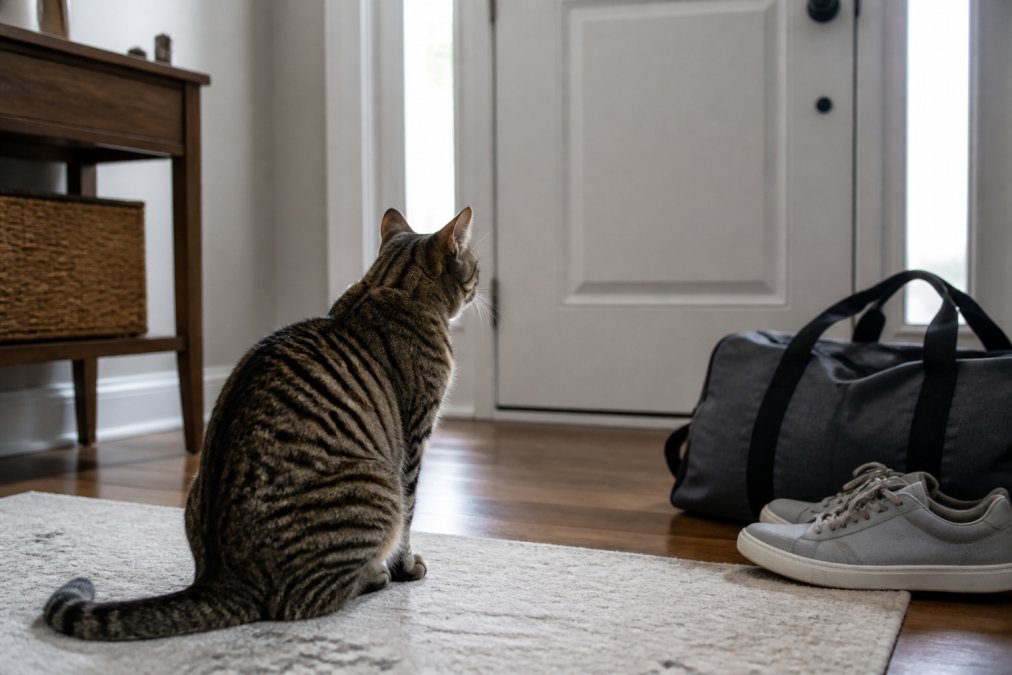
The disruption itself becomes a trigger. If your cat knows you leave at 8 a.m. and return at 5 p.m., that predictability reduces anxiety. Sudden changes to that schedule create uncertainty, which amplifies stress responses. Some cats develop anxiety specifically tied to departure cues, the sight of you putting on shoes, grabbing keys, or packing a suitcase.
This explains why cats sometimes develop separation anxiety after a major life change. A job shift from office work to remote work, followed by a return to the office, can trigger anxiety because the routine disruption has already happened. The cat has learned that your presence is inconsistent.
Past trauma or loss
Cats with histories of abandonment, loss, or trauma are significantly more prone to separation anxiety. A cat rehomed multiple times may develop fear of abandonment. Cats that experienced the loss of a primary caregiver or companion animal sometimes become clingy with their remaining attachment figure.
Traumatic events, even those you might consider minor, can trigger lasting anxiety. A cat left alone during a frightening event (thunderstorm, fire alarm, construction noise) may associate your absence with danger. That single incident can establish a pattern where separation equals potential threat.
Enrichment Activities for Indoor Cats: Building Independence
Environmental enrichment is foundational to managing separation anxiety. The goal isn't just to keep your cat entertained; it's to build confidence and independence by creating a stimulating, engaging environment that reduces reliance on your presence for satisfaction.
Interactive play sessions before you leave help tire your cat physically and mentally. A 15-20 minute play session using wand toys, laser pointers, or ball toys can reduce restless energy and anxiety. The key is consistency, play at the same time each day so your cat anticipates this engagement.
Puzzle feeders and food-dispensing toys shift your cat's focus from your departure to problem-solving. Rather than eating a meal in two minutes, your cat spends 20-30 minutes working for food. This creates mental stimulation and a positive association with alone time. Rotate puzzle feeders to maintain novelty and engagement.
Environmental enrichment extends beyond toys. Window perches give cats visual stimulation and a sense of territory. Cat trees at various heights provide climbing opportunities and safe vantage points. Some cats benefit from bird feeders positioned outside windows, creating natural entertainment.
Auditory enrichment matters too. Leaving soft music, white noise, or cat-specific audio recordings can mask outside sounds that trigger anxiety. Some cats respond well to pheromone diffusers that create a calming environment (covered in detail in the final section).
Consider the cat-safe environment holistically. Multiple litter boxes placed in different locations reduce stress around elimination. Hiding spots, cat tunnels, boxes, or enclosed beds, give anxious cats places to retreat. The more your cat can self-soothe through environmental engagement, the less dependent they become on your physical presence.
Behavioral Modification: Step-by-Step Desensitization
Desensitization is the most effective behavioral modification technique for separation anxiety. The process involves gradually teaching your cat that your absence is safe and temporary, reducing the emotional charge attached to separation.
Departure cue training
Start by identifying your departure cues, the signals your cat recognizes as precursors to your leaving. Common ones include putting on shoes, grabbing keys, picking up a bag, or moving toward the door. Your cat has learned these signals predict separation, creating anticipatory anxiety.
The goal is to decouple these cues from actual departure. Practice the behavior without leaving. Put on your shoes and sit down. Grab your keys and watch TV. Move toward the door and return to the living room. Do this repeatedly, multiple times daily, until the behavior no longer triggers a response.
When your cat stops reacting to individual cues, combine them. Put on shoes, grab keys, and stand at the door, but don't leave. Reward calm behavior with treats or attention. This teaches your cat that departure cues don't inevitably mean separation.
Gradual absence intervals
Once departure cues lose their power, practice short absences. Start with 30 seconds. Leave your home, wait outside the door, and return. Your cat should remain calm. Reward this calm behavior immediately upon your return.
Gradually extend the interval: 30 seconds, one minute, three minutes, five minutes, ten minutes, and so on.
Hiring a Professional Pet Sitter for Anxious Cats
For cats with significant separation anxiety, professional in-home pet sitting addresses a core problem: the anxiety itself. Unlike boarding facilities where your cat experiences an unfamiliar environment with strangers, in-home sitting keeps your cat in their familiar space with consistent human interaction.
When to Consult a Veterinarian or Behaviorist
If your cat's separation anxiety is severe or doesn't improve with environmental enrichment and behavioral modification after 4-6 weeks, professional veterinary guidance is essential. A veterinarian can rule out medical issues that mimic anxiety symptoms, thyroid problems, urinary tract infections, or neurological conditions can all cause behavioral changes.
Pheromone Therapy and Calming Supplements
Pheromone diffusers create a calming environment by releasing synthetic versions of natural feline pheromones. Cats produce these pheromones naturally from glands in their face, and the scent signals safety and familiarity. Diffusers like Feliway mimic this effect, reducing stress responses in many anxious cats.
Frequently Asked Questions
How do you fix separation anxiety in cats?
Fixing cat separation anxiety requires a multi-step approach: desensitize your cat to departure cues, gradually increase alone time, provide environmental enrichment like puzzle feeders and interactive toys, maintain a predictable routine, and consider pheromone diffusers. For severe cases, consult a veterinary behaviorist who may recommend anti-anxiety medication. Professional in-home pet sitting can also help by reducing the duration your cat spends alone and providing consistent care and attention during your absence.
What are the main signs of anxiety in cats?
Common signs include excessive vocalization, destructive behavior, inappropriate elimination outside the litter box, over-grooming or psychogenic alopecia, self-injury, loss of appetite, and hiding. Some cats become hyper-attached and follow their owners constantly. Changes in self-grooming habits, stress-induced illness, or behavioral shifts when you prepare to leave are also red flags. If your cat displays these behaviors, document when they occur to help your veterinarian assess whether separation-related problems are the cause.
Can a change in routine cause cat anxiety?
Yes, routine disruption is a major trigger for feline separation anxiety. Cats thrive on predictable routines; changes in your departure time, work schedule, or household composition can trigger stress responses. Even small alterations like moving furniture or introducing new pets can disrupt your cat's sense of security. Maintaining a consistent daily schedule for feeding, playtime, and your departures helps prevent anxiety. If changes are unavoidable, introduce them gradually and provide extra environmental enrichment during the transition.
Is it normal for cats to have separation anxiety?
While cats have a reputation for independence, separation anxiety is not uncommon, especially in cats with strong attachment figures or those lacking early socialization. Some cats are naturally more prone to anxiety than others. The condition becomes problematic when it causes destructive behavior, inappropriate elimination, or stress-induced illness. If your cat shows signs of separation anxiety, it's worth addressing through behavioral modification, enrichment, and professional support rather than assuming it will resolve on its own.