 ultimate-guide
Licensed and Bonded Cat Sitters: What It Means
Table of Contents
- What Licensed and Bonded Cat Sitters Actually Mean
- The Real Difference: Bonding vs. Insurance vs. Licensing
- How to Verify Your Cat Sitter's Credentials and Background
- Questions to Ask a Potential Cat Sitter Before Hiring
- The Cat Sitter Daily Check-In Process: What Professional Care Looks Like
- Pet Sitting Service Agreement Template: What Should Be Included
- Why In-Home Care Works Better for Nervous or Shy Cats
- Pricing, Cancellation Policies, and What to Expect
- Frequently Asked Questions
Last Updated: September 1, 2026
What Licensed and Bonded Cat Sitters Actually Mean
When you hire a professional pet sitter to care for your cat while you're away, you'll often see the terms "licensed," "bonded," and "insured" used interchangeably. They're not the same thing. Licensed and bonded cat sitters represent three distinct layers of protection and accountability that safeguard your home, your pet, and your relationship with the person entering your space.
A licensed pet sitter has met specific training and credentialing requirements set by their state or professional organization. Bonding is a form of financial protection that covers you if the sitter steals from you or causes property damage. Insurance protects you if your cat is injured during care or if someone is hurt on your property. Pet sitting remains largely unregulated at the state level, but some sitters hold certifications from professional organizations like the National Association of Professional Pet Sitters (NAPS) or Pet Sitters International (PSI), which require background checks, pet first aid and CPR training, and adherence to a code of ethics.
The Real Difference: Bonding vs. Insurance vs. Licensing
These three protections serve completely different purposes, and a professional pet sitter should have all three in place.
Licensing refers to formal training and certification, usually through a professional pet-sitting organization. A licensed sitter has completed coursework in pet behavior, health and safety, emergency protocols, and business practices, passed an exam, and agreed to follow a professional code of conduct.
Bonding is a surety bond that protects you against employee dishonesty. If a bonded sitter steals from your home, damages your property intentionally, or commits fraud, the bonding company compensates you up to the bond limit, typically ranging from $2,500 to $10,000. Bonding does not cover accidental injury to pets.
Liability insurance (also called professional liability or errors and omissions insurance) covers accidental injuries, accidents, or property damage that occur during the sitter's care. If your cat is accidentally let outside and gets lost, or if the sitter knocks over a lamp and breaks it, liability insurance covers the financial responsibility.
A truly professional licensed and bonded cat sitter carries all three: formal credentials, a surety bond, and liability insurance. When you call a potential sitter, ask specifically what they carry.
How to Verify Your Cat Sitter's Credentials and Background
Asking the right questions and requesting documentation is your first line of defense. A professional sitter expects these questions and welcomes the opportunity to prove their credibility.
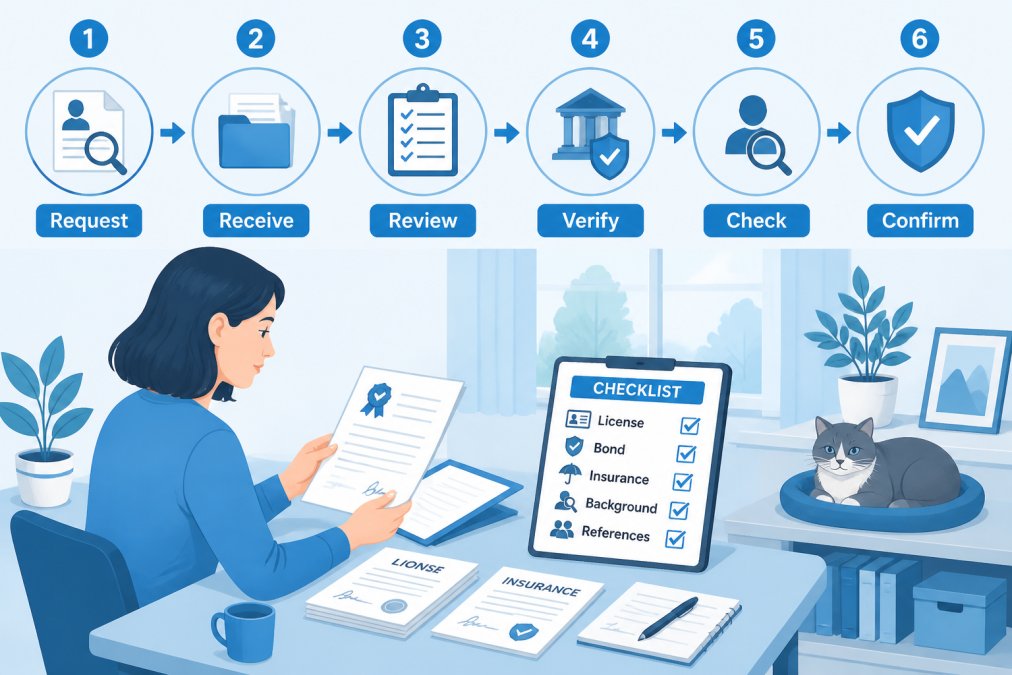
Start by asking for proof of professional certification. Request a copy of their NAPS or PSI membership card. Legitimate organizations maintain searchable directories on their websites, so you can independently verify membership. Next, ask for proof of bonding and insurance. A bonded sitter should provide a copy of their surety bond showing the bond amount and coverage dates. An insured sitter should provide a certificate of insurance from their liability insurance provider.
Request a background check report and ask for references from previous clients. A sitter with several years of experience should have at least three to five references who can speak to their reliability, trustworthiness, and care quality. Check online reviews and ratings if the sitter uses platforms like Care.com, Rover, or Wag. While online reviews aren't foolproof, patterns emerge.
Questions to Ask a Potential Cat Sitter Before Hiring
The conversation with a potential sitter reveals a lot about their professionalism, experience, and approach to cat care.
Start with their experience level: "How long have you been pet sitting, and how many cats do you currently care for?" Ask about their approach to nervous or shy cats: "How do you handle cats that are scared or hide from strangers?" A good sitter will explain techniques like giving the cat space, using treats to build trust, and allowing the cat to approach them rather than forcing interaction.
Inquire about medication administration: "Have you given cats medications before, and what's your process for ensuring the correct dose at the correct time?" Ask about emergency protocols: "What would you do if my cat seemed sick or injured during your visit?" A professional sitter should have a clear plan: contact you immediately, contact your veterinarian, and potentially transport the cat to an emergency clinic if necessary.
Discuss communication preferences: "How will you update me during my time away?" Most professional sitters send daily text updates with photos or videos. Ask about their cancellation and rescheduling policy: "What happens if I need to cancel a visit, or if my plans change?"
The Cat Sitter Daily Check-In Process: What Professional Care Looks Like
A professional daily check-in goes far beyond just refilling a food bowl.
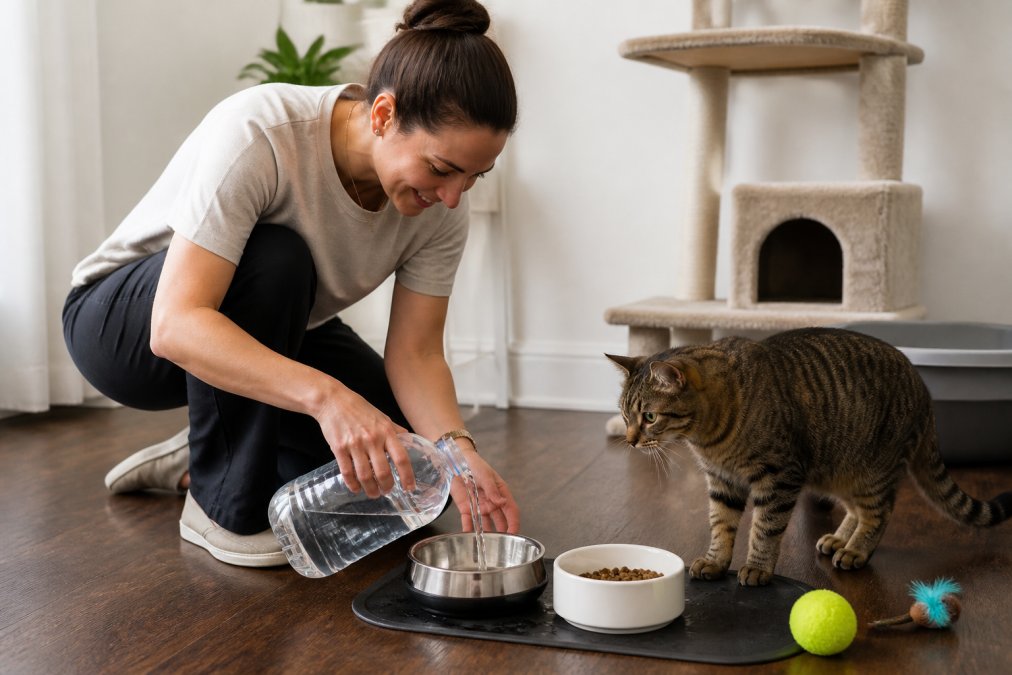
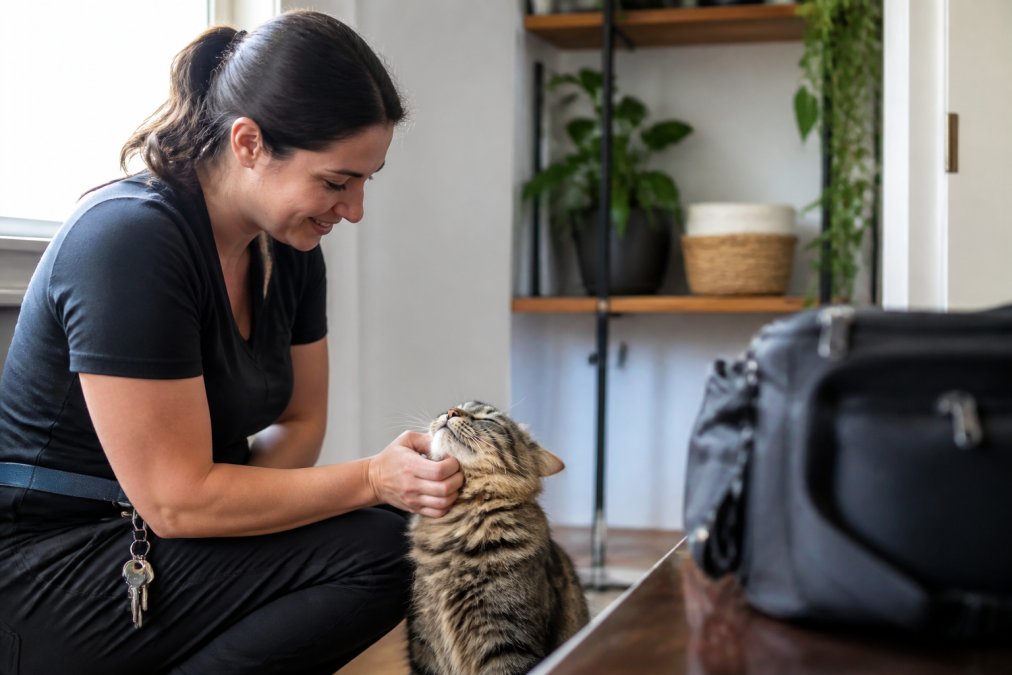
A typical 30-minute visit includes several components. The sitter arrives at your home and immediately assesses your cat's condition. Are they alert and responsive? Do they show any signs of illness or injury?
The sitter then provides fresh water, refilling the water bowl completely and ensuring it's clean. Feeding comes next, following your specific instructions about portion size, type of food, and any dietary restrictions. Litter box cleaning is essential, the sitter scoops out waste, removes clumps, and tops up litter as needed. The final component is playtime and attention, providing mental stimulation and emotional support. Services like cat sitting service follow this standard protocol to ensure your cat receives comprehensive daily care while you're away.
Before leaving, a professional sitter documents the visit, noting the time of arrival and departure, what they observed about your cat's behavior and health, any issues that arose, and what they did during the visit. Many sitters send a text or email update with photos or a brief summary.
Pet Sitting Service Agreement Template: What Should Be Included
A professional service agreement protects both you and your sitter by clarifying expectations, responsibilities, and what happens if something goes wrong.
A solid service agreement should include your cat's name, age, and any health conditions or behavioral notes. It should specify the sitter's responsibilities during each visit: feeding, water, litter box cleaning, playtime, and medication administration if applicable. Include exact portion sizes, feeding times, and any dietary restrictions.
The agreement should detail emergency protocols, listing your veterinarian's name, address, and phone number, along with your cell phone number and an emergency contact. Specify whether the sitter has permission to take your cat to an emergency clinic at your expense if needed.
Include payment terms: the cost per visit, how often you'll be charged, accepted payment methods, and when payment is due. Address cancellation and rescheduling policies, confidentiality clauses, and what the sitter is and isn't authorized to do. Include a liability clause acknowledging that while the sitter takes reasonable precautions, accidents can happen.
Both you and the sitter should sign and date the agreement. Keep a copy for your records.
Why In-Home Care Works Better for Nervous or Shy Cats
Cats are territorial animals. Their home is their safe space, and removing them from it creates stress. For nervous or shy cats, in-home care eliminates this stressor entirely.
When a cat stays in their own home during your absence, they maintain their routine. They use their familiar litter box, eat in their usual spot, and rest in their favorite hiding places. This consistency is calming for anxious cats. Boarding facilities expose cats to new environments, unfamiliar sounds, and other animals, which can trigger anxiety and stress-related illness.
In-home care also allows the sitter to monitor your cat's health and behavior in their natural environment. Changes in eating habits, litter box use, or activity level are easier to spot at home. For cats on medication or with health conditions, in-home care is often medically necessary. A consistent sitter who visits daily becomes a familiar presence, reducing anxiety over time.
Pricing, Cancellation Policies, and What to Expect
Understanding pricing and policies upfront prevents surprises and helps you budget for pet care while you travel.
Standard 30-minute visits from Tracy's Kitty Care cost $30 per visit, covering feeding, fresh water, litter box cleaning, playtime, and attention. For cat owners who need daily visits while away, a typical week of care (seven visits) would be $210. For a two-week trip, you'd budget $420. This is generally comparable to or slightly higher than boarding facility rates, depending on your location and the facility's quality.
Most professional sitters require notice to avoid cancellation fees, a common policy is that cancellations made 48 hours or more in advance incur no fee. Tracy's Kitty Care offers a referral program offering free visits. Clarify which payment methods your sitter accepts and when payment is due.
Hiring a professional licensed and bonded cat sitter gives you genuine peace of mind while you travel. The credentials signal that someone has invested in their profession and takes responsibility seriously. But verification matters more than the label. Ask questions, request documentation, check references, and ensure your sitter carries bonding and insurance alongside their professional credentials. When you invest in a quality cat sitting service, you're investing in your cat's wellbeing and your own confidence that they're being cared for properly at home.
Frequently Asked Questions
What is the difference between bonded and insured pet sitters?
Bonding protects you if a sitter steals or damages your property, you can file a claim to recover losses. Insurance covers liability if the sitter is injured on your property or accidentally harms your cat. Licensed and bonded cat sitters carry both: bonding safeguards your home and possessions, while liability insurance protects against accidents. Together, they create comprehensive protection. Ask potential sitters for proof of both before hiring.
What should I ask a potential cat sitter before hiring?
Ask about their experience with cats, especially any special needs like medication administration or behavioral issues. Request references from other cat owners. Verify they're background-checked, bonded, and insured, ask for documentation. Clarify their daily check-in process: how often they visit, how long they stay, and how they communicate updates. Ask about their emergency protocol if your cat shows signs of illness. Finally, review their cancellation policy and service agreement before committing.
How much does professional in-home cat sitting typically cost?
In-home cat sitting services generally range from $25-$50+ per 30-minute visit, depending on location and services provided. Tracy's Kitty Care offers 30-minute visits at $30, which includes feeding, fresh water, litter box cleaning, and playtime. While higher than basic boarding, in-home care keeps your cat in their familiar environment, reducing stress, especially important for shy or nervous cats. Most owners find the peace of mind worth the investment.
What red flags should I watch for when hiring a cat sitter?
Avoid sitters who cannot provide proof of background checks, bonding, or insurance. Be wary if they resist giving references or won't sign a service agreement. Red flags include vague descriptions of their daily check-in process, unwillingness to discuss emergency protocols, or pressure to book without a trial visit. Sitters who seem uncomfortable with questions about their credentials or experience may not be trustworthy. Trust your instincts: reliable, professional sitters are transparent about their qualifications and welcome verification.
This article was written using GrandRanker