 how-to
7 Steps to Prepare Your Home for a New Cat
Last Updated: November 1, 2026
Quick Summary
To prepare your home for a new cat, set up one quiet safe room with supplies, litter box, food, water, bed, and hiding box before arrival day. Cat-proof every room, place one litter box per cat plus one extra, and introduce resident pets and children slowly over the first week.
- Buy supplies from a checklist one to two weeks before your cat arrives.
- Cat-proof each room one week before, checking at cat height.
- Set up a quiet safe room three to five days before arrival.
- Place one litter box per cat, plus one extra box.
- Introduce pets and kids slowly between days three and seven.
Table of Contents
- Start With a New Cat Checklist Before You Bring Your Cat Home
- How to Cat-Proof Your Home Room by Room
- Setting Up a Safe Room for a New Cat
- Litter Box Placement, Number, and Troubleshooting
- How to Help a Cat Adjust to a New Home in the First Week
- Introducing Resident Pets and Children Safely
- Plan Ahead for Travel With Trusted In-Home Cat Care
- Frequently Asked Questions
Start With a New Cat Checklist Before You Bring Your Cat Home
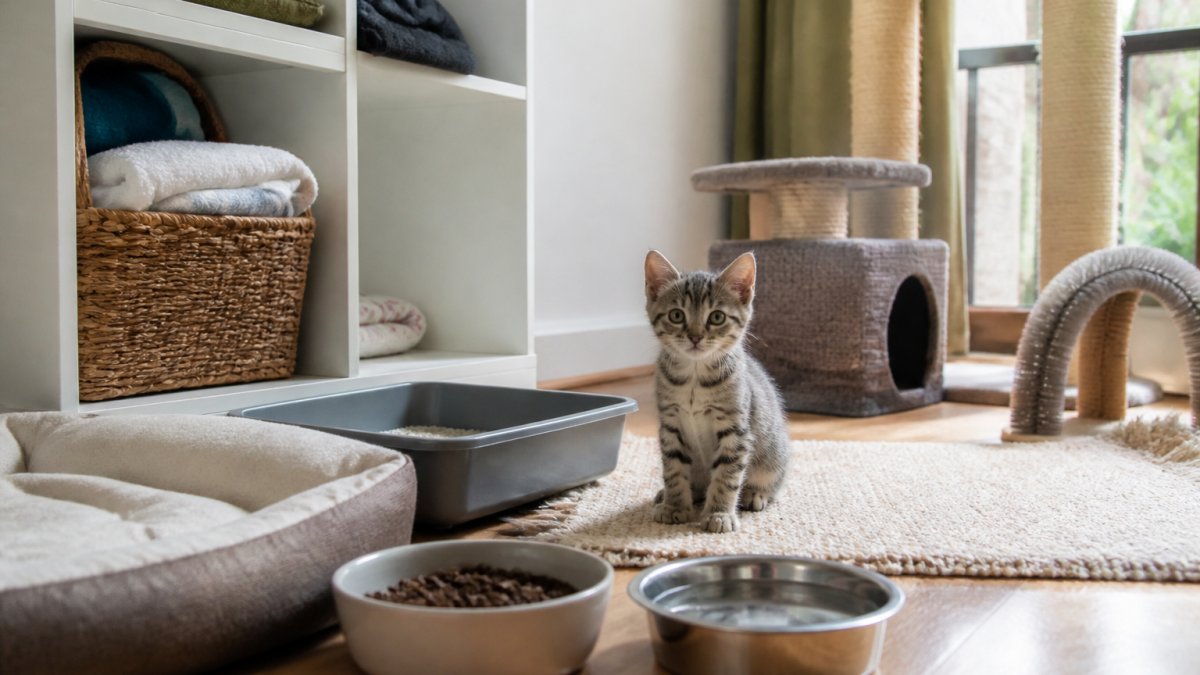
A new cat checklist is a written list of every supply, safety fix, and space your cat needs before arrival day. It keeps you from making three trips to the pet store in one afternoon.
How to prepare your home for a new cat comes down to one idea: set up the room before you set up the cat. Cats are territorial, so a ready space feels safe.
Here is the short version you can scan right now:
| Step | What You Do | When |
|---|---|---|
| 1 | Buy supplies from a checklist | 1-2 weeks before |
| 2 | Cat-proof each room | 1 week before |
| 3 | Set up one safe room | 3-5 days before |
| 4 | Place litter boxes correctly | Before arrival |
| 5 | Plan the first week | Arrival day |
| 6 | Introduce pets and kids slowly | Days 3-7 |
| 7 | Arrange care for travel | Before you book trips |
Essential Supplies to Have Ready
Buy these before the cat comes home. Missing basics cause stress for you and the cat.
- Cat carrier with a solid bottom and a door that opens wide
- Food and water bowls in ceramic or stainless steel
- Cat food the cat already eats, plus a small bag of the same brand
Ask the shelter or breeder what food and litter the cat uses. Switching brands too fast upsets digestion. Keep the same food for the first two weeks, then blend slowly.
A common mistake is buying a litter box that is too small. Pick one about one and a half times the length of your cat, with low sides if the cat is a kitten or a senior.
How to Cat-Proof Your Home Room by Room
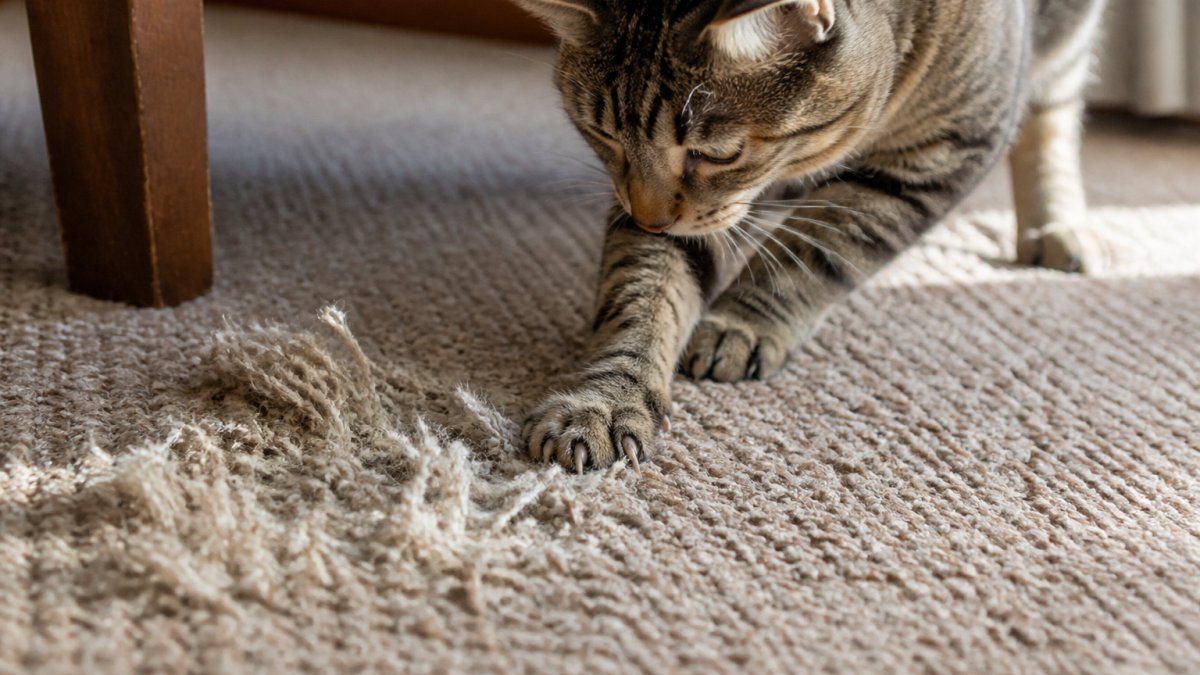
Cat-proofing means removing or covering anything a cat can swallow, knock over, tangle in, or climb onto and fall from.
- Kitchen: lock cleaners and pills in cabinets. Cover trash cans with locking lids. Push knives and hot pans away from edges. Keep the dishwasher and oven closed, cats climb in for warmth and crumbs.
- Bathroom: close the toilet lid. Store dental floss, hair ties, and small bottles out of reach. Floss and hair ties are linear foreign bodies that can bunch in the gut and require surgery.
- Living room: secure bookshelves and tall furniture to the wall with furniture straps or L-brackets. Hide cords in cable covers. Move breakable items off shelves. Block access behind entertainment centers.
Watch out: string, ribbon, and tinsel are serious hazards. Cats swallow them, and the string can bunch up in the gut.
Another common mistake is leaving plants unchecked. Many common houseplants are toxic to cats, lilies are especially dangerous and can cause kidney failure.
Emergency and Veterinary Readiness
Cat-proofing is only half of safety. Before the cat arrives, set up a plan for the first veterinary visit and for emergencies:
- Find a veterinarian before arrival day. Ask the shelter or breeder for records and confirm the cat's vaccination and spay/neuter status. Book a wellness visit within the first week.
- Save an emergency clinic address and phone number. Know the nearest 24-hour emergency hospital and the route to it. Tape the number inside a cabinet door.
- Build a basic first-aid kit. Include gauze, self-adhesive wrap, a digital thermometer, tweezers, a syringe for flushing wounds, and a copy of your cat's records. Keep it with the carrier.
Walk the checklist once before arrival, then again after the cat has explored each room, cats find hazards you missed.
Setting Up a Safe Room for a New Cat
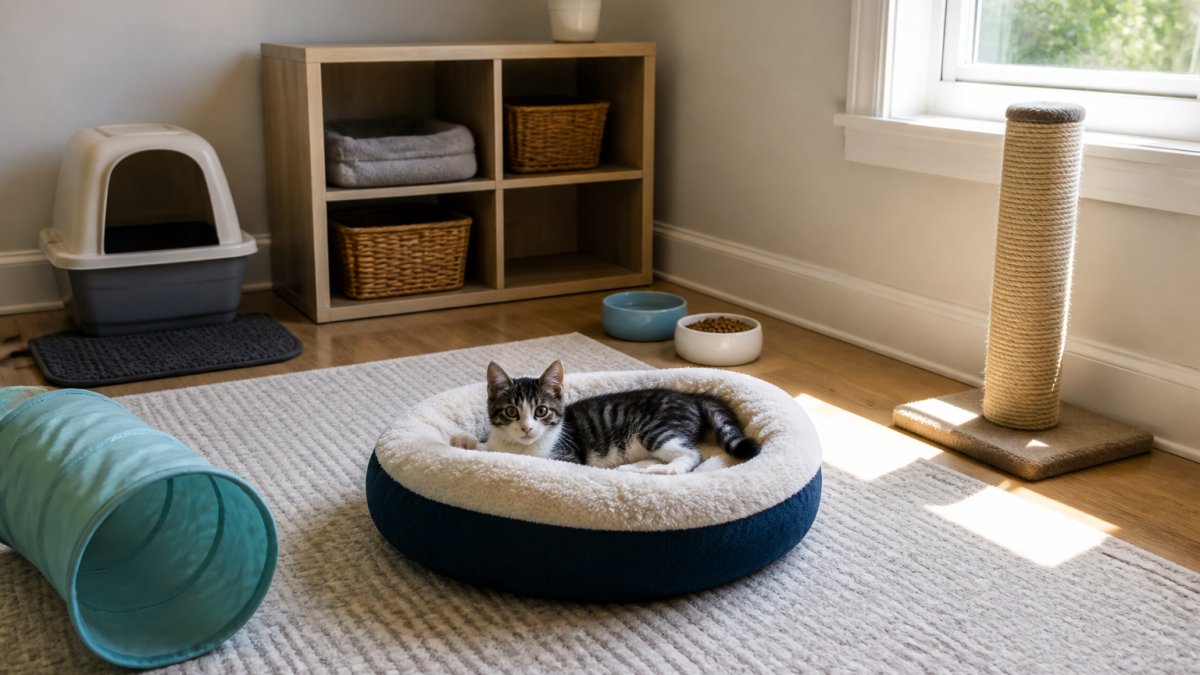
Setting up a safe room for a new cat means choosing one quiet room and stocking it with everything the cat needs for the first few days.
Pick a spare bedroom or a quiet office. Avoid the busiest room in the house. The space should have a door that closes and a window with a secure screen.
What Goes Inside the Safe Room
Stock the room before the cat arrives. Here is what to include:
- Litter box, placed far from the food and water
- Food and water bowls on a mat
- A soft bed and a hiding box
Cats like to hide when they feel unsure. A cardboard box on its side with a blanket inside works as well as an expensive cat cave.
Want a fuller walkthrough of supplies and setup? Our guide on how to set up essential supplies for a cat safe room breaks it down item by item.
Litter Box Placement, Number, and Troubleshooting
The right litter box setup prevents most litter box problems before they start. Place one box per cat, plus one extra.
Placement matters just as much as number:
- Put boxes in quiet spots with an escape route
- Keep boxes away from food and water
- Avoid next to noisy appliances like furnaces or washing machines
If a cat stops using the box, check the basics first. A dirty box is the most common cause.
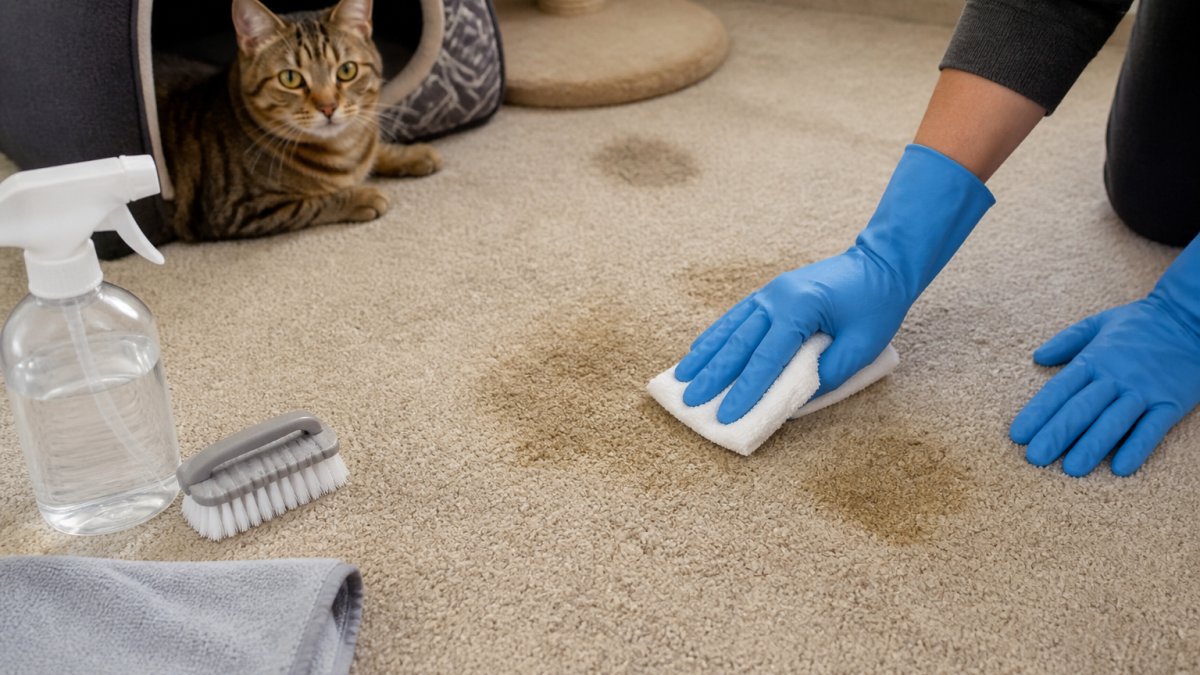
Watch out: never use strong cleaners or scented litter.
If a cat suddenly avoids the box after using it well, a vet visit comes first.
How to Help a Cat Adjust to a New Home in the First Week
How to help a cat adjust to a new home comes down to time, quiet, and routine. The first week sets the tone.
Here is a staged plan that works for most cats, with the reason behind each step so you can adapt it:
- Day 1, Arrival and decompression. Set the carrier on the floor of the safe room and open the door. Sit quietly a few feet away and talk softly. Do not pull the cat out. Leave food, water, and the litter box within easy reach, then leave the room and check back every 30-60 minutes.
- Days 2-3, Building trust in the safe room. Visit often but briefly. Sit on the floor, avoid direct staring (slow blinks are a cat's signal of calm), and let the cat approach you. Offer a treat on a long-handled spoon or your palm rather than reaching overhead. Keep the door closed so the cat learns one small territory first.
- Days 3-4, Supervised exploration. With resident pets closed in another room, open the safe room door and let the cat explore at its own pace. Follow the cat rather than carrying it. Keep sessions to 15-20 minutes and return the cat to the safe room afterward so it always has a retreat.
- Days 4-5, First supervised pet meetings. Start with scent swaps (see the next section), then short visual meetings through a baby gate or cracked door. End every session while both animals are still calm, a hiss or puffed tail is normal, but a swat or charge means you moved too fast.
- Days 5-7, Routine and play. Feed meals on a set schedule. Two short play sessions with a wand toy build confidence and burn energy.
Expect hiding. A shy cat may stay under the bed for two or three days. That is normal.
Watch for these signals that the pace is too fast or too slow:
- Not eating for more than 24 hours: offer the food the shelter used, warm it slightly, and try hand-feeding. A cat that refuses food for more than a day needs a call to your veterinarian.
- Hiding all day and only moving at night: normal in week one. If it continues past day five, slow down and spend more quiet time in the room.
- Hissing at you or flattening ears when you enter: back off, shorten visits, and let the cat initiate contact.
Adapt the plan to the cat. Kittens usually bounce back in a day or two and need more play and supervision.
If you have a shy or nervous cat, our step-by-step guide on how to help a shy cat adjust to a new home covers the slow approach in more detail.
Introducing Resident Pets and Children Safely
Introduce pets and children slowly, one at a time, and never force a face-to-face meeting. A rushed introduction sets back trust by weeks.
Start with scent. Swap blankets between the new cat and resident pets so each gets used to the other's smell.
For children, set clear rules:
- Sit still and let the cat come to them
- No picking up, chasing, or loud play near the cat
- Leave the cat alone while it eats or sleeps
- Use quiet voices in the safe room
For a full step-by-step plan, read our guide on how to introduce a new cat and reduce stress in seven steps.
Plan Ahead for Travel With Trusted In-Home Cat Care
Travel planning should start before the cat arrives, not the week you leave. Many cats do better at home than in a boarding facility, since familiar smells reduce stress.
Here is what to look for in a sitter:
- Experience with cats specifically, not just dogs
- Background checks and clear proof of insurance
- A written visit plan with feeding and litter details
- The ability to give medication if your cat needs it
Tracy's Kitty Care provides in-home cat sitting with background-checked, licensed, bonded, and insured sitters. You can view our cat sitting pricing to plan ahead, and our guide on hiring a cat sitting service walks through the questions to ask before you book.
Frequently Asked Questions
How long should I keep a new cat in one room?
Most cats do best with one to two weeks in a safe room before you open up the rest of the house. Start with a few days of full confinement, then let your cat explore one additional room at a time while supervised. Watch for signs of confidence, like eating normally, using the litter box, and coming out when you enter. Shy cats may need longer, so move at their pace rather than a fixed schedule.
What supplies do I need before bringing home a new cat?
Have a carrier, food and water bowls, the food your cat was already eating, a litter box and litter, a bed, a hiding spot, and a scratching post ready before arrival. Add a few toys and a soft blanket that carries a familiar scent. Having everything set up in advance means your new cat can settle in without a flurry of shopping trips and strange smells during the first few days.
How do I cat-proof my home before my new cat arrives?
Walk each room at cat height and remove hazards: tie up blind cords, cover or hide electrical cables, secure toxic plants like lilies, and store cleaning products in closed cabinets. Install screens on windows, block gaps behind appliances, and keep small swallowable items out of reach. Check the ASPCA's toxic plant list before bringing any houseplant into a cat-friendly home.
How do I help a new cat feel comfortable in a new home?
Keep the first days quiet and predictable. Sit in the safe room and talk softly without forcing contact, let your cat approach you, and stick to the same feeding times and food. Keep the litter box in a quiet spot away from the food. If you travel, book in-home cat sitting so your cat stays in its familiar space instead of adjusting to a boarding facility.
Preparing for a new cat takes a weekend of setup and a week of patience. The payoff is a calm cat and a home that works. If travel is on your calendar, Tracy's Kitty Care keeps your cat in its own space with feeding, fresh water, litter box care, and playtime on every visit. Our sitters are background checked, licensed, bonded, and insured, so you can leave with peace of mind. Get started with Tracy's Kitty Care and give your cat steady, familiar care while you are away.