 how-to
How to Reduce Cat Anxiety During Pet Sitting
Table of Contents
- Start Before You Leave: The Owner-to-Sitter Handoff
- Know the Signs of Anxiety in Cats So You Can Act Early
- Build Cat Sitter Instructions and Routine That Match Normal Life
- Step-by-Step: A Low-Pressure Visit Plan That Reduces Cat Anxiety
- How Long Does It Take a Cat to Adjust to a Sitter?
- Calming Products for Cats: What Helps and What to Skip
- Updates, Escalation, and Medication Boundaries
- Conclusion
- Frequently Asked Questions
Last Updated: October 20, 2026
Start Before You Leave: The Owner-to-Sitter Handoff
The best way to reduce cat anxiety during pet sitting starts weeks before you pack a bag.
Set aside 30 minutes for a meet-and-greet. Walk the sitter through your home while your cat watches from a distance. Then hand over a written guide.
The care basics
- Feeding schedule: exact amounts, times, food brands, and whether food is left out or served in meals
- Litter box routine: location, scooping frequency, litter type, and where the spare litter and bags are kept
- Hiding places: where your cat retreats when scared, plus any spots that are off-limits
- Favorite toys and treats: what actually gets your cat moving, and which treats are reserved for medication
- Household quirks: doors that stick, alarms, water shutoffs, and the Wi-Fi network name
The anxiety-specific notes most handoffs miss
- Known triggers: the vacuum, the doorbell, a particular window, loud music, or being picked up. List them so the sitter can avoid them rather than discover them.
- Preferred interaction style: whether your cat likes a slow blink from across the room, a hand offered at nose height, or no contact at all until it initiates. Write down what your cat does when it wants space, a tail flick, a flattened ear, a slow retreat.
- Safe-room plan: which room the sitter should set up as a quiet base, and whether the door should stay closed or cracked.
- Medication authorization: the exact medication name, dose, route, and time, plus a clear line that the sitter may not start, stop, or adjust any calming product without your written instruction and your veterinarian's direction.
- Emergency contacts: your cell number, a backup contact, your veterinarian's name and address, the nearest 24-hour emergency clinic, and your written permission for emergency care up to a stated dollar limit.
- Escalation criteria: what warrants a call versus a text. A common standard is a text for a missed treat, a call for a missed meal, and an immediate call for repeated vomiting, straining in the litter box, or a cat that will not come out for more than 24 hours.
A written handoff removes guesswork. It also gives the sitter a script to follow, which keeps your cat's world predictable. Predictability is the single strongest tool against cat stress.
Know the Signs of Anxiety in Cats So You Can Act Early
Cats hide fear well, so owners and sitters need to read body language closely. The signs of anxiety in cats range from obvious to subtle. Watch for these stress signals:
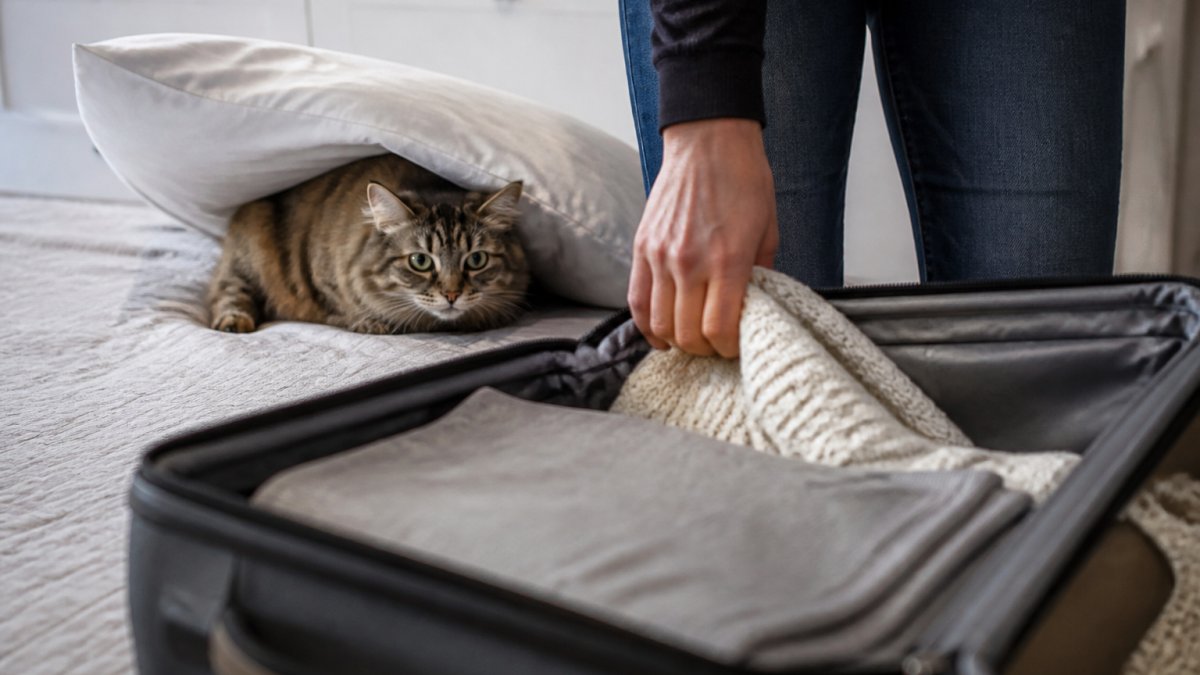
- Hiding for long stretches, especially in new spots
- Hissing, growling, or swatting when approached
- Flattened ears, dilated pupils, or a tucked tail
- Over-grooming or pulling out fur
- Skipping meals or drinking less water
- Missing the litter box or holding waste
- Pacing, yowling, or restless behavior at night
One missed meal is a red flag. A cat that hides for a full day after a sitter arrives is telling you something. Early action keeps mild stress from turning into a health problem. According to the American Association of Feline Practitioners, appetite and litter-box changes are among the most reliable indicators that a cat is struggling.
Build Cat Sitter Instructions and Routine That Match Normal Life
Your cat sitter instructions should mirror your cat's normal day, not reinvent it. Cats thrive on a predictable routine. Feeding at the same times, scooping the litter box on schedule, and keeping play sessions consistent all signal safety.
Here is what a strong routine covers:
- Feeding: same food, same times, same bowls
- Fresh water: refreshed at every visit
- Litter box: scooped once or twice daily
- Playtime: 10-15 minutes of interactive play
- Quiet company: sitting nearby without forcing contact
- Enrichment: a puzzle feeder or a window perch left in place
Small details matter more than people expect. Leave a worn t-shirt in your cat's favorite spot so a familiar scent stays in the room. Keep bedding and toys where they normally sit. Move nothing.
Step-by-Step: A Low-Pressure Visit Plan That Reduces Cat Anxiety
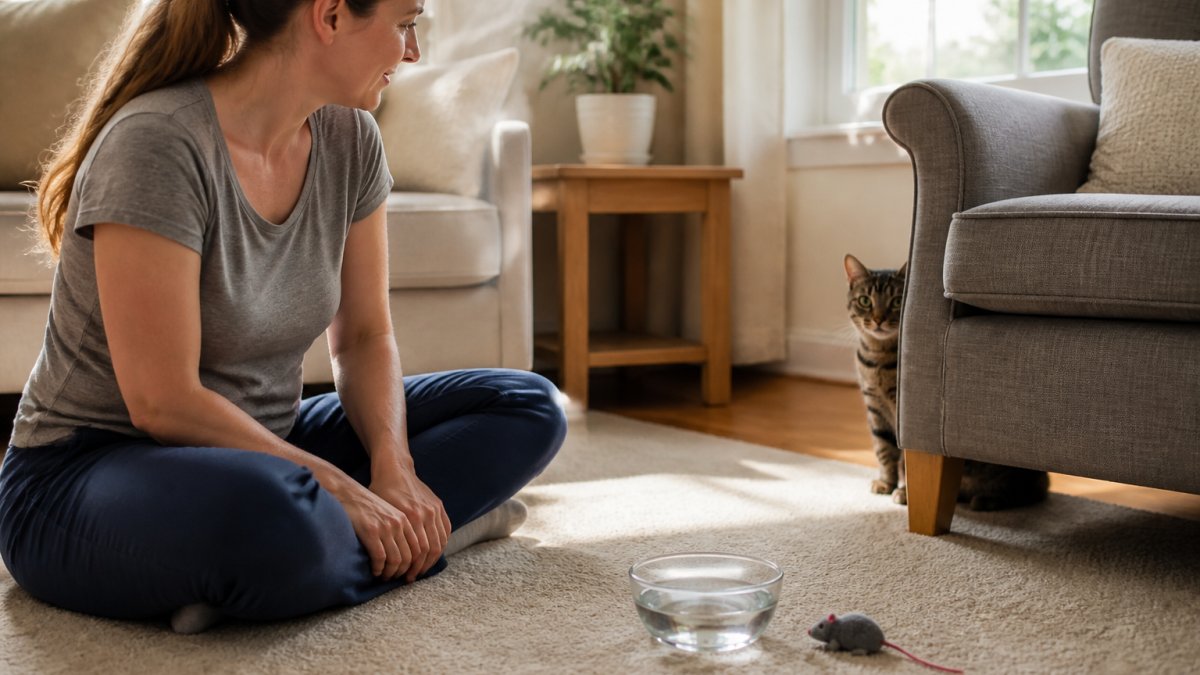
A good cat sitting visit follows a rhythm. The goal is not to win your cat over in one visit. The goal is to prove, visit after visit, that nothing bad happens.
First visit: set up, observe, and leave early
The first visit is a reconnaissance mission, not a socialization session. Budget 30 minutes and expect the cat to hide for most of it.
- Set up the safe space. Choose the quiet room the owner identified. Confirm fresh water, food, a litter box, and a hiding place are in place. Close off risky areas like open windows, cluttered garages, and rooms with exposed cords.
- Walk the routine once. Feed, scoop, refresh water, and note where everything lives. Do this in the same order every visit so the cat learns the sequence.
- Sit and be boring. Sit on the floor at a distance, talk softly, and do not reach for the cat. Slow movements and a relaxed posture tell the cat the sitter is not a threat.
- Let the cat approach on its own terms. Offer a hand only if the cat comes forward first. A slow blink from across the room is a better first move than a outstretched hand.
- Leave on time. Ending the visit calmly teaches the cat that the sitter comes and goes without drama.
Daily check-ins: same order, low pressure
Each subsequent visit follows the same sequence: feed, water, litter, a short quiet sit, then play only if the cat is willing. Keep visits to the scheduled length. Do not extend a visit to "make progress", consistency matters more than duration.
- Days 1-3: expect hiding. Do the care tasks, sit quietly for 5-10 minutes, and leave. Do not force interaction.
- Days 4-7: watch for the cat emerging while the sitter is still present, eating with the sitter in the room, or sniffing a offered hand. These are the first trust signals.
- Week 2 and beyond: introduce 10-15 minutes of interactive play only if the cat initiates. A cat that plays in front of a sitter is settling in.
Handling a frightened cat safely
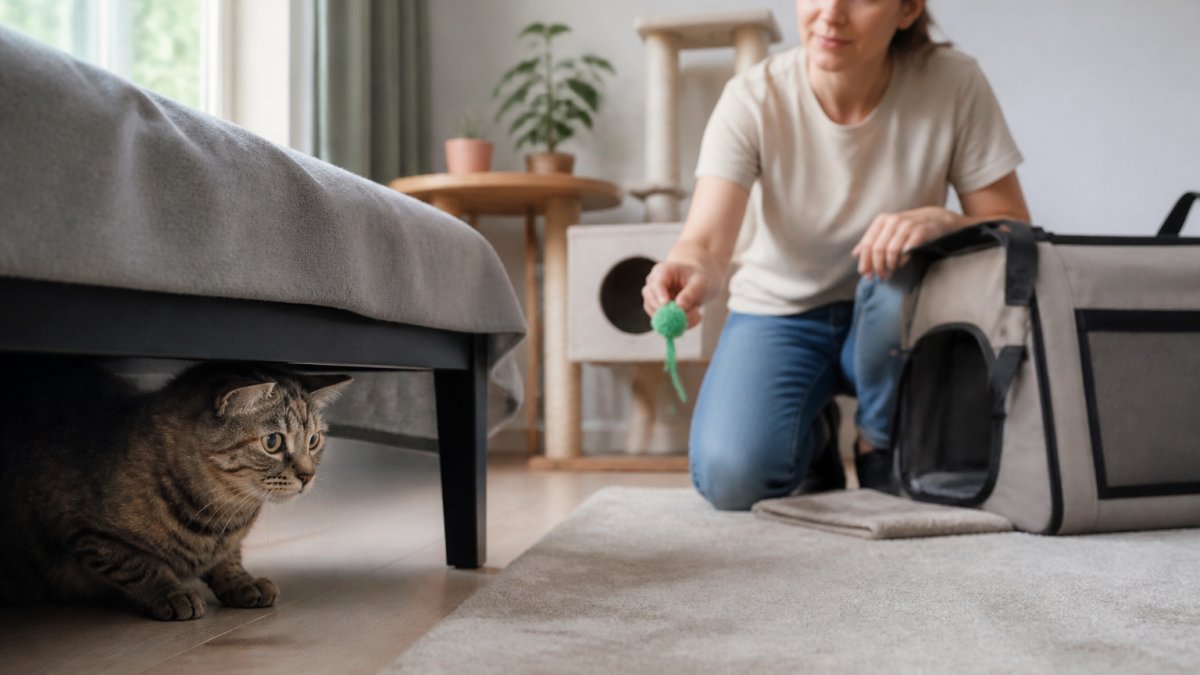
A frightened cat can scratch or bite, and both carry real risk. Never corner a cat or pull it from a hiding spot.
If a cat becomes defensive, stop, back away slowly, and give it an escape route. Do not stare, do not loom over it, and do not try to pick it up. Note the trigger in the visit report so the owner and sitter can plan around it.
Measuring whether anxiety is improving
Progress is easier to see in behavior than in mood. Track these observable indicators in every visit report:
- Appetite: is the cat eating the full portion, and how quickly?
- Water intake: is the bowl level dropping at a normal rate?
- Litter-box use: is the cat urinating and defecating normally, or holding waste?
- Hiding duration: how long before the cat emerges after the sitter arrives?
- Willingness to explore: does the cat leave the safe room, approach the sitter, or play?
A cat that eats normally and hides less each visit is on the right track. A cat that stops eating for 24 hours, strains in the litter box, or hides for more than a day without emerging warrants a call to the owner and, if needed, the veterinarian.
How Long Does It Take a Cat to Adjust to a Sitter?
Most cats need three to five visits before they relax around a new sitter. Shy cats may take a week or longer. The timeline depends on temperament, past experiences, and how much pressure the sitter applies. Low-pressure visits speed adjustment up; forced interaction slows it down.
Track progress by watching appetite, litter-box use, and how long your cat hides. A cat that eats normally and hides less each visit is on the right track.
Calming Products for Cats: What Helps and What to Skip
Calming products for cats can help, but they are a supplement to routine, not a replacement. A pheromone diffuser plugged into the room your cat spends the most time in may ease mild stress. Calming sprays work on bedding and carriers.
What to skip: sedatives without a vet's guidance, and any product that promises to "fix" a fearful cat overnight. If your cat's anxiety is severe, talk to your vet. The ASPCA's pet care guidance notes that persistent stress can affect a cat's health, so behavior changes deserve professional attention.
Updates, Escalation, and Medication Boundaries
A professional sitter sends updates after every visit. Photos and short notes on appetite, litter-box use, and behavior tell you whether your cat is settling in or struggling.
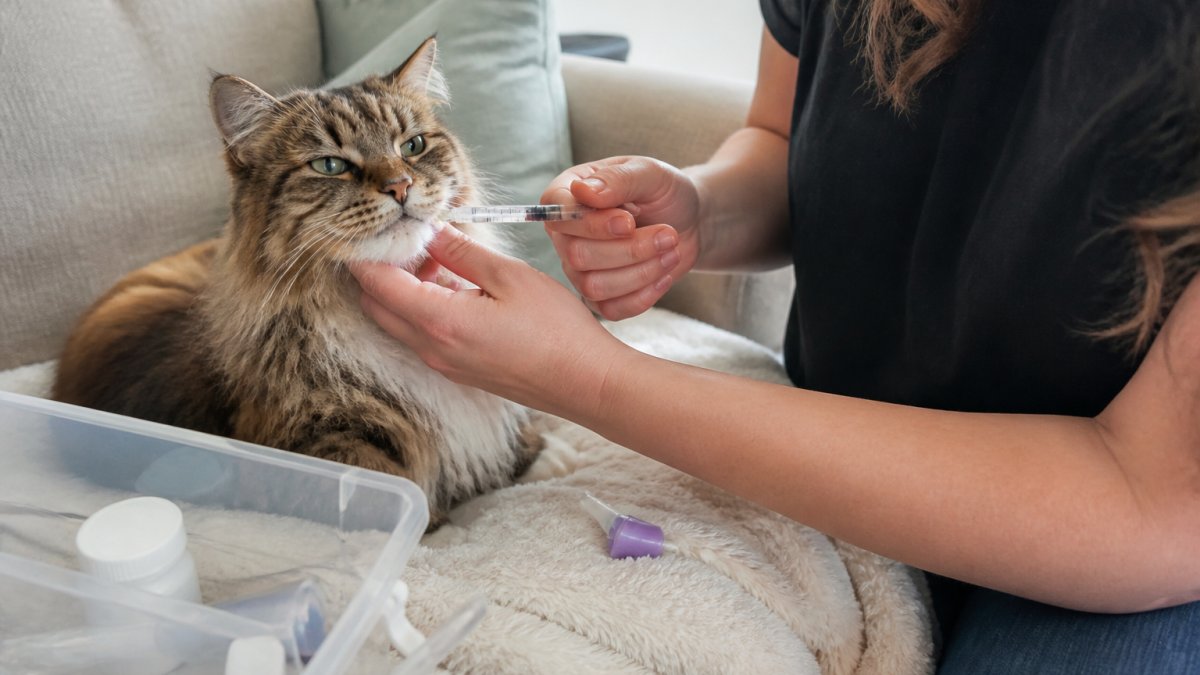
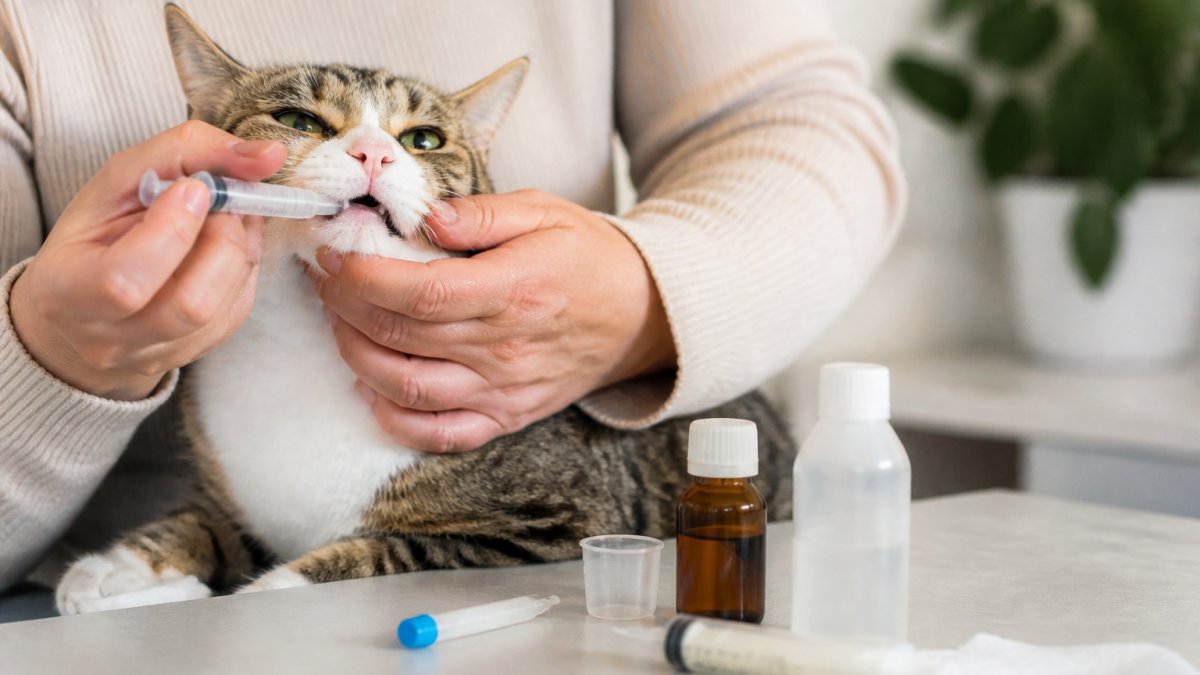
Medication is a boundary worth setting clearly. A sitter should give medication only when instructions are written, doses are clear, and the cat can be handled safely.
For owners who want reliable, cat-only care, our cat sitting service starts at $30 for a 30-minute visit that includes feeding, fresh water, litter box cleaning, and playtime.
Conclusion
Travel is stressful enough without worrying about a scared cat at home. A written handoff, a low-pressure visit plan, and clear escalation rules make all the difference. Tracy's Kitty Care specializes exclusively in cats, and our background-checked, licensed, bonded, and insured sitters follow your routine exactly as written. Get started with Tracy's Kitty Care and give your cat calm, consistent care in its own home.
Frequently Asked Questions
How do I reduce my cat's anxiety during pet sitting?
Keep the cat in its own home, stick to the same feeding and litter schedule, and set up a quiet room with familiar bedding and a hiding place. Ask the sitter to move slowly, let the cat approach first, and never force interaction. Leave written instructions covering food, water, litter, medication, and what a normal day looks like. A 30-minute visit that includes feeding, fresh water, litter cleaning, and calm playtime covers the basics. Predictability does more for cat anxiety than any single product.
What are the signs of anxiety in cats while the owner is away?
Watch for hiding that lasts longer than usual, hissing or scratching at the sitter, refusing food, drinking less water, or skipping the litter box. Some cats over-groom or pace. Ask the sitter to note appetite, water intake, litter-box use, and hiding duration at each visit. These four measures tell you whether the cat is settling or getting worse, and they give you something concrete to compare day to day instead of guessing from a single photo.
How long does it take a cat to adjust to a sitter?
Many cats settle within two to three visits once the routine repeats, but shy cats can take a week or longer. The 3-3-3 rule is a rough guide: about three days to decompress, three weeks to learn the routine, and three months to feel fully at home. During short trips, judge progress by appetite, litter-box use, and how much the cat hides rather than by whether it comes out to greet the sitter.
Do calming products for cats actually help during pet sitting?
Pheromone diffusers and sprays help some cats take the edge off in an unfamiliar-feeling house, and they are low risk. Start a diffuser a few days before you leave so it is already working. Calming chews and supplements vary widely, so check with your veterinarian first. Prescription anxiety medication is a veterinary decision, not a sitter decision. A sitter can follow a medication schedule you and your vet set, but should never adjust a dose.