 how-to
How to Find a Bonded and Insured Cat Sitter (2026 Guide)
Table of Contents
- Why a Bonded and Insured Cat Sitter Matters
- What Bonding and Insurance Actually Cover
- How to Verify Pet Sitter Insurance and Bonding
- Questions to Ask a Cat Sitter Before You Hire
- Your Cat Sitter Meet and Greet Checklist
- In-Home Cat Sitting vs. Boarding: Which Is Better?
- Independent Sitter vs. Agency or Platform
- Frequently Asked Questions
Last Updated: October 14, 2026
Why a Bonded and Insured Cat Sitter Matters
A bonded and insured cat sitter carries two separate protections: a surety bond covering theft by the sitter, and liability insurance covering accidental damage or injury during a visit. Both shift financial risk away from you.
Most owners never think about this until something goes wrong: a sitter forgets to latch a window, your cat slips out, or a key goes missing with a piece of jewelry. Without coverage, you absorb the loss.
The American Society for the Prevention of Cruelty to Animals pet care guidance stresses that cats do best with consistent, low-stress care in familiar surroundings, which is exactly what in-home sitting provides. But familiarity only helps if the person entering your home is accountable.
Here is the uncomfortable truth most guides skip: "insured" and "bonded" are words anyone can type on a website. Verifying them takes ten minutes and a few direct questions.
What Bonding and Insurance Actually Cover
A surety bond is a three-party agreement: the sitter pays for it, a bonding company issues it, and it pays you back if the sitter steals from you. It does not cover a broken vase, a sick cat, or a missed visit.
Liability insurance handles the other side. A general liability policy for a pet sitter typically covers:
- Accidental damage to your home or belongings
- Injury to a third party caused by your pet during a visit
- Some policies extend to veterinary costs if the sitter's negligence harms your cat
What neither one covers is important to know up front:
- Pre-existing medical conditions. If your cat was already ill, a claim will likely be denied.
- Intentional harm or gross negligence. These fall outside standard coverage.
- Your cat's escape if the sitter followed your instructions. Read the exclusions.
Many sitters also carry care, custody, and control coverage, which addresses pets in the sitter's care. Ask whether that rider is included, it is the difference between a policy that sounds good and one that pays.
How to Verify Pet Sitter Insurance and Bonding
Verifying coverage is a document-by-document process, not a yes-or-no question. Here is how to do it so a claim actually pays later.
Step 1: Request the certificate of insurance. This one-page document lists the named insured, insurer, policy number, coverage limits, and effective and expiration dates.
Step 2: Match the names. The named insured should match the person or business you are hiring.
Step 4: Ask for the bond separately. A surety bond is a different document from the liability policy.
Step 5: Check every expiration date. A policy that lapsed last month is the same as no policy.
Step 6: Confirm the business registration. Ask for the business license or registration number and confirm it with the issuing state or local licensing office.
| Document | What It Proves | Who to Call | What to Confirm |
|---|---|---|---|
| Certificate of insurance | Active liability policy and limits | The insurer listed on the certificate | Policy is active, limits, care-custody-control rider |
| Declarations page | Full policy terms, exclusions, deductibles | The insurer | Exclusions that could void a claim |
| Certificate of bonding | Active surety bond | The bonding or surety company | Bond is current, sitter is named principal |
| Business license or registration | Legal operation | State or local licensing office | License is active and matches the business name |
| Background check record | Screening was completed | The sitter or their agency | Who ran the check and when |
If a sitter hesitates, deflects, or says the certificate is "somewhere" and never sends it, that is your answer.
Questions to Ask a Cat Sitter Before You Hire
Ask these before you book, not after. The cat-specific questions at the end are the ones most owners forget, and the ones that matter most when something goes wrong.
On credentials:
- Are you bonded and insured? Can I see the certificates and the declarations page?
- Are you licensed or registered as a business, and under what name?
- Have you been background-checked, and by whom?
- Are you certified in Pet CPR or trained in feline first aid?
On experience:
- How many years have you cared for cats specifically?
- Do you have references from cat owners I can call?
- How do you handle a shy or fearful cat?
- Have you cared for a cat with a chronic condition like diabetes, kidney disease, or hyperthyroidism?
On the job itself:
- What does a standard drop-in visit include, and how long is it?
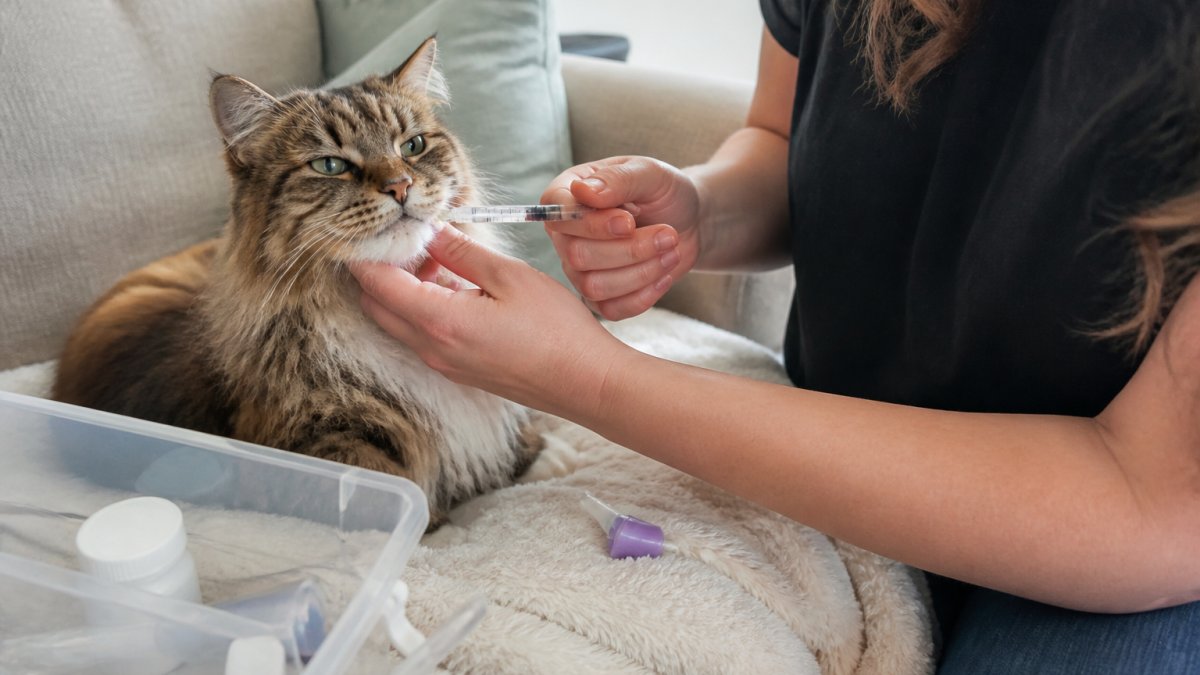
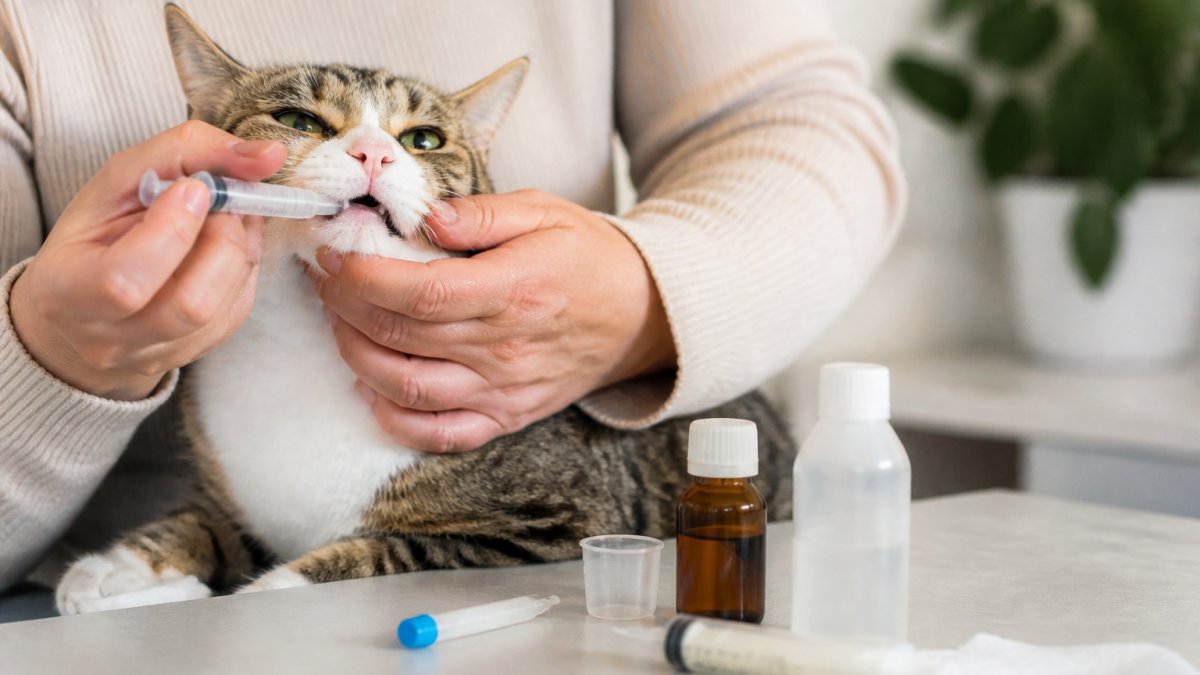
- Can you administer medication, including insulin injections and oral meds?
- What is your cancellation policy?
On access and safety:
- How do you handle keys and home access?
- Do you send updates or photos after each visit?
- What is your backup plan if you get sick or stuck?
On cat-specific emergency planning, the questions most owners skip:
- Veterinary authorization. Do you have a signed authorization form that lets you take my cat to a vet in an emergency? Which vet, and what is the after-hours clinic you would use? Will you call me first, or act immediately if the cat is in distress?
- Medication protocol. If my cat is on medication, how do you confirm the dose was given? What do you do if you miss a dose or the cat vomits it up? Do you keep a written log?
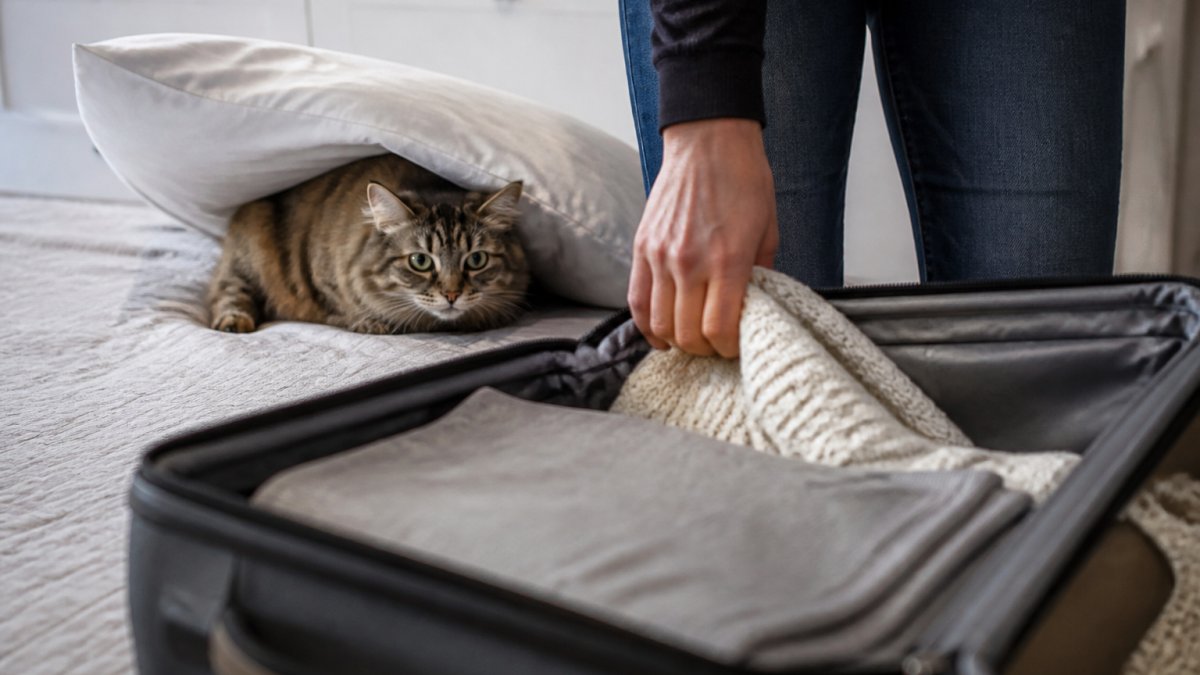
- Hiding behavior. Cats hide when stressed or ill. If you cannot find my cat during a visit, what is your protocol? How long do you search, and when do you call me?
- Multi-cat households. If I have more than one cat, how do you confirm each one is eating, drinking, and using the litter box? How do you separate them if one needs medication or isolation?
- Illness while I am away. What are the signs you watch for, not eating, not using the litter box, lethargy, vomiting, hiding, and at what point do you call me versus take the cat to the vet?
- Incident reporting. If something goes wrong, a bite, a fall, a cat escapes, a medication error, how and when do you tell me? Do you document it in writing?
- Backup sitter. If you have an emergency, who covers my cat, and are they also bonded, insured, and background-checked? Will I meet them in advance?
That last group is where amateurs fall apart. A professional has answers ready because they have faced these situations before.
Your Cat Sitter Meet and Greet Checklist
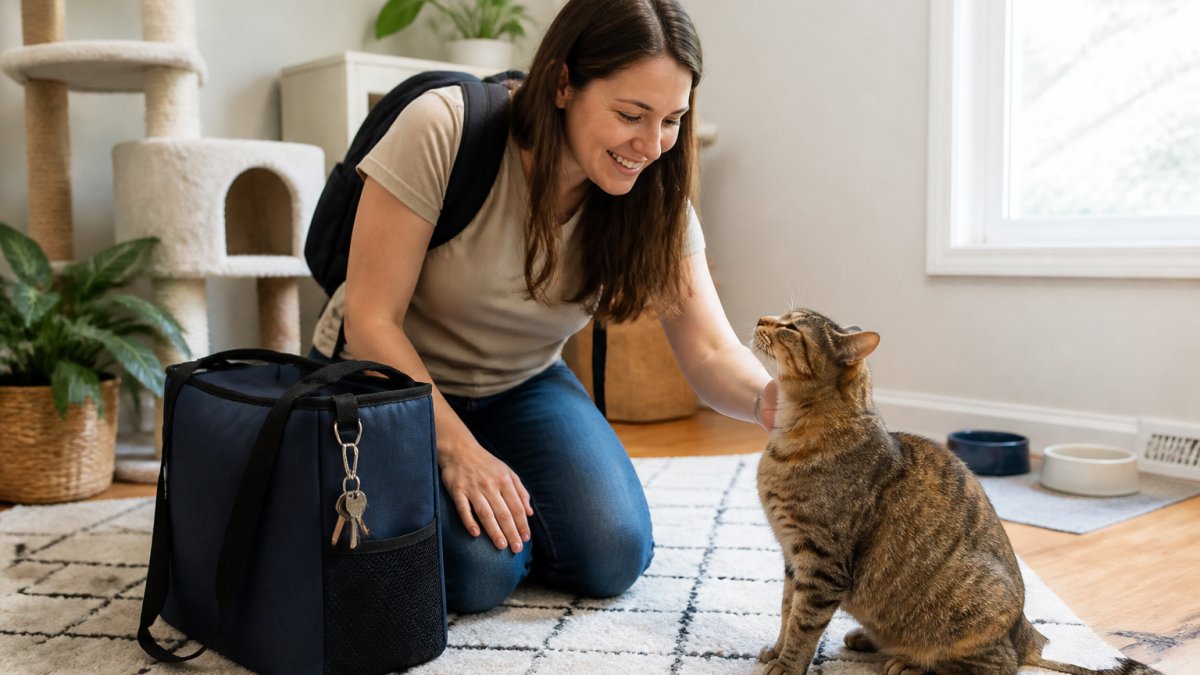
The meet and greet is your only real chance to see how a sitter behaves around your cat. Treat it like a working interview, not a social call.

Bring this list and check items off as you go:
- Sitter arrives on time and confirms the booking details
- Sitter asks about your cat's routine, diet, and quirks
- Sitter lets your cat approach first, no chasing or grabbing
- Sitter knows where food, litter, and carriers are kept
- Sitter can demonstrate medication administration if needed
- Sitter provides proof of bonding and insurance
- Sitter shares references and contact information
- Sitter explains their emergency and backup plan
- Sitter confirms visit length, arrival windows, and pricing
- Sitter leaves you with a written service agreement
Watch how your cat reacts. A cat that hides is normal. A sitter who respects that and waits is the one you want; one who forces interaction is a red flag.
In-Home Cat Sitting vs. Boarding: Which Is Better?
For most cats, in-home care wins. Cats are territorial, and removing them from their space causes stress that can trigger hiding, appetite loss, and litter box avoidance. A sitter who comes to you keeps the environment, scent, and routine intact.
Boarding has its place: if your cat needs daily veterinary monitoring, a facility with medical staff may be safer, and if your home has no reliable sitter access, boarding solves a logistics problem.
Here is the trade-off in plain terms:
| Factor | In-Home Sitting | Boarding |
|---|---|---|
| Stress on cat | Low, familiar space | High, new environment |
| Illness exposure | None, cat stays home | Higher, shared facility |
| Medication handling | Sitter administers | Staff administers |
| Home security | Sitter checks the house | Home sits empty |
| Cost for one cat | Predictable per-visit rate | Often higher for medical care |
One more point for in-home care: your sitter can water plants, bring in mail, and check on other small pets, real value if you keep birds or hamsters alongside your cat.
Independent Sitter vs. Agency or Platform
Both work. They carry different risks.
An independent sitter often costs less and builds a personal relationship with your cat. The catch is that you must verify everything yourself: bond, insurance, license, background check. If they get sick, there is no backup.
An agency or platform handles screening and usually carries its own insurance, giving you a team, backup plan, and formal process. The trade-off is higher rates and less consistency, since sitters may rotate through.
If you go independent, run every check in this guide. If you go with an agency, ask whether the sitters are employees or independent contractors. That distinction matters for who is liable if something goes wrong.
At Tracy's Kitty Care, we are a dedicated team of background-checked, licensed, bonded, and insured sitters who specialize only in cats. You can see the full breakdown on our cat sitting service pricing page.
Finding someone trustworthy to walk into your home and care for your cat is a decision built on proof, not promises.
Frequently Asked Questions
What does it mean for a cat sitter to be bonded and insured?
A bonded and insured cat sitter carries a surety bond and liability insurance. The bond protects you if the sitter steals from you, while liability insurance covers accidental damage to your property or injuries that occur during a visit. Together, they give you financial recourse if something goes wrong. Always ask for proof, such as a certificate of insurance, because anyone can claim to be bonded without actually holding a policy.
Can pet sitters administer medication?
Yes, many professional pet sitters are trained to give oral medications, insulin injections, and subcutaneous fluids. When interviewing a cat sitter, ask specifically about their experience with your cat's medication and request a demonstration during the meet and greet. For insulin-dependent cats, confirm the sitter has handled feline diabetes before. A service like Tracy's Kitty Care includes medication administration as part of its 30-minute visits, so your cat stays on schedule.
How can I verify a cat sitter's insurance and bonding?
Ask the sitter to email you a certificate of insurance directly from their insurer. Call the insurance company using the number on the certificate to confirm the policy is active and covers pet sitting. For bonding, request a copy of the bond or a letter from the bonding company. If the sitter works for an agency, the agency should provide these documents. Never rely on a verbal assurance; always see the paperwork.
Is an in-home cat sitter safer or less stressful than boarding?
For most cats, in-home care is less stressful because they stay in their familiar environment with their own scent, food, and hiding spots. Boarding facilities expose cats to unfamiliar sounds, other animals, and potential illness. In-home sitting also lets you keep your cat's routine, including feeding times and medication. The main trade-off is cost, but for shy or anxious cats, the reduced stress often outweighs the higher price.