 how-to
Cat Anxiety When Owner Travels: 2026 Prep Guide
Table of Contents
- Signs of Anxiety in Cats: What to Watch For Before You Leave
- How to Prepare Cat for Pet Sitter: Step-by-Step
- Calming Aids for Cats: Natural vs. Pharmacological Options
- Boarding Facility vs. In-Home Pet Sitter: Which Reduces Cat Anxiety?
- Managing Cat Anxiety During Travel and Post-Trip Reintegration
- Age-Specific Anxiety Management: Kittens, Adults, and Seniors
- Conclusion
- Frequently Asked Questions
Last Updated: September 10, 2026
Signs of Anxiety in Cats: What to Watch For Before You Leave
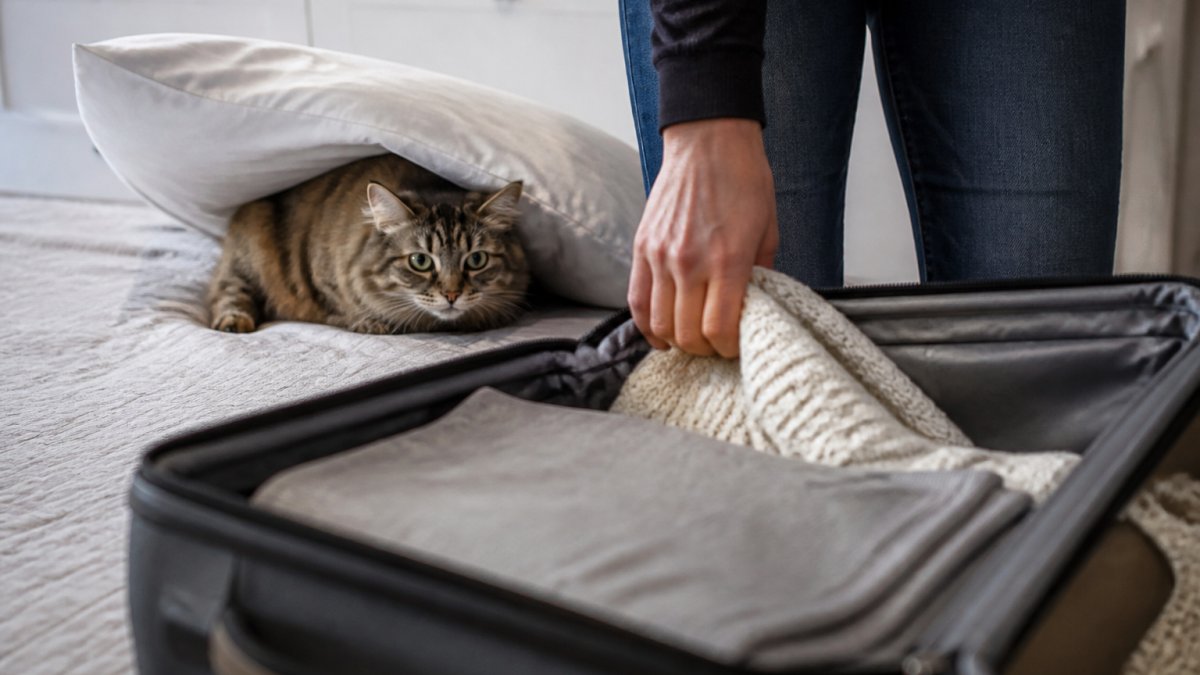
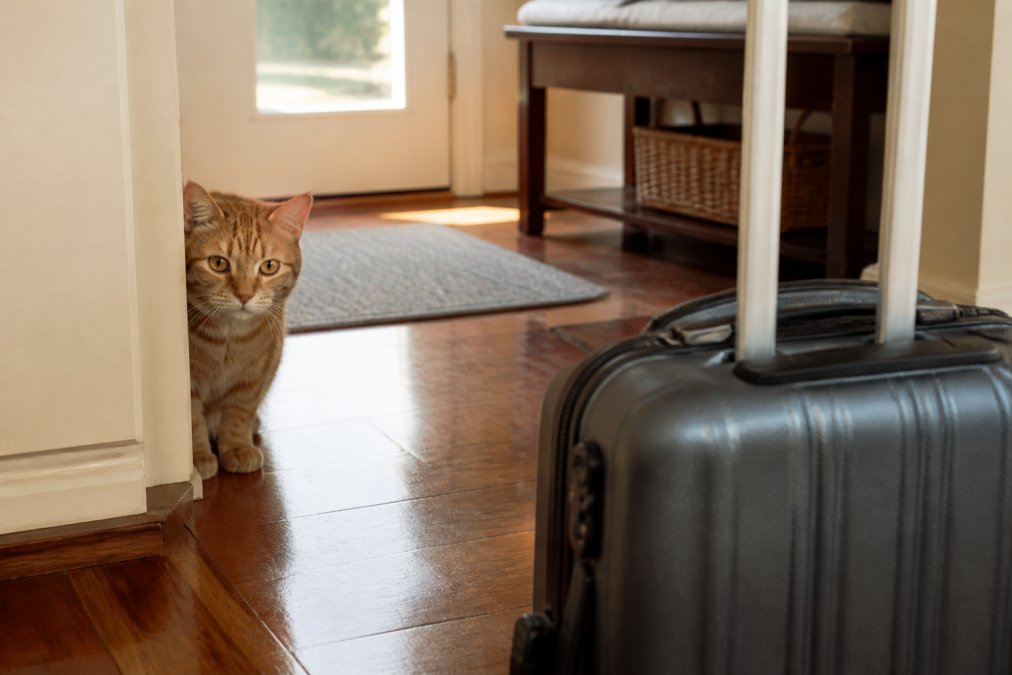
Cat anxiety when owner travels often begins before the suitcase comes out. Cats pick up on disrupted routines, packing activity, and schedule changes, and their stress response can start days before departure. Owners who spot the early signals have an easier time.
Behavioral Changes That Signal Distress
The most reliable early indicator is a break from your cat's normal pattern:
- Hiding in new or unusual spots for extended periods
- Increased vocalizing, especially at night or near the door
- Obsessive grooming that creates bald patches or skin irritation
- Clinginess that follows you room to room
- Pacing, restlessness, or over-attachment in the days before you leave
Don't write these off as "just being a cat", sudden behavioral changes are the clearest sign something is wrong.
Physical Symptoms and Stress-Induced Illness
Stress in cats frequently shows up in the body, not just the behavior. Appetite suppression, vomiting, diarrhea, and inappropriate elimination are classic stress responses, and some cats develop stress-induced illness such as cystitis or upper respiratory flare-ups when their environment shifts.
If your cat stops eating for more than 24 hours, that warrants a veterinary consultation before you travel, not after.
Cornell Feline Health Center guidance on feline behavior problems
How to Prepare Cat for Pet Sitter: Step-by-Step
Preparation is where most owners lose ground. The goal: make the sitter's presence feel like a normal part of your cat's routine before you leave.
Setting Up Your Home for Success
Keep your cat's world predictable. Leave food bowls, litter boxes, beds, and scratching posts in their usual places, cats rely on territorial security, and moving furniture before a trip adds unnecessary stress.
- Stock food and medication with clear written instructions
- Leave a worn t-shirt or blanket with your scent in your cat's favorite spot
- Set up a quiet room with a litter box, food, water, and hiding spots
- Keep blinds and lighting on their normal schedule
Introducing Your Sitter Before You Go
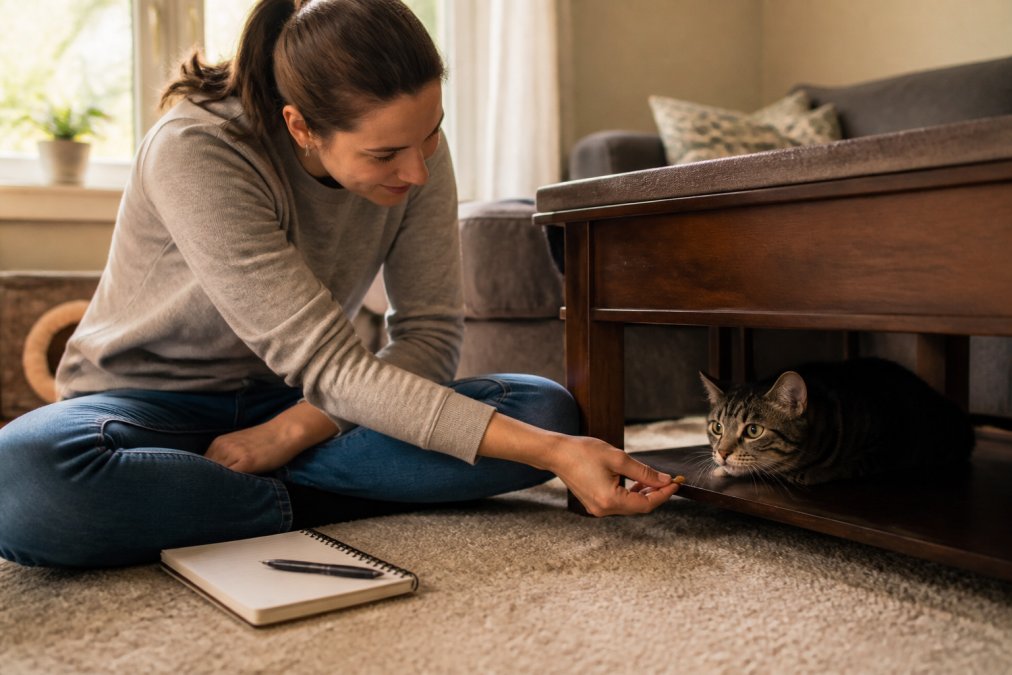
A meet-and-greet before your trip is worth more than any calming product. Schedule one or two visits while you're still home so your cat associates the sitter with normal, safe surroundings. Have the sitter sit quietly, ignore the cat at first, and let it approach on its own terms.
When your cat comes out, a treat and calm praise build the association. Most shy cats warm up within two or three visits.
Calming Aids for Cats: Natural vs. Pharmacological Options
Calming aids fall into two categories: non-pharmacological supports you can try at home and prescription medications requiring veterinary involvement. Most cats do well with the first; a smaller group needs the second.
Pheromone Diffusers and Environmental Enrichment
Pheromone diffusers plug into a wall outlet and release a synthetic copy of the facial pheromones cats use to mark safe territory. Start one at least a week before you leave so the scent builds up.
Environmental enrichment does the rest. Puzzle feeders, window perches, rotated toys, and vertical climbing space give your cat something to do besides worry. Predictability plus enrichment beats any single product.
When to Ask Your Vet About Anxiolytics
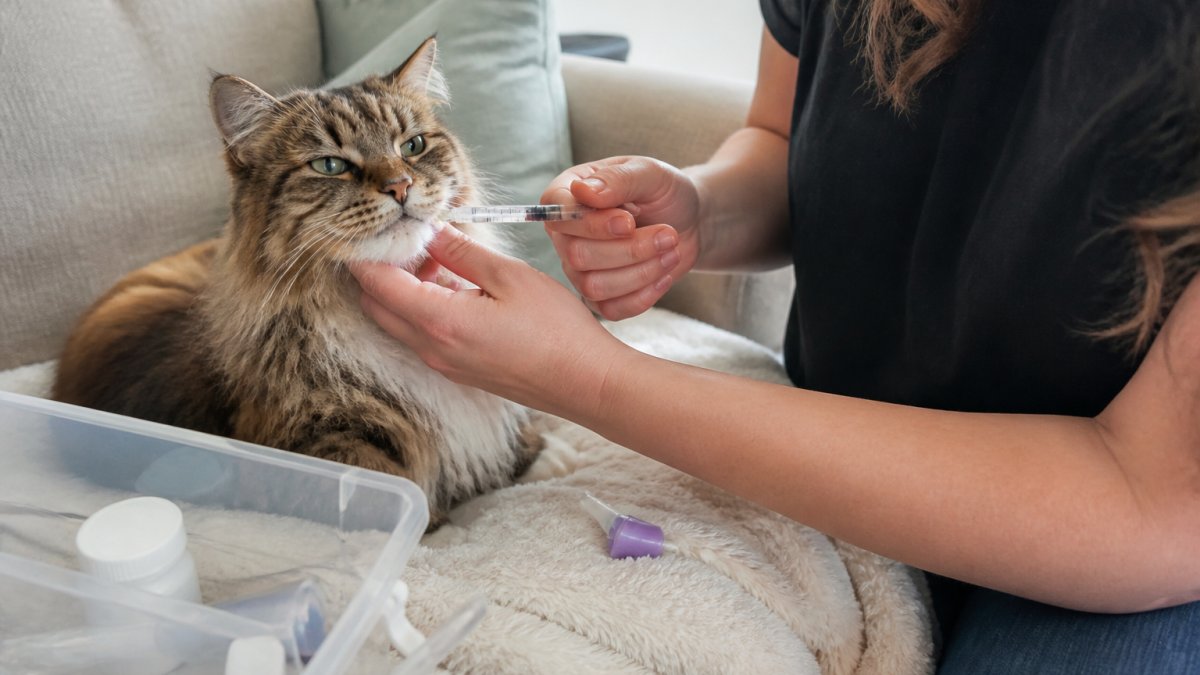
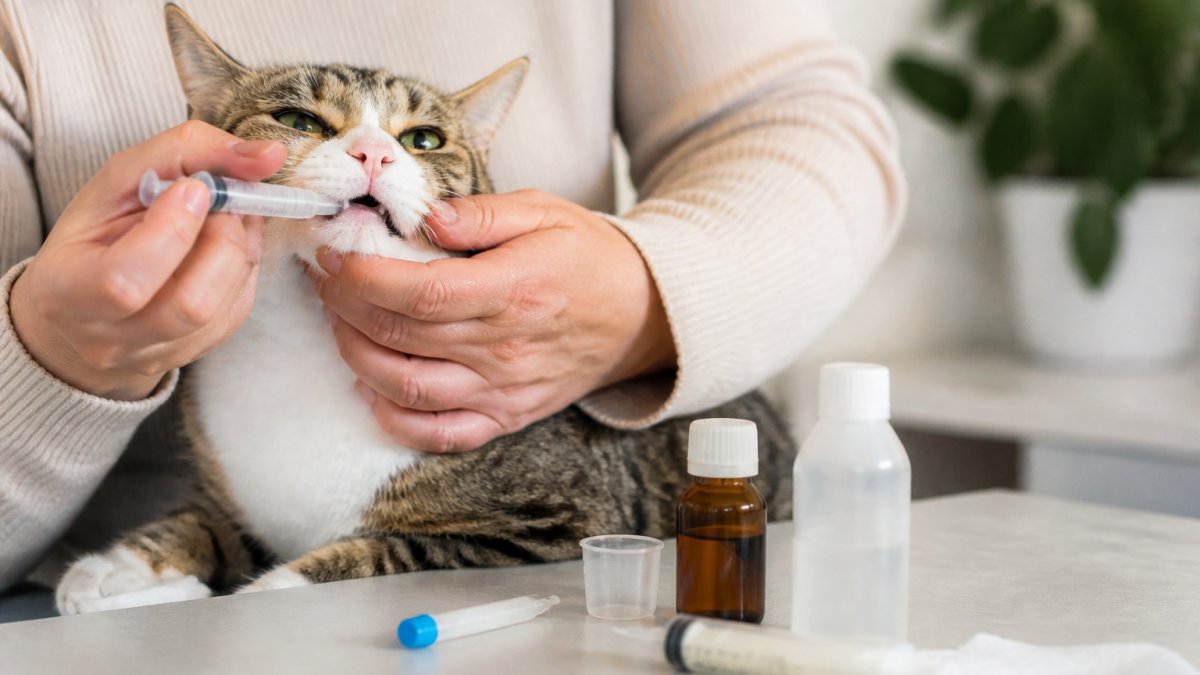
Anxiolytics are prescription anxiety medications, appropriate when a cat's stress is severe, self-injurious, or causes illness. Signs it's time to call your vet:
- Your cat injures itself grooming or refuses food for over a day
- Previous trips triggered illness or extreme hiding
- Behavioral modification alone isn't working
Never give a cat human medication or an old prescription without veterinary guidance. Dosage and drug choice depend on weight, health history, and other medications.
American Veterinary Medical Association guidance on pet behavior and welfare
Boarding Facility vs. In-Home Pet Sitter: Which Reduces Cat Anxiety?
For most cats, in-home care wins. Cats are territorial, and boarding removes them from everything familiar at the exact moment they're already stressed. Home-based care keeps your cat in its own space, scent, and schedule.
| Factor | In-Home Pet Sitter | Boarding Facility |
|---|---|---|
| Environment | Familiar home | Unfamiliar cages and smells |
| Exposure to other animals | None | Constant |
| Routine | Preserved | Disrupted |
| Stress triggers | Minimal | High |
| Best for | Shy, senior, or anxious cats | Highly social cats, short trips |
Boarding can work for a confident cat who enjoys novelty, or for very short trips. For a shy or nervous cat, the stress difference is significant.
Tracy's Kitty Care provides 30-minute in-home cat sitting visits for $30.00, including feeding, fresh water, litter box cleaning, and playtime. Our sitters are background-checked, licensed, bonded, and insured.
Managing Cat Anxiety During Travel and Post-Trip Reintegration
Most advice stops the moment you walk back through the door. That's a mistake: the reunion phase is where short-term stress either resolves or hardens into a lasting pattern, and the first 72 hours home matter more than most owners realize.
If Your Cat Travels With You
Acclimatization starts weeks before the trip. Leave the carrier out in a common area with the door open and a familiar blanket inside, feed meals next to and then inside it, and take two or three short practice drives ending somewhere pleasant, not the vet.
During travel:
- Cover the carrier with a light towel or breathable cover to reduce visual stimulation. Leave one side open for airflow.
- Do not open the carrier in a moving vehicle. Cats that bolt in a car are a genuine safety risk.
- Offer water at rest stops but expect refusal. Most cats will not drink while stressed, and that is normal for a single travel day.
- Never give a cat an over-the-counter sedative, antihistamine, or human medication for travel. Some commonly assumed-safe drugs are toxic or paradoxical in cats. If sedation is genuinely needed, it is a veterinary decision made in advance.
The Reunion Phase: The First 72 Hours
The instinct when you get home is to scoop up your cat and shower it with attention. For many cats, that backfires, a cat in a low-grade stress state for days is often over-aroused, and sudden intense handling can tip it into avoidance or defensive behavior.
A more effective sequence:
- Arrive calmly. Put your bags down, sit on the floor at your cat's level, and let the cat initiate contact. Do not chase, corner, or pick up a cat that is backing away.
- Restore the routine immediately. Feed at the normal time, clean the litter box at the normal time, and resume play at the normal time. Routine is the single most reassuring signal you can send.
- Resist the urge to change anything. Do not introduce new furniture, new pets, new foods, or houseguests in the week after you return. The cat's nervous system is still settling.
- Watch appetite and litter box use for at least seven days. A cat that eats normally on day one but stops on day four is showing a delayed stress response, which is common.
- Give space, not smothering. Brief, calm interactions several times a day work better than one long cuddle session for a cat that is still on edge.
Signs the Reunion Is Not Going Well
Most cats return to baseline within three to seven days. A smaller group does not, and those are the cases where early intervention prevents a chronic problem.
Contact your veterinarian if any of the following appear after you are home:
- Food refusal lasting more than 24 hours
- No urination for more than 24 hours, or repeated trips to the litter box with little output, this can indicate a urinary blockage, which is a medical emergency in male cats
- Hiding that persists beyond three or four days with no improvement
- New aggression toward you or other pets in the household
- Over-grooming that creates bald patches or skin lesions
- Vomiting or diarrhea lasting more than 48 hours
Behavioral fallout after a trip is far easier to prevent than reverse. A cat that learns its owner leaves and returns, the house stays the same, and food and litter box schedules don't change will be measurably calmer on the next trip, that learned security is the real payoff of a good reunion plan.
American Association of Feline Practitioners client resources on feline behavior and stress
Age-Specific Anxiety Management: Kittens, Adults, and Seniors
Most articles treat feline anxiety as one condition with one playbook. In practice, the trigger, timeline, and intervention all shift with life stage, a kitten and a 16-year-old can show identical hiding behavior for completely different reasons, and the wrong response makes both worse.
Kittens Under One Year: Building a Security Baseline
Kittens are still forming attachment and territorial maps, so every absence is partly a learning event. A kitten whose first long separation is chaotic may generalize that into a lasting expectation that people disappear. Short, frequent absences with the same consistent sitter build a stronger foundation than one long trip.
Concrete adjustments for kittens:
- Cap early absences at one to two nights where possible, and use the same sitter each time so the face is constant even when you are not.
- Keep the kitten in one or two rooms rather than giving full run of the house, a smaller, fully scent-marked territory feels safer than a large unfamiliar-feeling space.
- Schedule at least two play sessions per day during your absence. Kittens burn stress as energy, and a tired kitten hides less.
- Expect regression. A kitten that was reliably litter-box trained may have one or two accidents during your first trip. This is normal and usually resolves within a few days of your return.
Adults One to Ten: Routine Disruption Is the Main Trigger
Adult cats between roughly one and ten have the most stable behavioral baseline, which makes them the easiest to prepare and the easiest to accidentally destabilize. Their anxiety is usually about broken routine, not the sitter. A confident adult may barely notice a stranger but will absolutely notice dinner moving from 6 p.m. to 8 p.m.
The highest-leverage interventions for adults are unglamorous:
- Keep feeding times, play times, and litter box cleaning times identical to your normal schedule. Write the schedule down for the sitter rather than relying on verbal instructions.
- Leave the furniture exactly where it is. Rearranging a room before a trip is one of the most common self-inflicted stress triggers.
- Rotate enrichment rather than adding new items. A puzzle feeder your cat already knows is calming; a brand-new toy can be mildly arousing.
- Watch for subtle appetite changes. Adult cats are masters at eating just enough to avoid concern while quietly losing weight.
Seniors Over Ten: Sensory Loss Compounds Everything
Senior cats are the group most often under-served by generic advice. By ten or eleven, many have some hearing loss, vision change, or both, and those deficits change how anxiety presents. A senior cat that can't hear you come home may startle easily, vocalize at night, or become clingy, a sensory change, not a personality change.
Senior-specific considerations:
- Get a baseline veterinary exam before any trip longer than a few days. Untreated pain from arthritis, dental disease, or hyperthyroidism frequently masquerades as anxiety, and no amount of environmental management will fix a medical driver.
- Ask your veterinarian whether a pre-travel check is warranted if your cat is on medication for a chronic condition. Dosing can need adjustment when routine changes.
- Keep night lights on in hallways and near litter boxes. A senior cat navigating in the dark with reduced vision is more prone to litter box avoidance.
- Consider a lower-entry litter box and food bowls at floor level. Mobility limitations become more obvious when a cat is already stressed.
- Expect longer recovery times. A senior cat may take a week or more to return to baseline after you come home, versus a day or two for a healthy adult.
The through-line across all three stages is the same, predictability reduces stress, but the levers differ. A kitten needs repetition and a consistent face, an adult needs an unchanged schedule, and a senior needs a medical baseline plus an environment that accommodates sensory and mobility changes.
Conclusion
Traveling without your cat doesn't have to mean weeks of anxiety for both of you. Preparation, a familiar environment, and a trusted sitter who understands cat anxiety when owner travels can make the difference between a stressed cat and a calm one.
Tracy's Kitty Care specializes exclusively in cats, with background-checked, licensed, bonded, and insured sitters who provide in-home care in your cat's own space. Our 30-minute visits include feeding, fresh water, litter box cleaning, and playtime.
Get started with Tracy's Kitty Care and give your cat the calm, consistent care it deserves while you're away.
Frequently Asked Questions
Do cats get upset when their owners go on vacation?
Yes, many cats experience feline stress and separation anxiety when their owner travels. Cats are creatures of routine and social attachment. Changes in feeding schedules, litter box cleaning, and playtime can trigger behavioral changes like vocalizing, hiding, or appetite suppression. The severity depends on your cat's personality and past experiences. Shy or hyper-attached cats often show more intense signs. Preparing your cat with gradual desensitization and maintaining predictability through a pet sitter can reduce distress significantly.
What are the common signs of anxiety in cats when left alone?
Watch for inappropriate elimination outside the litter box, obsessive grooming, excessive vocalizing, hiding, and appetite suppression. Some cats become destructive or pace. Physical signs include vomiting, diarrhea, or stress-induced illness. These behavioral changes often appear within 24 to 48 hours of your departure. If your cat shows these signs, consult your veterinarian to rule out medical issues and discuss calming aids like pheromone diffusers or behavioral modification techniques.
Is it better to board a cat or use an in-home pet sitter?
For most cats, in-home pet sitting reduces feline stress because your cat stays in its familiar environment with territorial security. Boarding facilities introduce new smells, sounds, and other animals, which can spike cortisol levels. In-home care also maintains routine maintenance like feeding times and play sessions. However, boarding may suit cats who need medical supervision. Tracy's Kitty Care offers in-home visits starting at $30 for 30 minutes, including feeding, fresh water, litter box cleaning, and playtime.
How can I prepare my cat for a pet sitter?
Start two weeks before your trip. Schedule a meet-and-greet where the sitter visits while you're home, using positive reinforcement like treats. Leave worn clothing with your scent in your cat's safe space. Write detailed instructions covering feeding, medication, and favorite hiding spots. Set up environmental enrichment like puzzle feeders and window perches. Confirm the sitter is background-checked, licensed, bonded, and insured. This acclimatization process helps your cat associate the sitter with calm, predictable care.