 ultimate-guide
Anxious Cat Care Guide for Senior Cats: 2026 Tips
Table of Contents
- Signs of Anxiety in Cats: What Senior Owners Often Miss
- How to Calm a Stressed Senior Cat: Environment and Routine
- In-Home Pet Sitting for Anxious Cats: Why It Works
- Anxiety-Specific Medical Screening for Senior Cats
- Multi-Cat Household Dynamics and Stress
- End-of-Life Emotional Support and Quality of Life
- Frequently Asked Questions
Last Updated: September 16, 2026
Signs of Anxiety in Cats: What Senior Owners Often Miss
An anxious cat care guide for senior cats starts with one uncomfortable truth: the behaviors most owners dismiss as "just getting old" are frequently anxiety, not age. Anxiety in senior cats is a persistent state of fear or arousal that shows up as hiding, vocalizing at night, appetite loss, litter box avoidance, or clingy behavior, and it often intensifies because of pain, sensory decline, or a shifted routine rather than personality change.
How Aging Changes Anxiety Symptoms
Aging changes how anxiety presents. A cat who once yowled at strangers may now go silent and still. Sensory decline means a senior cat hears less, sees less clearly, and startles more easily, so the same household noise that never bothered her five years ago now triggers a stress response. Feline cognitive dysfunction also plays a role: disorientation, night waking, and litter box accidents are cognitive health changes, not defiance.
How to Calm a Stressed Senior Cat: Environment and Routine
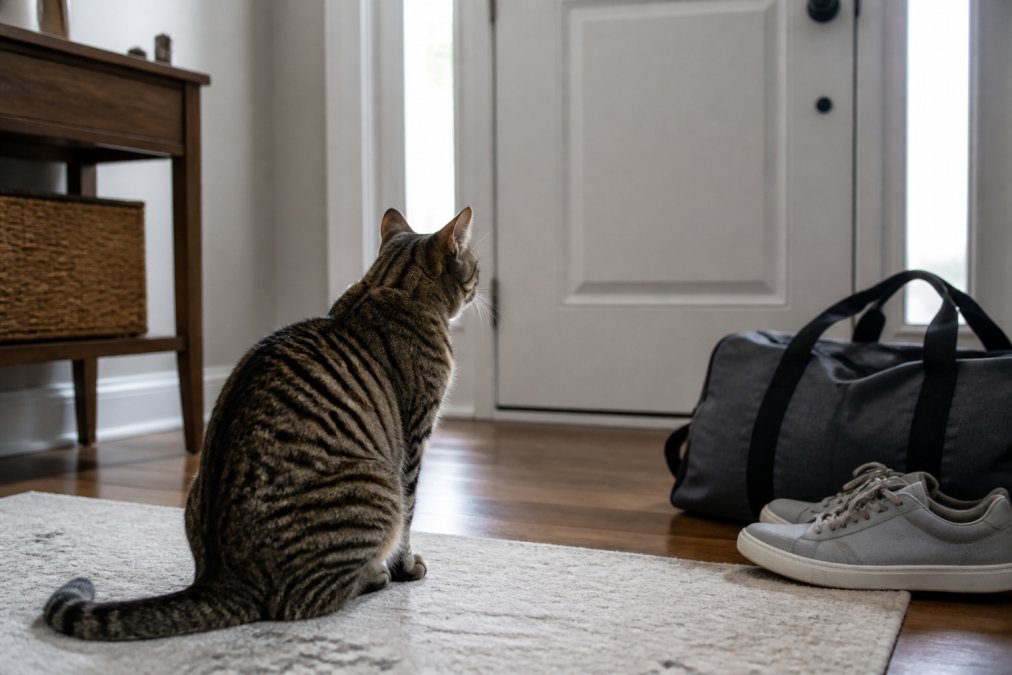
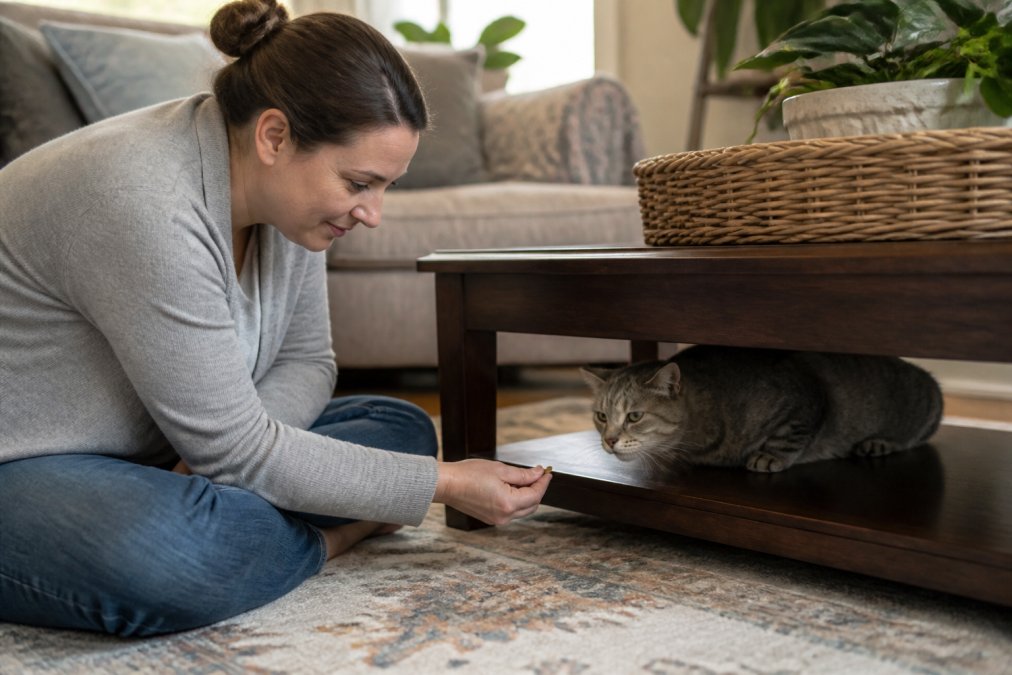
An anxious senior cat does not need a new product. She needs a predictable environment that compensates for the senses and joints she has lost. The fastest way to calm a stressed senior cat is to remove unpredictability and rebuild the home around her declining abilities. Routine consistency matters more than any single purchase: feed at the same times, scoop the litter box on the same schedule, and avoid rearranging furniture.
Why Aging Makes the Environment Itself Stressful
Three changes drive most senior anxiety at home, and they overlap:
- Sensory decline. A senior cat hears high frequencies less well and sees less clearly in dim light. She startles at a hand that appears without warning, at a vacuum she did not hear coming, at a toddler who rounds a corner. Every startle spikes cortisol, and repeated spikes keep her in a low-grade aroused state.
- Arthritic pain. Climbing into a high-sided litter box, jumping onto a bed, or descending stairs becomes a negotiation with pain. Cats in pain do not limp the way dogs do, they hide, they stop using the box, they stop jumping onto the couch, and owners read all of that as 'slowing down.'
- Cognitive dysfunction. Disorientation, night waking, and litter box accidents are cognitive health changes, not defiance. A cat who forgets where the box is will avoid it out of confusion, then get scolded, then hide more.
A Senior-Specific Setup, Room by Room
Build the home around the cat's actual range of motion and senses:
- Pick one quiet room as base camp. Choose a low-traffic room away from the front door, the washing machine, and the loudest TV. Put her bed, water, food, and a litter box in it so she can meet every basic need without crossing the whole house.
- Lower the litter box rim. A box with a rim higher than about 2 inches is a barrier for a cat with sore hips. Use a low-sided pan, or cut down the front of a storage bin. Keep at least one box on every floor she uses, and place it so a younger cat cannot guard the only route to it.
- Add traction. Senior cats slip on hardwood and tile, and slipping makes them stop moving. Runners, yoga mats, or low-pile rugs along her main path restore confidence.
- Build ramps and steps. A set of pet stairs to the couch or bed removes the jump that hurts. A ramp to a favorite window perch keeps the perch usable.
- Raise the food and water. A cat with neck or dental pain eats more comfortably from a bowl raised a few inches off the floor. Wide, shallow bowls also reduce whisker fatigue.
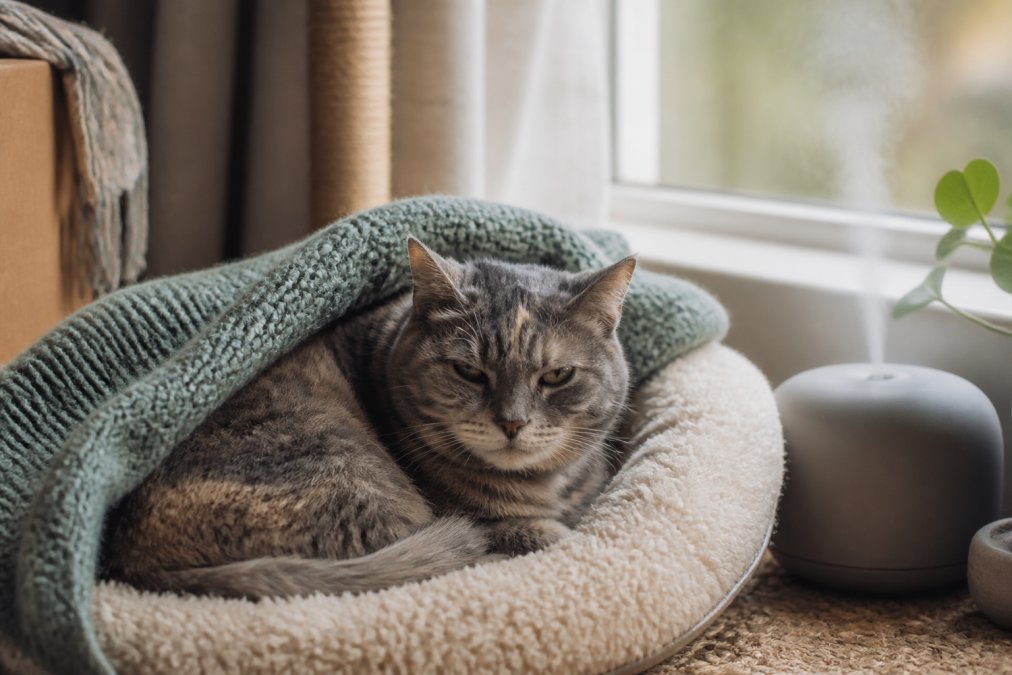
- Add warmth. Older cats have less body fat and poorer circulation, so they seek heat. A heated bed or a covered cave bed gives her a place to self-soothe.
- Keep night lights on. A cat with failing vision navigates far better with a dim light in the hallway and near the litter box.
- Introduce changes one at a time. Never rearrange the whole house in a weekend. One change, then a week to settle, then the next.
Routine: The Part Owners Underestimate
Routine is not a soft concept. For a cat whose senses are unreliable, predictability is the only thing she can still count on. Feed at the same times, seven days a week. Keep play short and gentle, two or three 5-minute sessions beat one long one, and a senior cat with arthritis will stop playing before she shows pain. Keep the litter box in the same spot even if it is inconvenient for you.
In-Home Pet Sitting for Anxious Cats: Why It Works
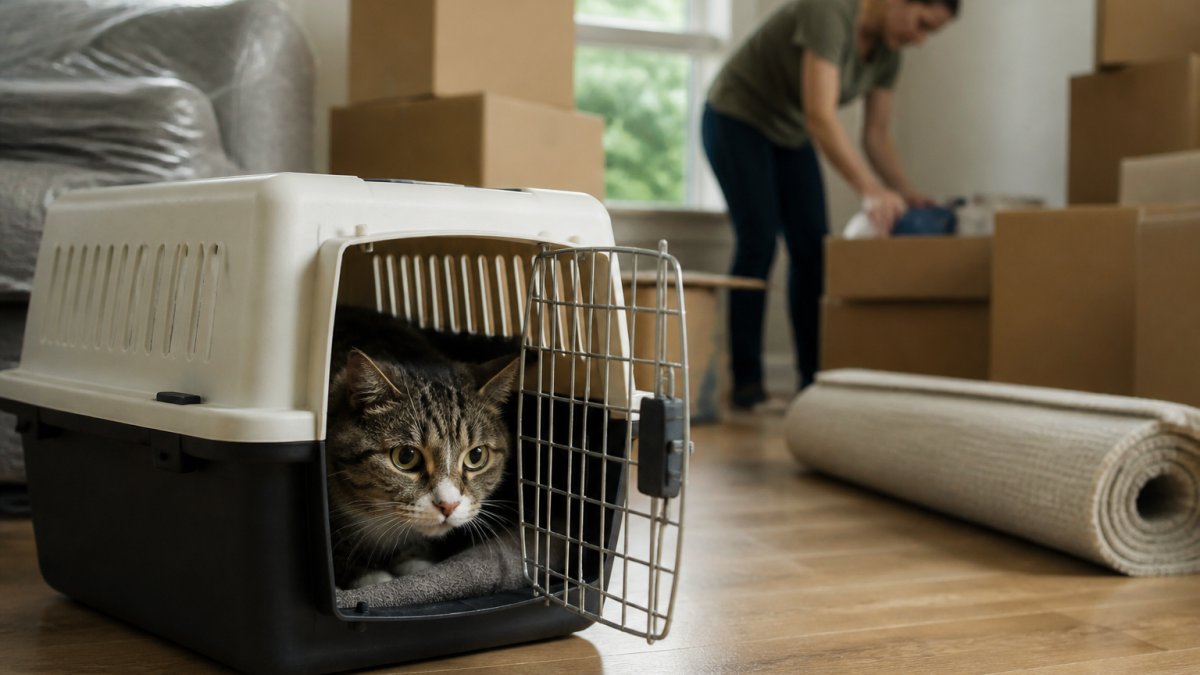
In-home pet sitting for anxious cats works because it removes the single biggest stressor in a senior cat's life: relocation. Boarding puts a cat in an unfamiliar space with unfamiliar smells and sounds, and senior cats with sensory decline handle that poorly. A sitter who comes to your home keeps the cat's environment, routine, and scent markers intact, which is why in-home care is often the calmer option for shy or nervous cats.
Anxiety-Specific Medical Screening for Senior Cats
Anxiety-specific medical screening should come before any behavioral modification plan. That's the step most owners skip. A senior cat presenting with new anxiety needs bloodwork, a thyroid panel, blood pressure measurement, and a pain assessment, because hyperthyroidism, kidney disease, hypertension, and dental pain all produce anxiety-like behavior. The Cornell Feline Health Center's guidance on senior [cat care(/in-home-cat-care-for-multiple-cats-2026-guide) | vet.cornell.edu] recommends twice-yearly checkups for cats in their senior years, precisely because age-related changes progress quickly and early diagnostics catch what a home observation misses.
| Symptom | Possible Cause | First Step |
|---|---|---|
| Night yowling | Cognitive dysfunction, pain, anxiety | Veterinary exam plus bloodwork |
| Hiding more | Chronic stress, sensory decline | Calm room, routine consistency |
| Litter box avoidance | Arthritic pain, box accessibility | Low-sided box, pain assessment |
| Over-grooming | Anxiety, skin or thyroid issue | Diagnostics before behavior plan |
| Appetite loss | Dental pain, nausea, stress | Full senior wellness exam |
Multi-Cat Household Dynamics and Stress
Multi-cat household dynamics quietly drive a lot of senior anxiety, and most care guides ignore it. As cats age, the social balance shifts: a formerly confident cat may become the target of a younger, more assertive housemate. Resource competition makes it worse. Senior cats need their own feeding station, water source, and litter box, ideally one more box than the number of cats, placed where a younger cat can't guard the only route.
End-of-Life Emotional Support and Quality of Life
End-of-life emotional support is part of anxious cat care, not separate from it. When a senior cat's anxiety climbs alongside declining health, owners carry a different kind of stress, and that stress travels down the leash, so to speak. Quality of life assessments help: track eating, grooming, mobility, interaction, and good days versus bad days on a simple weekly log.
Frequently Asked Questions
What are the common signs of anxiety in senior cats?
Senior cats often show anxiety through hiding, excessive vocalization (especially at night), pacing, or avoiding the litter box. You might also notice changes in appetite or grooming habits. Because these can overlap with medical issues like arthritic pain or sensory decline, it is important to have a veterinarian rule out physical causes first. Keeping a log of when these behaviors occur helps your vet distinguish between behavioral issues and age-related changes.
How does aging affect a cat's stress levels?
Aging brings sensory decline, which makes senior cats feel more vulnerable. They may startle easily or become disoriented, leading to chronic stress. Cognitive dysfunction can also make them forget routines, increasing anxiety. To help, maintain a calm environment and stick to a consistent schedule. Using pheromone diffusers and providing easy access to resources like litter boxes and food can reduce stress triggers.
What environmental changes help calm an anxious senior cat?
Focus on accessibility and predictability. Add pet stairs or ramps to furniture, keep litter boxes on every floor, and use night lights to reduce disorientation. Create quiet hiding spots with soft bedding. Pheromone diffusers and routine consistency are also key. Avoid moving furniture or changing schedules suddenly. For more tips, see our guide on how to calm a stressed senior cat.
When should I consult a veterinarian about my cat's anxiety?
If anxiety interferes with eating, sleeping, or litter box use, or if you notice sudden behavior changes, see your vet. They can screen for medical conditions like hyperthyroidism or dental pain that mimic anxiety. A wellness examination is also a chance to discuss anxiety-specific medical screening. Early intervention improves quality of life and may prevent severe behavioral issues.
How can professional in-home pet sitting reduce stress for senior cats?
In-home pet sitting for anxious cats keeps them in their familiar environment, avoiding the stress of boarding. A consistent sitter follows your cat's routine, administers medication if needed, and provides calm companionship. This reduces anxiety triggers like new surroundings and strange animals. For senior cats with mobility issues, sitters can also assist with grooming and litter box accessibility.
What are the best ways to maintain a routine for an aging cat?
Keep feeding, play, and litter box cleaning times consistent. Use automated feeders or timers if you are away. When you travel, hire a sitter who can follow the same schedule. Routine consistency reduces stress and helps manage cognitive decline. Also, keep vet visits at similar times of day and use pheromone sprays in the carrier to make travel less stressful.
Senior cat anxiety rarely resolves on its own, and it often flares hardest when you're away and your cat's routine breaks. Tracy's Kitty Care keeps that routine intact with in-home cat sitting for cats only, delivered by background-checked, licensed, bonded, and insured sitters who can manage medication and understand feline stress. Get started with Tracy's Kitty Care and give your anxious senior cat calm, familiar care while you travel.