 blog
Rover vs Professional Cat Sitter: Which to Choose
Table of Contents
- Rover vs Professional Cat Sitter: How the Two Models Compare
- Cost Breakdown: Rover Fees vs Professional Cat Sitting Rates
- Pet Sitter Insurance and Bonding Requirements: What Protects Your Cat and Home
- Questions to Ask a Potential Cat Sitter Before You Book
- Vetting, Background Checks, and Emergency Protocols
- Special Needs Cats: Medication, Shy Temperaments, and Consistency
- The Legal and Tax Side of Hiring a Cat Sitter
- Contingency Planning When Your Sitter Gets Sick
- Frequently Asked Questions
Last Updated: September 16, 2026
Rover vs Professional Cat Sitter: How the Two Models Compare
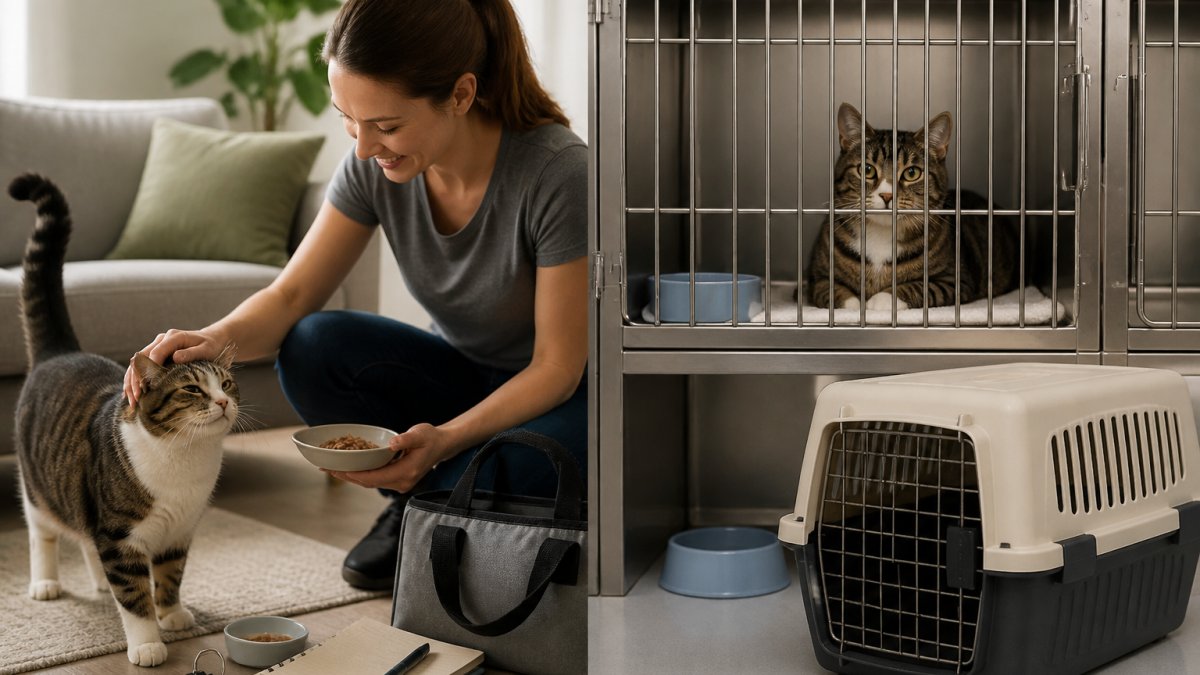
Choosing between Rover and a professional cat sitter comes down to one question: do you want a marketplace match or a vetted local specialist? Rover is a gig platform that connects you with independent sitters, while a professional cat sitter is a dedicated service with its own credentials, insurance, and standards. At Tracy's Kitty Care, we work in the second category every day, so we can explain exactly where each model shines and where it falls short.
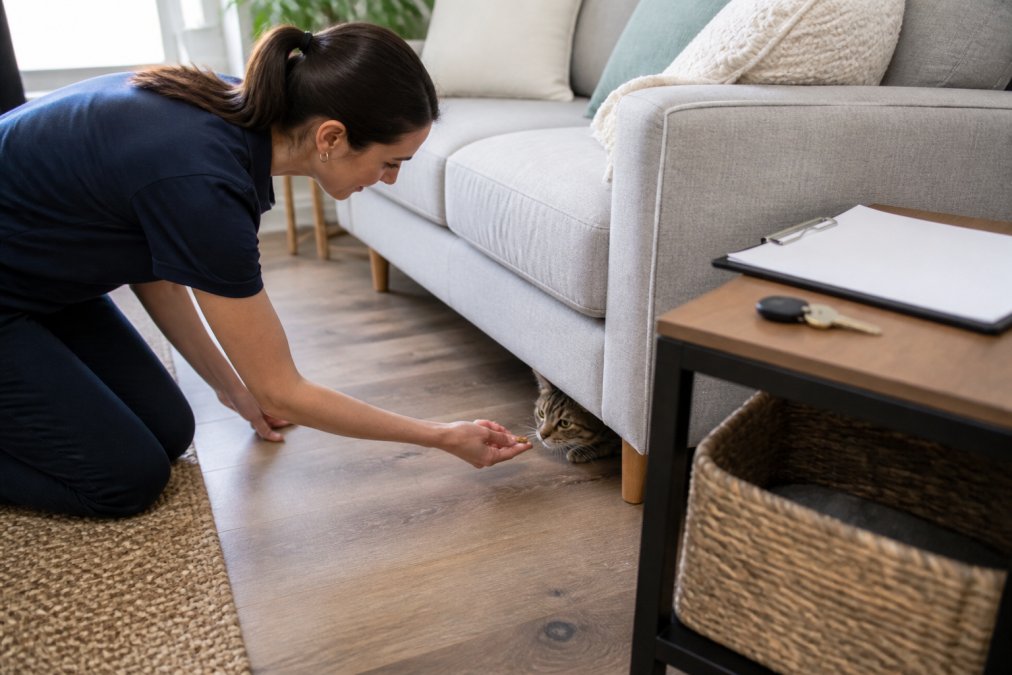
The two models differ in who takes responsibility for your cat's care.
How Rover Works
Rover operates as a marketplace. You enter your dates, browse sitter profiles, read reviews, and book directly through the platform.
How a Professional Cat Sitter Works
A professional cat sitter is a business, not a profile. You hire the company, which assigns a background-checked sitter and maintains its own standards for every visit.
Cost Breakdown: Rover Fees vs Professional Cat Sitting Rates
Rover charges the sitter a percentage fee on each booking, and many sitters build that cost into their listed rate. Professional services typically publish flat rates per visit instead.
What You Pay For With Each Option
| Feature | Rover | Tracy's Kitty Care |
|---|---|---|
| Pricing model | Sitter-set, varies | Flat $30 per 30-min visit |
| Platform fee | Yes, added to booking | None |
| Background checks | Sitter-provided | All sitters checked |
| Bonding and insurance | Varies by sitter | Licensed, bonded, insured |
| Cancellation terms | Set by platform | Confirmed at booking |
Pet Sitter Insurance and Bonding Requirements: What Protects Your Cat and Home
Pet sitter insurance and bonding requirements vary by state and by provider, but the distinction matters for any cat owner handing over a key. Insurance covers liability for injuries or property damage during a visit. Bonding protects you against theft by the sitter.
Why Bonding Matters for Home Access
When a sitter has a key or code to your home, you are extending trust with real financial exposure. A bonded sitter gives you recourse if something goes missing. Ask directly: who is insured, and can they show proof?
Questions to Ask a Potential Cat Sitter Before You Book
The right questions to ask a potential cat sitter cover credentials, emergency plans, and communication. Ask them before you book, not after.
- Are you background checked, bonded, and insured? Can I see proof?
- What is your emergency protocol if my cat gets sick or injured?
- How do you handle medication, including injections?
- What is your cancellation policy if my plans change?
- Will I get photo or text updates after each visit?
Vetting, Background Checks, and Emergency Protocols
"Background checked" is one of the most repeated and least examined phrases in pet care. The phrase means different things depending on who runs the check, so the useful question is not whether a check happened but what it screened for and who can prove it.
How to Verify a Background Check
Ask three specific questions:
- Which screening company ran the check, and how far back does it search?
- Does the check include county courthouse records, or only a national database?
- Can the service show documentation that the check was completed and is current?
A professional service can answer all three. An individual marketplace sitter may only be able to point to a platform badge, which usually reflects a single database search at signup and is not re-run on a schedule.
What a Real Emergency Protocol Contains
Emergency readiness is where the two models diverge most, and it is measurable. A written protocol should specify:
- The primary veterinarian's name, address, and phone number, plus the nearest 24-hour emergency clinic
- A signed veterinary release authorizing treatment up to a stated dollar limit without prior approval
- Your reachable contact numbers and a backup decision-maker who can authorize care if you are unreachable
- The cat's known conditions, medications, and allergies, in writing
- Transportation: who drives the cat to the clinic if the sitter cannot leave other animals
Contingency Planning When the Sitter Cannot Arrive
A single independent sitter is a single point of failure. If they get sick the morning you fly out, you may have no coverage at all. Ask any sitter, individual or company, two questions before booking:
- Who is your designated backup if you cannot make a visit?
- Have I met or been introduced to that person?
Special Needs Cats: Medication, Shy Temperaments, and Consistency
Cats with special needs do best with the same person every visit. Consistency reduces stress for shy cats and keeps medication schedules accurate. But "we handle medication" is a claim, not a qualification, and the difference matters most for cats on a strict schedule.
Verifying Medication Qualifications
Before you trust a sitter with a syringe, ask what they have actually administered and how they were trained. Useful answers sound like:
- "I've given insulin injections to diabetic cats and can show you my technique during a meet-and-greet."
- "I've administered subcutaneous fluids and can walk you through how I hold the cat and where I insert the needle."
- "I've given oral medication by pill, liquid, and transdermal gel, and I know how to use a pill popper if the cat won't take it by hand."
What Each Medication Type Requires
- Insulin injections: precise dosing on a fixed schedule, proper syringe handling, correct injection site rotation, and awareness of hypoglycemia signs such as weakness, wobbling, or seizures. Timing matters, a missed or doubled dose is a medical event, not a minor slip.
- Subcutaneous fluids: sterile technique, warming the bag to body temperature, needle size selection, and monitoring for leakage or discomfort. This is a skill most casual sitters have never practiced.
- Oral medication: pill, liquid, and transdermal forms each require a different hold. A cat that spits a pill is not a failure, it means the sitter needs a backup method ready.
Shy and Fearful Cats
Shy cats hide, and a sitter who panics will force interaction and make things worse. A sitter who knows cats will sit quietly at a distance, let the cat come out on its own terms, and confirm the cat is eating and using the litter box rather than forcing contact. Look for a sitter who asks about your cat's hiding spots and normal routines before the first visit.
Why Consistency Is a Medical Issue, Not a Comfort One
For a cat on insulin or daily medication, a rotating cast of sitters is a dosing risk. Each new person has to learn the cat's handling, the dose, and the schedule, and each handoff is a chance for error. A professional service that assigns the same sitter to recurring visits removes that variable. If your cat has a chronic condition, ask whether the same person will handle every visit and what happens if that person is unavailable.
The Legal and Tax Side of Hiring a Cat Sitter
Hiring an independent sitter through a marketplace means you're often dealing with a sole proprietor or independent contractor. That person handles their own taxes, and you generally don't withhold anything.
Contingency Planning When Your Sitter Gets Sick
A single independent sitter is a single point of failure. If they get sick the morning you fly out, you may have no coverage at all.
Frequently Asked Questions
Is pet sitting through Rover worth it for cat owners?
Rover can work for short trips if you find a sitter with strong reviews and cat experience. The tradeoff is that sitters are independent contractors, so insurance, bonding, and emergency training vary by individual. For cats with medical needs or shy temperaments, a professional cat sitter who specializes in felines and carries liability insurance often provides more consistent, lower-stress care.
What are the red flags to look for in a pet sitter?
Watch for reluctance to provide references, no proof of insurance or bonding, vague answers about emergency protocols, and unwillingness to do a meet-and-greet before the first visit. A sitter who cannot describe how they would handle a medical emergency, a cat that hides, or a home security concern is a risk. Ask directly and expect specific, documented answers.
What are the benefits of hiring a licensed and bonded cat sitter?
A bonded sitter is covered if something is stolen from your home, and liability insurance covers accidents or injuries during visits. Licensed, bonded, and insured sitters also tend to follow written service agreements, keep incident records, and carry first aid training. That combination protects your cat, your home, and your wallet if something goes wrong while you are away.
How does professional cat sitting differ from gig-economy pet care?
Gig platforms connect you with independent contractors who set their own rates and schedules, so quality and coverage vary widely. A professional cat sitting service vets every sitter with background checks, carries insurance and bonding, and follows set pet care standards for feeding, medication, and litter box cleaning. The result is more predictable care, especially for recurring visits or cats on medication.
Travel plans rarely fail on schedule, and the person watching your cat shouldn't be the weak link. Tracy's Kitty Care provides background-checked, licensed, bonded, and insured sitters who specialize exclusively in cats, with in-home visits that include feeding, fresh water, litter box cleaning, and playtime. Our referral program even earns you free visits when you send a friend our way. Get started with Tracy's Kitty Care and give your cat reliable, familiar care while you're away.