 ultimate-guide
In Home Pet Care for Seniors: A Complete 2026 Guide
Table of Contents
- Why In-Home Pet Care Works Better for Senior Cat Owners
- How to Choose a Cat Sitter With Experience in Medication Administration
- Affordable Pet Care Assistance for Seniors: Programs and Practical Options
- Daily Living Assistance: Feeding, Litter Boxes, and Mobility Support
- Technology-Assisted Pet Care: Automatic Feeding and Health Monitoring
- Coordinating Care With Home Health Aides and Family Members
- Legal and Estate Planning for Pets: Pet Guardianship and Trusts
- Frequently Asked Questions
Last Updated: September 14, 2026
Why In-Home Pet Care Works Better for Senior Cat Owners
In home pet care for seniors is professional pet sitting delivered inside the owner's residence, letting cats stay in their familiar environment instead of a boarding facility. The cat keeps its routine, and the owner avoids the strain of kennel transport.
This guide from Tracy's Kitty Care covers what that care includes, how to vet a sitter who handles medication, what financial help exists, and how to coordinate with family and aides.
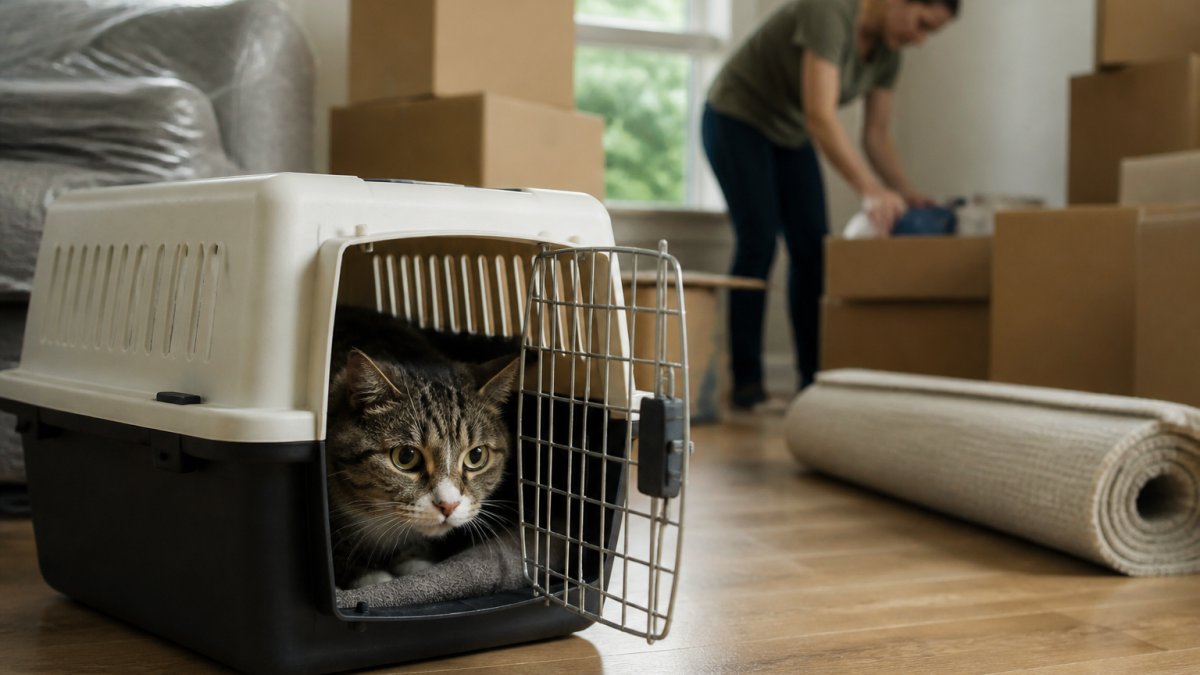
Cats are territorial, and a change of environment commonly triggers stress-related illness. Boarding introduces unfamiliar smells, sounds, and animals; a drop-in sitter enters a space the cat already owns.
The Difference Between Drop-In Visits and Boarding
Boarding moves the cat to the service; in-home pet sitting brings the service to the cat, changing stress levels, exposure to illness, feeding accuracy, and recovery time.
Drop-in visits typically run 30 minutes and cover feeding, fresh water, litter box cleaning, and play. Cats that hide from strangers often need two or three visits to relax.
Boarding suits short trips with a cat that travels easily. For a cat that panics in a carrier or needs twice-daily medication, home is the better call.
How to Choose a Cat Sitter With Experience in Medication Administration
The right sitter combines verifiable credentials with hands-on medical comfort. Ask whether they have administered insulin, oral medication, or subcutaneous fluids, and how they confirm doses.
A common mistake is treating "pet sitter" as one skill level. Feeding and litter box care is one job; injecting insulin on a fixed schedule is another. Get specific answers before you book.
Questions worth asking every candidate:
- Can you show proof of licensing, bonding, and insurance?
- Have you completed a background check, and can I see documentation?
- What is your protocol if a cat refuses food or hides for the entire visit?
- How do you document each visit, and will I get updates?
- What happens if my cat needs emergency veterinary care while I'm away?
Credentials That Actually Matter: Licensed, Bonded, and Insured
Licensing confirms the business meets local requirements. Bonding protects you if a sitter is accused of theft. Insurance covers damage or injury during a visit. All three should be documented, not described verbally.
Background checks are the fourth piece. Anyone entering your home while you're away should be screened, and a reputable service will confirm this.
Affordable Pet Care Assistance for Seniors: Programs and Practical Options
Cost is the most common reason older owners hesitate to book professional care. In-home visits usually cost more per day than basic boarding, but they eliminate transport, reduce stress-related vet visits, and keep the cat on its exact routine, for a cat on twice-daily medication, avoided vet bills often close the gap.
Tracy's Kitty Care offers a 30-minute cat sitting service at $30.00, including feeding, fresh water, litter box cleaning, and playtime.
National Programs Worth Knowing
Several established organizations run pet assistance programs older owners can apply to directly. Funding cycles change, so confirm current status:
- Meals on Wheels America, Many local Meals on Wheels affiliates deliver pet food alongside human meals through programs like AniMeals and Pets for Seniors. Contact your local affiliate and ask specifically whether pet food delivery is offered.
- The Humane Society of the United States, Maintains a searchable directory of pet food pantries and low-cost veterinary clinics by ZIP code. This is the fastest starting point for local help.
- ASPCA, Runs community pet food distribution and low-cost spay/neuter and wellness events in select metros. Check the ASPCA community programs page for current locations.
- Banfield Pet Hospital's preventive care programs, Some locations offer reduced-cost wellness plans; ask about senior-owner discounts at the front desk.
- RedRover Relief, Provides grants for urgent veterinary care when an owner cannot afford emergency treatment. Applications are reviewed case by case and require a veterinarian's estimate.
- The Pet Fund, Offers grants for non-basic, non-emergency veterinary care such as cancer treatment or chronic condition management. Applications open and close based on funding.
- Brown Dog Foundation, Assists with the cost of treating life-threatening illness when the owner is facing financial hardship.
How to Apply Without Wasting Time
Most of these programs share the same friction points:
- Gather documentation first. Expect to provide proof of income, proof of residency, the cat's vaccination records, and a written veterinary estimate for treatment grants.
- Call before you apply online. Funding windows open and close; a phone call confirms whether the program is currently accepting applications.
- Ask your vet about payment plans. Many clinics offer in-house installment plans or work with third-party financing. This is often faster than a grant.
- Stack resources. A food pantry covers supplies while a grant covers a procedure. They are not mutually exclusive.
- Ask about senior-specific waivers. Some municipal animal shelters and county agencies waive licensing fees or offer discounted rabies vaccination clinics for owners over a certain age.
What In-Home Care Actually Saves You
Compare total cost, not just the visit fee. Boarding adds transport, carrier stress that can trigger a vet visit, and a disrupted medication schedule. For a cat with a chronic condition, one avoided vet visit can offset weeks of sitting fees.
Daily Living Assistance: Feeding, Litter Boxes, and Mobility Support
Daily living assistance for a senior cat owner covers routine tasks that become difficult with age or reduced mobility: bending to scoop a litter box, carrying a full water bowl, reaching a food dish, or getting up at night to check on the cat. The goal is to remove physical strain while preserving routine.
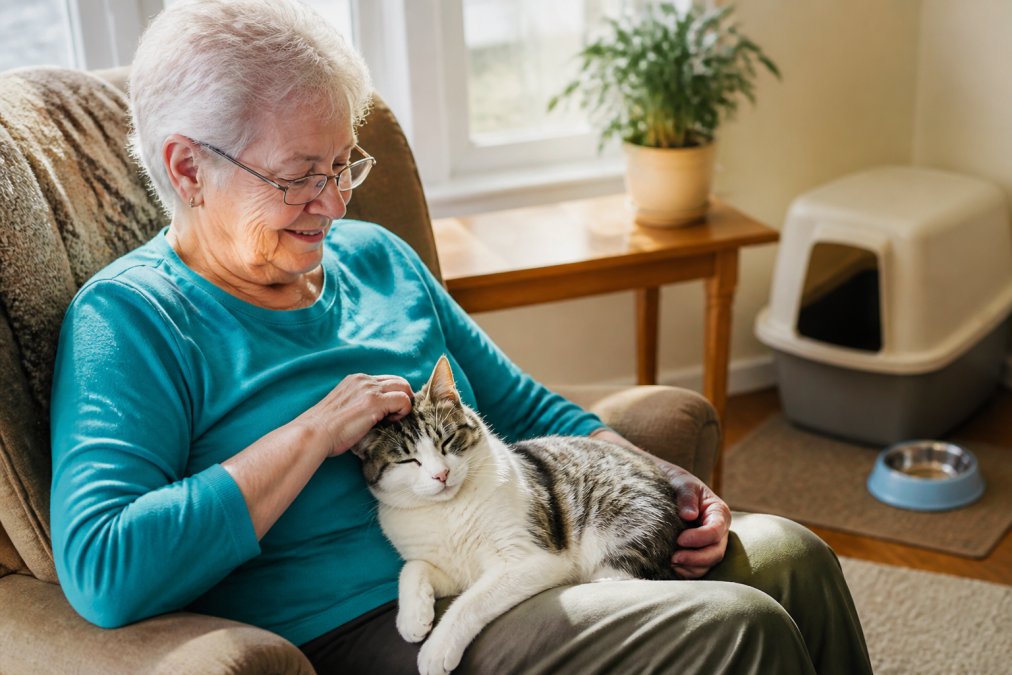
Start With a Room-by-Room Mobility Assessment
Before buying equipment, walk through the home and note where the owner struggles:
- Kitchen / feeding station, Can the owner bend to floor level? Can they lift a full water bowl without spilling or straining? Is the food stored at a height that requires a step stool?
- Litter box location, Is it on the same floor the owner spends most of the day on? Are there stairs, thresholds, or narrow doorways between the owner and the box?
- Cat's resting spots, Can the cat reach them without jumping on furniture the owner cannot easily navigate around?
- Nighttime path, Is there a clear, lit route from bed to the litter box and food area for both owner and cat?
- Entry and exit, If the cat goes outdoors (or the owner needs to carry supplies in), are there steps, uneven surfaces, or heavy doors?
Write down every task that requires bending, lifting, or stair use. Those are the tasks to delegate or adapt.
Adaptive Equipment That Actually Helps
Most of these are inexpensive and available at pet supply stores or online:
- Elevated feeding stations, Raise bowls to counter height (roughly 24-30 inches) so the owner does not bend. Look for models with non-slip feet and removable stainless bowls for easy cleaning.
- Low-entry or ramp-access litter boxes, Standard boxes have 5-7 inch sides. Senior cats and owners with limited mobility both benefit from boxes with a 2-3 inch entry or an attached ramp.
- Self-cleaning litter boxes, These automate scooping, which is the single most physically demanding daily task. They require an outlet and a supply of liners and clumping litter, and they need periodic manual maintenance, but they cut daily bending dramatically.
- Long-handled scoops and dustpans, Extend reach without bending. Pair with a small, lidded waste bin kept at waist height.
- Non-slip mats, Place under bowls, litter boxes, and along the cat's walking path. Slippery floors are a fall risk for both owner and older cat.
- Pet gates with walk-through doors, Keep the cat out of rooms the owner cannot easily supervise, without requiring the owner to step over a barrier.
- Lightweight, stackable food storage, Move dry food into a counter-height container so the owner is not lifting a heavy bag from a low shelf.
- Motion-sensor night lights, Illuminate the path to the litter box and food station for late-night checks.
A Second Litter Box Changes the Math
A second litter box on the main living floor eliminates stair use for the most frequent daily task, one of the highest-impact, lowest-cost changes a senior owner can make. The trade-off is more cleaning, which a drop-in sitter can handle on a schedule.
Mobility Support for the Cat, Not Just the Owner
An older cat may struggle with a high-sided box, slippery floors, or jumping onto a favorite chair. Address both sides:
- Provide a low-entry box or a ramp for the cat.
- Add non-slip rugs or mats along the cat's route.
- Place a pet stair or ramp next to the cat's preferred resting spot so it does not have to jump.
- Keep food and water within easy reach of the cat's main resting area.
Folding These Tasks Into a Care Plan
Daily living assistance works best when it is written down and divided. A workable split:
| Task | Best Handled By | Notes |
|---|---|---|
| Medication administration | Trained pet sitter | Requires documented protocol |
| Feeding and fresh water | Aide, family, or sitter | Confirm agency policy first |
| Litter box cleaning | Pet sitter or self-cleaning box | Physical strain for some owners |
| Equipment maintenance (self-cleaning box, fountains) | Family member | Needs periodic manual cleaning |
| Veterinary appointment scheduling | Family member | Needs transport and records |
| Daily wellness check | Family or sitter | Look for appetite and behavior changes |
| Emergency decisions | Pre-designated person | Must be documented in advance |
Technology-Assisted Pet Care: Automatic Feeding and Health Monitoring
Automatic feeders, water fountains, and pet health monitoring devices extend how long a senior can manage a cat independently, but they don't replace a visit. A feeder can't tell you the cat stopped eating.
What the technology does well:
- Automatic feeding on a fixed schedule, useful for cats on timed meals
- Water fountains that encourage hydration, which matters for kidney health
- Pet health monitoring through activity trackers and smart litter boxes that log weight and elimination habits
- Pet safety cameras that let you check in from a phone
The gap is judgment. Sensors report data; they don't notice a cat hiding, vocalizing oddly, or moving stiffly. Pair devices with in-person visits rather than substituting one for the other.
Coordinating Care With Home Health Aides and Family Members
A home health aide provides daily living assistance to the person, not the pet, a distinction worth settling before building a care plan.
Most home health agencies do not permit aides to feed, walk, or clean up after pets. Some allow it as a courtesy if the animal is not aggressive, but confirm directly with the agency.
A workable division of labor:
| Task | Best Handled By | Notes |
|---|---|---|
| Medication administration | Trained pet sitter | Requires documented protocol |
| Feeding and fresh water | Aide, family, or sitter | Confirm agency policy first |
| Litter box cleaning | Pet sitter | Physical strain for some owners |
| Veterinary appointment scheduling | Family member | Needs transport and records |
| Daily wellness check | Family or sitter | Look for appetite and behavior changes |
| Emergency decisions | Pre-designated person | Must be documented in advance |
Distant family members can handle scheduling, payment, and vet coordination remotely. The sitter handles the physical work; the aide handles the owner.
Legal and Estate Planning for Pets: Pet Guardianship and Trusts
Most guides skip this, and it's the gap that causes the most heartbreak. If a senior owner becomes incapacitated or passes away, the cat's future depends on documents prepared in advance.
Pet guardianship is a written designation naming who takes the cat if the owner can no longer care for it. It is not the same as a will and should be updated whenever circumstances change.
Pet trusts are a formal legal arrangement that sets aside funds for an animal's care and names a trustee to manage them. State law governs their structure, so an estate attorney familiar with local rules should draft it.
The practical checklist:
- Name a guardian in writing and confirm they've agreed
- Set aside funds for food, vet care, and boarding
- Give a copy of the plan to your vet and your sitter
- Review the plan annually or after any major life change
- Consider a pet trust if the amount set aside is significant
Mental health matters here too: losing a companion animal is a recognized grief experience, and pet loss support groups exist in most communities. Planning ahead doesn't prevent the loss, but it removes the fear that the cat will end up in a shelter.
Coordinating reliable care for a cat while managing your own health, travel, and family logistics is genuinely difficult, and most services aren't built for it. Tracy's Kitty Care was designed for exactly this situation: cat-only in-home pet sitting with background-checked, licensed, bonded, and insured sitters who handle medication administration and follow your cat's existing routine. If you're in the Amherst area and want care you don't have to second-guess, review the service details and pricing and book a visit.
Frequently Asked Questions
What are the benefits of in-home pet care for seniors?
In-home pet care keeps cats in their familiar environment, which reduces stress for both the pet and the owner. For seniors, it means no need to drive to a boarding facility or rely on family for daily pet tasks. Professional sitters handle feeding, litter box cleaning, and medication, providing peace of mind. This support helps seniors maintain their daily routines and stay together with their companion animals longer.
How much does an in-home cat sitter charge?
Pricing varies by location and services included. For example, Tracy's Kitty Care offers a 30-minute cat sitting visit for $30, which covers feeding, fresh water, litter box cleaning, and playtime. This rate is often comparable to or less than boarding, and it eliminates the stress of transporting your cat. Ask potential sitters about their exact rates and what each visit includes.
Can in-home sitters administer medication like insulin injections?
Many professional pet sitters are trained to give oral medications, topical treatments, and injections, including insulin for diabetic cats. When interviewing a sitter, ask specifically about their experience with medication administration and whether they have references for similar cases. A reputable service will confirm their training and may ask for a demonstration from you before the first visit to ensure your cat receives the correct dosage.
How can seniors find trustworthy, background-checked pet sitters?
Start by asking for recommendations from your veterinarian, local senior centers, or friends. Then verify credentials: a trustworthy sitter should be background-checked, licensed, bonded, and insured. Ask for references and schedule a meet-and-greet before booking. For example, Tracy's Kitty Care provides all these credentials and specializes in cats, so you know your pet is in experienced hands. Always trust your instincts during the interview.
What should seniors look for in a pet care provider?
Look for a provider who specializes in your type of pet, has clear pricing, and offers a meet-and-greet. They should be background-checked, licensed, bonded, and insured. Ask about their experience with shy cats, medication administration, and emergency protocols. Also confirm they provide updates after each visit, so you know your cat is safe. A dedicated cat sitter will understand feline behavior and provide enrichment, not just basic feeding.
How does professional pet care support aging in place?
Aging in place means staying in your own home as you grow older. Professional pet care supports this by handling daily pet tasks that may become difficult due to mobility issues, such as bending to clean litter boxes or carrying heavy food bags. It also provides companionship for your cat when you need to travel for medical appointments or family visits. This support reduces the risk of falls and helps you maintain your independence.