 comparison
Benefits of In-Home Pet Sitting for Cats
Table of Contents
- Why Cats Hate Boarding Facilities
- How In-Home Pet Sitting Reduces Stress and Anxiety
- Maintaining Cat Routine While Traveling
- Health Benefits of Staying in a Familiar Environment
- What to Look for in a Cat Sitter
- In-Home Sitting vs. Boarding: A Cost and Comfort Comparison
- Medical Care and Special Needs Support
- Conclusion
- Frequently Asked Questions
Last Updated: September 2, 2026
Why Cats Hate Boarding Facilities
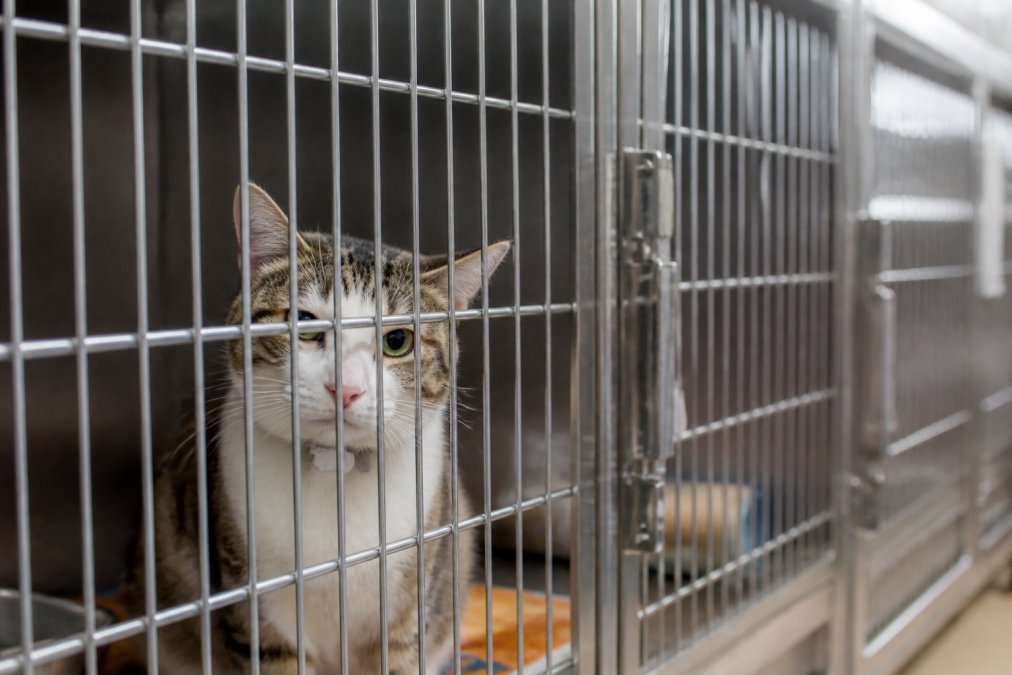
Cats are creatures of habit. Removing them from their familiar environment triggers a stress response far deeper than homesickness. Boarding facilities represent everything that makes cats anxious: unfamiliar smells, loud noises, strange cats in adjacent cages, and the absence of their owner's scent and routine.
Cats rely on environmental consistency to feel safe. A boarding facility strips that away completely, triggering behavioral changes that can last days or weeks after you return home. Many cat owners report their pets become withdrawn, stop eating properly, or develop litter box issues after a boarding stay. Some cats develop kennel stress so severe they refuse to use litter boxes or eat, leading to dehydration and other health complications.
In-home pet sitting fundamentally changes this equation. Instead of forcing your cat into an unfamiliar environment, a professional sitter comes to your cat. The cat stays in its familiar home, maintains its normal routine, and experiences minimal disruption to its daily life.
How In-Home Pet Sitting Reduces Stress and Anxiety
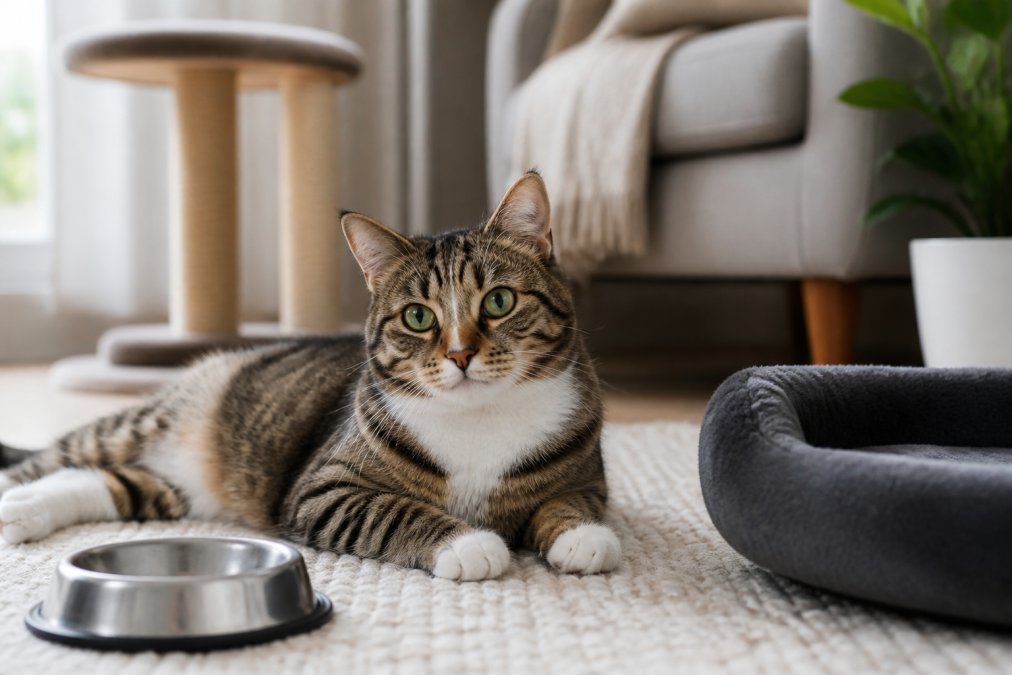
The most effective way to reduce stress in cats during your absence is to maintain their familiar environment and routine. In-home pet sitting accomplishes this by keeping your cat in the home where it feels safe, with consistent feeding schedules, regular litter box maintenance, and environmental stability.
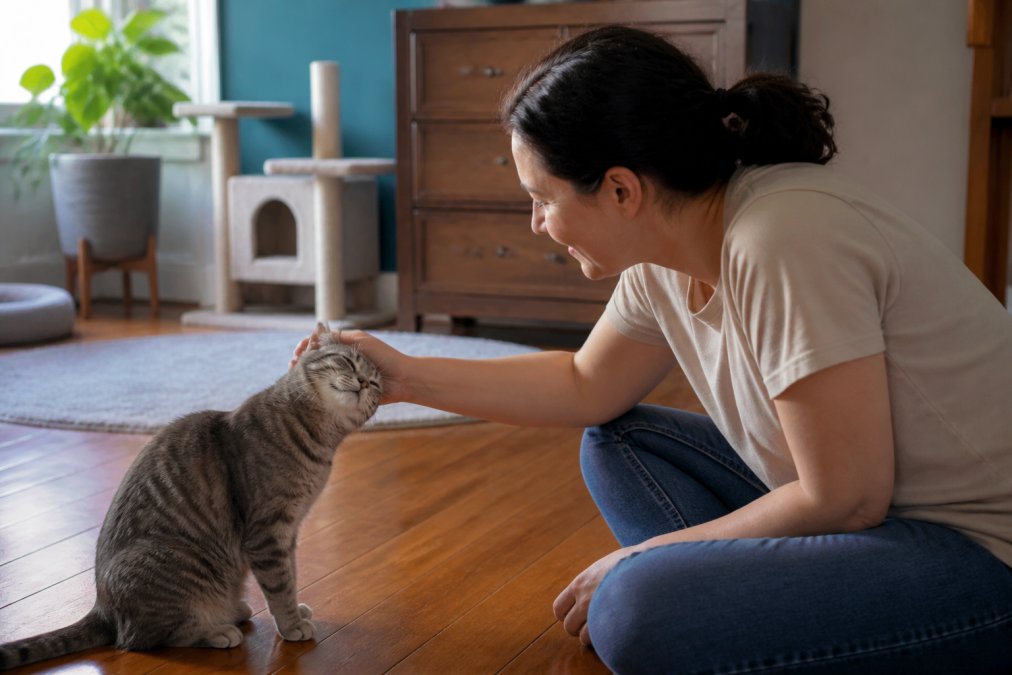
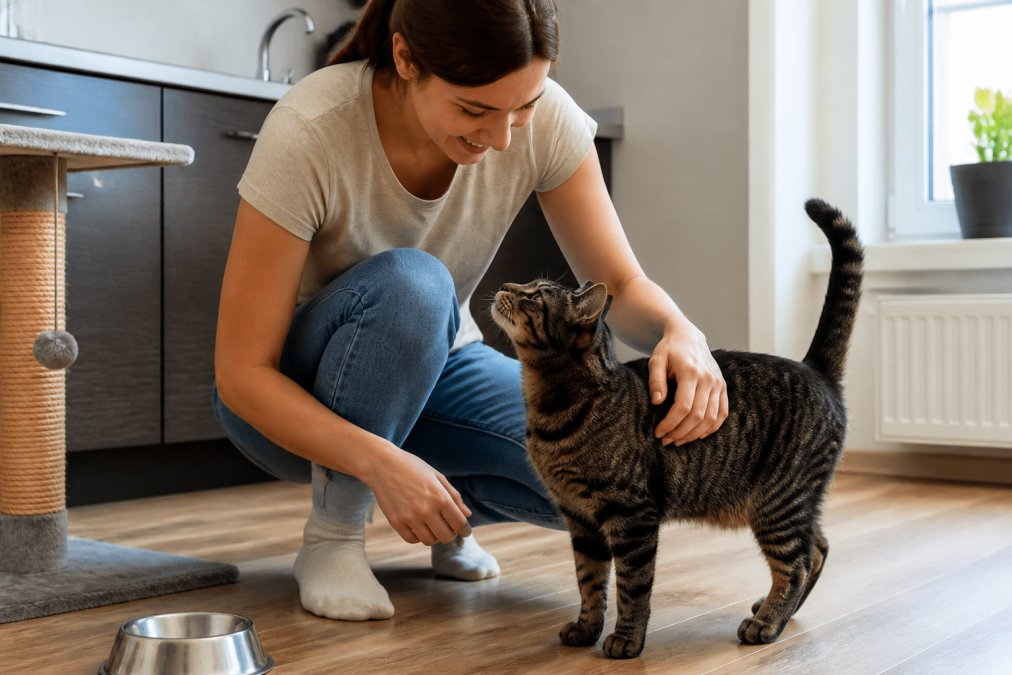
When a professional sitter visits, your cat doesn't face the separation anxiety of boarding. The cat remains in its territory, surrounded by familiar scents and favorite spots. A consistent sitter visiting at the same time each day creates predictability, your cat learns that the sitter's arrival means fresh food, clean water, a clean litter box, and attention.
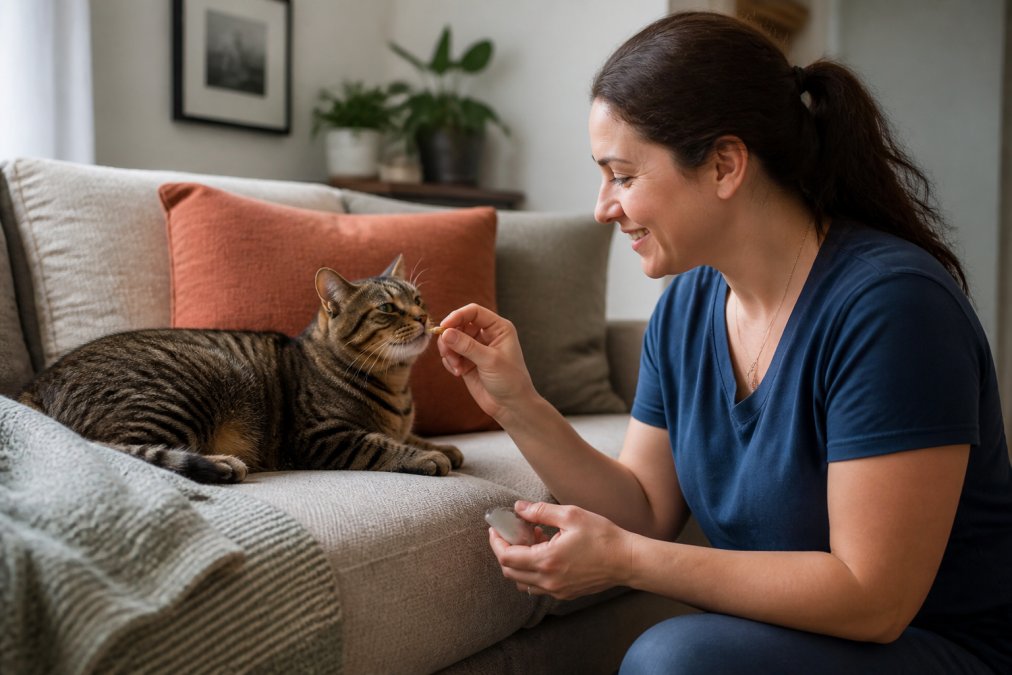
Cats with separation anxiety benefit enormously from in-home pet sitting. These cats often refuse to eat or use litter boxes when their owners leave, or develop destructive behaviors like excessive meowing or inappropriate elimination. A sitter's presence and attention can interrupt these anxiety spirals by providing social interaction, maintaining feeding schedules, and keeping the environment stable.
Tracy's Kitty Care specializes in this dynamic. Our sitters understand cat behavior and know how to interact with anxious or shy cats in ways that build trust. Each visit includes personalized attention tailored to your cat's personality, helping maintain emotional equilibrium while you're away.
Maintaining Cat Routine While Traveling
Cats thrive on routine. Their digestive systems, sleep patterns, and emotional regulation all depend on consistent daily schedules. In-home pet sitting preserves that routine by having a professional sitter visit at scheduled times, feed your cat at normal hours, refresh water bowls, clean litter boxes, and provide playtime and attention.
This consistency means your cat's body clock doesn't get disrupted. Feeding schedules stay intact, sleep patterns remain normal, and the cat doesn't develop stress-related digestive issues or litter box problems.
This matters especially for cats on specific feeding schedules or with dietary needs. Some cats need multiple small meals throughout the day or have food sensitivities requiring precise portions. A sitter in your home can accommodate these individual preferences far better than a boarding facility.
Exercise regimens also stay on track. A sitter can engage your cat with toys and interactive play matching your cat's personality and energy level. Cats that maintain their routine during owner absence show fewer signs of stress, anxiety, or behavioral regression. When you return home, your cat transitions smoothly without the behavioral adjustment period that follows boarding stays.
Health Benefits of Staying in a Familiar Environment
Your cat's immune system is directly affected by stress levels. When cats experience the acute stress of boarding facility confinement, their immune function declines temporarily, making them vulnerable to opportunistic infections like kennel cough and respiratory viruses that spread rapidly in multi-cat facilities.
In-home pet sitting eliminates this exposure risk entirely. Your cat stays in your home, avoiding contact with other animals and their pathogens. For immunocompromised, senior, or chronically ill cats, this protection is invaluable. The familiar environment also reduces cortisol levels, supporting immune function and overall health.
Stress-induced digestive upset is common in cats during and after boarding. Cats may develop diarrhea, constipation, or temporary loss of appetite. In-home pet sitting prevents this stress response by keeping your cat in a calm, familiar setting with consistent feeding schedules.
Cats with existing medical conditions benefit enormously from in-home care. A cat on medication, managing diabetes, dealing with kidney disease, or recovering from illness needs consistency and minimal stress. A sitter can administer medications on schedule, monitor eating and litter box habits, and report concerning changes. This level of individualized attention isn't possible in a boarding facility.
What to Look for in a Cat Sitter
Choosing the right sitter is the foundation of successful in-home pet sitting. Start with background verification. A legitimate pet sitter should provide background check documentation and be bonded and insured. These credentials protect both you and your pet.
Look for cat-specific experience. A qualified cat sitter understands feline behavior, knows how to handle cats of different temperaments, and can recognize signs of illness or distress. Ask potential sitters about their experience with anxious, shy, or medically complex cats.
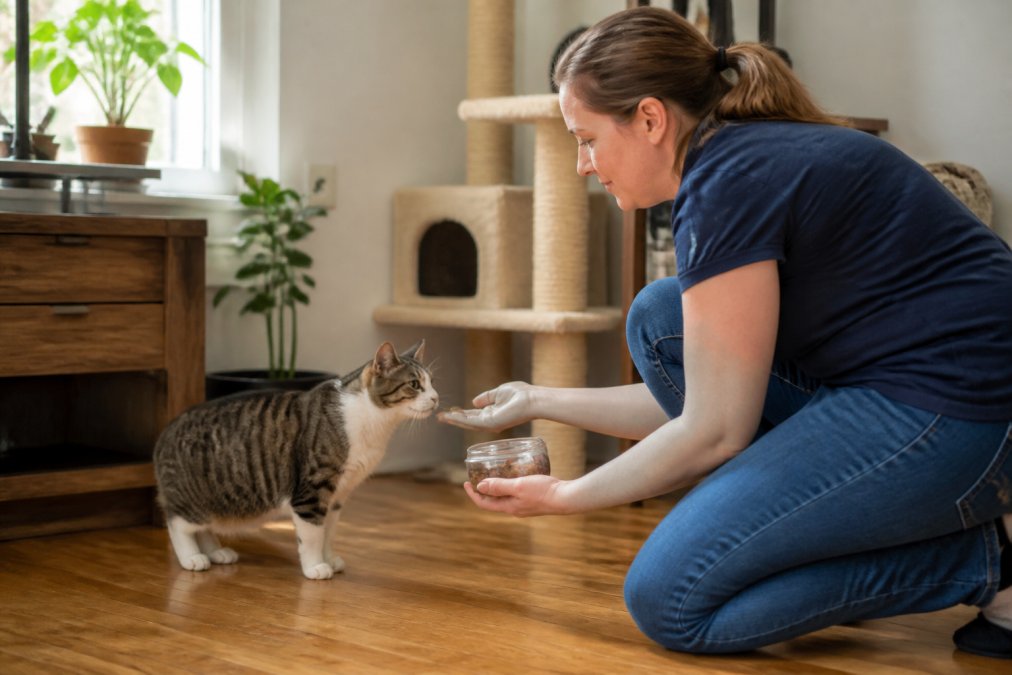
Ask about their approach to handling cats. A good sitter will ask about your cat's personality and adjust their approach accordingly, letting your cat set the pace for interaction. Verify they understand medication administration if your cat needs it. A sitter without medical confidence shouldn't handle your cat's prescriptions.
Check references from previous clients about reliability, communication, and how their cats responded to the sitter.
Tracy's Kitty Care sitters meet all these standards. Every sitter is background-checked, licensed, bonded, and insured. Our team specializes exclusively in cat care, understanding feline behavior deeply. We can handle medication administration, recognize signs of illness, and adapt our approach to each cat's individual personality.
In-Home Sitting vs. Boarding: A Cost and Comfort Comparison
The comparison between in-home pet sitting and boarding facilities reveals why many cat owners are shifting to in-home care.
| Aspect | In-Home Pet Sitting | Boarding Facility |
|---|---|---|
| Environmental Stability | Your cat's home, familiar surroundings | Unfamiliar cage or room with other cats |
| Stress Level | Minimal, routine maintained | High, environment completely changed |
| One-on-One Attention | Personalized care during each visit | Minimal individual attention |
| Illness/Parasite Exposure | Isolated in your home | Exposure to other animals and pathogens |
| Medication Administration | Precise, individualized | Often less reliable or unavailable |
| Feeding Flexibility | Custom schedules and diets | Standard facility meals |
| Behavioral Issues During Absence | Rare with consistent sitter | Common (litter box issues, loss of appetite) |
| Recovery Time After Care | Minimal, cat remained home | Days or weeks of behavioral adjustment |
| Cost Structure | Per visit (typically $30 per 30-minute visit) | Daily boarding rate (v |
| aries by facility) |
A single 30-minute in-home pet sitting visit from Tracy's Kitty Care costs $30. For a week-long trip with one daily visit, you're looking at $210. Many boarding facilities charge $40-75 per day, making a week-long stay $280-525. The price difference narrows significantly, and the quality difference heavily favors in-home sitting.
The real cost isn't just financial. A cat that experiences severe stress during boarding may develop behavioral problems requiring veterinary intervention. A cat that stops eating during boarding risks dehydration and complications. In-home pet sitting prevents these issues entirely, making it more economical when you factor in health outcomes.
Home security and additional benefits also favor in-home sitting. While your sitter visits your cat, they can collect mail, water plants, and check that your home is secure.
Medical Care and Special Needs Support
Cats with medical conditions require consistent, knowledgeable care that boarding facilities often can't provide. A cat on insulin needs injections at consistent times. A professional in-home sitter can administer insulin reliably, monitor eating and water intake, and watch for complications. A boarding facility managing dozens of animals simultaneously can't provide this level of individualized attention.
Cats with chronic kidney disease need frequent small meals and consistent water access. Some require specific prescription diets that boarding facilities don't stock. An in-home sitter can prepare meals exactly as your veterinarian recommends and monitor water intake.
Cats recovering from surgery or illness need quiet, stress-free environments with restricted activity and careful monitoring. Boarding is contraindicated for post-surgical recovery. In-home pet sitting provides the calm, familiar environment that supports healing.
Elderly cats benefit enormously from in-home care. Senior cats often have multiple medical conditions requiring consistent routines, pain management, and careful monitoring. They struggle with the stress of boarding. In-home pet sitting allows them to age in place with minimal stress.
Cats with behavioral issues, extreme shyness, aggression, or anxiety often can't be boarded at all. In-home pet sitting is often the only viable option. A skilled sitter understands how to interact with difficult cats, build trust gradually, and provide care without escalating behavioral problems.
Tracy's Kitty Care sitters are trained to handle all of these scenarios. We can administer medications, monitor health indicators, recognize signs of medical distress, and provide specialized care for cats with complex medical needs.
Conclusion
The choice between in-home pet sitting and boarding facilities becomes clear once you understand what's at stake. Your cat's stress levels, health, behavior, and emotional wellbeing all depend on maintaining the familiar environment and routine that in-home pet sitting provides.
Tracy's Kitty Care offers professional in-home pet sitting that keeps your cat safe, comfortable, and happy while you travel. Our background-checked, licensed, bonded, and insured sitters specialize exclusively in cat care, understanding feline behavior deeply and providing personalized attention your cat deserves. Learn more about our cat sitting service and pricing to see how we can give you peace of mind on your next trip.
Frequently Asked Questions
Q: Why do cats experience more stress in boarding facilities?
A: Cats are territorial animals that thrive on environmental stability. Boarding facilities expose them to unfamiliar spaces, new sounds, and other animals, triggering kennel stress and separation anxiety. The disruption to their daily routine, combined with potential exposure to illness in shared environments, can cause behavioral changes and health issues. In-home pet sitting eliminates these stressors by keeping your cat in its familiar environment where it feels secure.
Q: What should I look for in a cat sitter?
A: Choose a sitter who is background-checked, licensed, bonded, and insured. Verify they have experience handling shy or nervous cats and can manage medical needs like medication administration. Ask about their safety protocols, how they handle emergencies, and whether they provide daily updates. A reliable sitter should understand your cat's personality, feeding schedule, and exercise regimen, ensuring consistent personalized care that keeps your pet comfortable and healthy.
Q: How much does in-home pet sitting cost compared to boarding?
A: In-home pet sitting typically costs more per visit than basic boarding, but the long-term value is significant. Tracy's Kitty Care charges $30 for a 30-minute visit including feeding, water, litter box cleaning, and playtime. Boarding facilities often charge $25-$50 per day, but you lose the benefits of your cat staying home. For occasional travel a few times yearly, in-home sitting is worth the investment for stress reduction and health protection. For frequent travelers, the cost difference narrows when you factor in fewer vet visits due to reduced illness exposure.
Q: Can pet sitters handle medical needs like insulin injections?
A: Yes, professional pet sitters trained in medication administration can handle insulin injections and other medical care. When hiring, confirm your sitter has experience with your cat's specific medical needs and ask about their protocols for emergencies. Provide clear written instructions, dosages, and your veterinarian's contact information. Licensed, bonded sitters are insured to handle medical tasks, giving you peace of mind that your immunocompromised or medically complex cat receives proper care while you're away.
This article was written using GrandRanker