 how-to
Keep Indoor Cats Entertained While Away for Work
Table of Contents
- How Long Can You Leave a Cat Alone
- Interactive Cat Toys for When You Are Away
- Environmental Enrichment Strategies to Keep Indoor Cats Entertained
- Cat Sitter Daily Check-In Process
- Establishing Routine and Managing Separation Anxiety
- Safety Checklist Before You Leave
- Frequently Asked Questions
Last Updated: September 28, 2026
How Long Can You Leave a Cat Alone
Most cats can safely stay alone for 24 to 48 hours maximum. Beyond that, they need fresh water, food, and litter box attention. Leaving a cat unattended for longer periods creates real risks: dehydration, urinary tract issues, and behavioral stress.
Timeframes vary by age: kittens under one year need attention every 12 hours, senior cats (over 10 years) may need twice-daily visits, and healthy adults typically manage 24 hours.
Indoor cats rely entirely on you for food, water, and litter maintenance, even one missed cleaning causes stress.
This is where professional help makes a real difference. A service like Tracy's Kitty Care's cat sitting service handles daily visits, feeding, fresh water, and litter box maintenance so your cat stays comfortable while you work.
Interactive Cat Toys for When You Are Away
Puzzle Feeders and Food-Dispensing Toys
Puzzle feeders turn eating into an activity, keeping your cat's mind engaged and body moving instead of finishing a bowl in two minutes.
Food-dispensing toys come in different difficulty levels:
- Beginner level: Simple ball feeders with large holes
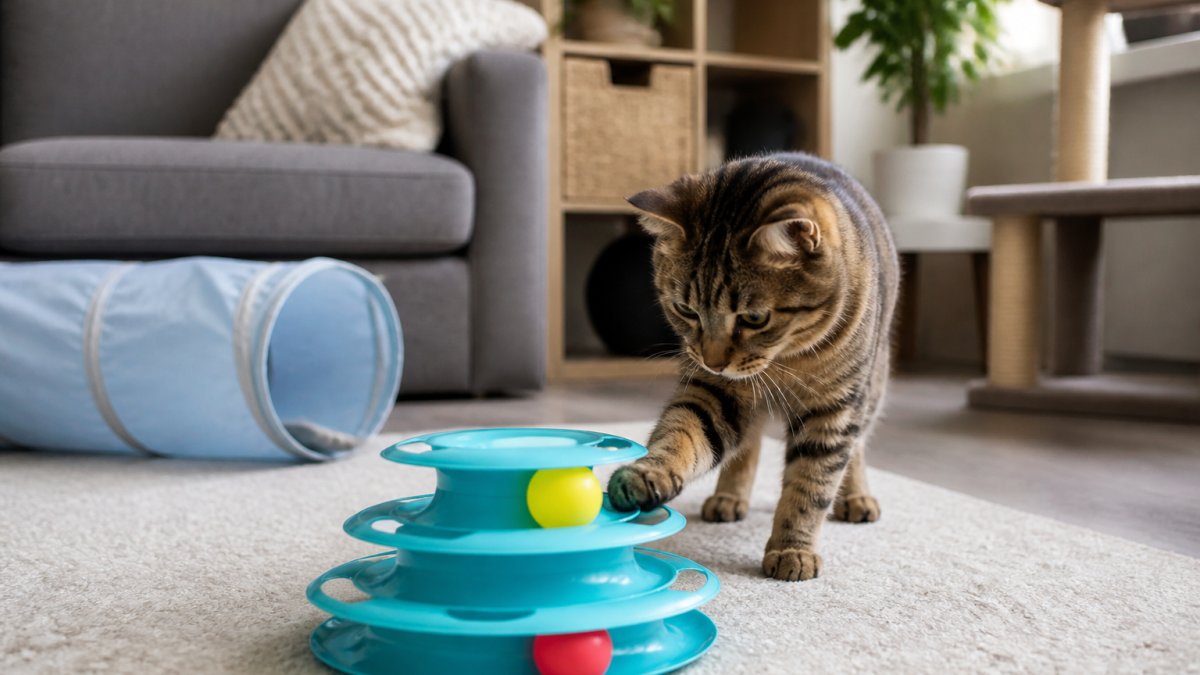
- Intermediate: Treat-dispensing toys requiring pawing or rolling
- Advanced: Multi-step puzzle feeders with hidden compartments
Puzzle feeders tap into natural foraging instincts, providing 30 minutes of mental and physical activity, ideal for workday enrichment.
Set up multiple puzzle feeders in different rooms so your cat hunts them down throughout the day, breaking up boredom.
Wand Toys and Interactive Play Before Departure
A 10-minute pre-departure play session with a wand toy tires out most cats, encouraging napping while you're gone.
Play 30 minutes before leaving to create a natural wind-down period that aligns with their hunting and sleeping cycles.
Rotate wand toy styles (feather wands, string toys, crinkle toys, ball toys) to match your cat's natural hunting behavior, whether they prefer vertical leaping or low stalking.
Automated and Smart Enrichment Systems
Automated toys bridge the gap between passive toys and interactive play. Unlike wand toys, they don't require your presence, but they do require thoughtful setup.
Battery-operated motion toys work best on hard floors, engaging cats for 5-10 minute bursts.
Automated laser systems trigger chase instincts but cats cannot catch the laser, creating frustration. Limit sessions to 10-15 minutes and always follow with a physical toy your cat can catch to satisfy the hunting sequence.
Smart treat dispensers with cameras combine enrichment and remote monitoring, letting you watch and dispense treats via phone. Look for durable construction and reliable app connectivity.
Robotic toys move autonomously but cat reactions vary widely, test before committing to extended use.
Combine puzzle feeders, wand toys, and one or two automated options to keep your cat engaged throughout your workday.
Environmental Enrichment Strategies to Keep Indoor Cats Entertained
Vertical Space and Cat Trees
Vertical space is essential for indoor cats, it provides territory, safety, and exercise.
Multi-level cat trees (6+ feet) provide climbing distance and physical activity across different platforms.
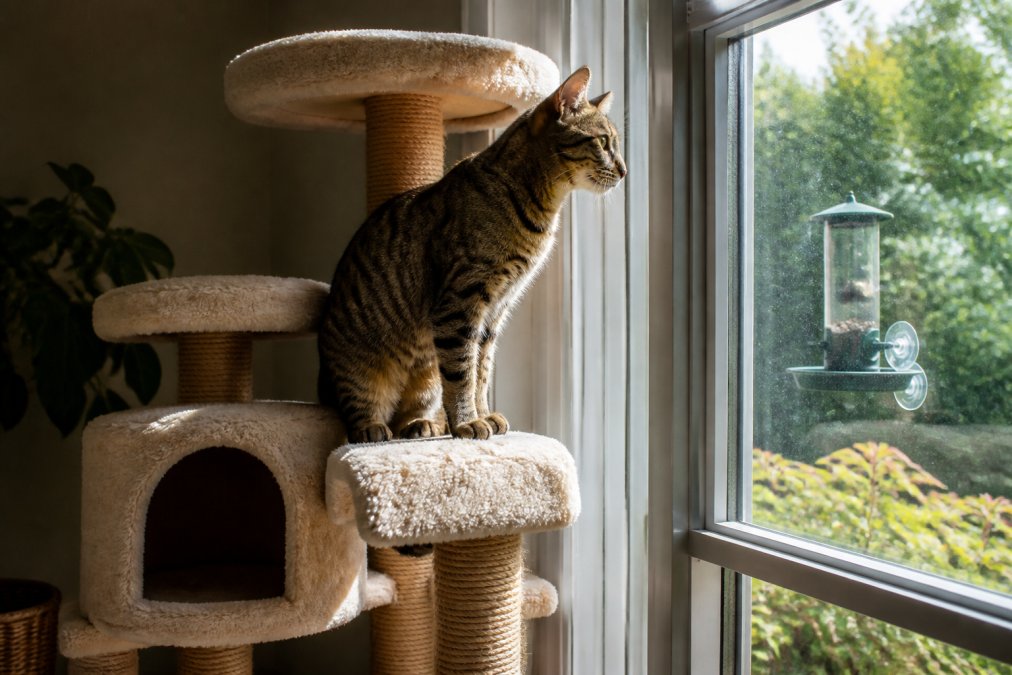
Place cat trees near windows or in corners where your cat feels secure, isolated placement gets ignored.
Different heights serve different purposes: low platforms for kittens and seniors, mid-level for adults, high perches for observation. Scratching posts are equally important, cats need them to shed nail sheaths, mark territory, and stretch muscles.
Window Perches and Bird Feeders
Window perches provide free entertainment, birds and outdoor movement keep cats mentally stimulated for hours.
Suction-cup window perches provide front-row seating; heated versions add comfort in cold months.
Place a bird feeder outside your window to trigger your cat's prey drive and keep them engaged.
Window stimulation reduces stress and anxiety, a cat watching birds is a calm, focused cat.
Multiple windows let your cat rotate viewing spots, keeping stimulation fresh.
Safe Hiding Spots and Scent Enrichment
Hiding spots are essential, they make cats feel secure and reduce stress.
Create hiding spots with cardboard boxes, paper bags, covered beds, or tunnels, scatter multiple options throughout your home.
Scent enrichment keeps cats' brains active, cats experience the world through smell.
Use catnip, silvervine, pheromone diffusers (like Feliway), or worn clothing. Rotate scents every few days and replace catnip regularly for maximum potency.
Cat Sitter Daily Check-In Process
A typical 30-minute daily visit includes fresh food and water, litter box cleaning, 10-15 minutes of playtime, and a quick health check. Consistency matters most, same-time arrivals reduce anxiety.
Before hiring, clarify visit details: playtime duration, medication administration, and comfort with shy cats. Choose sitters who are background-checked, bonded, and insured.
Tracy's Kitty Care sitters are background-checked, licensed, bonded, and insured, specializing exclusively in cats and understanding feline behavior.
Establishing Routine and Managing Separation Anxiety
Cats thrive on routine, consistent feeding, play, and sitter visits reduce anxiety, though specific needs depend on age and health.
Age-Specific Enrichment and Routine Needs
Kittens need 4-6 play sessions daily and twice-daily sitter visits. Rotate puzzle feeders, provide safe climbing structures, and remove hazards. Kittens under 12 weeks need attention every 4-6 hours and 3-4 meals daily, professional mid-day care is essential for full-time workers.
Adult cats manage 24-36 hours with a single daily sitter visit.
Building Routine Before You Need It
Start your routine before you need it. Don't wait until you're leaving for a week-long trip to hire a sitter. Introduce your cat to a sitter while you're home. Let them get comfortable with this person. By the time you leave, your cat knows the routine.
Recognizing and Managing Separation Anxiety
Signs of separation anxiety include:
- Excessive vocalization (meowing, yowling)
- Destructive behavior (scratching furniture, knocking things over)
- Litter box avoidance or accidents outside the box
- Loss of appetite or refusal to eat while you're gone
- Over-grooming, hair loss, or skin lesions
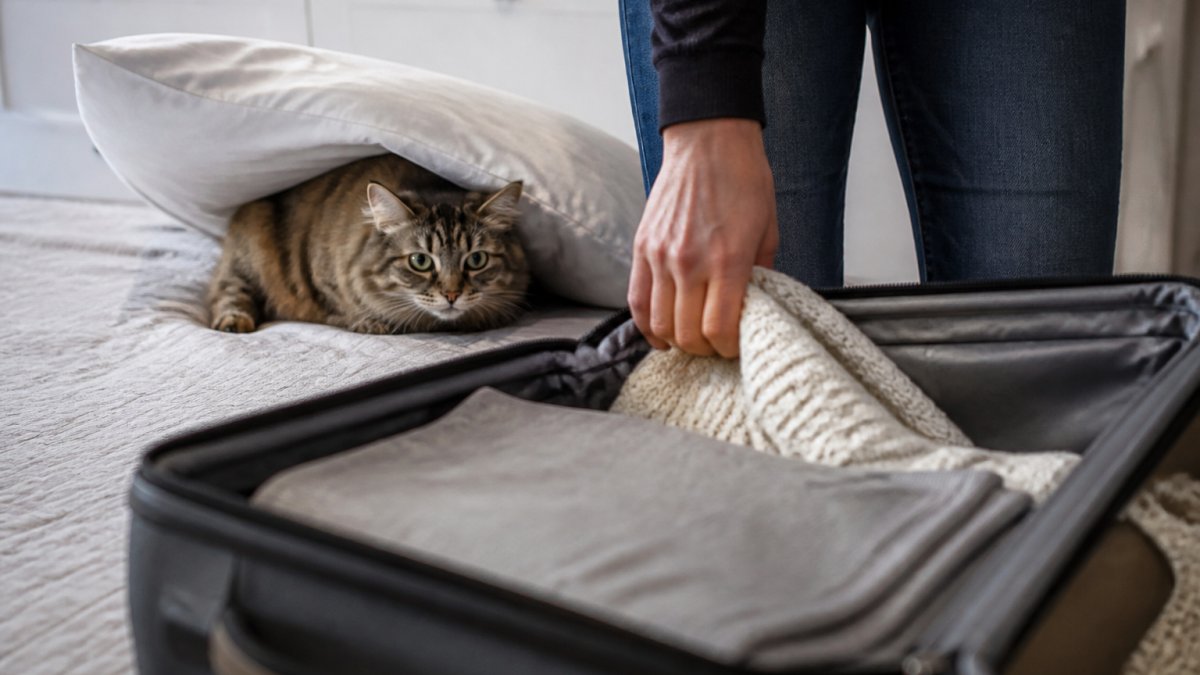
- Attempts to escape or panic at doors/windows
Managing separation anxiety requires a multi-pronged approach:
Gradual desensitization: Leave for short periods first. Five minutes. Then 15 minutes. Build up slowly over weeks. Your cat learns that you always come back. This works best for mild anxiety and is essential for kittens.
Safety Checklist Before You Leave
Before you leave for work, run through this checklist:
- Fresh water in multiple bowls (or a water fountain)
- Food portioned correctly (ask your sitter if unsure)
- Litter boxes clean and accessible
- No toxic plants within reach
- No open windows or doors
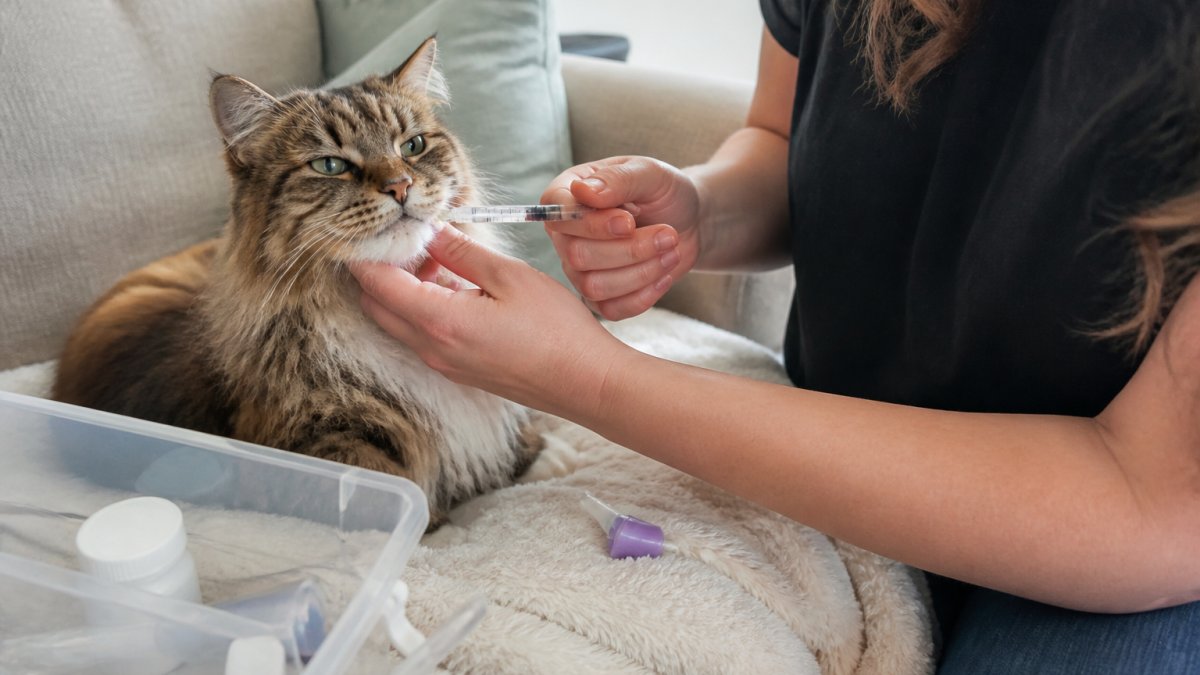
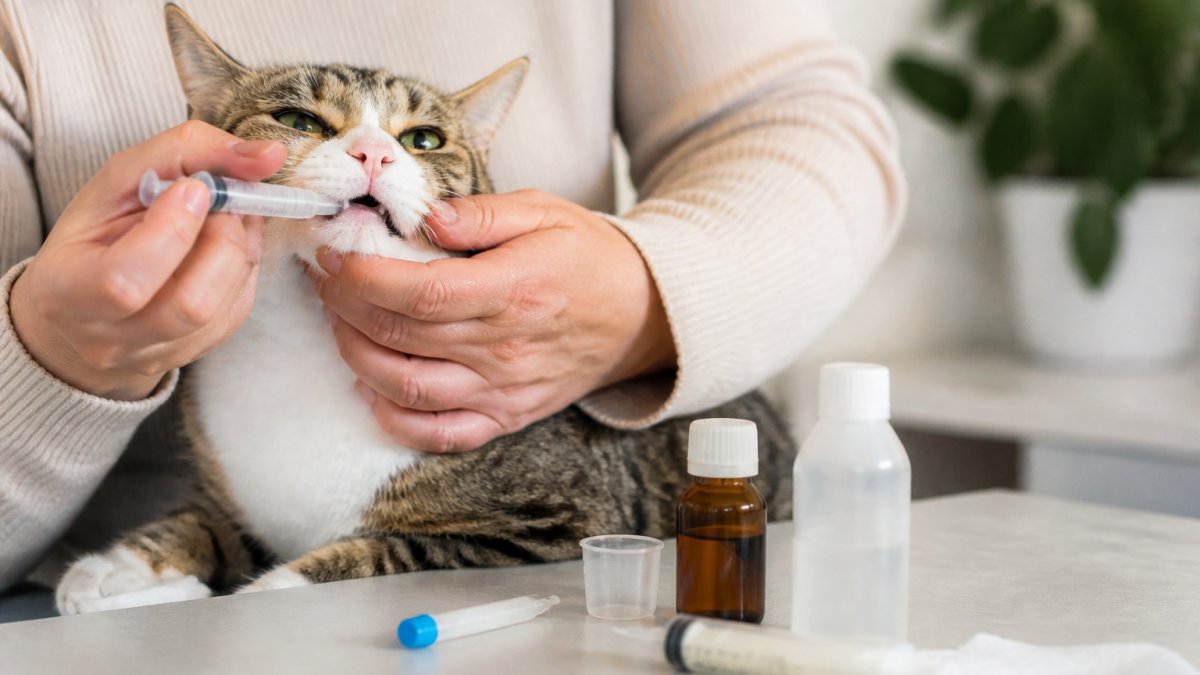
- Medications set out and labeled
- Emergency vet contact info visible
- Sitter has your phone number and backup contact
- Doors to dangerous areas (laundry room, basement) closed
- Breakable items moved to safe locations
- Your cat's hiding spots accessible and safe
Cat-proofing your home prevents accidents. Secure electrical cords. Remove toxic substances. Close off areas where your cat could get trapped.
If you're gone overnight, add these items:
- Extra litter boxes (one per cat, plus one extra)
- Water bowls in multiple rooms
- Comfortable sleeping areas
- Access to all safe rooms in your home
Frequently Asked Questions
How long can you leave a cat alone before they need care?
Most cats can safely stay alone for 24-48 hours with access to fresh water and a clean litter box, but they begin experiencing stress and boredom after 24 hours. For work trips lasting a full day or longer, a daily check-in from a professional cat sitter helps maintain their routine, provides mental stimulation, and ensures medical needs are met. Cats left alone for extended periods are at risk of litter box issues, dehydration, and behavioral problems from separation anxiety.
What are the best interactive cat toys for when you are away?
Puzzle feeders, wand toys on timers, and food-dispensing balls engage your cat's foraging and hunting instincts while you're gone. Automated toys that move unpredictably, catnip-filled toys, and silvervine alternatives provide mental stimulation without your participation. Rotate toys every few days to prevent boredom. Combine multiple types, solitary play toys with interactive options, so your cat has variety throughout the day.
Can a professional cat sitter really help reduce my cat's stress while I'm at work?
Yes. A consistent daily check-in from a trained sitter breaks up long periods alone, maintains your cat's feeding and litter routine, and provides social interaction that reduces separation anxiety. Professional sitters understand cat behavior and can identify signs of stress, illness, or injury early. For shy or nervous cats, a familiar sitter in their own home is far less stressful than boarding facilities or kennel environments.
How do I know if my indoor cat is bored or lonely during the day?
Bored cats often display destructive behavior, excessive meowing, litter box avoidance, or reduced appetite. They may overgroom, seem lethargic, or show less interest in play. Cats with separation anxiety may refuse to eat or become anxious when you prepare to leave. Providing environmental enrichment, interactive toys, and consistent daily routines, or scheduling cat sitter visits, addresses these signs and improves your cat's mental health and overall well-being.