 blog
Alternatives to Declawing: Humane Cat Care Options
Table of Contents
- Why Declawing Is No Longer Recommended
- Alternatives to Declawing: A Comprehensive Overview
- Regular Nail Trimming and Maintenance
- Claw Caps: How to Use Them Effectively
- Scratching Posts and Humane Scratching Solutions
- How to Choose a Cat Sitter for Behavioral Modification Support
- Professional Cat Sitting Services in Amherst: Support for Scratching Management
- Cat Sitting vs. Boarding: Which Supports Nail Health Best
Last Updated: August 28, 2026
Why Declawing Is No Longer Recommended
Declawing involves amputating the last bone of each toe, fundamentally altering a cat's anatomy and causing chronic pain (avma.org). The procedure removes the bone structure that supports normal walking, climbing, and balance. Declawed cats often develop arthritis, nerve damage, and behavioral problems including aggression and inappropriate elimination (peer-reviewed research). The American Veterinary Medical Association discourages the practice except in rare medical circumstances. Pain from declawing can persist for years, with some cats developing phantom limb pain or becoming hypersensitive to touch on their paws. Declawed cats lose their primary defense mechanism and become unsafe for outdoor living. Understanding these realities has shifted the conversation entirely, today's responsible cat owners are exploring alternatives that preserve their cat's health and natural behaviors.
Alternatives to Declawing: A Comprehensive Overview
Multiple evidence-based alternatives exist that address destructive scratching without compromising your cat's wellbeing. These solutions range from simple DIY approaches to professional services designed specifically to manage scratching behavior.
DIY Solutions vs. Professional Services
Managing scratching behavior at home requires consistency, patience, and the right tools. DIY solutions are cost-effective and give you direct control over implementation through scratching posts, nail trimming, and environmental modifications. However, DIY approaches demand ongoing effort and many cat owners underestimate the time required, especially with multiple cats or established scratching habits.
Professional services offer targeted expertise. A professional cat sitter or behavioral consultant can assess your cat's specific scratching triggers, territorial marking, stress, boredom, or claw maintenance, and implement solutions accordingly. Professional support is particularly valuable for cats with anxiety or medical needs. Tracy's Kitty Care provides in-home cat sitting, allowing your cat to stay in their familiar environment while receiving expert attention. The hybrid approach, combining DIY basics with occasional professional support, works well for many households.
Regular Nail Trimming and Maintenance
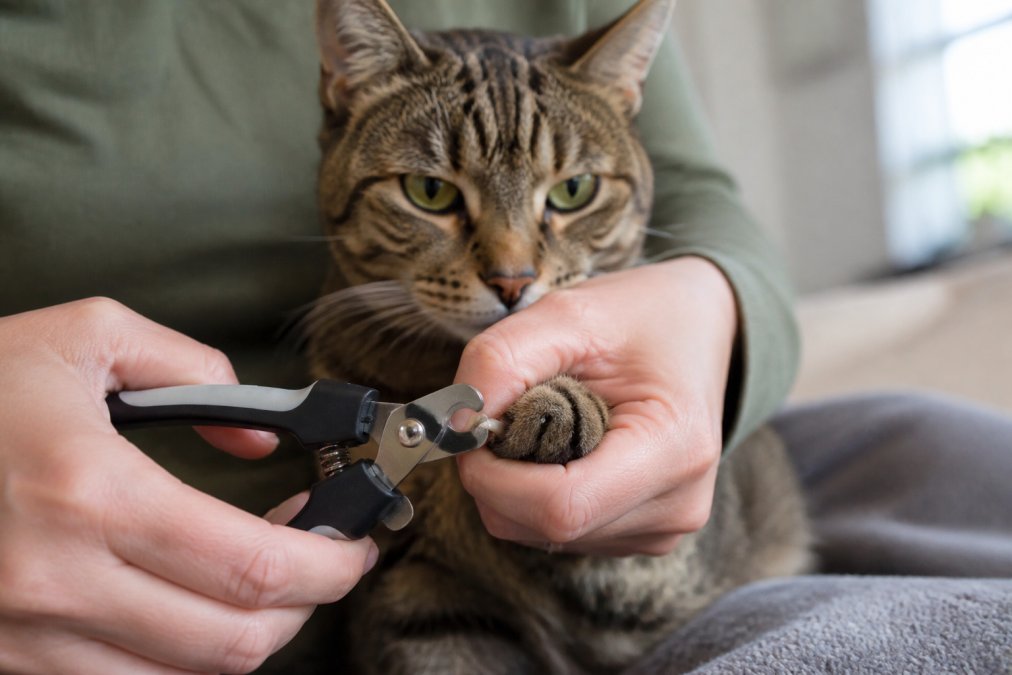
Regular nail trimming every 2-3 weeks removes sharp tips that cause furniture damage while keeping claws healthy and manageable. Short nails are less likely to catch on fabric, reducing the urge to scratch furniture. Use a cat-specific nail clipper and trim only the clear or white tip, avoiding the pink quick that contains blood vessels. Frequent small trims are better than occasional deep cuts.
Most cats tolerate trimming if you start early and keep sessions brief. If your cat resists, professional groomers or veterinary technicians can help. Some cats respond better when relaxed or sleepy. The key is making it a positive experience with treats and praise.
Claw Caps: How to Use Them Effectively
Claw caps are small, soft plastic sheaths that fit over your cat's claws, blunting them and preventing furniture damage. They're humane, non-invasive, and completely reversible. Cats can still extend and retract their claws normally, and caps eventually fall off as nails grow, requiring replacement every 4-6 weeks.
Applying claw caps requires practice. Trim nails first, then fit each cap snugly over the nail. The caps come in different sizes, too loose and they fall off immediately, too tight and they cause discomfort. Most kits include adhesive, though some cats' natural oils prevent caps from staying on long-term. For cats that tolerate them well, claw caps preserve natural scratching behavior while eliminating furniture damage.
Scratching Posts and Humane Scratching Solutions
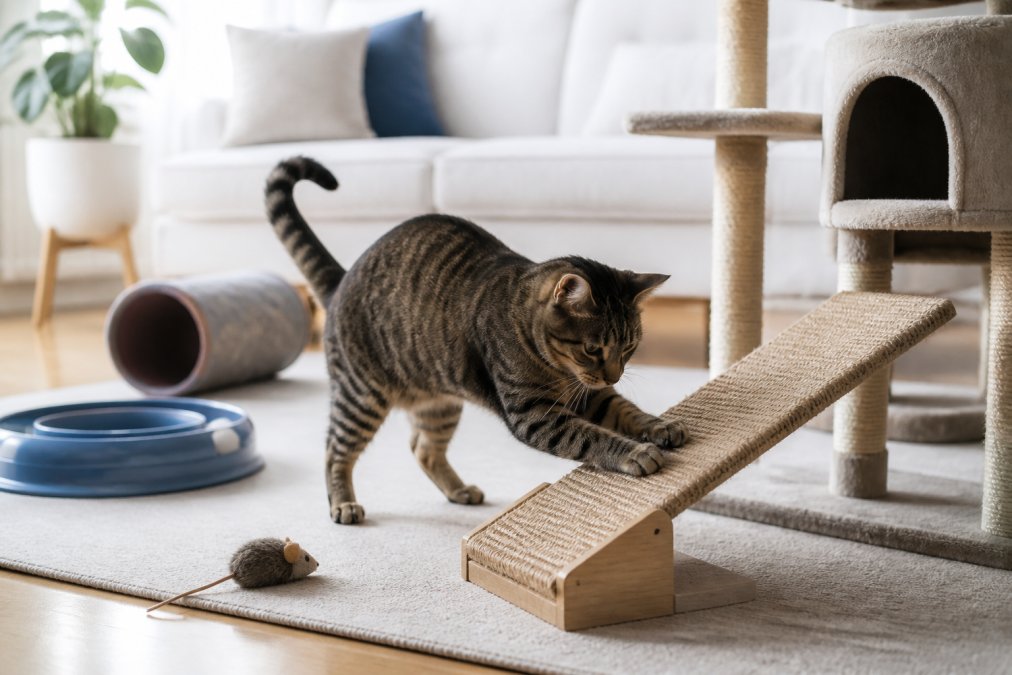
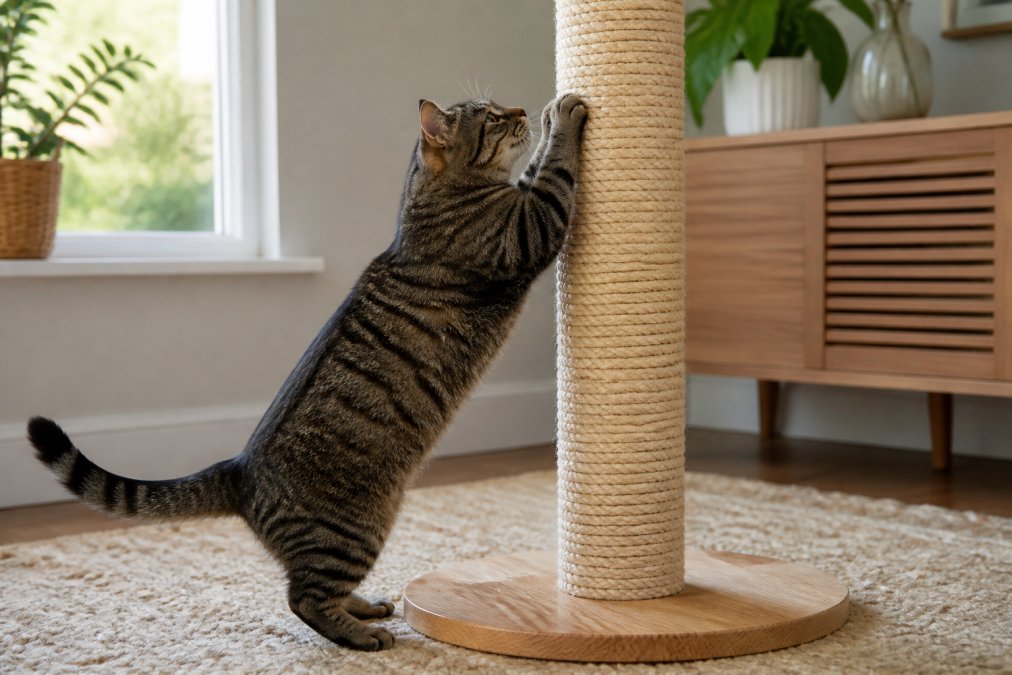
Scratching posts and cat trees redirect natural scratching behavior away from furniture. Cats scratch to maintain healthy claws, mark territory, stretch muscles, and relieve stress (peer-reviewed research). The key is offering posts that appeal to your cat's preferences, some prefer vertical surfaces, others horizontal, and many prefer a mix.
Different materials appeal to different cats. Sisal rope is a classic choice many cats love. Cardboard scratching pads are inexpensive and replaceable. Carpet-covered posts can train cats to scratch carpet throughout your home, defeating the purpose. Wood or bark-textured posts appeal to cats wanting a natural feel.
Placement matters enormously. Put scratching posts near furniture your cat currently scratches, near windows, and in high-traffic areas. Cats often scratch after waking, playing, or eating, so position posts near sleeping areas and play zones. Make posts more appealing by rubbing catnip on them or spraying with catnip spray. Reward your cat for using posts with treats and praise.
How to Choose a Cat Sitter for Behavioral Modification Support
A good cat sitter understands cat behavior, recognizes stress signals, and knows how to interact in ways that build trust. When evaluating a sitter, ask about experience with behavioral issues, desensitization techniques, and medication administration. Ask for references from other cat owners, particularly those with similar cats. A sitter specializing in cats will have deeper expertise in feline behavior.
Verify credentials carefully. Background checks are essential. Ask whether the sitter is bonded and insured. Licensed pet sitters have completed formal training and adhere to professional standards. Tracy's Kitty Care employs only background-checked, licensed, bonded, and insured sitters who specialize exclusively in cats. Trust your instincts about personality fit, your cat will spend time alone with this person, so compatibility matters.
Professional Cat Sitting Services in Amherst: Support for Scratching Management
Professional in-home cat sitting offers advantages beyond basic care. When you're away, a trained sitter can continue behavioral modification work, maintain nail trimming schedules, monitor scratching behavior, and ensure your cat stays mentally stimulated. In-home sitting keeps your cat in their familiar environment, reducing stress and anxiety.
Tracy's Kitty Care provides professional cat sitting services for cats in the Amherst area. Our sitters offer 30-minute visits that include feeding, fresh water, litter box cleaning, and playtime. Beyond basic services, our team can support behavioral goals by monitoring scratching behavior, maintaining nail trimming schedules, and ensuring your cat receives consistent attention and stimulation. Our sitters are background-checked, licensed, bonded, and insured. Rather than leaving your cat alone with an automatic feeder, professional sitters ensure daily attention, exercise, and monitoring.
Cat Sitting vs. Boarding: Which Supports Nail Health Best
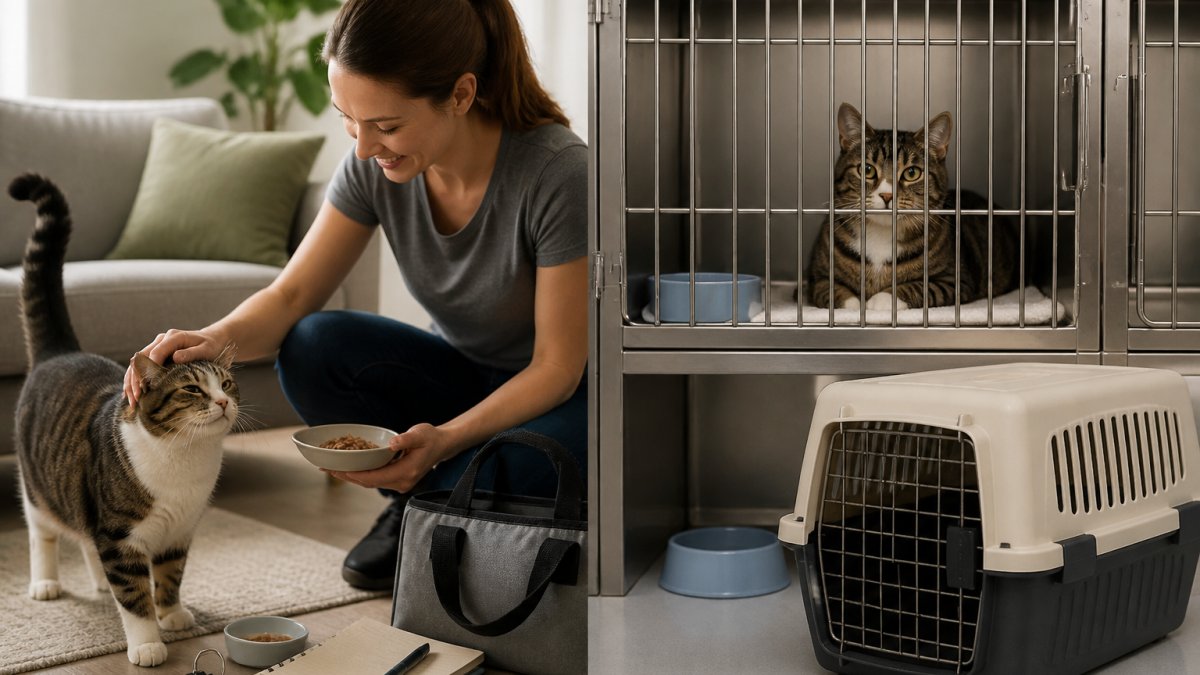
In-home cat sitting keeps your cat in their familiar environment with minimal stress. Your cat stays on their regular schedule, maintains access to favorite spaces, and receives one-on-one attention. A professional sitter can observe changes in scratching behavior and ensure your cat remains emotionally stable.
Boarding facilities house multiple cats in shared or individual spaces. Even high-quality facilities introduce environmental stress, unfamiliar surroundings, and the presence of other animals. Some cats handle this well; others experience anxiety that can trigger behavioral changes including increased scratching. Boarding is often more affordable but offers reduced individual attention and increased stress for sensitive cats.
For cats with anxiety, behavioral issues, or medical needs, in-home sitting is typically the better choice. For healthy, social cats that handle change well, boarding can be adequate and more economical.
| Aspect | In-Home Sitting | Boarding Facility |
|---|---|---|
| Environment | Familiar home | Unfamiliar facility |
| Stress Level | Lower for most cats | Higher, especially for anxious cats |
| Individual Attention | One-on-one daily | Shared attention among multiple cats |
| Scratching Behavior | Typically stable | May increase due to stress |
| Cost | Higher | Lower |
| Best For | Anxious, shy, or medical-need cats | Healthy, social cats |
| Behavioral Continuity | Excellent | Limited |
Declawing is irreversible and harmful, but effective alternatives exist. From regular nail trimming and claw caps to scratching posts and professional behavioral support, you have multiple options for managing your cat's natural scratching behavior while preserving their health and wellbeing. The most successful approach combines environmental management with professional support when needed.
Tracy's Kitty Care provides expert cat sitting services that support your behavioral goals while keeping your cat comfortable and secure in their own home. Our background-checked, licensed, bonded, and insured sitters specialize exclusively in cats and understand how to manage scratching behavior, administer medication, and provide consistent care your cat deserves. Whether you need occasional support while you travel or regular visits to maintain behavioral continuity, professional cat sitting is an investment in your cat's physical and emotional health. Reach out to learn more about how our services can support your cat's wellbeing and help you move beyond declawing toward truly humane alternatives.
Frequently Asked Questions
Q: What are the best alternatives to declawing for protecting furniture?
A: The most effective alternatives to declawing include regular nail trimming every 2-3 weeks, claw caps (soft plastic sheaths that dull claws), and providing multiple scratching posts or pads. Many cat owners combine these methods for best results. Scratching posts made from sisal rope or cardboard satisfy your cat's natural scratching behavior while protecting furniture. Professional grooming services can handle regular trimming if you're uncomfortable doing it yourself.
Q: How do I choose a cat sitter who understands scratching behavior and nail care?
A: When selecting a cat sitter, ask about their experience with behavioral modification and whether they've worked with cats that have scratching issues. Request background verification, licensing, and insurance proof. A good sitter should understand how stress affects scratching behavior and can help maintain consistency with training while you're away. Ask for references from other cat owners and discuss their approach to handling nervous or anxious cats during visits.
Q: Is professional in-home cat sitting better than boarding for managing scratching issues?
A: In-home cat sitting generally supports nail health better than boarding facilities. Cats experience less stress in familiar environments, which reduces anxiety-driven scratching. A professional sitter can monitor nail condition, maintain trimming schedules, and ensure scratching posts are accessible. Boarding facilities may cause stress that increases destructive scratching. For cats with behavioral sensitivity or those requiring consistent care routines, in-home sitting provides superior continuity and comfort.
Q: What are the long-term health effects of using scratching deterrents instead of declawing?
A: Scratching deterrents like sprays, double-sided tape, or furniture covers are non-invasive and preserve your cat's natural claw function and mobility. Unlike declawing, which causes chronic pain and behavioral problems, deterrents simply redirect scratching to appropriate surfaces. Combined with regular nail trimming and scratching posts, these methods maintain your cat's physical and mental health. Regular maintenance prevents overgrown nails that can curl into paw pads, causing infection or discomfort.
This article was written using GrandRanker