 blog
9 Pill Dispenser Options for Cats Compared
Quick Summary
The best pill dispensers for cats are pill guns with soft silicone tips for small tablets and capsules, and longer pillers for larger tablets. A dispenser lets you place a pill at the back of the cat's mouth without your fingers near her teeth, which lowers the risk of bites and scratches.
- Choose a soft silicone or rubber tip, since firm plastic can nick the gums.
- Measure your pill with a ruler and match the barrel diameter to it.
- Test a dispenser with an empty capsule of the same size before dosing.
- Give one smooth press of the plunger, then stroke the throat to encourage swallowing.
- Ask your veterinarian before crushing, splitting, or mixing any pill into food.
Table of Contents
- Why Pill Dispensers Make Dosing Safer and Less Stressful
- Types of Pill Dispensers: Pill Guns, Pillers, and Plungers
- Side-by-Side Comparison of Dispenser Features
- How to Give a Cat a Pill With a Dispenser
- Pill Pockets and Hidden-Dose Alternatives Compared
- Safety Cautions, Fit by Cat Size, and Medication Warnings
- Cleaning, Maintenance, and Troubleshooting Stressful Doses
- Getting Help With Medication When You Travel
- Frequently Asked Questions
Why Pill Dispensers Make Dosing Safer and Less Stressful
A pill dispenser lets you place a tablet or capsule at the back of a cat's mouth without your fingers going near her teeth.
A dispenser also keeps the dose consistent. You load one pill, deliver it in one motion, and know it went down.
Dispensers are not a universal fix. Some cats still resist, and some medications should not be crushed or split.
Types of Pill Dispensers: Pill Guns, Pillers, and Plungers
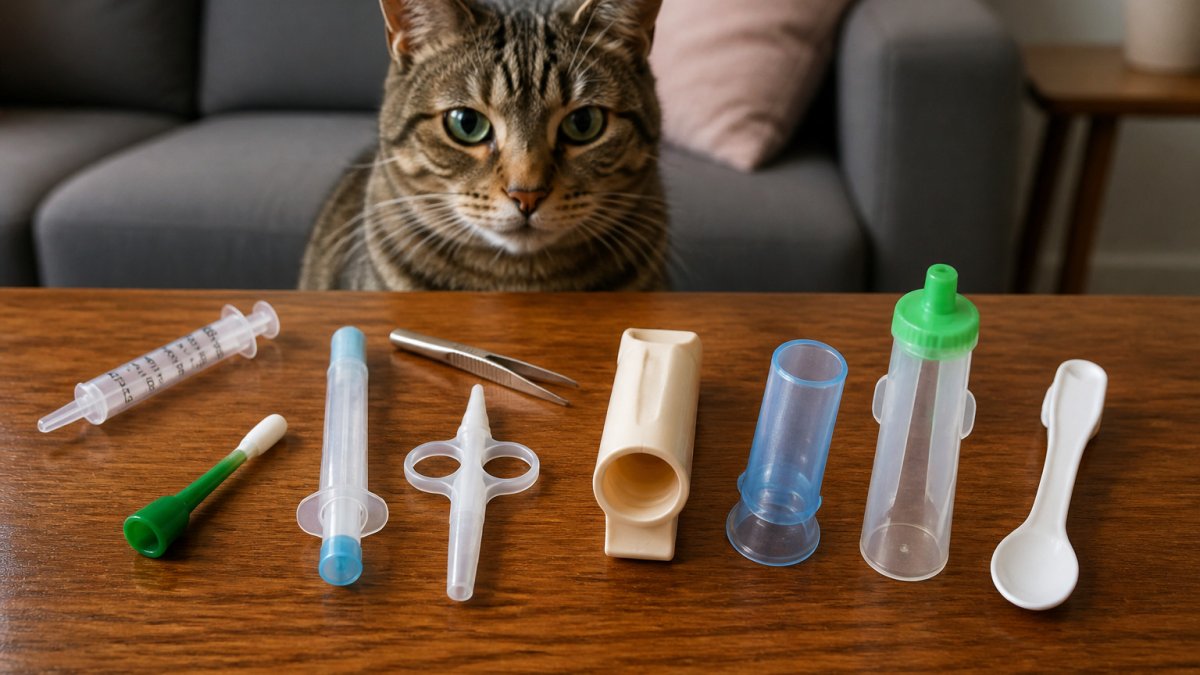
Most dispensers fall into a few families. The names overlap in product listings, so focus on how the device works rather than its label.
Pill Guns and Pill Shooters
A pill gun has a barrel that holds a single pill and a plunger that pushes it out. Place the soft tip into the side of the mouth, angle it toward the back of the throat, and press. Pill guns suit small tablets and capsules and are often the most portable option.
Look for a soft silicone or rubber tip. A firm plastic tip is more likely to bruise the gums or lips.
Pillers and Plungers
Pillers, sometimes called pill pushers or pet pillers, use a longer barrel and a plunger you press firmly to move the pill past the tongue. Plunger-style models often handle larger tablets better than compact guns, but take more practice because the length gives you less control in a tight space.
Side-by-Side Comparison of Dispenser Features
Most roundups stop at "look for a soft tip," which is not enough to choose between two dispensers on a shelf. The comparison below breaks the category into the design choices that actually change how a cat tolerates dosing, with trade-offs spelled out.
The Three Design Families, Compared
| Design family | Typical barrel length | Tip style | Best for | Main trade-off |
|---|---|---|---|---|
| Compact pill gun / pill shooter | Short, roughly 3-5 inches | Soft silicone or rubber bulb | Small tablets and capsules; nervous cats you want to dose fast | Less reach, so placement depends on opening the mouth correctly |
| Long-barrel piller / pill pusher | Longer, roughly 6-10 inches | Rounded plastic or rubber | Larger tablets; cats that clamp down | More reach but less fine control in a small mouth |
| Plunger-style syringe dispenser | Medium, with a wide plunger head | Soft flexible tip | Owners with limited grip strength; repeated daily dosing | Bulkier to store and clean; some models are harder to load one-handed |
What to Check Before You Buy
- Tip material and thickness. Soft silicone or rubber compresses against the gum instead of digging in. A thin, hard plastic tip is the most common cause of a small gum nick. If the tip does not give under finger pressure, it is too firm for daily use.
- Barrel diameter versus your pill. Measure the tablet or capsule with a ruler. A barrel rated for small tablets will jam on a large capsule, and a barrel that is too wide lets a small pill roll out of the tip. Test with an empty capsule of the same size before the first real dose.
- Plunger travel and feel. Press the plunger a few times before buying. It should move smoothly with one thumb and stop firmly at the end of its travel. A gritty or stiff plunger is hard to control in a moving cat's mouth.
Matching the Dispenser to Your Cat
A short-barrel gun suits a small cat or kitten because you do not need to insert as much length past the teeth. A long-barrel piller gives reach on a larger cat but is harder to aim in a tight mouth. If your cat has a history of biting, a model with a wider finger guard or thumb rest keeps your hand farther from the teeth.
How to Give a Cat a Pill With a Dispenser
Work in a quiet room with the door closed, and have a towel nearby. Follow these steps:
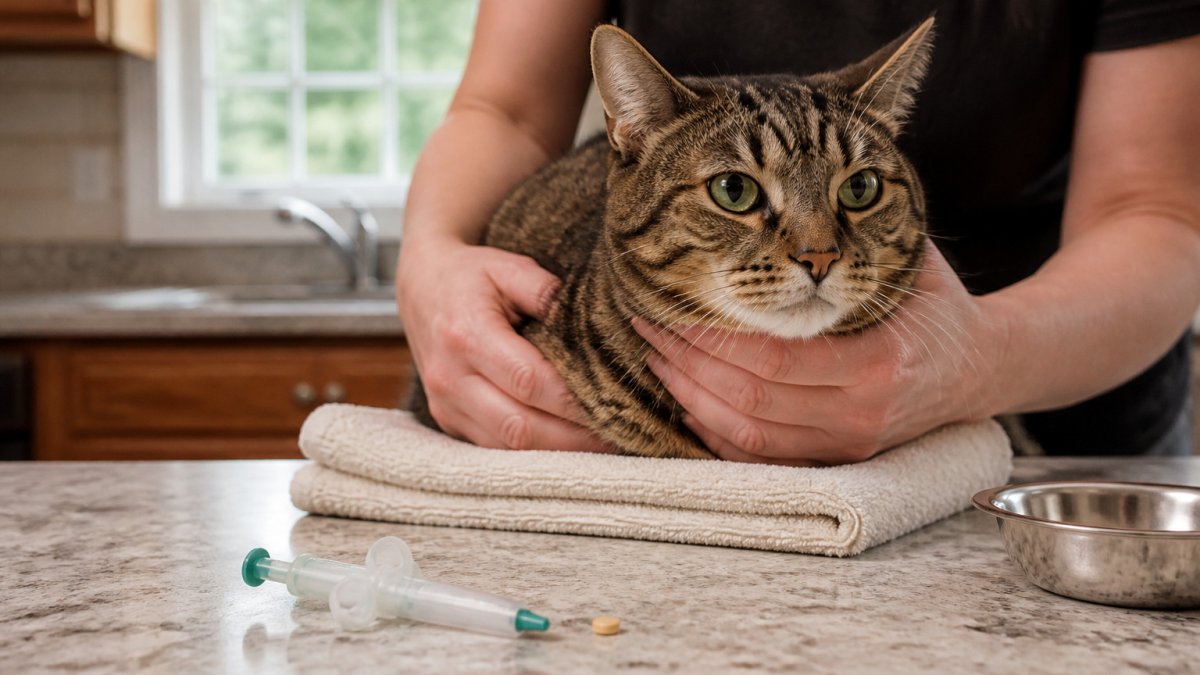
- Load one pill into the barrel, seating it so it sits at the tip.
- Hold your cat securely but gently, with one hand supporting her chest and head.
- Open her mouth by pressing gently on the sides of the jaw, not by pulling the lower jaw down hard.
- Insert the tip at the side of the mouth, then angle it toward the back of the throat.
- Press the plunger smoothly and steadily to release the pill.
- Close the mouth and gently stroke the throat to encourage swallowing.
- Offer a small treat or water afterward and watch that she swallows.
Go slowly. Rushing increases the chance of a bite and a pill that lands in the wrong place.
Wrapping or Restraining a Cat During Dosing
A snug towel wrap, often called a burrito wrap, keeps the front legs and head controlled while leaving the face free. Wrap her gently, leaving the head exposed, and keep the wrap loose enough that she can breathe comfortably. Never force a cat into a wrap she is fighting. If she panics, stop and consult your veterinarian about alternatives.
Using Dispensers With Tablets and Capsules
Tablets are usually the easiest to load. Capsules can be trickier because they may crack or split in the barrel. Test the fit with an empty capsule or a similar-sized object before you use real medication. Do not crush tablets or open capsules unless your veterinarian or pharmacist confirms the medication can be altered.
Pill Pockets and Hidden-Dose Alternatives Compared
Dispensers are not the only option. Pill pockets are soft treats with a hollow center where you hide a pill.
Hiding a pill in wet food works when a cat eats her whole meal, but a picky eater may leave the medicine behind.
For a cat who accepts food readily, a pocket or hidden dose may be the least stressful choice.
Safety Cautions, Fit by Cat Size, and Medication Warnings
Safety in this category has three layers: the size of the pill relative to the cat, the chemistry of the medication, and what to do when a dose fails. Most guides cover only the first.
Fit by Cat Size and Pill Size
A tablet that is easy for a large adult cat can be too big for a kitten or a small-boned cat and may lodge at the back of the throat. Use these rules of thumb, then confirm with your veterinarian:
- Kittens and cats under about 6 pounds. Use a short-barrel gun with a soft tip and the smallest pill opening that still holds the tablet. Ask your vet whether the medication can be given as a liquid instead.
- Average adult cats (roughly 8-12 pounds). Most standard pill guns and pillers work. Match the barrel to the pill, not to the cat.
- Large cats (over about 12 pounds). A longer piller gives reach, but the tip still needs to be soft. Do not push deeper just because the barrel is longer.
If a pill is too large for any dispenser you own, ask your veterinarian or pharmacist about other dosing options. Never split or crush a pill on your own.
Medication-Specific Cautions
Some medications are harsher on mouth and throat tissue than others. Certain antibiotics, some anti-inflammatories, and pills formulated to dissolve quickly can irritate tissue if they stick to the lining of the mouth or esophagus. Follow these precautions:
- Do not crush, split, or open a pill or capsule unless your veterinarian or pharmacist confirms it is safe. Some medications release slowly, and crushing them can cause an overdose or make them ineffective.
- Do not mix a pill into food unless the label or your vet says it is acceptable. Some drugs taste bitter, some break down in food, and a cat that eats around the pill gets no dose at all.
- Follow with a small amount of water or a treat after dosing to help move the pill down and rinse the tissue, unless your vet has told you to withhold water.
Troubleshooting a Failed or Stressful Dose
A failed dose is common and is not a sign that you are doing it wrong. Work through these steps before trying again:
- Stop and let the cat settle. Forcing a second attempt immediately raises stress and the risk of a bite. Give a few minutes in a quiet room.
- Check the pill in the barrel. If it jammed, the barrel is the wrong size or the pill is seated crooked. Reload with a fresh pill and confirm it sits at the tip.
- Check your angle. A pill that comes back out usually means the tip was not angled toward the back of the throat, or the mouth was not open wide enough.
- Check the cat's response. A cat that clamps her mouth shut may need a towel wrap or a different approach. A cat that panics should not be forced.
- Try a different method for the next dose. A pill pocket, a veterinarian-approved liquid, or a compounded formulation may be less stressful. Ask your vet before switching.
- Know when to call the veterinarian. Contact your vet if you cannot get a dose in, if the cat becomes distressed or aggressive, if you are unsure whether a dose was swallowed, or if the cat shows signs of illness after dosing.
A calm, consistent routine matters more than any single device. If dosing stays difficult after several attempts, ask your veterinarian about alternatives, a different formulation, a compounding pharmacy, or a demonstration in the clinic.
Cleaning, Maintenance, and Troubleshooting Stressful Doses
Clean the dispenser after each use. Disassemble it if possible, rinse the barrel and tip with warm water, and let every part dry fully before reassembling. Residue from medication can build up and affect how the plunger moves.
If a dose goes badly, do not force a second attempt right away. Let your cat settle and try again later with your vet's guidance.
Getting Help With Medication When You Travel
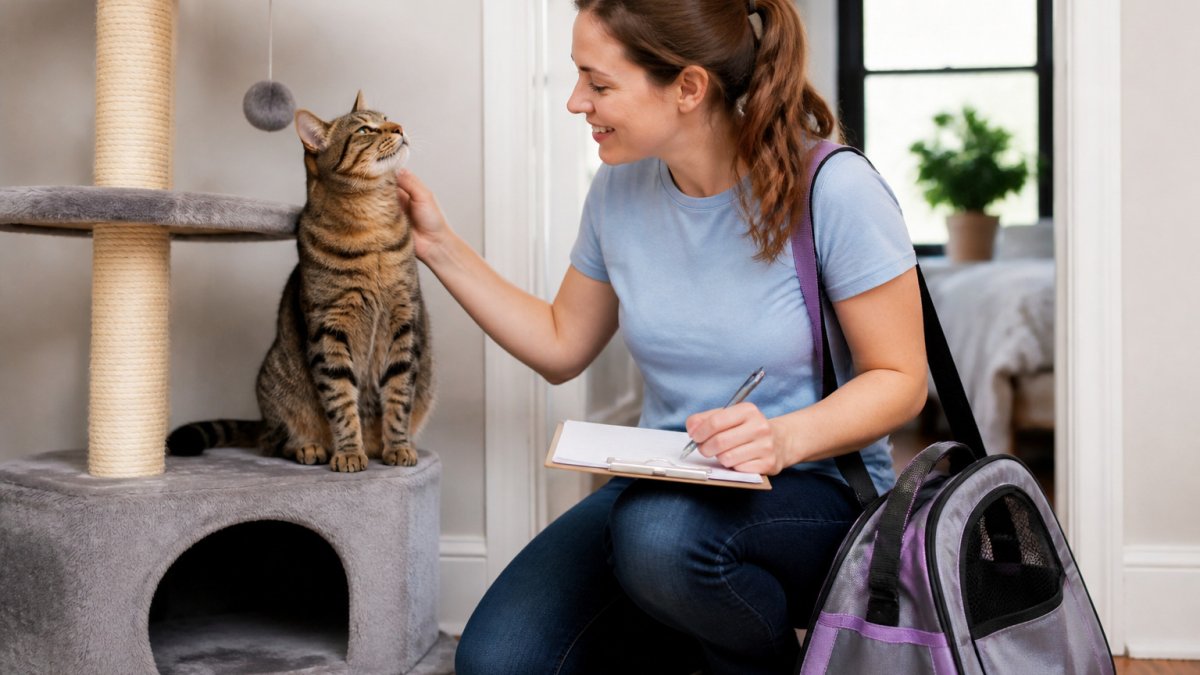
When you travel, a sitter may need to give medication. Before you leave, write down the medication name, dose, timing, and how your cat takes it. Show the sitter how you load and deliver the dispenser, and confirm they feel comfortable doing it.
If you need someone to visit your cat while you are away, consider our Cat sitting service, which can help keep your cat's routine familiar while you are gone.
Frequently Asked Questions
What is the best pill dispenser for cats?
The best choice depends on your cat's size, temperament and the medication's form. Pill guns with soft silicone tips are common for direct dosing, while pill pockets suit cats that accept treats readily. Look for a soft, flexible tip, a clear barrel so you can confirm the pill is loaded, and an easy-to-clean design. Check that the pill fits the chamber before buying, and ask your veterinarian whether direct dosing or a food-based method is appropriate for the specific medication.
How do you use a pill gun for a cat?
Load the pill into the chamber, then gently open the cat's mouth by pressing on the upper jaw just behind the canines. Place the tip toward the back of the tongue, angle it slightly toward the throat, and press the plunger to release the pill. Follow with a small amount of water or a treat to help swallowing. Stop if the cat struggles heavily, and never force the tip into the throat.
Are pill dispensers safe for cats?
Pill dispensers are generally safe when used correctly, but they carry a risk of mouth or throat injury if the tip is pushed too far or the cat thrashes. Choose a dispenser with a soft tip, use it only on the back of the tongue, and keep sessions short. Some medications, including liquids and certain crushable or coated tablets, should not be dosed this way without veterinary guidance, so confirm the method with your veterinarian before starting.
How do you give a cat a pill without a pill dispenser?
You can hide the pill in a small amount of soft food or a pill pocket, or place it directly on the back of the tongue with a gentle press on the jaw and a quick swallow assist. Some medications should not be crushed or mixed with food, so check with your veterinarian first. If a cat repeatedly refuses, a dispenser or professional help may be safer than repeated attempts.